When I first thought about the Venus Fly Trap care guide, I was sure that the genus grows by its own rules. If you think you can treat it like your other indoor plants, you are mistaken!
It isn’t needy, but it surely demands the right growing environment. The unique appearance of this plant might make you think it requires an expert gardener, but don’t worry! I’ve got your back.
Moving further, allow me to quickly walk you through a well-established Venus Flytrap care guide that you can follow to witness a thriving genus in your backyard.
Venus Fly Trap Care: A Brief Overview of the Plant
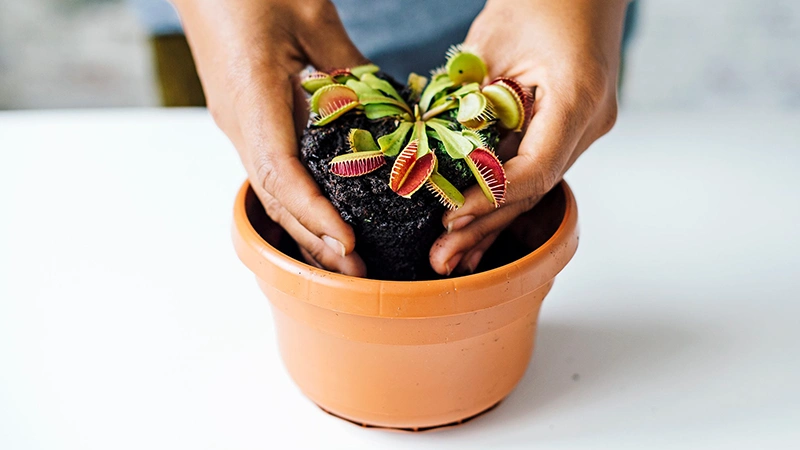
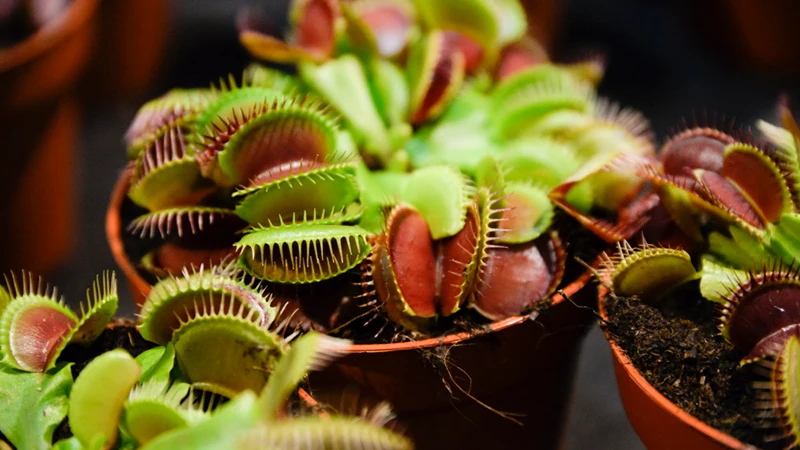
According to the National Wildlife Federation, the Venus Flytrap is a carnivorous perennial plant, native to the coastal regions of the southeastern United States, specifically in North Carolina. Botanically called Dionaea muscipula, it is a houseplant that grows up to 1-5 inches tall and 3-5 inches wide.
It is a popular terrarium plant that feeds on insects for its survival. I have always found the Venus Fly Trap to be one of those plants that instantly grabs attention – and honestly, it deserves all the hype.
- How it catches insects using its jaw-like leaves, turning every grasp into a literal science show, never fails to fascinate me.
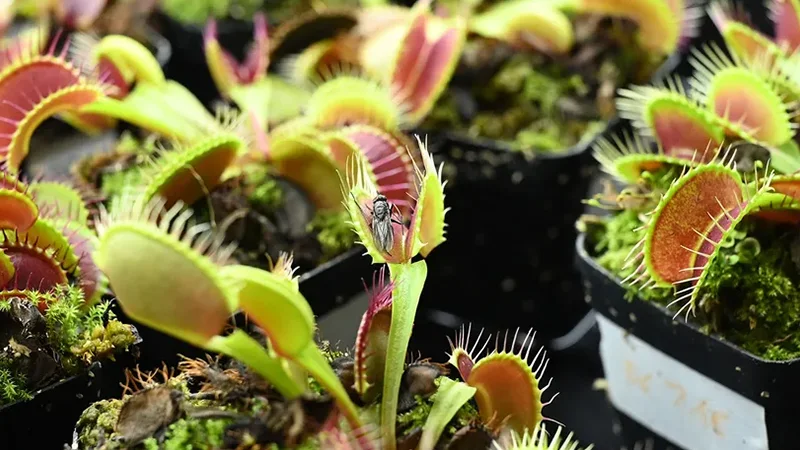
- The plant grows low to the ground, with bright and glossy green leaves that open like a mouth. When any insect or fly triggers the fibre-like hair for roughly 20 seconds, the trap shuts in seconds.
- It is almost impossible for the prey to escape; the genus later secretes a digestive enzyme to dissolve the insect, and the plant absorbs nutrient-rich liquids for 5-10 days, after which the trap opens up again.
- Due to the boggy and poor soil texture in its native land, the Venus flytrap uses this mechanism to absorb nitrogen for survival. Each trap can only shut for a few times before the plant dies; triggering it unnecessarily is dangerous for the overall health of the plant.
- The genus usually grows in compact rosettes and is ideal to be grown in small or indoor spaces. It naturally tends to add a wow factor when added to any garden space.
If you wish to add a plant to your garden that looks a little magical and a little rebellious, the venus fly trap is an ideal option.
Fun Fact
The Venus Fly Trap will snap its jaw-like leaves shut if you put your finger inside, but don’t worry, it will not cause any harm, and you will only feel a little tickle.
How to Care for a Venus Fly Trap? Explore the Complete Care Guide
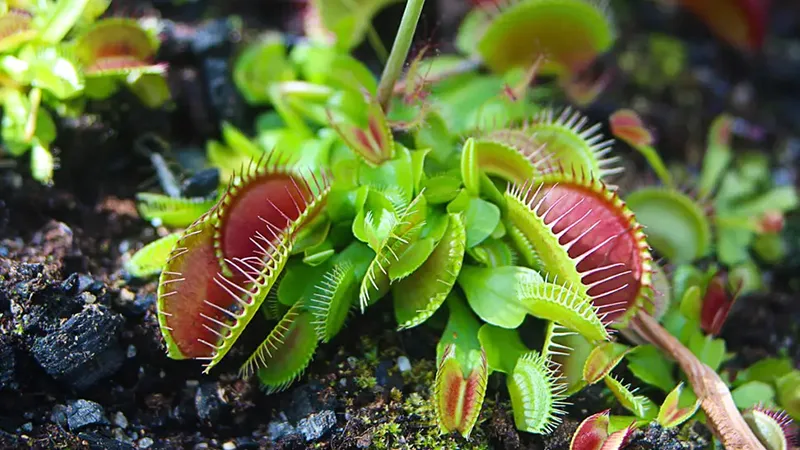
Once I started learning about the Venus Fly Trap care guide, I realised that this plant isn’t complicated; it’s just different. The fact that I do not need to overdo anything excites me more about growing this botanical marvel in my front lawn.
Just like me, I came across many first-timers who wish to know and explore how to take care of a venus fly trap in simple steps. Let us quickly examine the dos and the don’ts.
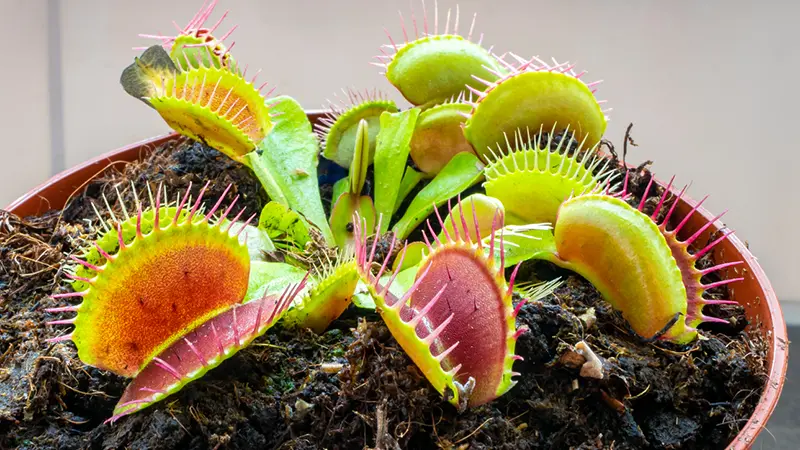
- Sunlight Exposure: One of the most essential parts of the Fly Trap plant care is the sunlight exposure it needs. The genus grows best under direct sunlight.
If you are planning to add it indoors, be sure to keep it near a south-facing window. A minimum of six hours of direct sunlight is ideal for overall plant growth.
- Water Needs: The Venus Fly Trap needs consistent watering for complete development. I, personally, prefer using distilled or rainwater only.
A common method many plant enthusiasts follow is to keep the pot in a water tray so the soil stays moist throughout, but make sure it does not become waterlogged.
- Soil Type: While I was on my quest to explore the best soil, I realised that a normal potting mix that I usually buy for my other houseplants will not work for this magical genus.
The Venus Flytrap thrives in poor, acidic soil that has peat moss mixed in it and is permeable enough. I prefer growing the plant in a traditional compost mixture, which has all the essential nutrients that it needs for full growth.
One of the best parts about the Venus Fly Trap car guide is that it does not need any additional fertilizers. The insects/bugs that it obtains provide the plant with all the essential nutrients.
By following this simple care tip for this flower, I have noticed that it has not only become more responsive but also grown into a healthier and stronger garden plant.
Potting and Repotting of the Venus Fly Trap
The one thing that I have learned throughout my journey of exploring how to look after a Venus Fly Trap is that it likes unconventional things. So if you are thinking you can use any regular pot lying in your garden, you are wrong.
Potting a Venus Fly Trap
- I always choose a shallow pot with good drainage holes because the roots of the genus do not like sitting too deep.
- For soil, I like sticking to a nutrient-poor mix, usually having peat moss, perlite, or sand.
- You gently need to place the plant into the pot without pressing it too much, as this can stress the roots and kill the plant.
Repotting a Venus Fly Trap
- I usually repot this carnivorous plant when it outgrows its original pot, mostly in around one or two years.
- Fill the new pot, at least 4 inches deep, with unenriched soil, that is, peat moss or perlite.
- Lightly water the mixture and make a small hole in the prepared soil mix using your fingers.
- Now gently take out the plant from its previous pot, brush off any excess loose soil, and place it in the newly prepared pot.
- Pat the soil around the roots of the plant and water it generously until it pours out of the drainage holes.
- The whole process takes around 10-15 minutes, and the Venus Flytrap does not need any specific aftercare once it is properly repotted.
While potting or repotting this alluring plant, you simply need to remember that it thrives in boggy, nutrient-poor soil, and one can easily mimic these conditions by using peat-based compost.
Common Pests and Diseases That Affect the Venus Fly Trap
One of the major aspects of looking after a Venus Fly Trap is recognizing whether it is struggling or facing any kind of pest or not. One simply needs to follow some basic yet essential care tips, and you will have a thriving and vibrant Venus Flytrap plant.
- If you notice yellowing leaves, it basically means that the plant has a nutrient deficiency. This can also sometimes happen due to overwatering or underwatering.
Solution: Adjust the frequency and fix any underlying drainage issues. Make sure the holes of the pot are not clogged and the soil is not overly moist.
- Wilting or drooping leaves indicate the vulnerable health of the plant. This means that the root health of the genus is not good and needs immediate attention.
Solution: Since the Venus flytrap is a sun-loving plant, to treat this issue, make sure that you place the pot in a sunny spot.
- Aphids, spider mites, and fungus gnats are some common pests that generally damage the health of the plant. If you notice sticky residue on the surface of the leaves, the plant is most likely affected by pests.
Solution: I usually treat these pests with neem oil or other horticultural oils. You can also use insecticidal soaps or consider beneficial insects like ladybugs to treat the issue.
- Another issue that deteriorates the health of the Venus Flytrap is root rot or squishy roots. Even after proper watering, if the plant is droopy or wilting, there is a chance that the roots of the plant have turned mushy.
Solution: This may happen due to drainage issues. Make sure that the pot you plant the Venus Flytrap in has proper drainage holes. Provide at least 6-8 hours of direct sun exposure so that the leaves stay upright and the water also dries out evenly.
Once the treatment for any issue has started, visible improvement will only be noticed after 2-3 weeks. You can also remove or trim off dead or damaged traps to save the plant. Optimize light and water correctly, and you are good to go.
Research and Findings
How to care for a Venus Flytrap plant has always been a topic of discussion. Not only is the appearance of the genus unique, but its food-catching method also draws major attraction.
Here is what a reliable research portal has to say about how the species attracts insects.
Study Year: 2014-2015
Source: National Center for Biotechnology Information
Aim of the Research: Does the Venus flytrap use a particular mechanism to attract animal prey?
Findings: This study stated that the Dionaea muscipula releases volatile organic compounds (VOCs) that draw the prey inside the trap of the plant. It emits over 60 compounds, including terpenes, benzenoids, and aliphatics, due to which the scent of the genus lured the insects towards it.
Conclusion
After following the right Venus Fly Trap care routine, I have seen how resilient this plant can be. You simply need to place the plant in a sunny spot, avoid over-watering and over-fertilizing the plant for its optimal health.
Throughout my experience of growing this vibrant plant, I have learned that it will only flourish if you follow the care guide consistently, avoiding all other complexities.
FAQs
Is a Venus Fly Trap hard to keep alive?
Though the care guide for this unique plant is unusual and challenging, with consistency and a healthy routine, you can witness good, pest-free growth.
Is it okay to touch the traps of the Venus Flytrap plant?
The Venus Fly Trap will snap its jaw-like leaves shut if you put your finger inside, but don’t worry, it will not cause any harm. Avoid touching the traps, though, as it can stress out the genus.
How long does a Venus Flytrap live?
The Venus Flytrap is a perennial, and if given proper growing conditions, the genus can live up to 20 years.
Should I remove the dead bugs from the trap of my Venus flytrap?
There is no need to remove the dead bugs from the trap of the Venus Flytrap plant, as they can be blown out on their own by wind or during heavy rainfall.
- Carnivorous Plant Care: Venus Flytrap Houseplants – NY Botanical Research Guide
- Venus Fly Trap – Britannica
- How to Care for a Venus fly trap– BBC Gardeners World Magazine