A modern fence can be an aesthetic choice, but it also can be an investment in the long-term performance and sustainability of your property.
As we see changes in climate over time, there has been a trend with homeowners creating their own personalized “one size does not fit all” fencing solutions based upon their geographic locations. It can be places where environmental stresses such as high humidity or extreme UV light are present.
Current modern fences provide functional benefits beyond just being a boundary marker. They can reduce noise levels, provide advanced security features and extend your home’s functionality.
Whether you are looking for low-maintenance options, sustainable “living” fence types or cost-effective security, understanding the technical performance characteristics of materials will help you choose a material that will last through many years of use.
KEY TAKEAWAYS
- While chain link is cheapest upfront, vinyl and composite offer better long-term value by eliminating the need for painting and staining.
- Current trends favor eco-friendly options like bamboo, recycled composites, and FSC-certified timber for a lower carbon footprint.
- Define your primary goal—privacy, security, or aesthetics—before selecting a material to avoid performance mismatches.
Fence Materials and the Needs They Solve
It is not one single ‘best’ material, due to the fact different materials will suit different requirements.
As such, knowing what materials provide will make it easier to pick the right one for your fence according to the use of the whole site.
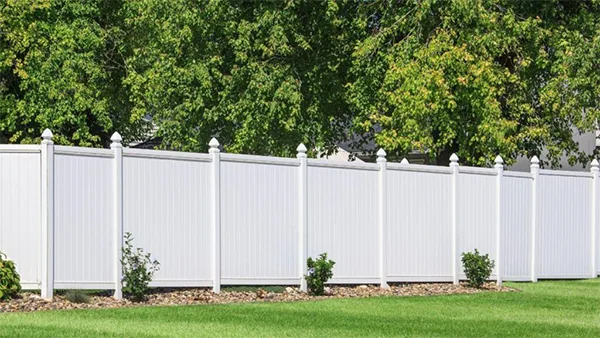
Vinyl – Low Maintenance and Consistent Appearance
If you’re looking for a finished look with little (or no) work done, your choice will probably be vinyl fencing.
It may seem like a generic option, as many go for this one, but it still has a couple of important advantages, one of which is that it doesn’t rot, and it doesn’t absorb moisture. This means that if you live in an area where there’s year-round high air humidity, vinyl is pretty much ideal.
Also, they will perform to accommodate changes in the ambient temperature during the seasons.
This is important because you do not want to have to constantly think about making repairs and surface treatments.
So, if you want to use basic functionality, vinyl will provide all the functional features of a fence without all the fancy design elements often associated with other fence materials.
Wood – Natural Look & Flexible Design
Completely opposite to vinyl, wood fencing allows you to design and tailor it however you want.
You will also have control over the height, spacing and surface characteristics of fencing based on the types of fence being constructed.
People choose it when aesthetics plays a bigger role than maintaining itself.
On the one hand, it perfectly integrates with the home style and landscape. On the contrary, wood requires regular treatment in order to preserve its appearance over time.
Aluminum – Security Without Visual Heaviness
Looking for safety, with defined boundaries – your solution is aluminum. These fences are mostly used near pools or open yards, where anti-corrosive materials play a huge part.
It may not provide you with extra privacy, but it will give you a sense of security.
Chain Link – Practical Boundaries & Cost Control
When controlling costs is the most important factor, chain link fencing provides a practical and robust alternative for big lots.
- Pros: Inexpensive; highly durable; virtually no upkeep.
- Cons: Limited privacy (unless slats are added), industrial look.
- Best Uses: Big acres, pet containment, and commercial and/or job-related land.
Why You Should Lock Your Material Choice ASAP
The installation method used for installing each fence type can affect the timing, durability and installation method of the fence, as well as all aspects of any type of customisation or design work. People typically choose to install vinyl fencing when aesthetics are more important than functionality.
As there are different installation methods for each material, the timing, stability, and complexity of the fence project can vary.
On top of that, your every demand for customization and design can prolong the process. And, if not said at the time, and planned, it can make building harder.
Besides, the chosen material has a significant part in the lifespan of fences and maintenance. So you have to consider your weather changes, soil, and moisture when deciding between materials. If one gives you extra privacy like wood, but you live in an area where it rains a lot, it will not be as efficient as you thought.
If a fence contractor does not consider this additional element, the contractor may end up with a fence that only meets your expectations for a short period of time before requiring more attention, or in the ideal situation, will not meet your expectations at all.
This and reasons such as this one are why you should always do your research in advance (before you make any final decisions). If you can’t make up your mind or you still have a few unanswered questions, it might be best to consult with a local fencing contractor. Only when you have all the information will you be able to make a decision knowing all the pros and cons that come with it, so you’re not blindsided later.
Firstly, define your needs, whether you want more privacy or to invest as little as you can; be specific. After that, priorities become clear, and this helps make any decisions that follow, which helps prevent any possible mismatches between appearance and performance.
Conclusion
Fences are made to serve various purposes, providing solutions for every home.
All in all, materials are not to be used as a single best alternative; many can fulfill different needs, but you have to consider other aspects as well, such as costs, maintenance, and installations.
But, keep in mind that each of those materials serves a different purpose, so don’t be affected by its rank, as the looks don’t overrule quality.
Shift out from your aesthetics-only mindset and go for more sustainable options.
FAQ
Is vinyl more expensive than wood?
Initially yes, but vinyl is often cheaper over 10 years because it never needs painting or rot repairs.
What material is best for rainy climates?
Vinyl, aluminum, and composite are superior in wet areas as they do not absorb moisture or rot.
How long does a fence last?
Vinyl and aluminum can last 20-30+ years, while wood typically requires replacement or major repair every 10-15 years.