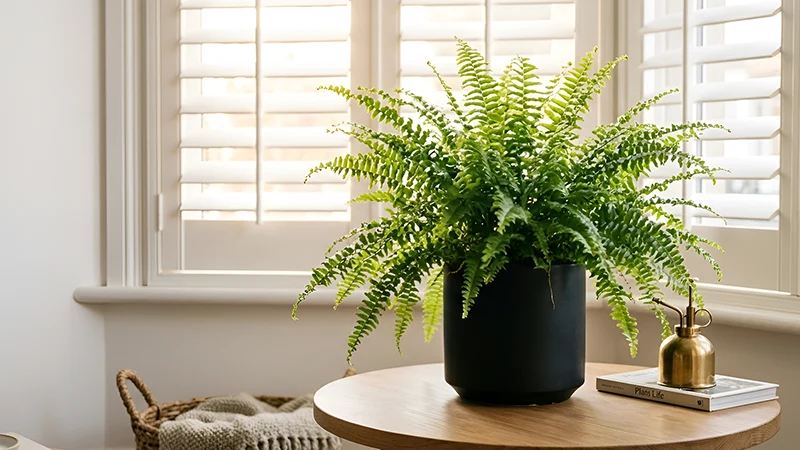
I was at a friend’s house when I first saw a Boston Fern. I was immediately fascinated by this hanging plant and how it instantly elevated the room’s vibe. The plant lover in me knew what would be the next addition to my collection.
Since it was my first time growing it, I had all sorts of questions about how to take care of it properly. One thing is for sure: this process taught me a lot about this species, which is informative and rewarding at the same time.
If you are also keen to get yourself Boston Ferns, here is everything you need to know about them.
Boston Fern: Origin and Description
Boston Fern(Nephrolepis exaltata), also known as the Sword Fern, belongs to a species of fern in the family of Lomariopsidaceae. This indoor plant is native to several regions of South America, Mexico, and the West Indies.
These ferns thrive best in partial shade and a humid climate. It has lush, arching fronds and is a common choice for houseplants, especially in the region of North America. The hardiness of the Boston Fern is USDA Zones 9-11.
It has large fronds with leaflets on either side, which can grow up to 4 feet long. My main concern initially as a pet-parent was, Are Boston Ferns toxic to cats? And I found out that this indoor plant is extremely pet-friendly. So, if your pet is obsessed with it, you can let them adore the beauty.
Did you know?
The Boston Fern plant is also known for its air-purifying quality and for removing toxins such as Formaldehyde, Xylene, and Toluene from the air.
Let us look at its taxonomy to understand the background better.
| Botanical Name | Nephrolepis exaltata |
| Kingdom | Plantae |
| Phylum | Tracheophyta |
| Class | Polypodiopsida |
| Order | Polypodiales |
| Family | Nephrolepidaceae |
| Genus | Nephrolepis |
| Species | Nephrolepis exaltata |
Did you know?
This species of fern was first discovered in a shipment sent from Philadelphia to Boston in 1894.
How to Grow a Boston Fern?
Growing a Boston Fern plant is not as complicated as it seems. They are pretty easy to grow; you just have to make sure that this indoor vine plant is grown in appropriate conditions, as they might be a little sensitive to certain temperature settings.
Sunlight
Boston Fern light requirements are very significant. Place the plant where it receives filtered sunlight. Direct sun exposure is not considered ideal for the plant as it can lead to browning fronds, which can damage the plant.
Water
Make sure to water it regularly, but do not let it sit in water for too long. Once a week, if planted indoors.
Temperature
A temperature between 65 – 75°F is considered ideal for the Boston Fern plant. Excessive temperatures can cause damage. High humidity (above 40%) prevents the leaves from turning brown.
Soil
Boston Ferns grow best in well-draining, moisture-retaining soil having slightly acidic pH levels. They need to be repotted once every year.
The plant also needs little pruning to encourage new growth. Let’s quickly check out some tips and tricks to help this low-light plant thrive.
How To Take Care of Boston Ferns?
Honestly, I thought that caring for Boston Fern must be a tedious process with loads of steps, but to my surprise, it is extremely easy. One crucial point is that this low-light hanging plant loves to be interacted with regularly. So, do not leave them alone for too long!
Moving further, here are the tips to maintain Boston Ferns.
Pruning
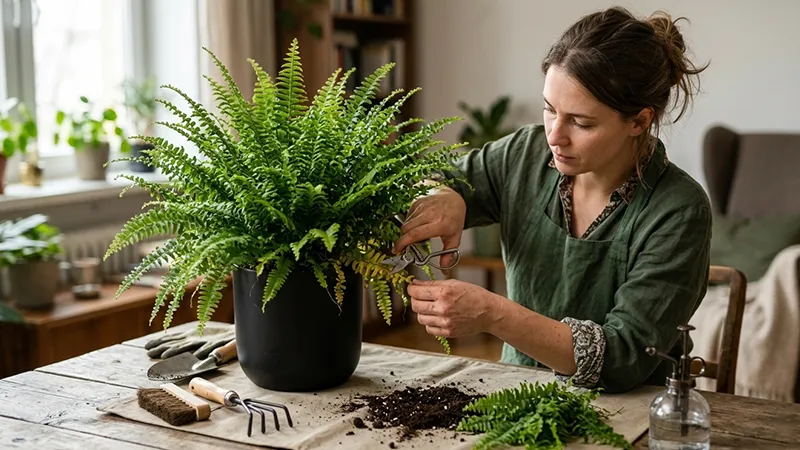
Pruning is done to remove the damaged and overgrown parts of the plant. It is essential to trim a Boston Fernplant every 2–3 years to maintain good shape and encourage new growth. The damaged fronds, if not removed, will affect the growth of the plant.
Repotting
Repotting is the process of moving a plant to a new pot when it gets overcrowded. The healthy roots are separated and converted into different plants. It is an essential Boston Fern care tip, as it gives room for new growth and enables better nutrient and water absorption.
Let us quickly explore the steps to repot the Boston Fern plant.
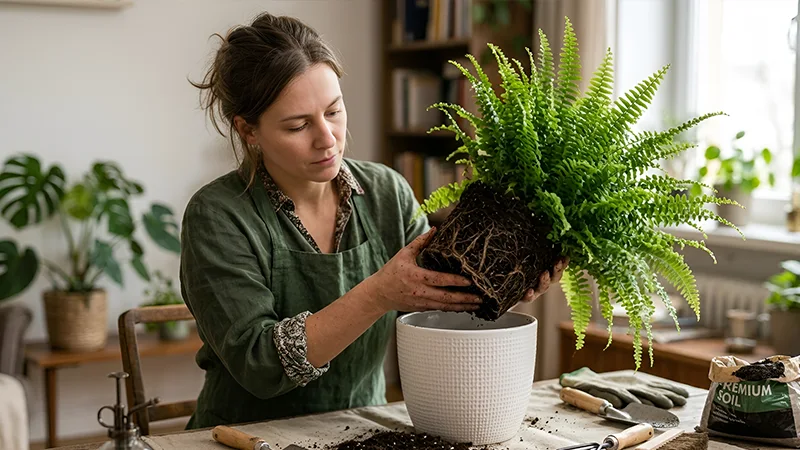
- Make sure the soil is moist before repotting, as it makes the whole process easier.
- Select a pot a size larger than the previous one.
- Fill the new container with potting soil up to 5 cm.
- Hold the fern and gently transfer it to the new pot.
- Cover it up with soil around the roots.
- Pat the soil well to ensure there are no air pockets formed.
- Keep it in partial shade and water it regularly.
Fertilizing
The best time to fertilize the Boston fern plant is during its growing period in summer.
- Use balanced organic manure with an N-P-K ratio of 20-10-10.
- You can also use a liquid plant food mixed at half strength.
- Do this every 4–6 weeks during this season.
My Personal Takeaway
During winter, the growth of Boston Ferns is significantly slower, which means that they do not need fertilizer, although it is considered ideal to feed them once every 2 months; otherwise, the plant will die.
Types of Boston Fern
Nephrolepis has 44 varieties of ferns belonging to this family. Here are the most popular ones.
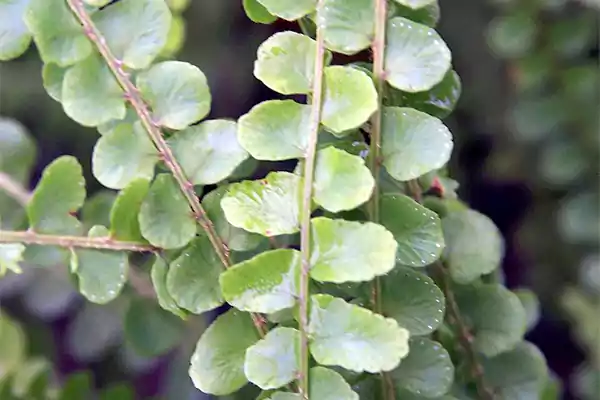
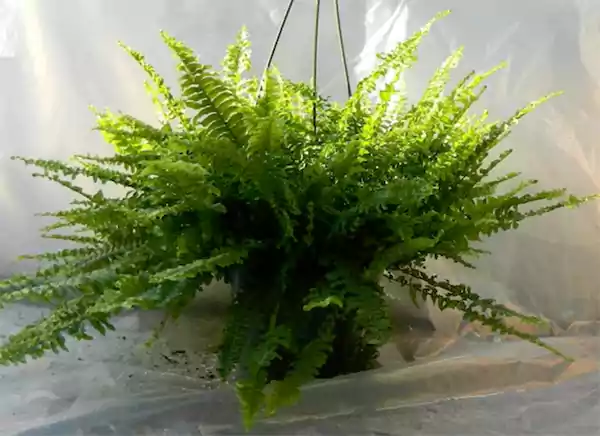
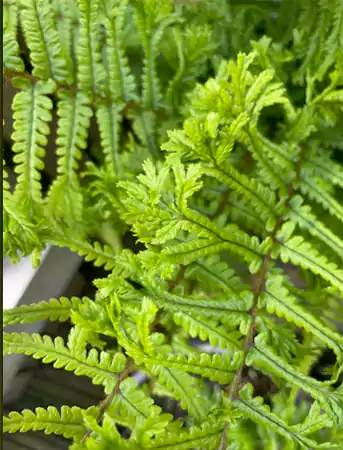
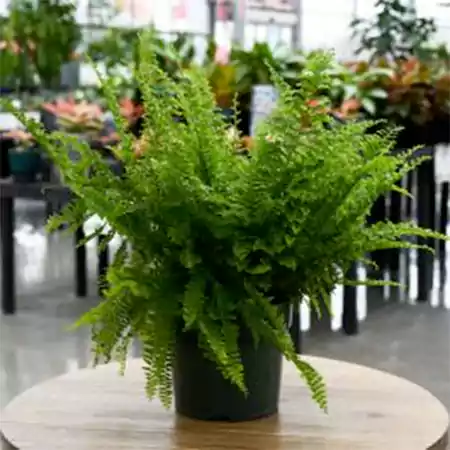
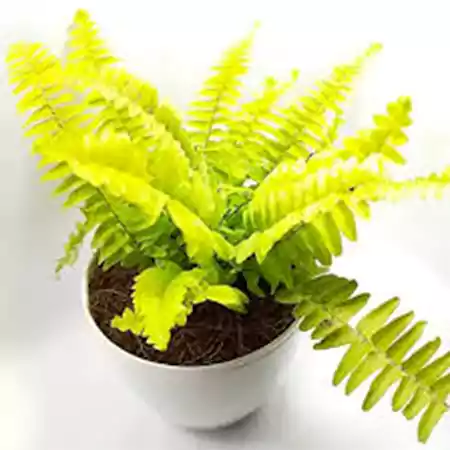
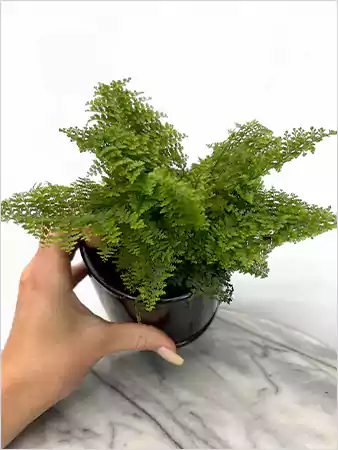
Each cultivar of this evergreen plant has its own unique traits, which make it stand out from the others. If you wish to have more of this species, let’s quickly explore its propagation steps in the next section.
Propagating Tips to Grow More Boston Ferns
Contrary to what might look like a hassle, propagating the Boston Fern plant is really easy and a rewarding process. There are two methods by which you can do it.
Separate the Roots
After the fern has outgrown the pot, it is time to remove it. Before doing that, a new pot, a garden trowel or a spade shovel (in case you have a Boston Fern outdoors), and soil are required.
- Gently remove the plant from the pot and shake off the excess soil from it.
- Separate the healthy roots into smaller sections.
- Prepare a potting mix using a peat-based mix, 40% organic matter, coarse sand to prevent water-logging, and a balanced fertilizer.
The pH of this mix should be acidic, so add elemental sulfur if it is too alkaline.
- Fill the new pot halfway with potting soil, carefully place the new separated roots, and eventually cover the pot with the soil.
- Water the plant and let the excess water drain out of the pot.
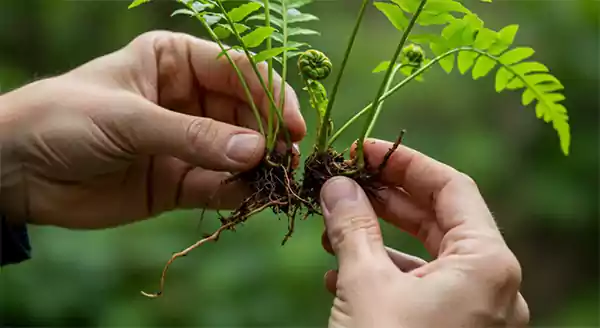
Repotting Method: The separating the roots method is also known as repotting, which is done when the plant gets overcrowded. The roots are separated and converted into different plants. It is used to promote growth.
Separate the Runners
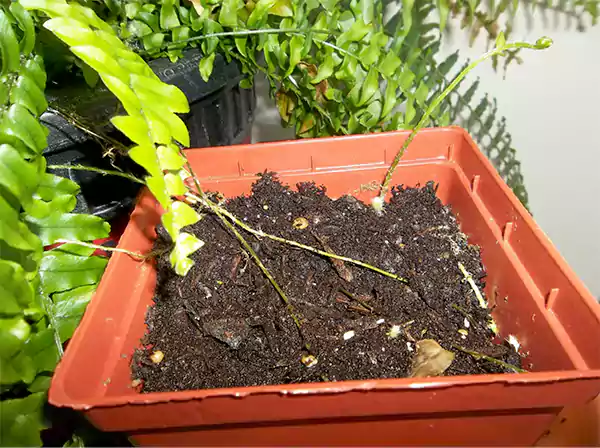
- Identify a healthy runner in the Boston Fern plant.
- Take a new pot and place the tip of the new runner on top of the soil. Do not separate it from the mother plant.
- Make sure it receives adequate water and indirect sunlight.
What are the Common Issues With Boston Ferns?
Maintaining a healthy Boston Fern plant is easy, but a little negligence can lead to some common issues with the plant.
Take a look at all the routine concerns and their easy solutions.
- Browning Fronds : The fronds of the Boston Fern plant turning brown is caused due to direct sun exposure. Place them somewhere they receive filtered sunlight.
- Pest Infestation: Boston Ferns are prone to pests such as mealybugs, snails, spider mites, and more. In this case, re-pot the plant immediately. A spray of lukewarm water is also helpful for light pests.
- Root Rot: Root rot is caused by over-watering and leads to yellowing fronds and mushy roots. To treat this, remove the damaged roots and re-pot the plant.
- Drooping Leaves: The fronds of the Boston Ferns often become weak and droopy, mainly because they do not receive sufficient light. Ensure that they receive filtered sunlight.
Conclusion
Plants radiate positivity, and having Boston Ferns hanging from a basket in your living room is the ideal way to go. Apart from being pleasing to look at, they purify the air and are pet-friendly.
Being a plant lover, I always wondered how difficult it must be to maintain these beautiful ferns. After the right research, I concluded that they can be easily maintained in appropriate conditions with the right care, which does not feel overwhelming at all.
FAQs
Does Boston Fern purify air?
Yes, Boston Fern has air-purifying qualities. It removes toxins like Formaldehyde, Xylene, and Toluene from the air, which makes it an efficient air purifier.
Is the Boston Fern Plant hard to keep alive?
No, Boston Ferns are easy to maintain and thrive in humid surroundings, moist soil, and indirect sunlight. Do not expose them to direct sunlight and keep the soil moist. Monitor them regularly, and they are good to go.
Do Boston Ferns Like Sun Or Shade?
They prefer indirect sunlight. So, place them near a window where they receive filtered sunlight.
What are the disadvantages of Boston Ferns?
One thing that could feel like a task with Boston ferns is that they are sensitive to extreme conditions, and if not monitored properly, they could lead to browning fronds.
What is the best place to keep a Boston Fern, if growing indoors?
The place to keep a Boston Fern is near a window where it receives filtered sunlight because direct sun exposure can scorch the fronds. Also, They thrive in a humid environment, so place them in near naturally humid area or keep a pebble tray with water near it.
Why are the fronds of my Boston plant turning yellow and brown?
Yellowing of the fronds of the Boston Fern plant could be due to multiple reasons:
- Direct sun exposure can be harmful to the foliage.
- Overwatering can lead to browning fronds.
- Low humidity affects the ferns. They need more than 40% humidity to survive.
From where can I buy a Boston Fern plant?
You can buy a Boston Fern plant from a plant nursery near you or order online from various e-commerce websites.
- Bostern Fern – Wisconsin University Research Paper
- Nephrolepis exaltata – NC State Extension Research Paper