Every region of the world has its own rhythm – shaped by soil, weather, light and the way people live in their land. What’s special about those regional traits is that they can be borrowed, softened and adopted in your own personal yard without copying a single postcard scene.
Efficient landscaping was never about copying and imitation – it’s about your mood. Create a mix of the best ones – a sense of calm from the east, openness from the plains, warmth from the south or the contrast from the west.
It might seem overwhelming, but it is not hard to do. When you design after being influenced, your outdoor space turns more about atmosphere – personal, grounded and intentional.
Let’s explore the various state inspirations for a more personal and effective backyard –
Eastern Calm: Borrowing From the Atlantic States
Along the northeastern corridor, landscapes tend to work with restraint. Homes there often cradle gardens that feel like side notes rather than announcements. To bring that sensibility into your own yard, let structure lead before ornament steps in.
Picture low hedges standing like patient guardians of a walkway, or a brick path that looks as though it remembers footsteps from decades ago.
Prefer tidy plants —boxwoods trimmed into rounded silhouettes, hydrangeas with blooms that changes their tone with seasons. Also, place bench tucked near a wall or under a maple whose branches cast shadows.
It’s less about having alot and more about desired presence. Landscaping drawn from this region often leans on endurance and subtlety, letting time polish the edges rather than dramatic features stealing attention.
Southern Ease: Warm Light, Open Shapes
Move south and the landscape exhales. Everything stretches—porches, branches, the afternoons themselves. To bring that atmosphere into your home space, work with openness. Wide beds that curve gently, clusters of perennials that seem to wander rather than march.
As plants in warm tones carry long seasons of bloom or foliage and still stays rich when the sun peaks. Crepe myrtles, magnolias, or ornamental grasses that sway like they’re half-listening to a distant blues tune.
Free your yard to welcome lingering; if possible, add a swing or hammock in a pocket of shade instead of pushing it to the center. Southern-inspired landscaping carries an invitation—not loud, not forced, just a quiet “stay for a minute.”
Middle-America Lines and Space
The central states deal in scale. Big skies. Fields that repeat without apology. A kind of open-handedness that doesn’t need embellishment.
Bringing that spirit home doesn’t mean turning your backyard into farmland. Instead, think about presence through simplicity. Straight lines, long views, and plants that thrive in honest sun.
Prairie Influence: Movement Over Decoration
The prairies give you a sense of motion even when the day is still. That movement comes from texture, not drama. Tall grasses that ripple, coneflowers that stand steady, black-eyed Susans that glow when morning hits them. To adopt this design language, curate plants in drifts rather than isolated clusters. Let them sweep across a section of your yard like a slow brushstroke.
Hardscaping should feel grounded: stone slabs with minimal cuts, pathways that maintain direct routes instead of zigzagging. Place seating low to the ground—wood or metal that looks like it could weather a decade outside without fuss. Prairie-inspired landscaping isn’t ornamental; its honesty creates its own elegance.
Midwestern Warmth: Order With Personality
Further east in the Midwest, neighborhoods often blend neatness with individuality. Lawns stay trimmed, but porches carry potted surprises—geraniums, ferns, sometimes herbs. To channel this balance, keep your yard orderly but not stiff.
Create a central focal point, maybe a raised bed framed in timber or a set of stepping stones ending in a beautiful corner — possibly a vegetable patch or a fire pit that looks equally ready for summer dessert or autumn stories.
Use colors intentionally: reds or whites paired with lush green backdrops. Choose plants that feel familiar yet lively—hostas, daylilies, viburnum. Landscaping here is approachable, neighborly, and quietly proud of its mix of structure and spontaneity.
Western Horizons Reimagined at Home
Out west, the land behaves differently. It leans into extremes—dry, lush, jagged, soft—sometimes all within a day’s drive. Drawing influence from these regions requires understanding contrast. The secret isn’t copying deserts or coastal cliffs; it’s creating pockets of bold character in your own space.
Desert Notes: Geometry and Resilience
Dry landscapes deliver clarity. Shapes stand crisp, shadows carve patterns, and plants earn their keep through resilience. You can borrow that spirit even if you don’t live anywhere near sand or succulents. Choose plants that appreciate restraint—yucca, agave, or compact shrubs that sip rather than gulp. Use gravel or stone to replace some turf, forming clean planes of texture.
Think of form rather than abundance: a single sculptural tree, a rectangular bed with uniform plant heights, a courtyard corner where light becomes its own decoration. Desert-inspired landscaping rewards intention. It strips away excess until what remains feels purposeful.
Coastal West: Soft Drama and Shifting Air
The Pacific edge carries a certain hush beneath its drama. Mist, cliffs, towering evergreens. To evoke this mood at home, introduce variations in height. Layer plants so the eye climbs and dips—tall shrubs behind mid-level flowers, groundcovers weaving through the front. Use curves in your pathways, ones that don’t rush from point A to point B but meander as if listening for ocean breath.
Materials matter here: weathered wood, smooth stone, ceramics in deep blue or soft gray. Let vines soften railings or walls. A coastal-inspired space doesn’t need water to feel fluid—it needs transitions that feel natural, like a shoreline shifting slightly with each season.
Southwest Color and Craft
The Southwest brings a palette unlike any other—sunbaked reds, desert purples, unexpected greens. It’s a region where landscaping blends earth with artistry, and you can echo that spirit through color, pattern, and handmade details.
Earth-Toned Gardens With Cultural Echoes
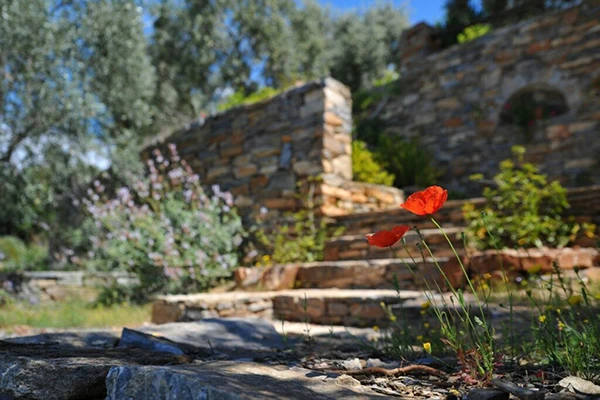
Look to clay, terracotta, muted golds. Incorporate pottery that feels weighty and grounded. Use stones in irregular shapes, forming mosaic-like paths that echo canyon floors.
Plant choices should speak softly but confidently: sage, lavender, prickly pear, rosemary. Their scents and silhouettes bring character without requiring endless maintenance.
A seating area built of stucco or stone that creates an impression of permanence. Add textiles—outdoor cushions or woven mats—that pull in desert colors without overwhelming the eye. Landscaping here becomes atmospheric, rooted in the idea that a yard can feel handcrafted.
Light and Shadow as Design Tools
In many southwestern homes, the sun isn’t simply a visitor; it acts like a collaborator. You can borrow that dynamic by deliberately shaping light and shadow. Pergolas with slats that cast shifting stripes. Tall plants that throw intentional silhouettes. Even a wall painted in an earthy shade can catch late-day light in a way that feels like a living artwork.
Minimal irrigation, maximal character—that’s the balance. Emphasize forms that look strong under bright daylight but charming in twilight. The result feels warm, imaginative, and deeply connected to the land’s rhythm.
Conclusion
Landscaping driven by various states isn’t about recreating geography – it is more about selecting what resonates. Maybe it is the restraint of the Northeast, the ease of the South, the honesty of the prairies or the bold contrasts of the West.
When you merge these influences thoughtfully with your yard – it becomes a collection of feelings rather than just being a fixed style. A place created by memory, preferences and intuition – rooted without being specific to any place.
Frequently Asked Questions
Is it necessary to reside in a specific region to use its landscaping styles?
No, the regional styles are about feelings, functionality, location and inspirations.
What is a specific tip to make your yard look themed or artificial?
Focus on subtle elements such as plant choice, materials and layout – not traditional symbols.
Why is regional landscaping expensive to implement?
It is not necessarily expensive – many styles rely more on layout and plant selection than cost.