


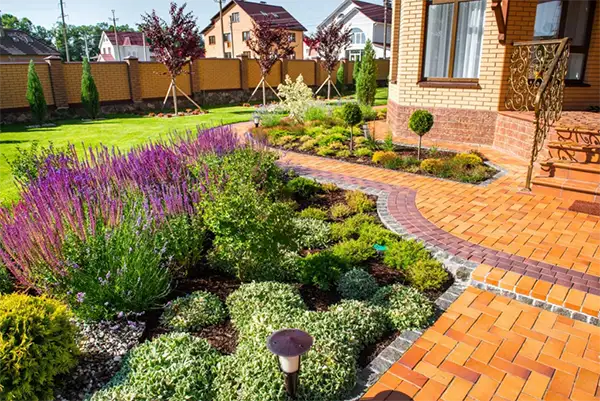
Gardening is absolutely a calming job, at least for me, and I believe that most of the people do basic landscaping tasks on their own. However, the question arises: Does it really work every time? Of course it doesn’t!
So when should you leave it to the professionals? Having no clues?
Don’t worry! I am here to help you out with this comprehensive guide explaining when the expert services matter the most.
Just scroll up and go through this whole write-up right away!
KEY TAKEAWAYS
- Use similar materials and colors for a cohesive look.
- Current trends favor smooth, rounded, natural materials that match surroundings.
- A professional will take care of your home’s foundation and other parts of complex, ”invisible” work.
- Integrating plants with indoor comfort blurs lines between interior and exterior space
The Appeal of DIY Landscaping and Where It Actually Works
Seeing your plant grow roots makes you feel good; it helps you connect with nature. Adding seasonal flowers, small bushes, or an herb garden is a great way to start growing things on your own. New mulch or plastic edging can improve how a yard looks without much effort. Decorative rocks, birdbaths, or solar lights will give you a way to be creative. Mowing regularly and lightly weeding can help keep your yard clean.
This landscaping in Calgary can make it look nice, but they do not necessarily mean that your yard is healthy for the future, and may need to be taken care of more by a professional.
What Professional Landscapers Bring to the Table
Landscapers are creators of possibilities in dirt. Many properties may be able to stand alone, but many will appreciate having a favorite landscape professional for the following reasons:
Design Expertise Beyond Curb Appeal
Landscaping creates visual unity between furniture and vegetation. A garden can create boundaries between interior and exterior spaces without appearing to end. An example of a style that accomplishes this would be Japandi.
Equipment, Materials, and Industry Knowledge
Their understanding of “intentional materiality” and ability to utilize high-quality natural products, such as sustainable wood and stone, along with long-lasting, weatherproof metals, enhances this potential further. Professionals like Tazscapes have access to high-quality, mature plant stock as well as soils that are specifically suited for planting gardens, meaning from the time you put a garden in the ground, it will look well-established!
Projects That Almost Always Need a Professional Hand
Some projects are “battle plans” that require a level of heavy lifting and engineering that goes beyond the average tool shed.
Grading, Drainage, and Structural Earthwork
Yard landscaping is very important; your yard should be sloped away from your house at a rate of 1 inch for every 1 foot distance to help prevent damage to the foundation. High-efficiency sprinkler systems are a great way for average households to save thousands of gallons of water per year.
Irrigation System Installation and Hardscaping
Installing high-efficiency irrigation systems can save an average household thousands of gallons of water per year.
- Smart Integration
- Level Threshold Mastery
- Water Management
- Durable Construction
REAL-LIFE IMPACTOne homeowner in LA had put thousands of dollars into beautiful DIY flowerbeds along the exterior of their home. Unfortunately, the way they created their flowerbeds unknowingly caused the slope of their yard to drain toward their home. After a heavy spring rain, water was collecting against the concrete exterior of their home, and that caused their sump pump to stop working. As a result, this homeowner ended up with a flooded basement. After hiring a professional landscaping company to come out and do structural earthwork to correct the grading as well as install a sub-surface drainage line, they completely secured the foundation of their home and avoided having to file any additional expensive insurance claims related to water damage.
When DIY Landscaping Can Cost You More in the Long Run
DIY landscaping can end up costing you more in the long run. The old saying, “you get what you pay for” applies here, but I also learned that a basement in good condition isn’t going to be helpful if you have a leaky basement due to improper grading from a “do it yourself” landscaping job.
If you’re doing an improper job of grading your project, then you might find yourself having to either pay for a “sump pump failure” or to add a writer for “flood Insurance” to the homeowner’s insurance policy that doesn’t normally cover flooding.
However, time will tell how much it costs. You may have saved yourself upfront money on materials when you did your own landscaping; unfortunately, without a 25-50 year warranty, any failures in the future will be a financial responsibility.
Getting the Most Value From a Professional Landscaper
Discussing biophilic balance with the contractor, you can combine the use of plants and trees to effectively use natural materials to improve one’s mental health and stimulate creativity. You will also want to find consistent flooring throughout the kitchen and terrace area to provide total visual continuity,
So, no matter what the type of flooring or surface, it will be easy to see the way between the two areas. You can also create an artistic, natural character by doing the right thing when nobody is looking; in the landscaping industry, this refers to making a financial commitment to improve the grading and soil under the beauty of the flower beds.
Final Thoughts
The trend for 2026 in homes includes seamless transitions between indoor spaces and nature
While some simple lawn projects can provide a nice break, investing in professional landscape services serves as an important asset protection strategy.
With today’s advancements, you will reduce risk for structural failure issues in your home over time! So, every home design element will combine beautiful creation with precise details executed by urban planners, ensuring your investment continues to yield positive results long into the future!
FAQs
Is matte black going out of style for exterior lights in the year 2026?
No! Matte black will always have a place in the vast array of finishes available to homeowners when designing their home’s exterior. And while there are new trends developing around softer colored finishes (e.g., grey), matte back is an ever-reliable and flexible finish.
Can I use different types of metal materials for my landscape?
Absolutely! By carefully planning the mix of metals (such as brushed brass and matte black), you can create an outstanding and eye-catching design that looks intentional and unique.
On average, how much water do you anticipate saving as a result of hiring a professional landscape contractor for your landscaping project?
On average, with the installation of high-efficiency, WaterSense-certified fixtures and automatic smart irrigation systems, you should save about 2,700 gallons of water annually.

27 Flowers That Start With N: Names, Types & Care Guide
[…] plants are valued for their ornamental beauty and are often grown in gardens, front lawns, or large landscapes. Given below is a list of some notable blooms that you can add to your […]