A dormitory can often resemble a complex puzzle, serving as a compact space that must effectively function as a bedroom, workspace, fitness area, and snack station all at once.
Implementing a well-structured plan, selecting a few carefully curated dorm room organizers, and establishing consistent habits will quickly provide you with the necessary breathing room.
In this blog post, we are going to explore practical and actionable dorm organization strategies that you can readily implement during your initial week on campus.
Let’s begin!
Key Takeaways
- Understanding why space matters more
- Decoding the vertical positioning to win back space
- Looking at dorm closet organization
- Uncovering a quick desktop routine
Map the space: zones first, stuff second
Begin by sketching out the room and categorizing it into four zones: sleep, study, storage, and socialization. This keeps college dorm organization simple and stops random purchases.
Decide what must live in each zone and give it a home before anything else. If your class load is heavy, free a little time by outsourcing one task on your list—some students try affordable writing service for low-stakes drafts—then use that reclaimed hour to set up storage and labels. Keep it practical, not salesy.
Tiny dorm room ideas that help right away:
- Put the bed on risers and park rolling bins underneath.
- Reserve one shelf or crate for quick-drop items (keys, ID, earbuds).
- Keep one empty bin for “returns” so clutter has a landing pad.
Interesting Facts
While direct facts and stats on storage solutions alone aren’t available, storage is a key aspect of the growing global home decor market, with revenue projected to reach $139.05 billion in 2025
Go vertical to win back floor space
If you’re asking how to maximize space in a dorm room, the answer is height. Walls, doors, and the void above the closet are your secret square footage. Use over-door racks for jackets and towels, stack lidded bins on the wardrobe top, and hang a peg rail or removable hooks for bags and hats.
Modular shelving inside closets converts dead air into usable storage, while command strips prevent fines.e dorm room space saving ideas let every inch work harder.
Mini checklist for vertical storage
- Over-door rack for coats/backpacks
- Removable hooks near the door for keys and tote bags
- Cubby shelves that stack and fit baskets
- Clip-on shelves above the desk for books and plants
Dorm closet organization that actually fits
Closets in student housing are small, so pick tools that reduce bulk. Swap old plastic hangers for slim flocked ones; you’ll often gain 30–50% hanging room and a cleaner look. Add a second tension rod for pants, then use shelf dividers on top for sweaters and linens. File-fold T-shirts in bins so you can see every piece at a glance—no digging. These small dorm closet ideas convert a cramped rod and one shelf into functional storage.
Dorm closet organization must-haves: a hanging shoe organizer for vertical pockets, a shallow bin for laundry products, and a labeled caddy for shower runs. Keep a lint roller and sewing kit in a small pouch on a hook.
Smart containers and dorm organization products
You don’t need a mountain of gear; just the right combination of dorm organization products that stack, slide, and label easily. Aim for containers of similar sizes so that they nest and look neat.
Best categories for dorm organizers
- Clear lidded bins (two heights)
- Soft baskets for clothes and linens
- Drawer dividers for socks, tech, and meds
- A rolling cart for snacks and coffee supplies
- Flat under-bed boxes for off-season items
Cost/fit snapshot
| Item | Why it works | Typical spot |
| Clear shoebox bins | Stackable, quick visual scan | Closet shelves & desk side |
| Fabric cubes | Hide bulk items without visual noise | Cubby units |
| Drawer dividers | Stop item “drift” and wasted space | Desk and dresser |
| Rolling cart | Adds shelves where none exist | Beside desk or mini-fridge |
| Under-bed boxes | Big capacity with a low profile | Bed zone |
Dorm desk organization ideas that fight distraction
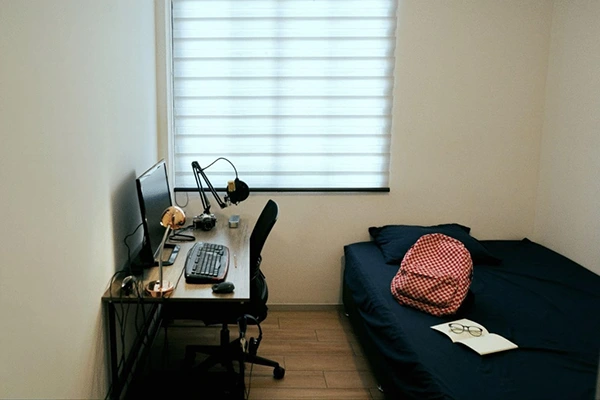
Your desk is prime real estate. Keep only daily tools on top: laptop, lamp, pen cup, sticky notes. Everything else lives in a drawer, caddy, or wall pocket. Use cable clips along the desktop edge so cords don’t slide away. A vertical file for current classes keeps paper piles thin. These dorm desk organization ideas are simple, but they work best when surfaces are 70% clear.
A quick desktop routine
- End of day: return chargers to clips, file loose sheets, empty cup.
- End of the week: replenish sticky notes and recycle any handouts that are no longer needed.
- Pre-exam: Clear the desk and place a single class folder in the center.
Tiny dorm room: layout that feels bigger
If you strike a balance between storage and circulation, a small dorm room can breathe. Keep the widest walking path open, and push bulk to corners: tall shelf by the closet, rolling cart tight to the desk, laundry hamper behind the door.
Use a small rug to define the study zone, not to cover the entire floor. Mirrors bounce light and visually double depth; hang one at eye level beside the desk. Small room organizing ideas like these reduce visual noise and help you focus.
Snack zone and cleaning stash
Late-night study sessions go smoother when food and clean-up live in one spot. Park a compact cart near the mini-fridge with mugs, tea/coffee, and quick snacks. Remove packaging to save space; decant into canisters or bins. Keep a tiny cleaning kit—wipes, duster, mini lint roller—on the lower shelf so resets take two minutes. This is low-lift college dorm organization that pays off nightly.
Week-by-week setup plan (so you don’t panic shop)
- Week 1: Bed risers, two under-bed boxes, over-door rack
- Week 2: Slim hangers, shelf dividers, one set of drawer organizers
- Week 3: Rolling cart, clear bins for snacks and supplies
- Week 4: Extra cubby shelf, mirror, label pass on every container
This pace avoids clutter from new “solutions” and keeps dorm room space-saving ideas grounded in what you actually use.
How to maximize space in a dorm room?
Go vertical, double rods, and choose stackable containers; keep surfaces 70% clear.
What about the dorm room organizers I already own?
Keep only the pieces that stack or slide; donate the rest.
What is the 3-5-7 rule in interior design?
The 3-5-7 rules in interior design revolve around the grouping of decorative objects in odd numbers (three, five, or seven) to create visually appealing and balanced arrangements