The ambience of a space is influenced by lighting even before the first meal is served. A single misstep in selection can dull the atmosphere, while the right choice can create a sense of function and design. An array of styles, finishes, and tech features available can lead to unexpected outcomes.
While some suggest there is a flawless arrangement, the reality is that comparisons, showroom displays, and seasonal inventory changes rarely become impressive. Therefore, a wise approach is needed to embrace adaptability and allow the dimensions of the room to accept your choices.
Although lists may simplify the process, the reality of achieving it may be far. Read the whole article to get modern dining room lighting ideas for every style and space!
KEY TAKEAWAYS
- The best modern lighting styles for dining rooms of all sizes
- How to choose fixtures that fit your ceiling, table, and decor
- Layering techniques for a dynamic, inviting ambiance
- Common mistakes and expert recommendations for standout results
Modern Dining Room Lighting Styles
Every dining room creates a vibe, even before the ottomans pull out. Lighting can improve it, or fight it. Modern styles can range from barely-there lines to sculptural art pieces that demand attention. The sweet spot sits where mood, ordered series, and function meet. Or try to, at least.
1. Statement Chandeliers
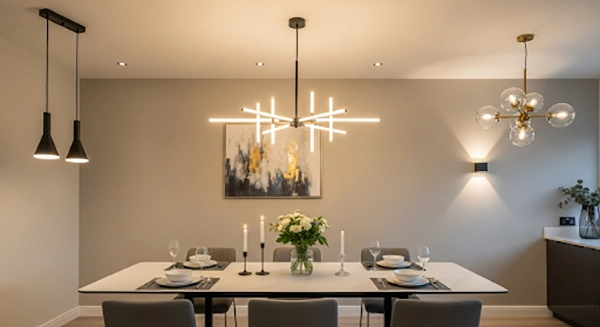
A chandelier can operate like a visual anchor. Linear bars suit long tables, while branched or tiered forms bring drama without cluttering sight lines. As a ballpark, aim for about one-half to two-thirds the table’s breadth, with a drop of 30–36 inches above the surface for standard ceilings.
Matte black and lightly polished brass keep trending, though smoked or colored glass adds a newer twist. And if those figures sound rigid, check up on them, shift with higher ceilings or a deeply textured table; context wins.
2. Pendant Lighting
Pendants do a great job with a little. A trio over a rectangle creates rhythm; one oversized ornament over a round table looks intentional and calm.
Glass, metallic, or fabric shades change the mood as much as the bulb does. When shortlisting dining room light fixtures, many end up evaluating sizes to see what actually fits, not just what looks good online.
3. Wall Sconces & Accent Lighting
Sconces introduce luminescence along the walls and highlight art or millwork. Clean-lined shapes and warm metals slip into newly decorated rooms without stealing the show. Mount near eye level to avoid glare, and let them act like dimmable “side lighting” that softens a bright central fixture. The catch: they’re fantastic, but they won’t carry the whole room alone.
4. Recessed & Track Lighting
Recessed cans and track frames keep ceilings calm and sight lines open. They’re great for filling in dark corners or bringing out a buffet. The common complaint? Flatness. Pair them with a lighting fixture and dimmers to add depth. Adjustable heads help identify shadows that stubbornly collect under table edges.
How to Choose the Right Fixture
Picking the “nice one” is easy. Picking the right one suggests weighing table size, ceiling height, decorativeness, and how bright the room wants to be. And yes, rooms do have opinions, watch the reflections on smooth tables and the shadows under large centerpieces.
Sizing & Scale Rules
Undersized fixtures vanish; outsize ones crowd the view. For rectangular tables, target one-half to two-thirds the table width. For round tables, test a diameter around half the table width.
Height matters: fix at 30–36 inches above the tabletop for 8-foot ceilings, raising roughly 3 inches (ca. 8 cm) for every extra foot. Even then, tall centerpieces and high-backed seat cushions can nudge the final height up or down.
Matching Lighting to Room Style
Modern spaces lean on simple forms, clean lines, and curation, so finishes matter. Brushed brass warms cool palettes, matte black frames soften rooms, and mixed metals can tie hardware and furniture together — especially when paired with quality dining room furniture in Maine.
Eclectic rooms can benefit from contrast: wood with glass, linen with metal. If the room reportedly has a lot to say, the fixture can whisper.
Dimmability & Smart Lighting
Dimmers are the least-known heroes. Bright for tasks, low for lingering after dessert, same room, different mood. Smart lamps and bulbs add schedules, incidents, and color temperature tweaks.
Just note: not every bulb plays nicely with every dimmer, and mixed brands can behave inappropriately after firmware updates. Annoying? Sure. Fixable with a unified setup? Usually.
Layering Light for Function & Mood
Single-source lighting highlights a dining room that looks like a stage; layered lighting makes it feel alive. Overhead illumination for visual clarity. Accent lighting for depth. Ambient fill for comfort. The harmonious arrangement shifts with time of day and company.
Combining Overhead, Accent, and Ambient Lighting
Start with a focal fixture, lighting fixture, or pendant, for presence. Add sconces or a nearby lamp to soften surfaces and highlight decor. Use recessed or track lights to keep the room evenly bright without shouting. This mix keeps supplies visible and faces flattering. And if something still feels off, it’s rarely the fixture, bulb tone, or height that is a common culprit.
As lighting specialist Marcus Webb explains in a guide from the American Lighting Association, “The true art of dining room lighting lies not in the fixture itself, but in how it interacts with the room’s geometry and the occupants’ needs. A great design balances drama with function.”
This principle demonstrates why layering matters more than any single piece.
Lighting for Entertaining vs. Everyday Use
Entertaining leans elegant and low, with glints on glassware and gentle shadows. Weeknight meals or homework sessions require clarity and reach. One room, two modes. Dimmers and secondary lights shift gears faster than swapping fixtures ever could, which is why numerous companies treat them as non-negotiable.
Common Mistakes & How to Avoid Them
Pretty can remain flat. Bright can feel harsh. The usual rookie errors land somewhere between scale issues and one-trick setups. It might look minor on paper, but rooms push back.
Overcrowding or Under-lighting
Stacking too many fixtures turns passion into visual noise. Too few, and the table becomes an island in the dark. Pick a clear hero, then support it with quiet collaborators. If the space still feels off, it would possibly be bulb tone, not brightness.
Ignoring Scale or Proportion
Small pendants over a large table feel timid; a massive chandelier in a tightly packed room overwhelms. Measure length, width, and ceiling dimensions before shopping. A quick mock-up with painter’s tape serves to stop regret before it starts.
Neglecting Functionality
Looks matter, until the first illuminated dinner. Check lumens, dimmed compatibility, and beam spread. Decorative shades can choke light output; additive fixtures can cast shadows at the ends of long tables. Make adjustments to placement before blaming the piece.
Comparison Table: Fixture Types at a Glance
If any of these categories feel too tidy, that’s because they are. Real rooms break rules; the “best for” column bends when ceilings are vaulted, or tables are unusually narrow. Treat this as a filter, then test against room reality.
| Fixture Type | Pros | Cons | Best For | Style Fit |
| Chandelier | Dramatic focal point, wide variety | Needs ceiling height, can be pricey | Large/medium rooms, statement | Modern, classic, eclectic |
| Pendant | Versatile, easy to group or solo | May need multiples for big tables | Small/medium rooms, task light | Minimalist, industrial |
| Wall Sconce | Adds ambiance, highlights art | Limited main light, needs wiring | Accent, layered lighting | Modern, transitional |
| Recessed/Track | Clean look, adjustable, space-saving | Can feel flat if used alone | Background, layering | Minimalist, contemporary |
| Floor Lamp | Flexible, no hardwiring needed | Takes up floor space | Rentals, flexible layouts | Eclectic, modern |
Even a perfect match on paper can go missing by a mile in practice. Sample bulb temps, mock heights, and don’t be shy about asking returns, policy changes, and stock cycles make timing part of the game.
Bringing It All Together: Designing Your Perfect Dining Room Lighting
A balanced family dining room feels easy, not staged. Start with a central piece scaled to the table and ceiling. Add accent and ambient layers, so the room can switch from lively to low-key quickly without a fight. Mix finishes if it can make the room feel collected over time.
For those excited to explore options, chandelier light selections span modern to classic styles, helping customize the search by aesthetic preference. Key steps to remember:
- Measure the table and surface height before choosing a fixture.
- Layer accent, overhead, and ambient light to avoid flat, single-source glare.
- Use dimmers and subtle controls to shift from weekday bright to weekend mellow.
Plenty swear by one flawless recipe; market data and lived-in spaces keep disagreeing. Maybe the best plan is to create room for tweaks later.
Your Dining Room Lighting Checklist
Strong design initially begins with the fundamentals and builds from there.Light House Co. offers curated collections across modern styles, making it less stressful to explore options side-by-side. The rest? Patience, testing, and a willingness to adjust as the room reveals what it actually needs.
Frequently Asked Questions
Quick answers help, but the market is complicated, and rooms behave differently. Averages, rules, and “ideals” keep shifting with season, inventory, and even bulb stock at local stores.
FAQ
What is the rule for dining room lights?
The commonly recommended size is a fixture around one-half to two-thirds the table width, hung 30–36 inches above the tabletop for standard ceilings. That said, higher ceilings, tall centerpieces, or bright-colored surfaces may push the height up or down a couple of inches; some lighting pros nudge the drop until glare and shadows even out.
How do I choose the right size chandelier for my dining room?
Measure the table first, then target a chandelier that’s approximately half to two-thirds its width. Long tables favor linear forms or multi-light spreads. Even with the math right, scale can feel off if the room is narrow or the chairs are visually heavy, which is why mock-ups or painter’s tape replacements are common.
Can I mix different lighting styles in my dining room?
Yes, style mixing is an accepted practice. A modern chandelier with vintage-inspired sconces can read intentional when finishes share a tone, or the silhouettes play well together. Some months, mixed metallic materials dominate; other times, single-finish stories come back around. Cohesion can prevail either way.