In today’s chaotic world, people are so busy and getting stuck in numerous hectic tasks that they are forgetting to fulfill the basic maintenance routine for their homes and invested properties.
That’s why common plumbing issues are becoming more prevalent in urban cities and also shared workplaces, which are not being fixed as they are supposed to.
As a homeowner myself, I believe that uncovering plumbing secrets to prevent imminent problems sometimes can be as simple as noticing small warnings that can become large emergencies if you ignore them.
In this blog post, we are going to talk about them more briefly, giving numerous insights to the readers.
Let’s begin!
Key Takeaways
Understanding why frequent clogs happen
Discovering how bad odors ruin your home
Decoding the impact of water strains on the structure of properties
Discussing how slow water pressure and water drainage are a major concern
Looking at how persistent noises became frustrating and killed the whole vibe
Now, first I want to talk about a sink or shower that drains slowly is more than just an irritation; it’s typically a warning that you have a potential plumbing problem. It’s common to have a minor clog from time to time, but when you have repeatedly clogged drains in the same place, there’s usually a bigger problem at play. Partial pipe collapses, tree roots invading sewer drainage lines, and improperly sloped pipes are all common assailants that lead to recurring drainage issues.
Mineral deposits can build up on your pipes over time, which will lead to narrowing pathways of water flowing through the pipes. Instead of using home remedies or other commercial chemical drain cleansers, at best, the professional solution just click here to get the whole system checked out using a specifically designed camera to see what the underlying issues are. Before it turns into a plumbing catastrophe.
Intriguing Insights
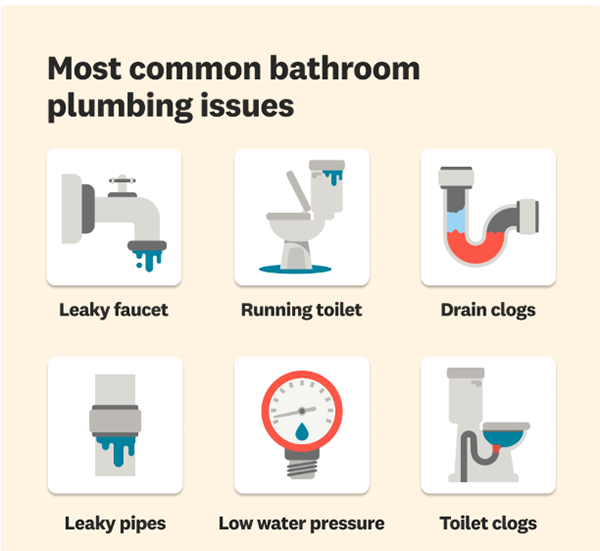
This infographic shows the most common bathroom plumbing issues.
Unpleasant Odors
Next up, I genuinely want to raise a question: When you begin to notice foul odors emanating from your drains, it may be your plumbing system’s way of alerting you to a problem. If the odor resembles that of something musty, the underlying issue is likely a dry P-trap. The P-trap is the bent pipe mechanism under a sink, designed to prevent sewer gases from entering your home. If the sink or floor drain is not used frequently, the water can evaporate from the P-trap, allowing sewer gases to enter the building.
According to me, if you are experiencing foul odors from the sewage system, there could be a broken pipe venting and/or a broken main sewer line, or bacterial growth in stagnant pipes. On top of being unpleasant, these odors could expose the building occupants to methane and other sewage fumes. It is also not a good idea to ignore the issue.
Water Stains or Damage
I think everyone would agree that the watermarks on the ceiling, walls, or floors are an eyesore, but they can also signal the presence of hidden leaks. Discoloration on a ceiling, wall, or floor could be from a slow drip through a pipe in the wall, a connection that is failing, or condensation. Whatever the cause of the moisture, if it persists, it may lead to property damage, mold, and other problems.
The real problem is that you rarely know about it until serious damage occurs. If you have discoloration, paint that is peeling or warping paint, you need to investigate before it becomes worse and turns into a small repair into a larger expense.
Interesting Facts These issues can lead to wasted water, increased utility bills, and potential damage to your home. For example, a dripping faucet can waste over 3,000 gallons of water per year. (Source)
Increased Water Bills
Furthermore, let’s talk about an even bigger issue that might make you bankrupt one day. Unless you’ve used a lot more water than normal and your bill keeps climbing, then there is a major possibility of a heavy leak. A running toilet can use hundreds of gallons of water per day, and possibly undetected, underground pipe leaks or broken irrigation systems can rack up your bill silently.
To check for leaks, simply turn off all water sources for the night and jot down your water meter reading before you go to bed. If the reading changes from your last recorded number first thing in the morning, you leak somewhere.
Low Water Pressure
If your faucets or showerheads are producing weak water flow, it can be more than a nuisance–it could be an indication of a larger issue. In some cases, the remedy can be as simple as cleaning out clogged aerators because of minerals. However, in older homes, you could be facing corroded galvanized pipes that will need to be replaced.
Other causes for low-flow or low pressure include a failing pressure regulator, obstructions in the main (supplier) line, or leaks that divert the water before it reaches your fixtures. Don’t allow this problem to linger; it can lead to further deterioration of the piping. Early diagnosis and cause identification are your best course of action.
Slow Drainage
If multiple drains are slow or backing up at the same time, the issue is likely in the main sewer line. Tree roots, collapsed pipes, or clogs could all be the cause of wastewater not being able to exit your home. If your home has a septic system, either a full tank or a failed drainage field can cause backups.
This is one of the most serious plumbing red flags—the last thing you want is sewage backing up into your sinks, showers, or your basement.
Persistent Noises from Pipes
Your plumbing system should not sound like the soundtrack of a horror movie. Loud banging sounds (water hammer) are produced whenever water stops quickly due to an abrupt closure of a valve, creating stress on the pipe system. Gurgling drains are often a sign of inadequate venting, which traps the air.
And to sum up this entire segment, I just want to say that make sure that high-pitched squealing could be too much water pressure, and a constant running water sound could indicate a leak. While annoying, these sounds could also signify issues with your system that, if left unattended, could lead to burst pipes or major water damage!
Frequently Asked Questions
What’s the hardest thing about plumbing?
Sometimes, a building’s architecture is a plumber’s worst enemy. Pipes, boilers, and drain lines are typically concealed within walls, floors, and crawl spaces. This is bad news for the plumber, who must squeeze into tight spaces to reach a leaking pipe, clogged elbow, or broken valve.
What is the common problem of drainage systems?
One of the most frequent drainage problems is water accumulating in low-lying areas of a garden, driveway, or car park. This often occurs when the ground is uneven or when soil becomes compacted, making it harder for water to absorb.
What are the negative effects of drainage?
Poor drainage systems often lead to water pollution. Runoff water can pick up contaminants such as oil, heavy metals, pesticides, and other pollutants as it travels over surfaces. These pollutants are then carried into rivers, lakes, and oceans, adversely affecting aquatic life and ecosystems.
How can we solve the problem of drainage?
Drainage problems can be addressed through various solutions, including improving soil drainage, installing drainage systems like French drains, and addressing issues with downspouts and gutters. Proper grading, adding organic matter to soil, and installing permeable surfaces can also help manage water flow.
Can blocked drains cause flooding?
Blockages in drains and sewers can cause sewer flooding. Flooding has a devastating impact on home and family life. People often have to move out while the damage is being repaired, and it can take months for life to return to normal.