KEY TAKEAWAYS
- Understand how to identify the scope of a small bathroom remodel
- Discover the rental-grade material strategy
- Learn how a well-remodeled bathroom reduces maintenance
Did you know 44.1 million American households are renters, and in the year 2024, 34% of Americans rented their homes? These stats simply mean the competition is high, and if you want to generate a good rental income, you have to work on house looks and functionality, especially the bathroom.
People love big bathrooms, so if you have one that is small, it can create problems. But don’t worry, smart remodelling can fix this and give the bathroom high quality and durability, while making it look appealing to renters.
Continue reading this article to understand how you can create a retail-ready bathroom in a few simple steps.
Identifying the Scope of Small Bathroom Remodel
Before you buy one tile, know the scope of your project. The scope will predict your budget, timeline, and duration of work. To do this, you must decide what type of remodel you want (a simple clean-up, an improvement for function, or an entire reconstruction).
To begin, start with a professional visual inspection of all of the elements in your bathroom. You will have to ask yourself, “Is it damaged, out-of-date, or working badly?”
Make categories based on these three levels:
- Cosmetic Update: A cosmetic upgrade is when you change the non-structural components to give your space a fresh look. Replace the mirror, change lighting fittings, paint, re-caulk, and you’ll have a bathroom that appears like new, even if it still has the same design.
- Partial Remodel: A partial remodel needs both updating the cosmetics and worn-out elements of the bathroom. You may replace the vanity, toilet, faucets, or flooring and shower design. A partial remodel will fix functional problems while enhancing the look of the bathroom.
- Full Remodel: A complete remodel of your bathroom might become a must when there has been a lot of water damage, design issues, or because the plumbing system is decades-old.
A full remodel will begin by taking everything back down to the studs (the structural wood in the walls) and then reconstructing that space. Because of the amount of time and money needed for a full remodel, it is most suitable to follow this route only when you are facing chronic repair problems.
As a tenant, needing to make minor modifications to the bathroom can be exciting, but there’s a chance it might break your lease terms. For this reason, it’s best to speak with a Washington DC rental manager if you have any worries about whether or not your decor plan is supported by the landlord.
The Rental-Grade Material Strategy
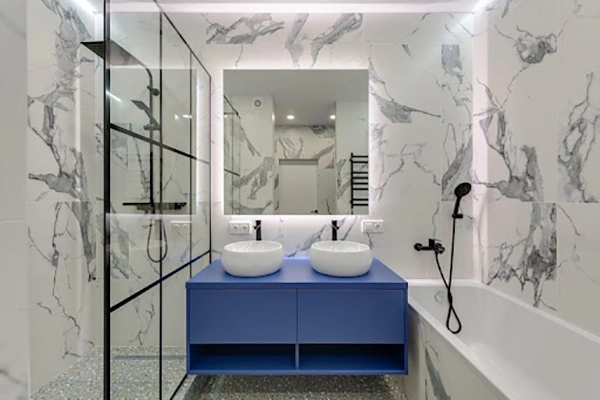
After you have specified your project scope, your product selections will be the most crucial aspect of your successful bathroom remodel. The purpose is to make product decisions that strike a balance among cost, aesthetic appeal, and excellent durability.
Focus on Mid-Range Durability
Do not select cheap materials because they may need frequent repairs, and do not use costly finishings that will not boost your rental income. Select products from the mid-range of products where value and durability complement one another.
Flooring
Porcelain or Ceramic Tile is described as the best option when it comes to flooring because it promises superior durability, as well as an exceptional level of water resistance. Luxury Vinyl Plank (LVP) could also be used if you want a speedier installation process. At the same time. LVP is waterproof, resistant to scratching, and offers a very comfortable walking surface.
Vanity
Select a Vanity that has a wood or plywood base, along with a Quartz or Solid-Surfacing Countertop. Both of these kinds of countertops are much more useful at resisting water damage, stains, and scratches when compared to laminate or particle board countertops.
Shower or Tub
An all-in-one acrylic tub/shower is also a great option for your bathroom remodel. This unit has the additional benefit of being made out of non-porous materials, which will make cleaning more effortless.
The all-in-one acrylic tub/shower also does away with the grout lines in between each tile, where mold can spread. On the other hand, a fiberglass shower or tub unit would be a good choice if you want to go with something that is less expensive and long-lasting.
Fixtures
When choosing fixtures, chrome and/or brushed nickel finish fixtures are a reliable bet, since these finishes are abundant, fairly priced, and very simple to clean and maintain. However, you do not actually need to purchase fixtures from a luxury manufacturer; as long as the interior parts come from a reliable company, you should have no issues with leaking.
To make the space feel bigger, research small apartment bathroom ideas that won’t make your space feel cramped. For example, using a floating vanity, a large mirror, and consistent light colors can make a more open and attractive setting for prospective tenants.
Allocate Budget Wisely
You also need a specific budget assigned to this project to minimize wasting money. Here are some of the smartest ways to allocate your home improvement budget:
- 50% of Your Budget for Labor: Normally, this will be your most expensive portion. The best way to ensure that the durability of the materials you buy will work as planned is through expert installation.
- 30% of Your Budget for Materials: All of the things you are buying, i.e., the toilet, tile, etc., should have priority depending on the amount they are used and exposed to moisture, e.g., the shower system and flooring, etc.
- 20% of Your Budget for Contingency: (see below).
Create a Contingency Fund
A lot can go wrong with a redesign. Walls have a way of opening up old plumbing, rotten sub-floor, and many other invisible problems once they’re removed. As such, it’s always smart to save 10-20% of the entire budget for a contingency fund.
This backup fund will be your “safety net” that lets you pay for unexpected bills, so as not to stop the whole project or cut back on finish quality.
How Does a Well-Remodeled Bathroom Reduce Maintenance Needs?
While a carefully planned bathroom remodel means an opportunity for a visual update, it also offers a proactive means of greatly reducing long-term maintenance costs and workloads.
Here’s how:
Waterproof Materials Prevent Cost Damage
An example is a one-piece shower unit will stop grout lines, which can be troubling areas where mold and mildew grow. Another example of this is a quartz vanity top that won’t discolor or scratch like laminate surfaces do.
By using these materials, you reduce your need to constantly caulk and clean deeply and replace prematurely, saving you time and money in service calls for repair and maintenance.
Upgrading Critical Fixtures Enhances Reliability
A cheap faucet or shower valve with plastic parts hidden will leak and drip. However, by choosing an affordable faucet or shower valve made from metal internally, you are buying a product that will work perfectly, and therefore help control water from being wasted and water damage too.
At the same time, a new, low-flow toilet with solid flush performance will be much less likely to become blocked, and also will not continue to run, thus removing two of the most common service call issues.
Effective Layout Means Better Upkeep
A bathroom that has an open and clutter-free vibe, such as using floating vanities, makes it less stressful to sweep and mop the floors. At the same time, large-format tile with less grout will be less challenging for your tenants to maintain and keep clean.
If you have designed the bathroom in an easy-to-maintain way, this promotes good tenant maintenance and prevents the buildup of grime, which could ultimately create long-term damage.
Conclusion
A remodeling of the bathroom strategically is a wise investment for your rental property. By identifying the scope of the project, by picking materials that will last as long as possible (rental-grade), and by selecting an appropriate budget, you have made a beautiful place for high-quality renters.
More than anything, when you take this early approach, you are decreasing the need for future maintenance of the space, which will help save you money, time, and headaches.
Which types of flooring are best for small rental bathrooms?
Luxury vinyl (plank or tile), sheet vinyl, and ceramic or porcelain tile are great options because they are waterproof, durable, and easy to clean.
Are there any specific design choices that make small bathrooms feel larger?
Yes, using large tiles, light colors, and strategic lighting possibly do this.
How often should rental bathroom fixtures be replaced or updated?
They should be immediately repaired or replaced if they are cracked or broken.
What are the best colors to use in a small bathroom to attract renters?
Use light, neutral colors like whites, grays, and beiges because they make the bathroom look big and clean.