In recent years, a significant number of individuals have been relocating from bustling urban centers. This trend became evident after 2020, as many office jobs transitioned to remote work, freeing people from the necessity of living in metropolitan areas for career advancement.
In fact, the global real estate market is expected to reach 4,332.38 billion USD. This is probably due to shifting preferences for lifestyle and living standards.
As a result, the lakeside towns have emerged as popular destinations for those seeking a serene and laid-back lifestyle. It’s not solely about picturesque waterfronts; these towns offer a unique rhythm and a more genuine way of living.
If this shift sounds interesting to you, here’s an insightful guide on the homes and lifestyle options available in a quaint lakeside community, along with our top suggestions.
Why Buyers are Drawn to Lakeside Homes
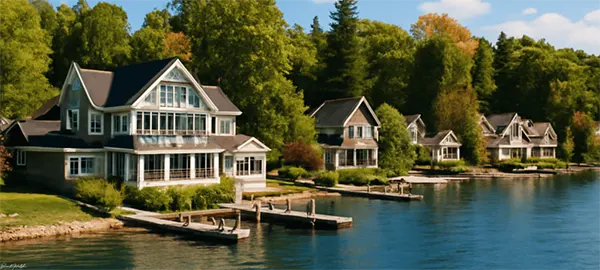
Away from the daily chaos, the lakeside view offers peace of mind. More than that, it can boast lower commute times, steady demand, and a lower cost of living.
Lower Commute Needs
Before COVID-19 hit, people used to select properties close to their offices. It allowed them to be on the road. But that has substantially changed since 2020.
Hybrid or remote workers generally need to visit the office only two or three days a week. So, when employees are not commuting daily, they can consider living in a suburban area with a way better lifestyle.
Steady Demand
Recent studies have shown that if you have homes near rivers, lakes, or waterfront trails, you can expect up to 10% value premium. It’s true for properties that do not have direct waterfront views. That’s how you know, the request is steady. Because buyers are not merely paying for views. They are also paying for the green walking paths, clean air, and a quieter environment.
Lower Cost of Living
Another fact: the cost-of-living angle that often gets overlooked. Lakeside and small-town neighborhoods tend to have lower daily friction costs. Less commuting signifies that you spend less on fuel and transportation. There are also fewer impulse purchases. Over a long period, that difference adds up.
6 Lakeside Home Types With Different Charms
Every individual might have their own needs and wishes. Considering that, there are the top six home type suggestions:
1. The Walk-to-Water Cottage-Style Home
Imagine, you don’t have to wait in a car to see the lake. Your task is to step outside and walk for five minutes or less. This type of home is meant for people who want to use nature, not just see it. We are talking about daily evening strolls, morning walks, weekend family picnics, etc.
These homes are usually more modest than full suburban houses. 1,200–1,800 sq ft is the normal range. But you get a big Porch. The open space in the exteriors of houses matters more than formal dining rooms. In fact, outdoor space is the proper living area.
2. The Historic Main-Street Home
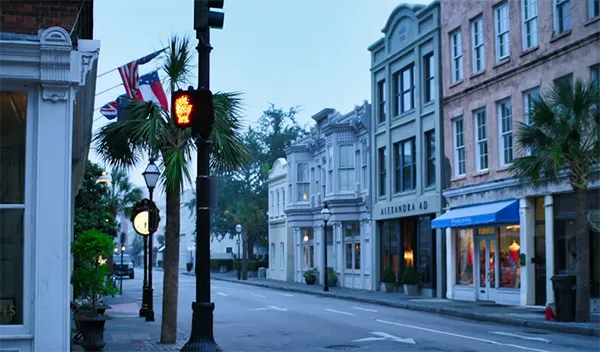
Such houses are typically located near the town center. So, you can actually walk to groceries, coffee, or local events. But the additional benefit is that you are not dealing with high-rise traffic.
The homes were primarily built between the early 1900s and 1950s. You can expect wider rooms, high ceilings, and more durable construction. Layouts undoubtedly feel different from modern builds. But that’s what the residents like most, who themselves are admirers of art and history.
3. The Modern-Rustic Family Home
Not in the urge to trade city comfort for nature? Then go for a newly built property in a lakeside town. It shouldn’t be older than 10–20 years. This comes with the modern systems and insulation. At the same time, you are surrounded by water, trees, and open land. It’s equivalent to having the best of both worlds.
Square footage most commonly lands in the 2,000–3,000 sq ft range. It’s enough for guests, families, and home offices. Many buyers stumble upon this type of home in Wisconsin’s lake regions near established communities, where year-round living is supported by strong interpersonal infrastructure.
Areas such as Williams Bay, in particular, place well-suited for blending lakeside access with everyday convenience and community life, making them attractive for both families and long-term residents.
4. The Downsizer-Friendly Lakeside Retreat
Downsizer-Friendly homes are smaller by design. They are usually measured around 1,100–1,600 sq ft. You can expect fewer stairs as well as fewer rooms. The primary focus is on lowering maintenance. But what they trade in size, they can make up for in location. Such homes are a perfect fit for retirees or older couples who do not have the mental energy to upkeep a large property.
These homes consistently show up in established lakeside towns with services nearby, such as Michigan lake town or the New England waters regions with walkable centers.
5. The Hobby-Forward Property With Land
This home type is not so much about the house itself. The limelight is on you and your hobbies. These properties often sit on larger lots. The home itself would likely be modest (1,800–2,500 sq ft). But the land changes everything. You can use it as a gardening space, studio, or just storage for equipment.
If you do not think much about managing more estate, you can surely go for such homes. In return, you will get confidentiality and flexibility to pursue any hands-on hobbies or side projects.
These homes are typically located just outside lakeside towns. You may find them in rural pockets near Midwest lake regions, as well as in the outskirts of New England lake towns.
6. The Community-Centric Neighborhood Home
Do you enjoy spending time around like-minded people? Then a likeable setting should be the focus of your property hunt.
These homes are discovered in established neighborhoods where people live. You see familiar faces. Kids grow up together, and neighbors look out for each other.
The houses themselves can be different in age and style. What matters more is the surrounding stability. Moreover, since the turnover is low, supply in such areas is very limited. That also provides long-term value if you think of selling.
Ontario and various Canadian lake areas are highly sought after for their community-focused neighborhoods.
Bottom Line
When it comes to purchasing a property, there’s no “right or wrong.” In fact, the wrong choice is not picking the “less impressive” home. It’s to select a home type that does not match how you will actually use it. When your lifestyle and the home’s layout line up, that’s the moment you get value delivered.
Frequently Asked Questions
What is the primary appeal of these homes?
The main significance is the blend of natural beauty and modern convenience.
What specific natural elements are typically integrated into the design?
Decks, patios, or private docks are generally integrated into the design for a more natural feel.
Are these homes designed for year-round living or primarily as vacation properties?
Many properties are suitable for year-round living, while some may consider it a place for vacation.