Windows aren’t like paint or flooring—you can’t easily change your mind in five years. Quality windows last 20-40 years depending on material and maintenance. That’s potentially three decades of living with your decision.
The frame material affects:
- How much you’ll spend on maintenance over those decades
- Whether your windows will still operate smoothly in year 15
- Your heating and cooling bills every single month
- Whether you’ll need early replacement due to material failure
- How your home looks and whether that matters for resale
And here’s what nobody tells you upfront: the replacement process is disruptive and expensive. Each window takes 2-4 hours to replace properly. Your house is open to weather during installation. You’re dealing with contractors, permits, and potential trim damage. Getting this decision right the first time matters.
What the Marketing Brochures Hide
Every manufacturer will tell you their material is “the best.” They’re all lying—or at least being strategically selective with truth.
Vinyl manufacturers emphasize low maintenance while downplaying aesthetic limitations. Aluminum suppliers showcase sleek profiles while glossing over thermal performance issues. Fiberglass companies highlight durability while hoping you don’t notice the limited product selection. Wood advocates romanticize tradition while soft-pedaling the maintenance reality.
Performance varies wildly within each material category. “Vinyl windows” could mean anything from $300 big-box garbage to $1,200 European-engineered systems. The material label alone tells you almost nothing.
Let’s fix that information gap.
uPVC (Vinyl): America’s Default Choice
What uPVC Actually Is
uPVC stands for unplasticized polyvinyl chloride. It’s regular PVC (the stuff in plumbing pipes) that hasn’t been softened with plasticizers, making it rigid and durable. Manufacturers add UV stabilizers, impact modifiers, and pigments to create window frames that won’t rot, rust, or require painting.
Quality uPVC frames use multi-chamber profiles—hollow sections within the frame that trap air for insulation. Low-end vinyl windows have 2-3 chambers. Premium European systems have 6-7 chambers. More chambers generally means better insulation and structural rigidity.
Many uPVC windows include steel or aluminum reinforcement inside the chambers for added strength, particularly in larger windows and doors. This reinforcement must be thermally isolated from both interior and exterior surfaces or it creates thermal bridging—a path for heat to bypass the insulation.
The Real Advantages
The low-maintenance claim is actually true. uPVC won’t rot even in humid climates. It won’t rust in coastal environments. You never need to paint it. Dirt washes off with soap and water. For homeowners who hate maintenance or don’t have time for it, this is a massive advantage.
Thermal performance is good when done right. A quality multi-chamber uPVC frame can achieve U-values of 0.20-0.25—excellent insulation that contributes meaningfully to energy efficiency. The material itself is a poor conductor of heat, which helps.
Cost is reasonable. Standard uPVC windows run $400-600 per window installed for typical sizes. That’s accessible for most homeowners. Premium European uPVC systems with multi-chamber profiles, better hardware, and superior sealing cost $700-1,200—still competitive with other premium options.
The Downsides Nobody Mentions
Color options are limited. Most uPVC windows come in white. Some manufacturers offer beige, tan, or gray. A few offer wood-grain laminated finishes. But if you want deep colors or custom matching, you’re out of luck. The pigments required for dark colors cause additional UV exposure problems, leading to warping and brittleness.
You can’t repair damaged uPVC frames. Dent a frame? Crack it somehow? You’re replacing the entire window. With wood or aluminum, localized repairs are possible. Not with vinyl.
Lower-quality uPVC products warp in extreme heat. I’ve seen windows in south-facing walls in Arizona and Texas develop visible bowing in the frames after 7-10 years. This happens when manufacturers use insufficient UV stabilizers or when frames have inadequate reinforcement.
Expansion and contraction with temperature changes is real. uPVC expands more than glass or aluminum. In climates with extreme temperature swings—like Colorado where it might be 20°F in January and 95°F in July—this expansion can stress seals and cause air leakage over time. Quality systems account for this with proper gasket design, but cheap vinyl windows don’t.
There’s also an aesthetic issue. In luxury markets, vinyl has a reputation as a “cheap” material. Fair or not, high-end homes often specify wood, aluminum, or fiberglass to avoid the stigma. Real estate agents in markets like coastal California or wealthy suburbs will tell you vinyl windows can hurt perceived value even when they perform well technically.
When uPVC Makes Sense
For most American homeowners in moderate climates, quality uPVC is the smart choice. If you live in the Mid-Atlantic, Midwest, or Pacific Northwest where you get cold winters but not brutal heat, uPVC delivers excellent performance at reasonable cost with minimal maintenance.
Budget-conscious projects benefit from uPVC’s value proposition. If you’re replacing 20 windows and your budget is $12,000-15,000, quality vinyl gets you good performance where other materials force compromises.
Rental properties are ideal for uPVC. Tenants aren’t going to maintain wood windows. They’re going to neglect them until something breaks. uPVC eliminates this problem while keeping replacement costs manageable.
If you’re elderly or have mobility issues that make maintenance difficult, the set-it-and-forget-it nature of uPVC is worth considerable aesthetic compromise.
Aluminum: Slim Profiles, Big Compromises
Why Architects Love It (And Why You Might Not)
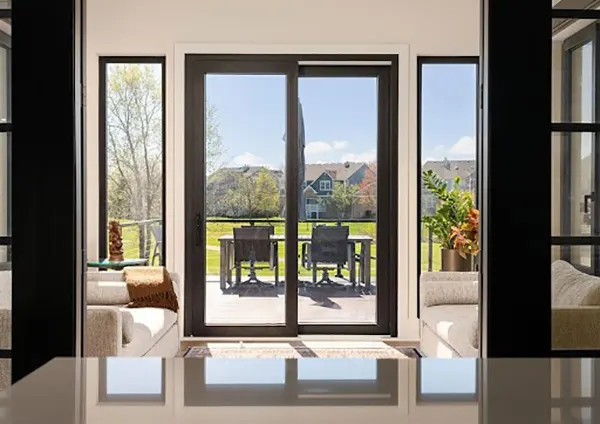
Walk through any modern commercial building or high-end residential project with floor-to-ceiling windows, and you’re looking at aluminum frames. Architects specify aluminum because it’s strong enough to support large glass areas while maintaining thin frame profiles that maximize transparency.
That strength-to-weight ratio allows design possibilities other materials can’t match. A 10-foot sliding door in uPVC needs substantial frame thickness for structural integrity. The same door in aluminum can use frames 40% thinner, giving you more glass and less frame in your sight line.
Aluminum also offers extensive color options through powder-coating. Want your window frames to match your bronze door hardware or your charcoal gray siding? Aluminum can do that. uPVC cannot.
The aesthetic is undeniably modern—clean lines, minimal visual weight, industrial sophistication. If you’re building a contemporary home with large windows and you care about architectural expression, aluminum probably makes sense despite its drawbacks.
The Thermal Bridge Problem
Here’s the issue: aluminum conducts heat exceptionally well. That’s terrible for insulation. Standard aluminum window frames have U-values of 0.45-0.60—nearly twice the heat loss of good uPVC or wood.
The solution is “thermally broken” aluminum frames. A thermal break is a non-conductive material—usually polyurethane—inserted between the interior and exterior aluminum sections. This breaks the thermal bridge, preventing direct heat conduction through the frame.
Quality thermally broken aluminum achieves U-values of 0.25-0.35—acceptable, though still not as good as premium uPVC. The thermal break adds significant cost. Standard aluminum windows might run $600-900 per window installed. Thermally broken systems jump to $900-1,500 or more.
If you’re buying aluminum windows and the salesperson doesn’t mention thermal breaks, you’re looking at standard aluminum. In any climate with meaningful heating or cooling loads, this is a mistake. The energy cost over 20 years will dwarf the upfront savings.
Corrosion Reality Check
Aluminum doesn’t rust, but it does corrode—especially in marine environments. Saltwater spray accelerates aluminum oxidation, creating white powdery deposits and eventual pitting.
Quality matters here. Anodized aluminum creates a protective oxide layer that resists corrosion much better than standard mill finish. Powder-coated aluminum adds another protective layer. These finishes cost more but extend lifespan dramatically in harsh environments.
Another corrosion risk: dissimilar metal contact. If aluminum frames touch steel fasteners or copper flashing without proper isolation, galvanic corrosion occurs. This is an installation issue more than a material issue, but it’s common enough to mention.
I’ve seen aluminum windows on beachfront homes in Florida and California. The ones with quality anodized or powder-coated finishes and stainless steel hardware still look good after 25 years. The ones with standard finishes and cheap hardware are corroded disasters after 12 years. The material works in coastal environments—but only if you pay for quality and proper installation.
Cost and Lifespan
Aluminum windows are premium-priced. Expect $800-1,500+ per window for thermally broken systems with quality finishes. Large sliding doors or specialty windows can easily hit $3,000-5,000 each.
But they last. With good finishes and minimal corrosion exposure, aluminum frames can perform well for 30-45 years. The hardware might need replacement at some point, but the frames themselves remain structurally sound.
Aluminum makes sense in:
- Modern architecture where aesthetics justify the premium
- Commercial applications requiring large glazing areas
- Projects where slim sightlines are priority
- Coastal locations with quality finishes and stainless hardware
It doesn’t make sense in:
- Budget-constrained residential projects
- Cold climates if you’re not willing to pay for thermal breaks
- Situations where energy efficiency is top priority
Fiberglass: The Niche Performer
What Makes Fiberglass Different
Fiberglass window frames are made from glass fibers embedded in resin—similar to boat hulls or fiberglass bathtubs. The material is strong, lightweight, and has low thermal expansion.
That low expansion rate is fiberglass’s key technical advantage. Glass and fiberglass expand and contract at nearly identical rates with temperature changes. This means less stress on the glazing seals, potentially fewer seal failures, and longer-lasting windows.
Unlike vinyl, fiberglass can be painted. If you want to change your window color in 10 years, you can. Try that with uPVC and you’ll get peeling paint within two years.
Why It’s Not More Popular
Limited manufacturers. Compare this to dozens of vinyl manufacturers and hundreds of aluminum fabricators.
Higher cost than vinyl without dramatic performance advantages. Fiberglass windows run $600-1,200 per window installed—right in the range of premium uPVC or aluminum, but without clear superiority over either.
Less choice in styles and configurations. Want a particular window shape or size? With vinyl or aluminum, any fabricator can make it. With fiberglass, you’re limited to whatever your chosen manufacturer offers. Custom shapes and sizes are expensive or impossible.
The One Thing Fiberglass Does Better
Dimensional stability across temperature extremes is unmatched. Fiberglass doesn’t expand or contract significantly between -20°F and 120°F. This makes it ideal for very large windows where even minor material movement could stress seals.
If you’re installing 6-foot by 8-foot picture windows in Colorado or Minnesota, fiberglass’s stability offers real advantages. For standard-sized windows in moderate climates, this advantage is theoretical—seal failure rates in quality uPVC or aluminum windows are low enough that dimensional stability doesn’t matter much in practice.
The Honest Assessment
Fiberglass is a good material that hasn’t found its market niche. It performs similarly to quality uPVC while costing more. It offers paintability that most homeowners will never use. It provides dimensional stability that matters only in edge-case applications.
There’s nothing wrong with fiberglass windows. But there’s rarely a compelling reason to choose them over quality uPVC unless you specifically need oversized windows, paintable frames, or you’re in an extreme climate where dimensional stability justifies the premium.
Best applications:
- Very large windows (over 40 square feet)
- Extreme temperature swing environments
- When you want the option to repaint later
- Commercial applications requiring specific performance specs
For standard residential window replacement in typical sizes? Save your money and buy premium uPVC or thermally broken aluminum depending on your aesthetic preferences.
Wood: Beauty With Maintenance Baggage
Why Wood Still Exists in 2025
Wood windows have been around for centuries because wood remains unmatched for aesthetic warmth. There’s something about real wood grain and the way natural light interacts with it that synthetic materials can’t replicate. In high-end homes, wood windows are often non-negotiable from a design perspective.
Historic homes sometimes require wood windows for preservation compliance. If your house is on the National Register or in a historic district, you might not have a choice. Local historic commissions often mandate wood windows to maintain architectural authenticity.
Wood also has the highest perceived value in luxury markets. Show a $800,000 home with vinyl windows and buyers notice. The same home with quality wood or wood-clad windows reinforces the luxury positioning. Fair or not, that’s the market reality in certain segments.
And wood can be repaired and refinished indefinitely. Damaged frame member? Replace just that piece. Finish degraded? Sand and repaint. Try that with vinyl or aluminum—you’re replacing the whole window.
The Maintenance Reality
Here’s what nobody wants to hear: wood windows require maintenance. Not “a little” maintenance. Real, ongoing maintenance.
Exterior wood exposed to weather needs repainting or restaining every 3-7 years depending on climate and exposure. South and west-facing windows in sunny climates need attention every 3-4 years. North-facing windows in mild climates might stretch 7 years.
That’s not just “touch up a little paint.” It’s proper surface prep, priming, and two coats of quality exterior paint or multiple coats of solid stain. Per window, figure 2-4 hours of labor if you’re doing it yourself. Hiring it out? $150-300 per window every few years.
Rot is a real risk in humid climates. The Gulf Coast, Pacific Northwest, and anywhere with sustained humidity above 70% and regular rain—wood windows require vigilant maintenance or they will rot. Period. Rot repair is expensive and eventually reaches a point where replacement makes more sense than repair.
Insect damage is regional but serious where it occurs. Termites love wood windows. Carpenter ants find them attractive. If you’re in an area with wood-destroying insects, you’re adding pest prevention to your maintenance schedule.
Seal failure around the glass requires immediate attention because water intrusion accelerates wood deterioration exponentially. With vinyl or aluminum, you can defer a seal replacement for a while. With wood, you can’t.
Wood-Clad: The Compromise
Wood-clad windows use wood on the interior for aesthetics and aluminum or vinyl on the exterior for durability. This reduces exterior maintenance significantly—you still need to maintain the interior wood, but that’s a much gentler environment than exterior exposure.
Expect to pay $800-2,000+ per window depending on size, configuration, and cladding material. That’s legitimate premium pricing.
For homeowners who want wood aesthetics but realistic maintenance requirements, wood-clad makes sense. You get the warm interior appearance without the exterior maintenance burden. The cost premium over all-wood is worth it for most people.
When Wood Makes Sense
Historic preservation requirements sometimes mandate wood. If that’s your situation, embrace it and plan for maintenance.
High-end custom homes where aesthetics justify maintenance costs and homeowners have the resources and inclination to maintain properly. If you’re building a $2 million custom home and you love the look of wood, go for it. Just be realistic about what you’re signing up for.
Dry climates reduce wood’s maintenance burden significantly. Arizona, New Mexico, interior California—wood performs better in these climates than humid regions. Rot risk is low, paint lasts longer, insects are less problematic.
Homeowners who actually maintain things. If you’re the type who stays on top of home maintenance, enjoys working on your house, and takes pride in keeping everything in top condition, wood windows can be rewarding. If you’re the type who defers maintenance until something breaks, choose a different material.
Head-to-Head: The Metrics That Actually Matter
Thermal Performance (U-Value)
Lower U-values mean better insulation. Here’s what you can actually expect from quality products in each material category:
uPVC multi-chamber: 0.20-0.28 Good insulation across the board. Premium European systems hit the low end of this range. American vinyl typically falls in the 0.24-0.28 range.
Aluminum standard: 0.45-0.60 Poor insulation. This is twice the heat loss of good uPVC. Only acceptable in very mild climates where heating and cooling loads are minimal.
Aluminum thermally broken: 0.25-0.35 Acceptable performance. The thermal break makes a massive difference. Without it, aluminum is a non-starter for energy efficiency.
Fiberglass: 0.22-0.30 Similar to good uPVC. No significant advantage despite higher cost.
Wood: 0.25-0.35 Depends on species and thickness. Dense hardwoods perform better than softwoods. Thicker frames perform better than thin ones.
For context, the 2021 IECC energy code requires U≤0.30 in cold climates and U≤0.32 in moderate climates. Any of these materials can meet code when properly engineered. But meeting code is a low bar. For genuine energy efficiency, target U≤0.25 regardless of material.
Lifespan and Durability
uPVC: 20-30 years before warping, brittleness, or UV degradation becomes problematic. Quality European systems might stretch this to 35 years. Eventually the material degrades from UV exposure and temperature cycling.
Aluminum: 30-45 years with quality finishes and minimal corrosion. The frames themselves can last 50+ years—hardware and seals will need replacement long before the frames fail structurally.
Fiberglass: 30-50 years theoretically. The material is too new for extensive long-term data, but laboratory aging tests suggest excellent durability. Real-world results in 40 years will tell the full story.
Wood: 30-60+ years with proper maintenance. Many 19th-century wood windows still function, proving the material can last indefinitely if maintained. But that’s a big “if”—neglected wood windows fail in 15-20 years.
Maintenance Requirements (Honest Assessment)
uPVC: Wash occasionally with soap and water. Check and clean weep holes annually to prevent water accumulation. Lubricate hardware every few years. Replace entire window if frames become damaged—repair isn’t possible. Total annual maintenance: maybe 1-2 hours for a whole house.
Aluminum: Check weep holes for proper drainage. Touch up powder coating if scratched or chipped—this matters more in coastal environments. Lubricate hardware. Check for corrosion on fasteners and address immediately. Total annual maintenance: 2-3 hours.
Fiberglass: Similar to aluminum. Inspect finishes, maintain hardware, ensure proper drainage. Can be repainted if desired—this is optional, not required like wood. Total annual maintenance: 2-3 hours.
Wood: Inspect exterior finish annually. Repaint or restain exterior every 3-7 years (significant time and money). Repaint or refinish interior every 10-15 years. Check for rot around sills and bottom rails—address immediately if found. Monitor for insect damage. Maintain weatherstripping and glazing compound. Total annual maintenance: 10-20 hours plus major refinishing projects every few years.
The maintenance difference between wood and everything else is not subtle. It’s the difference between a few hours of simple upkeep annually versus an ongoing commitment that never ends.
Environmental Impact
uPVC: PVC production involves chlorine chemistry that environmental advocates criticize. Recycling is possible but not widespread—most old vinyl windows end up in landfills. However, the 30-year lifespan and energy efficiency benefits over that period arguably offset production concerns.
Aluminum: Energy-intensive production—smelting aluminum from bauxite requires massive electricity input. But aluminum is infinitely recyclable with relatively low energy requirements for recycled material. Old aluminum windows have salvage value.
Fiberglass: Moderate production footprint. Not easily recycled—resin-impregnated fibers don’t separate easily. Most fiberglass windows end up in landfills.
Wood: Renewable resource if sustainably harvested. Biodegradable at end of life. Clear environmental winner—assuming you’re buying FSC-certified wood from managed forests, not old-growth timber. Paint and stain introduce chemical considerations, but overall footprint is lowest.
If environmental impact is a primary decision factor, sustainably harvested wood wins. If you’re not willing to maintain wood, quality uPVC is second-best—the long lifespan matters more than production concerns.
The European Factor: Why Material Choice Differs
uPVC Dominates Europe (60%+ Market Share)
Walk through any European residential neighborhood and you’ll see predominantly uPVC windows. Germany, UK, Poland, France—uPVC is the default choice for new construction and renovation across economic segments.
Why? European manufacturers developed sophisticated multi-chamber profiles with superior thermal performance decades before American companies caught up. Regulations drove this—European building codes have demanded better energy efficiency for longer.
Companies like OKNOPLAST set engineering standards that American vinyl manufacturers have only recently begun matching. Six and seven-chamber profiles, steel reinforcement designed to eliminate thermal bridging, multi-point locking hardware, sophisticated weatherstripping—these were European innovations that American manufacturers are now adopting.
European uPVC windows routinely achieve U-values of 0.18-0.22. Find me an American vinyl window that hits 0.18. They exist, but they’re rare. In Europe, it’s standard.
American Market Fragmentation
The American window market is more fragmented. Vinyl is most common in residential construction, but “vinyl” encompasses everything from bottom-tier big-box products to premium systems.
Aluminum dominates commercial construction and high-end residential modern architecture. Wood persists in historic homes and luxury segments. Fiberglass occupies a small niche.
No single material dominates the premium segment the way uPVC does in Europe. This reflects different architectural traditions, climate variations, and the fact that American building codes lagged European codes on energy efficiency until recently.
What Americans Can Learn
Frame design and engineering matter more than material selection. A well-designed aluminum window outperforms a poorly designed vinyl window despite aluminum’s inherent thermal disadvantages.
Multi-point locking—standard in Europe, still uncommon in American windows—dramatically improves air-sealing. American windows typically use two-point locking (top and bottom of sash). European windows use 5-7 lock points around the perimeter, compressing weatherstripping uniformly and eliminating air gaps.
Installation quality trumps frame material. The best uPVC window installed poorly will underperform a mediocre aluminum window installed correctly. Americans focus too much on product selection and too little on installation standards.
Climate-Specific Recommendations
Hot/Humid (Southeast, Gulf Coast)
Best choice: uPVC or fiberglass Wood will rot unless you’re committed to vigilant maintenance. High humidity accelerates wood deterioration. Mold and mildew grow on painted wood surfaces even with regular cleaning.
Aluminum works if you have quality finishes and can tolerate the thermal performance penalty. In climates where AC runs eight months a year, thermal performance matters. Standard aluminum is expensive to operate. Thermally broken aluminum is acceptable.
Avoid: Untreated wood unless you love refinishing windows. Just don’t.
Cold (Northern States, Mountains)
Best choice: uPVC multi-chamber or thermally broken aluminum Thermal performance is critical when outdoor temperatures hit 0°F or below regularly. Standard aluminum is terrible here—condensation on interior frame surfaces leads to mold and ice buildup.
Quality uPVC with U≤0.24 performs well. European systems with U≤0.20 perform even better. The energy cost difference over 20 years between U=0.30 and U=0.20 windows is $3,000-5,000 in cold climates.
Wood works if maintained. The dry cold of mountain climates is actually gentler on wood than humid heat. But you still need to maintain the exterior finish.
Avoid: Standard aluminum. Seriously, don’t.
Marine/Coastal
Best choice: Quality uPVC or powder-coated aluminum with stainless hardware Salt spray is brutal on windows. Standard aluminum corrodes visibly within 5-7 years. Quality anodized or powder-coated aluminum lasts 25+ years if properly maintained.
uPVC is essentially immune to salt corrosion. The material itself doesn’t corrode—though hardware does if it’s not stainless steel. Insist on stainless steel hardware and fasteners in coastal installations regardless of frame material.
Wood can work in coastal areas if you’re obsessive about maintenance. The combination of UV exposure, salt spray, and humidity means exterior finish needs attention every 2-3 years. Miss that window and you’re looking at rot repair.
Critical: Whatever material you choose, stainless steel hardware is non-negotiable in marine environments. Bronze or brass is acceptable. Regular steel, even powder-coated, will corrode.
Dry/Desert (Southwest)
Best choice: Any material works here, but UV resistance matters The dry climate eliminates rot risk for wood and reduces maintenance burden. Arizona, New Mexico, interior Southern California—wood actually performs reasonably well here.
uPVC needs quality UV stabilizers. I’ve seen cheap vinyl windows in Phoenix and Tucson with visible warping and brittleness after 8-10 years of intense sun exposure. Quality uPVC with proper UV protection performs well.
Aluminum works great. No corrosion concerns, no rot risk. Thermal performance still matters for AC loads, so thermally broken aluminum makes sense despite the cost premium.
The key consideration in desert climates is UV resistance regardless of material. Intense sunlight degrades everything eventually—choose products designed for high-UV environments.
Cost Reality: What You’ll Actually Pay
These are typical installed costs for standard double-hung windows around 36″ × 60″—probably the most common residential size. Prices vary by region, installer, and specifics, but this gives you a realistic baseline:
uPVC standard: $400-600 This is big-box or builder-grade vinyl. Adequate performance, minimal features, 2-3 chamber frames. Gets the job done without frills.
uPVC premium (European): $700-1,200 Multi-chamber profiles (5-7 chambers), steel reinforcement, multi-point locking, superior weatherstripping. This is where uPVC performance matches or exceeds other materials.
Aluminum standard: $600-900 Mill finish or basic powder coating. No thermal break. Only suitable for mild climates. Often specified for commercial projects where aesthetics matter more than energy performance.
Aluminum thermally broken: $900-1,500 Polyurethane thermal break, quality finishes, often includes better hardware. This is what you should buy if you’re buying aluminum for residential use.
Fiberglass: $700-1,400 Limited manufacturers mean less price competition. Performance similar to premium uPVC but costs more.
Wood: $800-1,600 Species, thickness, and finish affect pricing. Pine is cheapest, mahogany most expensive. Factory-finished costs more than primed.
Wood-clad: $1,000-2,500 Aluminum or vinyl exterior cladding adds significant cost. But it also reduces maintenance burden dramatically. For most people choosing wood, clad is worth the premium.
The Hidden Costs
Purchase price is only part of total cost. Over 20-30 years, maintenance and energy costs often exceed initial window investment.
uPVC maintenance: Maybe $200/year if you hire someone to wash windows and clean weep holes. Most people do this themselves. Minimal cost.
Aluminum maintenance: Similar to uPVC. Touch-up powder coating if needed. Maybe $300/year if you’re hiring out all maintenance.
Fiberglass maintenance: Similar to aluminum. $200-300/year hired out.
Wood maintenance: This is where it gets expensive. DIY exterior refinishing every 5 years: $100-150 per window in materials, 2-4 hours labor per window. Hiring out? $200-350 per window every 5 years. For a house with 20 windows, that’s $4,000-7,000 every 5 years—call it $800-1,400 annually.
Energy costs matter too. A house with U=0.30 windows will spend roughly $400-600 more annually on heating and cooling compared to the same house with U=0.20 windows in a cold or hot climate. Over 20 years, that’s $8,000-12,000.
Value Calculation Example
Let’s say you’re replacing 20 windows in a cold-climate house:
uPVC scenario:
- $600/window × 20 = $12,000 initial
- Maintenance: $200/year × 20 years = $4,000
- Energy costs: baseline
- Total 20-year cost: $16,000
Wood scenario:
- $1,200/window × 20 = $24,000 initial
- Maintenance: $1,000/year × 20 years = $20,000 (exterior refinishing, interior maintenance, repairs)
- Energy costs: baseline (assuming similar U-values)
- Total 20-year cost: $44,000
Standard aluminum scenario:
- $700/window × 20 = $14,000 initial
- Maintenance: $300/year × 20 years = $6,000
- Energy costs: +$500/year × 20 years = $10,000 (poor thermal performance)
- Total 20-year cost: $30,000
These numbers explain why uPVC dominates residential markets. The total cost of ownership is dramatically lower than alternatives with similar or better performance.
Common Mistakes When Choosing Frame Material
Mistake #1: Choosing Material Before Understanding Performance Needs
I’ve watched people walk into showrooms saying “I want wood windows” before considering their climate, maintenance willingness, or energy goals. Start with requirements:
- What’s your climate and exposure?
- How much maintenance are you realistically willing to do?
- What energy performance do you need?
- What’s your budget including long-term costs?
- Are there aesthetic or historic preservation requirements?
Then match material to requirements. Not the other way around.
Mistake #2: Assuming All [Material] Is Equal
Vinyl windows – ranges from $300 big-box junk with 2-chamber frames and no reinforcement to $1,200 European systems with 7 chambers and steel reinforcement engineered to Passive House standards. The performance difference is enormous.
Aluminum windows – could mean standard frames with U=0.55 or thermally broken systems with U=0.27. That’s double the heat loss.
Material label tells you almost nothing. Specifications tell you everything. U-value, number of chambers, reinforcement, locking points, weatherstripping design—these matter more than “vinyl vs. aluminum.”
Mistake #3: Ignoring Installation Quality
The best uPVC window in the world will fail if installed poorly. Air gaps around the perimeter destroy energy performance. Improper flashing causes water infiltration. Inadequate attachment leads to operational problems.
Frame material is maybe 50% of the equation. Installation quality is the other 50%. Find an installer who understands proper installation for your chosen material. Check references. Watch them work if possible. Bad installation ruins good windows.
Mistake #4: Optimizing for First Cost Only
Cheapest upfront cost is rarely cheapest long-term. That $400 vinyl window versus the $800 premium uPVC: over 20 years, the energy cost difference alone could be $1,000-2,000. The premium window pays for itself through lower utility bills, then continues saving money for another 15 years.
Wood windows are even worse for this. Sure, they’re only $200 more per window than vinyl initially. But the maintenance costs over 20 years dwarf that initial difference.
Calculate total cost of ownership including maintenance and energy costs. Then make your decision. Optimizing for first cost is optimizing the wrong variable.
My Honest Recommendation by Scenario
Best Overall Value for Most Americans
Winner: Quality uPVC (European multi-chamber systems)
Reasoning: Best balance of performance, cost, and maintenance for typical residential applications. U-values of 0.20-0.25, minimal maintenance, 25-30 year lifespan, reasonable first cost.
Specific products: For 5+ chambers, steel reinforcement, multi-point locking.
When to override this recommendation: Aesthetic requirements in luxury markets, extreme climates requiring specialized performance, historic preservation mandates.
For 70-80% of American homeowners, quality uPVC is the objectively correct choice. It won’t be the wrong choice. Other materials might be marginally better in specific situations, but uPVC will always be good enough or better.
Best for Coastal/Marine
Winner: Quality uPVC with stainless hardware or premium powder-coated aluminum with stainless hardware
Salt spray eliminates wood as a practical choice unless you’re truly committed to constant maintenance. Aluminum works with quality finishes—anodized or powder-coated—and proper maintenance.
uPVC is nearly perfect for coastal environments. The material is immune to corrosion. Just make sure all hardware and fasteners are stainless steel.
Fiberglass works too if budget allows, but uPVC delivers similar performance for less money.
Best for Historic Homes
Winner: Wood (because you don’t have a choice) or wood-clad (if preservation authorities allow)
If your local historic commission requires wood, that’s your answer. Embrace it. Get good quality wood windows, commit to maintenance, and appreciate the authentic aesthetics.
If they’ll allow wood-clad with wood interior, that’s a better option for most people. You maintain architectural authenticity on the interior while dramatically reducing exterior maintenance.
Some historic districts now allow high-quality vinyl or fiberglass if the profiles closely match original wood windows. If that’s an option, take it—you’ll thank yourself in 10 years when you’re not repainting.
Best for Modern/Minimalist Design
Winner: Thermally broken aluminum
Slim profiles, maximum glass area, clean contemporary aesthetic—aluminum does this better than any other material. The sight lines in quality aluminum systems are 40-50% narrower than uPVC or wood.
Yes, it costs more. Yes, you need thermal breaks for decent energy performance. But if you’re building modern architecture and aesthetics matter, aluminum is worth the premium.
Best for Rental Properties
Winner: Standard quality uPVC
Tenants will not maintain wood windows. They will not maintain anything, actually. uPVC eliminates maintenance requirements that tenants would ignore anyway.
Moderate cost means replacement after tenant damage doesn’t break your budget. Energy efficiency reduces tenant utility complaints. Simple operation reduces maintenance calls.
For rental properties, durability and low maintenance matter more than aesthetics or peak performance. uPVC delivers.
Cookies & privacy