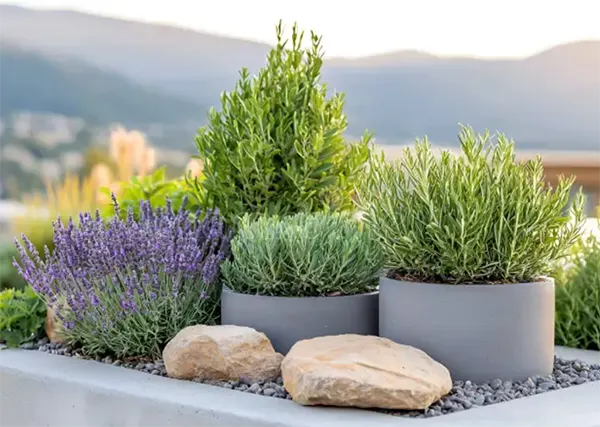
“A garden should make you feel you’ve entered a different world.”
– Ruth Stout (American Author)
Imagine walking through your garden and getting instant mental clarity with the pine-like fragrance surrounding you. You can create an ideal garden of your choice with rosemary. People often prefer plants that provide attractiveness and fragrance and benefits, but Rosemary offers you with all the benefits that are better than any other plant.
Through this article, we will show you how you can improve outdoor visual appeal using this durable herb. We will find out how layout design methods and ecological equilibrium function to show why this element acts as an essential element that enables gardens to be both sophisticated and durable.
Key Takeaways
- Rosemary is versatile. It works as a groundcover, a hedge, or a potted accent.
- It naturally stops unwanted visitors like pests, while inviting beneficial insects to the garden.
- Once planted, rosemary is incredibly drought-tolerant and hardy and is easy to maintain.
- Its scent improves mood and adds a sensory layer to the garden paths.
Why Rosemary is a Popular Choice for Garden Design
If you are wondering Rosemary is a popular choice among plants for professional designers. Well, the reason behind this is the various benefits of the plant. Rosemary not only looks beautiful, but it also smells divine, and it tastes even better.
Another amazing aspect of this plant is that it can survive in extreme heat, while other plants wilt when exposed to high temperatures. The structure of the plant will also make your garden look green and lively, even in harsh winters.
The garden also attracts beneficial insects like honeybees and butterflies that provide essential pollination services to support the development of the garden. Planting rosemary in your garden will give it an organized or structural look, making it perfect for a party or a gathering.
People who want to make their garden look elegant but have busy schedules should go with Rosemary. This plant can be the perfect choice because it doesn’t need a lot of maintenance; it just needs to be placed correctly and watered properly.
The process of planting your aromatic plant in your garden starts right at the moment when you discuss the planting locations for it.
Best Ways to Use Rosemary in Outdoor Garden Layouts
As soon as you start planning for your layout, you must imagine Rosemary in the layout of your garden. If you have a long walkway, you can consider planting it there so that the walkway looks beautiful and alive, along with being a fragrant passage. If you have a wall that looks a bit too industrial, you can place rosemary over the edges like a green waterfall.
To keep your garden safe from unwanted insects or animals, you can also find a place for rosemary near entrances. This acts as a natural barrier, though for local dogs and cats, you can combine it with an outdoor repeller and keep your flowerbeds undisturbed.
Did You Know?
In ancient Greece, students wore rosemary garlands around their necks to improve their memory during exams.
Rosemary can also be used as a focal point. A single and large rosemary bush can be trimmed into a neat cone or a Christmas tree shape to make your patio look more beautiful and playful. Because it is evergreen, it offers year-round privacy and wind protection for small and delicate plants.
Designing Functional Herb Gardens with Rosemary
Designing a useful herb garden is not just about planting the herbs in the soil. It needs to be planted structurally alongside the pathways so that you can walk through a surrounding offering freshness.
If you want the plant near your kitchen, you can go with a Culinary Wheel design where Rosemary is at the center with shorter herbs like oregano and thyme surrounding it. Your garden will benefit from this raised-bed system because it creates an orderly appearance while offering proper drainage that Rosemary needs to survive.
To design a functional space, you need precise planning and consideration for environmental systems. Rosemary creates a space for you where ladybugs and lacewings can make their home through its presence. The insects are like natural protectors that eat mites, which would otherwise damage your vegetable garden.
A functional garden should also be a place of rest for you and your loved ones. You can add a bench surrounded by rosemary; the scent of the flower is scientifically proven to lower cortisol levels. By mixing textures, the woody stems of the herb against soft mulch or stone pavers, you can create a space that is as beautiful to look at as it is useful for your Sunday rest.
Fun Fact: Rosemary is a member of the mint family, which explains its vigorous growth and refreshing scent.
Benefits of Growing Rosemary in Your Home Garden
Rosemary’s benefits go beyond just your kitchen; some of them are mentioned for you to have a look:
Drought Resistance
This plant is among the best water-efficient choices you can go with because it needs very little water for survival. Its roots are deep in the soil, which allows it to survive for long periods during drought.
Natural Pest Control
It also serves as a natural pest control. While we love the smell, many pests and insects find the camphor-like aroma overwhelming. This makes it an excellent companion plant for roses and vegetables.
Garden Protection
Using Rosemary not only makes your garden look beautiful, but it also protects your garden. If local strays keep coming to your garden, try using rosemary with an advanced outdoor cat repeller. It ensures that your space remains peaceful and clean.
Health and Well-Being
Growing a plant also gives you a feeling of accomplishment, which is good for your health and well-being. Using fresh rosemary in teas or infused oils will also keep you fit and healthy.
Ecological Support
Planting rosemary will always benefit you; it will protect your soil from erosion with its strong roots. Also, it feeds the local bee population, which will harvest flowers all the time of the year round.
Rosemary undoubtedly is a plant with numerous purposes for various aspects of your life, and you will definitely never regret having the plant in your garden.
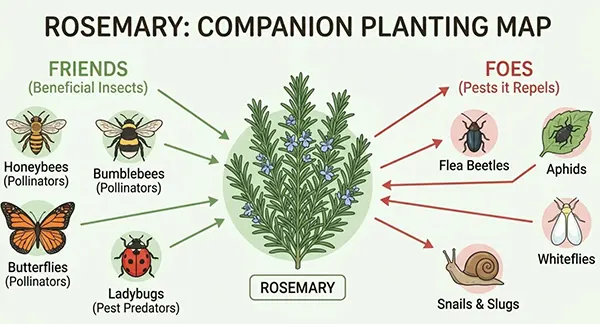
Rosemary acts as a natural hub for garden harmony, as it is shown in the image, welcoming your tiny allies while quietly showing the troublemakers the door.
Maintenance Tips for Healthy Rosemary Plants
Keeping your rosemary plant happy and healthy is a very simple task; all you need to do is give the plant sun and not water it too much. Rosemary hates wet feet, so make sure that your soil is sandy or well-drained. If you are planting in containers, you can use terracotta pots, which will help the moisture evaporate.
Pruning is the secret to a lush plant, and never be afraid to snip off the branches. In fact, regular harvesting will encourage and help the plant grow bushier rather than leggy and woody. Your aim should be to prune in the spring or summer so the new growth has time to harden before any frost hits.
If you live in a particularly cold climate, you can consider ‘overwintering’ your rosemary by bringing the pots indoor or you can also use burlap wraps. Check periodically for powdery mildew, which can happen if the airflow is not enough. To prevent this, place your plants at some distance, allowing the breeze to move freely.
You do not need to pay attention to the plant all the time; all you need to do is have proper drainage for it and place it where it gets proper sunlight. This way, Rosemary will become an exclusive identity for your home’s garden.
Conclusion
The Rosemary plant functions as an essential component for a smart and aesthetic-looking garden design. The selection of this durable herb will create a drought-proof landscape that will present you with both visual appeal and environmental advantages.
The plant has multiple design solutions because it attracts useful insects while keeping your garden green all the time. Rosemary is also useful as it keeps the pathways clear, keeps the garden clean, making it perfect for you to take a stroll.
Even if you don’t want to begin with your garden, you can first plant Rosemary in a pot, and once you get comfortable with it, you can plant it in your garden.
Ques: Can rosemary be grown in shade?
Ans: Ideally, it should not be grown in shade as it needs sun to stay vibrant and prevent diseases.
Ques: How often should I water the rosemary plant?
Ans: Watering it once a week is fine. You should always let the soil dry first before watering.
Ques: Can rosemary repel cats and dogs?
Ans: Yes, it can, but for 100% effectiveness, you should use it with an outdoor repeller.