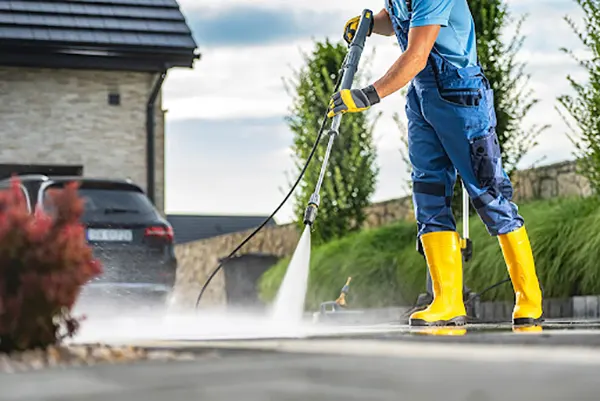
A pressure washer is an excellent tool used to wash your house thoroughly, but it can get tricky if you don’t know how to correctly operate it.
Additionally, incorrect pressure ranges and the wrong choice of a nozzle on the wrong material may end up causing some expensive damage to your home.
So, in this post, I’ll guide you on how to correctly handle a pressure washer and make your house look clean and snappy without wrecking your house with uncontrollable water splashes.

Key Takeaways
- Selecting the right pressure when washing
- Usage of the correct nozzle for safe house cleaning
- Precautions to take before beginning the process
- Mastering the right pressure washing technique
Use the Right PSI When Pressure Washing Your House
PSI stands for pounds per square inch. Think of it as the muscle behind the spray. More isn’t always better.
Safe PSI ranges by surface:
- Vinyl siding: 1,200 – 1,500 PSI
- Brick and concrete: 1,500 – 2,500 PSI
- Wood siding or painted surfaces: 500 – 1,200 PSI
A buddy of mine blasted his cedar siding at 3,000 PSI, trying to knock off mildew fast. He stripped the paint right off. It took him a full weekend and $400 in supplies to fix it.
Don’t be that guy. Pick the right PSI according to the material of your home, stand at a safe distance, and use the pressure washer with control and patience.
Pick the Right Nozzle for Safe House Washing
Nozzles are color-coded. This matters more than most people realize.
- White (40°): Best for siding — gentle, wide spray
- Green (25°): Good for concrete and tougher surfaces
- Red (0°): Never use on your house — it will cut into surfaces
When in doubt, go wider. You can always step closer for more cleaning power without cranking up the pressure.
Moreover, this practice ensures that you don’t cut into and cause major issues on your surfaces, which, honestly, is a big chore to fix.
Protect Your Home Before You Start Pressure Washing
Before you even turn on the machine, walk around your house and prep.
- Close all windows and doors — water gets in fast
- Cover outdoor outlets and light fixtures with plastic wrap or tape
- Move patio furniture, potted plants, and vehicles out of range
- Wet down nearby plants — detergents can damage landscaping
Remember to make a checklist before you begin and mark what you have done and what is left, so you go completely prepared and are bound to make fewer mistakes when you get to it.
Master the Right Pressure Washing Technique
This is where most homeowners go wrong. Technique beats power every single time.
- Always spray at a downward angle — never straight into seams or upward under siding
- Keep the nozzle 12–18 inches from the surface
- Work from top to bottom to rinse debris downward
- Use overlapping passes so you don’t leave streaks or missed spots
Keeping these things in mind lets you avoid injuring yourself or someone else while pressure washing. Remember, safety is always priority number one.
Did You Know?
Pressure washers were invented by accident in 1926 by Frank Ofeldt. He noticed that the steam coming out from his experimental whiskey distillery cleaner was actually cleaning the grease from the floor.
Know When Soft Washing Is Better Than Pressure Washing
Soft washing uses low pressure and a specialized cleaning solution to break down algae, mold, and grime instead of blasting it off. It’s safer for:
- Older painted wood siding
- Stucco and EIFS surfaces
- Roofs and delicate trim areas
If you’re not confident, skip the trial and error and hire a pressure washing company. A professional will assess your surface type and use the right method from the start — no damage, no do-overs.
Conclusion
Pressure washing your house the right way comes down to four things: the right PSI, the right nozzle, solid prep, and good technique. Skip one, and you’re paying to fix the damage.
Take your time, work smart, and your home’s exterior will look sharp without a single repair bill. And if you’re ever unsure — call a pro. It’s cheaper than the alternative.
Can I pressure wash my house myself?
Yes — if you use the right PSI, nozzle, and technique. Electric pressure washers in the 1,200–1,500 PSI range are great for most homeowners tackling house washing on their own.
How often should I pressure wash my house?
Once a year is the standard. If you live in a humid area with lots of mildew or algae growth, twice a year may make sense to stay ahead of exterior buildup.
What should I watch out for when pressure washing my house?
Avoid pressure washing directly at windows, vents, electrical panels, door seals, and old caulking. These areas are vulnerable to water intrusion and damage.
What PSI should I set my pressure washer on when washing my house?
The safe PSI ranges are 500-1500 PSI; avoid going for ranges higher than that. You may adjust the pressure range according to the material you are washing.