As energy prices are continuing to rise and sustainability is becoming a household priority, homeowners in 2026 are reconsidering how they heat their homes and manage hot water. Which is definitely a future focused thought, as just heating and hot water accounts for more than 75% of a typical household’s energy use. (Source – European Commission)
Relying on the traditional systems might still perform their job, but they are no longer the most efficient or future proof option. And this is where the air-to-water heat pump steps in – a modern heating solution designed to deliver comfort, efficiency, and future savings.
Think of it as upgrading from a keypad phone with basic features to a smartphone with modern ones. Both can make calls, but one does it better, conveniently and with far fewer limitations. An air-to-water pump works on the same principle – it doesn’t just create heat, but optimizes it.
Continue reading to reveal the five major benefits of installing an air-to-water heat pump in 2026 and its working in residential settings.
How Air-to-Water Heat Pumps Work in Residential Settings
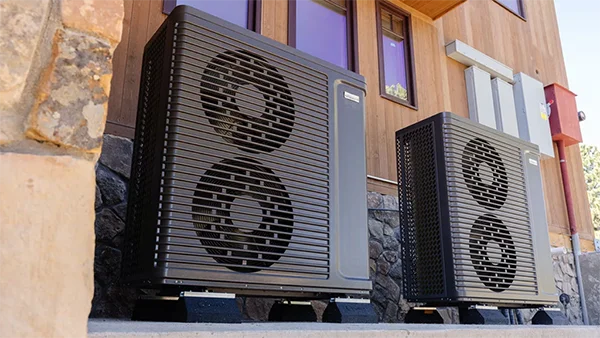
An air-to-water heat pump works by extracting heat from outside air and transferring it into your home’s heating system and water supply. Even if the outside environment is cold, there is still usable heat in the air. The system captures that heat, boosts its temperature and circulates it through radiators, underfloor heating or a hot water tank.
It works a bit similarly to a refrigerator – but in reverse. The way a fridge removes heat from inside and pushes it out, an air-to-water heat pump pulls heat from outside and brings it indoors – where it’s reused rather than wasted.
It replaces many traditional systems with just a single installation. For instance, imagine a family with radiators and a hot water cylinder. Once the heat pump is installed, it will provide heating during the cold season and continue to supply hot water all year round – all from a single system. No separate water heater, no fuel combustion and much less energy loss.
For optimal performance, correct installation is required. For which, professional heating system repairs are crucial to ensure efficiency doesn’t drop over time.
Key Benefits of Installing an Air-to-Water Heat Pump
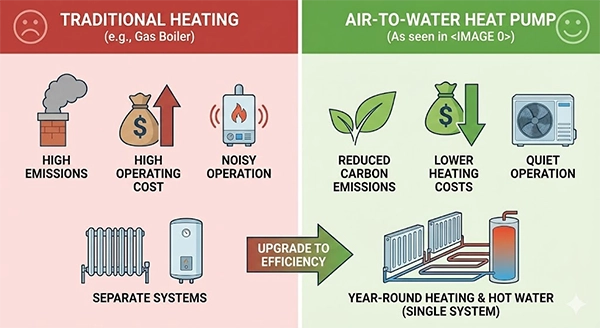
Now, let’s take a look at the key benefits of installing an air-to-water heat pump, whose benefits go beyond comfort and into long term efficiency –
High Energy Efficiency
Air-to-water heat pumps are known for their better efficiency. Rather than generating heat from scratch, they transfer existing heat and produce more energy than they consume.
According to the International Energy Agency (IEA), heat pumps can deliver 3-4 units of heat for every unit of electricity used.This makes them far more efficient than the traditional electric or gas systems.
Modern pumps make this difference by taking advantage of already present heat, which lowers the effort as compared to traditional ones.
Lower Heating Costs
The higher the efficiency, the lower the heating bills. While the upfront cost might be a bit higher, the continuing lower bills settle it down over time. Also, because air-to-water heat pumps mainly use electricity and reduce dependency on oil and gas – homeowners often benefit from lower monthly costs.
For instance, a household that switches from an oil boiler to a heat pump may find reduced winter heating bills, especially when integrated with proper insulation. Over many years, savings will offset installation expenses – making the system financially practical rather than just being earth-conscious.
Reduced Carbon Emissions
One of the major reasons homeowners are choosing heat pumps in 2026 is sustainability. Air-to-water produces significantly lower carbon emissions than fossil fuel-based heating systems.
The UK energy guidanceclearly states that replacing a gas boiler with heat pumps can lower household carbon emissions by upto 70%, depending on electricity sources.
If traditional boilers are like burning candles to light a room, heat pumps are like using LED lights – better results, far less waste.
Year-Round Heating and Hot Water
An air-to-water heat pump works year-round. It doesn’t stop after winter ends and continues to provide a reliable water supplyfor daily needs such as bathing, cleaning, and cooking throughout the year.
Instead of relying on separate systems for heating and hot water – this single solution simplifies home infrastructure and hence reduces maintenance complexity.
For instance, in a multi-bathroom home, the heat pump ensures consistent hot water availability, even during peak usage hours – something traditional systems struggle with.
Quiet Operation
Unlike traditional HVAC units and other boilers that are usually noisy, air-to-water heat pumps perform their operations quietly. Most systems work at a sound level similar to the frequencies of a refrigerator, making it perfect for residential areas and urban homes.
This is specifically beneficial for homes where the unit is installed close to living spaces or the neighbourhood properties. Quiet operation enhances your comfort without drawing attention – more like a modern electric car.
Compatibility With Existing Home Heating Systems
One of the common misconceptions is that installing an air-to-water heat pump requires the complete replacement of prior systems and the installation of new systems from scratch. But in reality, these systems easily adapt to the existing ones.
It performs well with:
- Existing radiators (especially low temperature models)
- Underfloor heating systems
- A hybrid setup that combines a heat pump with traditional boilers.
Older homes can also benefit, just the system needs to be correctly assessed and supported with insulation upgrades if needed.
Final Thoughts
Installing an air-to-water heat pump in 2026 is less about following modern trends and more about making a practical and future-ready decision. It offers higher energy efficiency, reduced energy costs, reduced carbon emissions, hot water year-round, and quiet operation – all while merging smoothly with existing home systems.
For homeowners looking to form a balance of comfort, sustainability, and long-term savings, this technology checks every box. With proper installation and maintenance, an air-to-water heat pump isn’t just an upgrade – it’s an investment in smarter living.
Does an air-to-water heat pump also work in cold weather?
Yes, modern systems are designed to work even when the outdoor temperatures are low.
Can it replace my existing boiler?
In many homes, it’s true. It can fully replace an existing boiler in a hybrid setup and can also work alongside.
Will it be able to provide hot water all year?
Yes, an air-to-water pump provides hot water consistently throughout the year.