KEY TAKEAWAYS
- Excavation is an essential process that helps in setting the foundation of the entire project.
- Site preparation is an important factor in excavation, which includes clearing vegetation, removing debris, grading the surface, and verifying the soil condition.
- Advanced equipment is more efficient and time-saving.
- It is important to build a proper drainage system as a faulty one can ruin the foundation of the structure over time.
- Excavation is one of the most hazardous tasks on a job site. Which means it needs trained workers and proper planning.
- Careful planning can minimize the environmental impact.
Do you also think excavation is just a process of digging the land or demolishing a structure? Well, that’s not what it actually is.
When it comes to modern construction projects, evacuation is a vital process that sets the solid base for the entire project, whether you are creating a foundation, installing underground utilities, or making a landscape design.
This process ensures the safety, stability, and sustainability of any construction project. Excavation helps move earth, rocks and other material with tools, equipment, and explosives. It includes earthwork, trenching, wall shafts, tunneling, and underground work.
Now, are you also wondering how this process benefits the entire process of construction?
No worries, in this blog, we will explore the important advantages of this process and how it contributes to the overall success and quality of your projects.
Site Preparation Sets the Stage for Structural Stability
Before any brick is laid or any beam is installed, it is important to prepare the site for secure stability. This process includes clearing vegetation, removing debris, grading the surface, and verifying the soil condition.
Site preparation is a crucial phase of any construction project, especially for a big commercial building, as it ensures the stability and capability to support the structure of the building.
Without proper site preparation, a building can face many challenges, such as soil instability, water drainage problems, and unforeseen delays in construction.
Proper grading and excavation need great planning to ensure that the land is leveled correctly and the underlying soil is strong and dense enough to handle the weight of the building.
This planning not only reduces the future foundation problem but also makes the drainage system strong, which will help decrease the risk of water leakage, which eventually protects the building from damage over time.
Excavation Enables Safe and Efficient Utility Installation
Excavation for utility installation is a key part of any construction. Electrical conduits, plumbing lines, and stormwater management systems, like underground utilities, are crucial for modern buildings.
It helps clear the land to install these systems at the right depth and space, which ensures that it doesn’t disturb the other elements.
Proper trenching and backfilling are important and require an understanding of both the material and layout involved. Because a single mistake can cause compact filling around pipes, broken connections, or sagging of the lines.
This is why an expert team is essential, who can collaborate with the engineers, blueprint, and utility providers, which will ensure safety and proper installation of utilities.
Advanced Equipment Improves Efficiency and Precision
In your childhood, you also saw 5-10 labourers together digging with the help of spades, right?
Because earlier excavations relied heavily on manual labor, but now things are changing. One of the most significant advantages of modern equipment is its ability to enhance productivity and efficiency.
Traditional methods of excavation were too labour-intensive and slow, but advanced technology and equipment accomplish a better outcome in a fraction of the time. Which is why it is worth considering the impact of an excavator bucket upgrade on both performance and safety.
A more specialized bucket can improve advanced machines’ digging accuracy, penetration, and their ability to handle different soil types. These improvements work hand in hand with a dependable final drive motor, which provides the travel power and torque needed to maintain consistent performance across demanding conditions.
Advanced equipment, relying on quality components like powerful John Deere final drive motor, is essential for construction success, offering great efficiency, versatility, and safety.
DID YOU KNOW
The first excavation machine was steam-powered. It was invented by William Otis, and he got a patent for his design in 1839.
Proper Drainage and Erosion Control Begin With Excavation
Do you know which is one of the most destructive elements that can destroy a huge building in a short period? Yes, that is drum roll please ‘Water’. Which is why it is important to make a proper plan to avoid any future drainage or erosion problems.
You can adopt various strategies to deal with this problem. Start by scanning your property layout and addressing problematic areas. Take help from a professional to make a tailored plan according to your requirements. Install the drainage system strategically and inspect properly if there is any need for change according to the area. Always install quality material to ensure durability.
Even minor miscalculations can cause big, unfixable mistakes or can cost a fortune to fix. Smart planning and execution can lead to proper drainage and erosion control while constructing any building.
Excavation Safety Requires Training and Planning
Excavation is an essential activity in construction, but it comes with many risks and dangers. Even trained workers need planning during this process to ensure their safety, but still, this work is one of the most dangerous on-site jobs.
To prevent dangers, a worker must be aware of a few things, like, types of soil and their stability, signs of potential cave-in, and soil instability.
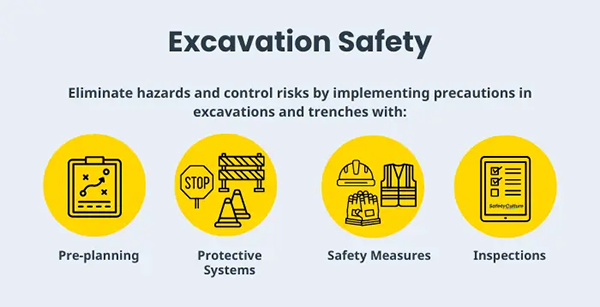
Apart from this, they should know about the safety measures too, such as using the personal protection kit (PPE), proper site inspection, and hazard assessment before starting the work.
In high-risk areas, all the teams should collaborate with geotechnical engineers and safety inspectors to minimize the risk and ensure proper safety.
Environmental Responsibility Starts in the Ground
Today, environmental sustainability is not just a preference but a mandate in construction. Careful planning can minimize the environmental impact. Like ensuring that the natural things on site are preserved as much as possible.
Apart from this, builders can take a few responsibilities, for example, implementing measures to prevent soil erosion that can harm the environment and the project. Also, builders should take steps to ensure the safety of local wildlife and their habitat during excavation.
These simple yet important responsibilities can make a big difference and ensure the safety of our precious nature.
Conclusion
Excavation is an important step in building and landscaping projects, which offers multiple benefits in their success and durability. It sets the stage for the entire project by preparing the site, establishing the foundation, ensuring soil stability, and installing utilities.
This also plays a significant role in shaping the space, grading, and proper drainage. Through smart planning, it can also save the wildlife around the construction land and prevent soil erosion.
All of these factors help in a successful, safe, and stable project.
What is the main objective of excavation?
The main goals of excavation are exploring new sites, constructing buildings, and mining precious resources.
Which tools are commonly used for excavation?
Backhoes, excavators, skid-steer loaders, trenchers, shovels, and picks are some of the common tools for excavation.
What is the greatest risk of excavation?
Cave-in is one of the major risks in excavation.
What are the benefits of the excavation?
It enables the safe and precise installation of ground utilities and infrastructure.