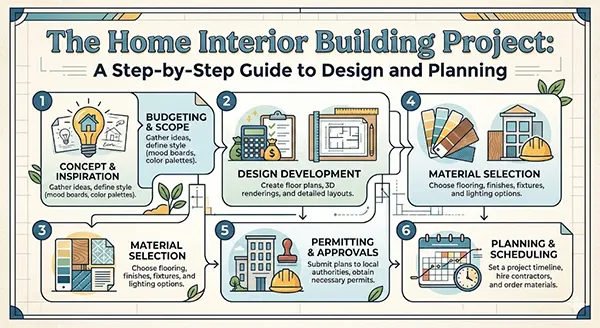
Planning and designing for the home interior building project might feel overwhelming. But with the right choices and efficient practices, it will not!
Deciding the interiors for your home is much more than selecting colors—it’s about deciding on your daily ease, comfort, and lifestyle.
Whether you are planning to move to a new home or deciding to touch up your existing one, having precise knowledge of interior building projects will smooth your journey.
Either you can get this through this guide or simply rely on some efficient builder groups, such as a family-owned construction company in the Bay Area.
Now, let’s further break it down with a step-by-step guide—
Key takeaways
- Having clear goals about what needs to be changed and renovated is essential for a flawless transformation.
- Execution should never be the first step. Clear planning and selecting the right materials come before execution.
- Selecting the right contractors is crucial, as even the best materials and designs go to waste if contractors are unskilled.
Understanding the Scope of Your Interior Building Project
Before you decide on any Instagram saved reel or Pinterest saved post, wait.
Every successful home interior project starts with absolute clarity. More clarity means more achievable goals. What exactly do you want to renovate? A single room? Or is it a full home transformation? Just ensuring these small things will avoid two major issues—overspending and underplanning.
Sit with your family members and decide what needs to be transformed. Note down the requirements—better lighting in the hall, improved ventilation for the kitchen, or a layout that eases your daily routine.
Once done, further planning, designing, and executing become much easier.
Step 1: Define Your Vision, Budget, and Timeline
Any home interior project without clear goals and a proper vision is similar to that of a construction without a blueprint. The result will be confusion and costly investments only.
First, define how you want your space to feel—calm and intentional, warm and traditional, or modern and functional. Take a sheet and frame all your inspirations and discussions. This will help to make clear decisions.
Now, precisely analyze how much you can invest. Improve this process by dividing your budget into design, materials, labour, and other unexpected expenses. Then, finally, set the timeline. Interior projects take time, so set a realistic timeline to reduce stress and keep expectations aligned.
Setting Realistic Goals and Prioritizing Key Areas
Rather than running behind perfection, set goals that are well-planned and realistic.
Getting everything done at once is one of the worst approaches. Start with the things that make your daily life impactful. Start with the kitchen, then the bedroom, bathroom, and living room.
Step 2: Space Planning and Functional Layout Design
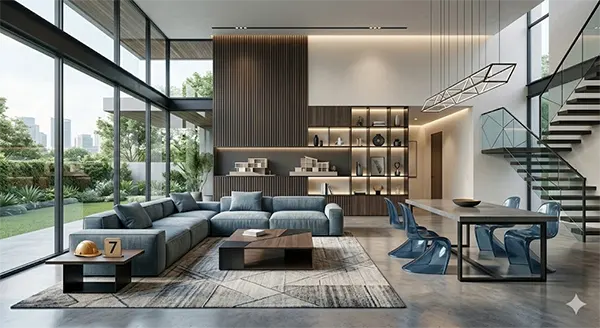
As design is not decoration, it is a function first and foremost. Executing the same, efficient space planning ensures that every inch of the home works efficiently. It considers right movement, natural light, and accessibility.
Ask family members whether there is enough walking space, whether doors and cabinets open smoothly, and required lighting is there. When executed well, it will improve your daily life without you even noticing it. This is the beauty of smart interior planning that feels effortless.
Step 3: Selecting Materials, Finishes, and Fixtures
This is where the plans start to get executed. Here, choose the material that matches both the style of the home and endures durability. Consider:
- Flooring: tiles, wood, laminate, or carpet.
- Furniture: sofas, beds, dining tables, and other storage units.
- Lighting: ambient, task, and accent lighting.
- Accessories: rugs, curtains, and artwork.
Every element should be contributing to the overall style while meeting the practical needs. For instance, modular storage units can help maximize space in smaller rooms, while statement lighting can uplift aesthetics and mood.
Interesting Fact
Homes that integrate better lighting and organized layouts have been connected to lower stress levels and boosted productivity.
Step 4: Hiring Designers and Contractors
Even the best materials and plans turn out to be of no use when managed by unskilled contractors. Professional and experienced designers add a structure to your project. They convert your ideas into technical drawings and ensure that the work meets safety standards and predefined plans.
Before hiring a professional, look for their portfolios, client reviews, and other similar projects, and analyze their communication clarifications. Make sure to choose professionals who listen to you and provide clear statements instead of just rounding things.
Step 5: Managing the Construction and Installation Process
Construction might get messy and noisy many of the times. But structured management keeps things on track. Here is what can help:
- Frequent site visits
- Right tracking of tasks
- Clear payment schedules
- Open communication with professionals
Ask every question, clear every doubt. As even a small misunderstanding can result in expensive reworks later.
Stay engaged—but avoid micro-undertaking. Trust the professionals while holding accountability in your hands.
Step 6: Final Styling, Inspection, and Quality Checks
Once all the loose ends are tied up, focus your attention on the finishing touches that give the room its personality. Add soft furnishings, art, and other decorative accessories that reflect your lifestyle. Styling transforms any constructed space into a dream home.
Also, before accepting a completed declaration, conduct a thorough inspection of alignment, electrical points, paint finishes, and check that agreed-upon materials are used.
A quality check ensures that your investment has delivered both the beauty and the required performance. Furthermore, go through this article to learn how to plan a building project from start to finish.
A home interior project is much more than just a design – it is about creating a space that feels like yours. In the journey to one’s dream interior, one might face some challenges, but with transparent, clear, and realistic planning, the execution becomes realistic, and the process gets more meaningful.
In the end, transforming home interiors is not just upgrading the interiors – it’s progressing towards a dream home that supports your everyday life.
What needs to be done first – layout or materials?
The best strategy is to prioritize the layout. Once a strong layout is ready, selecting the required material becomes much easier.
Do I necessarily need to hire a designer?
No, for small projects, one can manage them by themselves. For larger tasks such as full renovations, hiring a professional is a better choice.
How to avoid delays during the construction work?
For a smooth delivery of construction work, ensure clear communication and pre-purchase of materials.