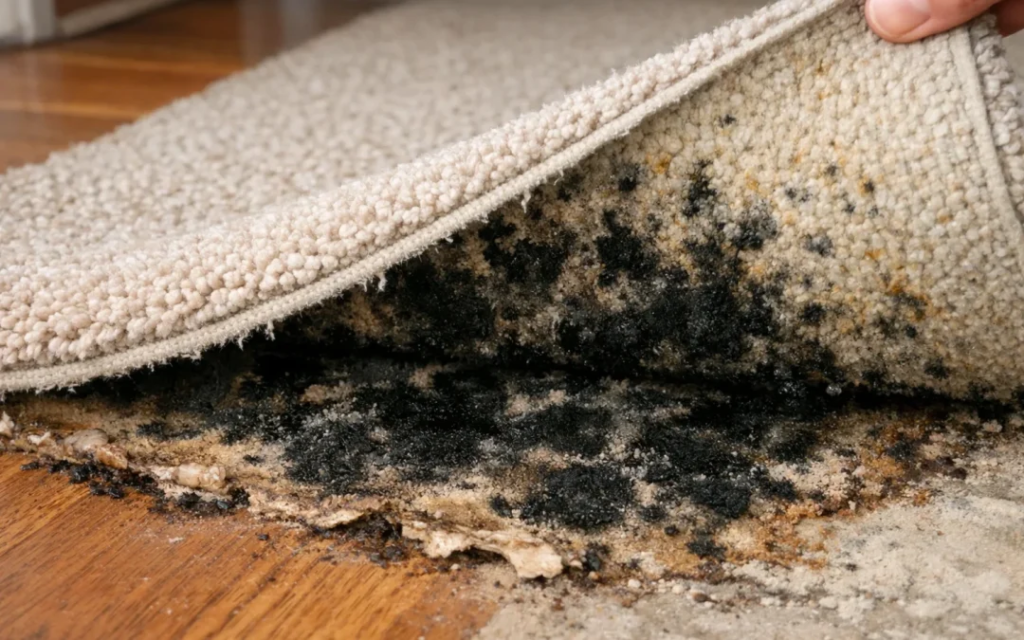
Carpets do give a sense of luxury to your living room. However, if they get wet and are left moistened without any proper dehumidification or cleaning, they become a perfect home for dust and mould.
And the level of humidity has a great impact on the smut growth. As per research, mould growth is 1000 times higher at 100% relative humidity compared to 50% relative humidity.
In this article, I’ll explain how some moisture-induced fungi can destroy your beloved mat if you don’t pay enough heed to its cleaning and overall house ventilation.
KEY TAKEAWAYS
- Leaving moisture on your carpet by not cleaning up spilled liquid can lead to mould growth.
- Try to prevent the smut growth by promptly cleaning and drying your rug as soon as any liquid drops on it.
- Keep proper ventilation in the carpet room, and humidity can magnify moisture and, in turn, mould growth.
Why Moisture Leads to the Growth of the Carpet Mould
Fungal growth happens in warm and damp areas. A mat is a great environment as it contains fibers, dust, and little particles that mould consumes.
When water enters a carpet and does not dry up quickly, the wet part provides space for smut spores. They are spores that are naturally present in the atmosphere. They begin multiplying immediately as they sit on a wet rug.
The water can be trapped under the carpet and padding. The surface itself can be dry, whereas the layers below can have water. This hidden wetness gives a perfect atmosphere for mould to develop.
Common Reasons for Moisture in Carpets
Moisture can be introduced into carpets very easily. One of the most common ones includes water leakage, spills, and humidity.
Leakages in piping are one of the leading causes. Water can penetrate gradually into the mat and padding and not be detected at once. When the leak is detected, it may have fungal growth on it.
The carpet fibre may also be wetted by the spilled beverages or cleaning water. Unless the spills are dried in a proper manner, they might not dry, and water could be trapped in the rug.
Flooding and heavy rain may cause more serious issues with moisture. Carpets are the ones that absorb the water quickly when large amounts of water intrude into the house. There is no rapid drying, and moulds may start growing in less than one day or two.
The other common cause is that of excessive humidity inside the house. Carpets can absorb moisture from the air in wet seasons.
Alert: That Mould May Be Growing in Your Carpet
To prevent the smut situation from getting out of hand, you have to detect it early.
A moldy smell is one of the initial indications. Mould is very reeky and can be smelled well as one enters the room. The mat surface may have dark spots or discoloration. These spots can spread over time as the fungi grow further.
The symptoms of allergy may also be enhanced in the presence of mould. Individuals can sneeze, cough, or be irritated by staying in the room. When a carpet remains wet over a long period of time, it might also signify the presence of moisture under the fibers
Prevention of Mould in Carpets
As they say, prevention is better than cure. And preventing carpet mould is actually pretty simple.
Ventilation is essential for mould prevention. With a properly ventilated place, the extra humidity in the air is removed. With appropriate air circulation, the carpets also dry more quickly after they are cleaned or soaked.
In humid areas, a dehumidifier can be used. The reduced humidity decreases the chances of moisture trapping within the carpets.
Another thing to do is to clean and dry off spills promptly. Wipe the liquid with clean towels and ventilate the area to enable it to be fully dry.
Frequent rug cleaning clears it of dust and organic materials that can cause smut. It is better to keep carpets clean to minimize the possibility of mould when moisture is observed.
Protecting Carpets by Keeping Them Dry
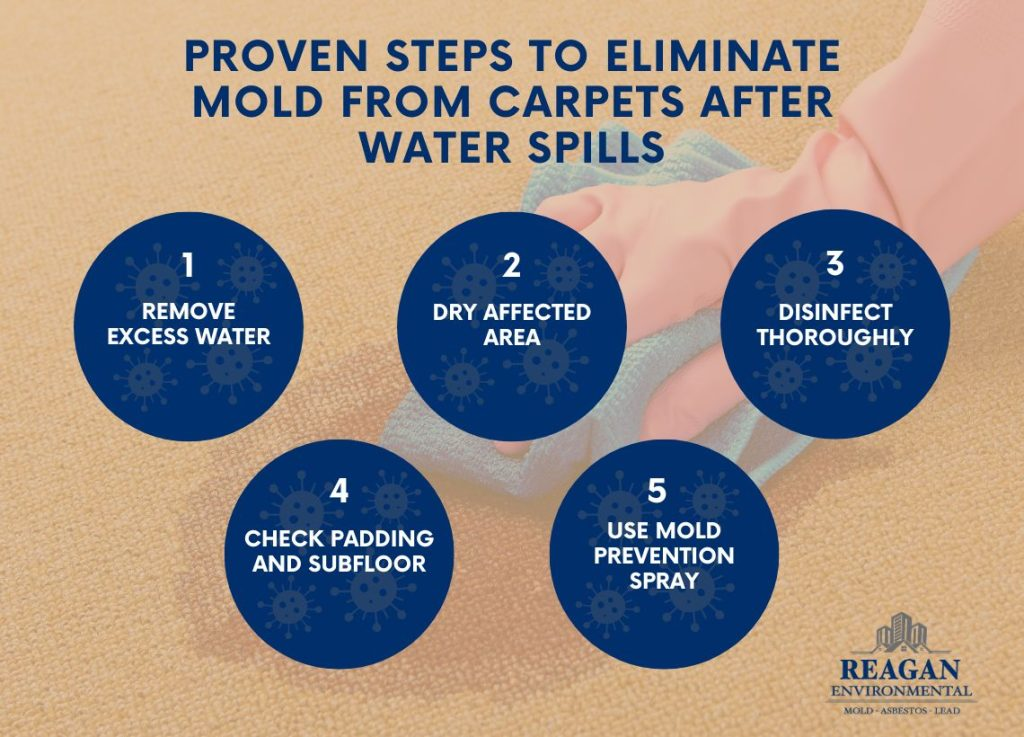
Drying up that spilled liquid is important before the moisture gets trapped in the carpet. Follow the simple 5-step process to eliminate fungi from your carpets:
Even more severe moisture problems may be caused by flooding and heavy rain. Carpets absorb moisture rapidly when massive quantities of water get into the house. Where there is no quick drying, smut might begin to grow in a day or two.
Another predominant cause is high humidity in the house. Carpets may absorb the moisture in the air in humid conditions.
Final Thoughts
Preventing mould in carpets must be prioritized, but it’s often easier said than done, as most homeowners are unable to observe the problem early enough.
A musty smell is one of the initial symptoms. The fungi definitely have a strong smell, which can be felt as one steps into the room.
Darkening or discoloring of the carpet surface can be observed. Such spots can be extended with time by further growth of the mould.
The presence of smut may also be increased as an allergic symptom. Sneezing, coughing, or irritation may also be witnessed when people are in the room.
A perpetually wet mat simply means there is moisture trapped in the carpet fibres.
FAQs
How to prevent mould when the rug gets wet?
Remove the standing water within 24-48 hours using a vacuum, fans, and dehumidifier
What kills mould caused by moisture?
Fungi are killed by white vinegar and hydrogen peroxide. You can also use specialized solutions like Concrobium.
How to remove and prevent mould on dampened carpet after a flood?
Remove water using a vacuum, replace saturated padding, and dry the entire area within 24-48 hours using dehumidifiers.