Every summer, I get excited about filling my garden with fresh greens, and cucumbers always top my list. If you have ever wondered how to grow cucumbers, you are not alone — I had the same question years ago. But now I know that the process is easier than it looks!
Moving further, I have put everything I have learned into this guide — simple steps, real experiences, and practical tips. Stick with this blog and learn the exact conditions, care steps, and tricks that work for me every season.
Did You Know?
Cucumbers grow faster at night, and they are extremely sensitive to root disturbance. Even minor damage to the roots can stall the growth of the fruit for days.
How To Grow Cucumbers? Ideal Conditions I Check For
As long as you know the basics, cucumbers are an easy-to-grow crop.
This process not only saves me from slow growth and pest issues but also determines how healthy and productive my plant will be. Here is my simple routine that will help you set up perfect growing conditions from day one.
Step 1: Warm Temperature
I prefer planting cucumber seeds when the daytime temperature stays between 22–30 degrees Celsius, as they love heat and slow down in cold weather.
Step 2: Full Sunlight
Although there are different kinds of cucumbers, full sunlight is a common requirement. I always choose a spot where my plants can get at least 6–8 hours of direct sunlight daily for strong vines and sweeter fruits.
Step 3: Loose and Fertile Soil
Be sure to check that the soil feels loose, drains well, and has plenty of compost so that the roots can grow easily and freely.
Step 4: Mulch and Maintain pH
Mulch around the base of the plant to retain soil moisture and reduce weeds. Ensure that the soil is slightly acidic to neutral with a pH between 6.0 and 7.0, as cucumbers absorb nutrients better in this range.
Step 5: Air Circulation & Water Access
Do not sow seeds in cramped corners. Proper air circulation is needed for the plant to grow and prevent fungal problems. Make sure that you are watering the plant regularly, especially during the fruiting stage.
Checking these ideal growing conditions always sets a strong foundation for cucumbers to grow. If you follow this routine, you will witness healthy vines, fewer difficulties, and a rewarding cucumber harvest.
How to Grow Cucumbers in a Pot?
I often come across questions like How do you grow cucumber plants in pots? Is it really possible? Well, the answer is yes! If you have limited space, container gardening is your best call for growing this refreshing fruit.
As a beginner, while I was on my quest to find the best way to grow this summer fruit, many novice plant enthusiasts were also looking for cucumber growing tips on various community forums.
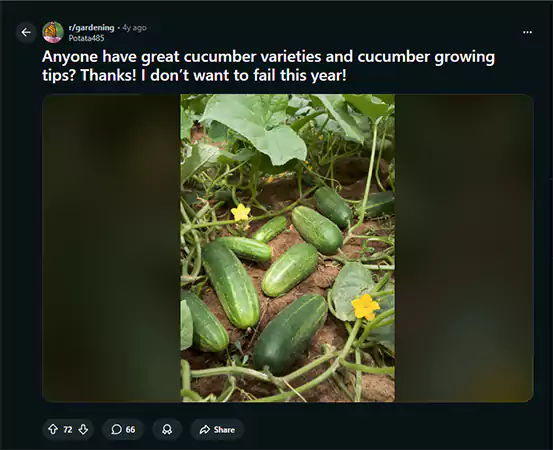
Growing them in a pot will also help you control the quality of the soil, reduce pest infestation, and you can easily place the plant where sunlight is best.
You simply need to make sure of three things before growing cucumbers in containers.
- Use a large pot, at least 12–16 inches deep, with good drainage.
- Make sure to choose bush or compact varieties for small spaces.
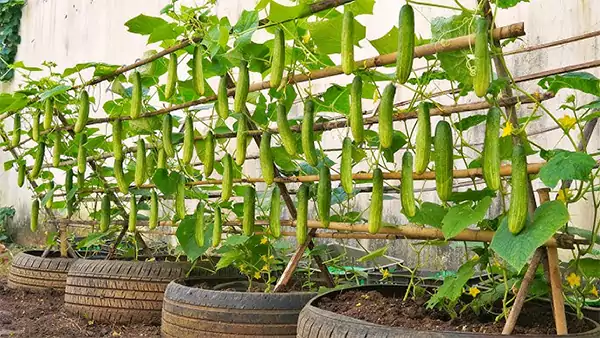
- Add a strong trellis, so the plant can climb easily.
Growing cucumbers in pots always helps me enjoy fresh harvests even when I don’t have garden space. With the right pot size, sunlight, and support, the plant can stay healthy and productive.
How Do You Grow Cucumbers From Seeds?
Here are a few simple steps that I follow, and always get strong seedlings that further turn into productive vines.
- Choose fresh seeds because cucumber seeds germinate best in their first few years.
- Mixing organic soil and compost for cucumbers is essential to ensure the healthy growth of the plant. I always prepare a loose and moist mixture before sowing the seeds.
- Always plant the seeds ½ inch deep, covering them lightly, so the air circulates well, and the moisture is also retained. Keep the soil consistently moist and maintain warmth, since the seeds germinate quickly in warm conditions.
- Place the pots in full sunlight once they sprout so that they can grow sturdy stems. Transplant quickly once you see the seedlings have 3–4 leaves. Make sure that the roots of the genus are not disturbed.
Growing this mildly sweet fruit from seeds not only gives me an understanding of what is good for cucumber plants but also helps the genus adapt to my soil and sunlight from the very beginning.
Understanding Different Types of Cucumber Plants
If you’re considering adding a cucumber plant to your fruit garden, it’s important to know that there is a wide variety of cucumber species available.
Let’s take a quick look at some of these varieties to help you determine which ones would be the best fit for your garden.
| Name of the Cultivar | Image | Description |
| Armenian (Cucumis melo) | 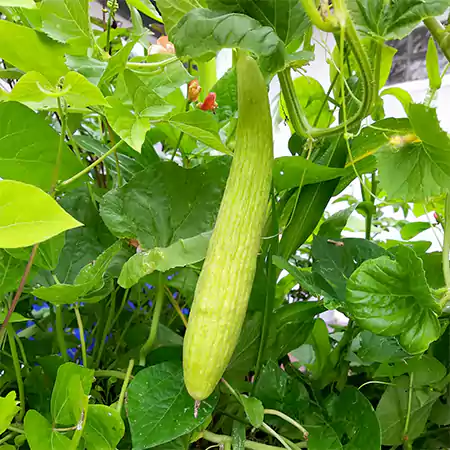 |
|
| Chicago Pickling Cucumber (Cucumis sativus) | 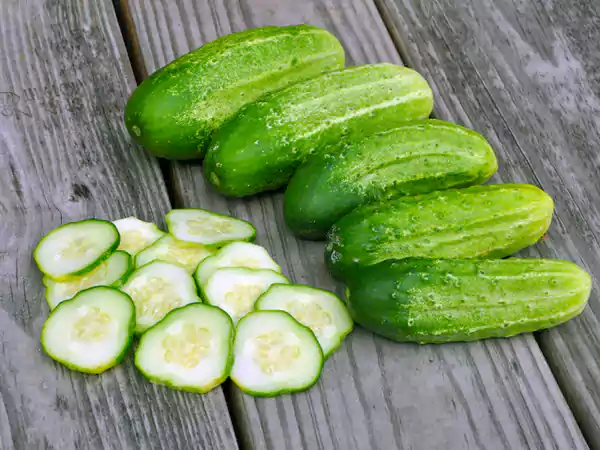 |
|
| Dragon’s Egg (Cucumis sativus) | 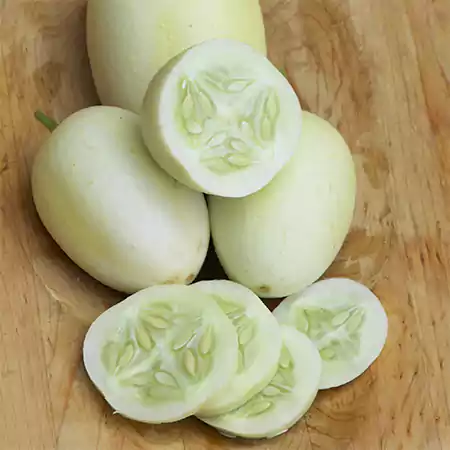 |
|
| Lemon Cucumbers (Cucumis sativus) | 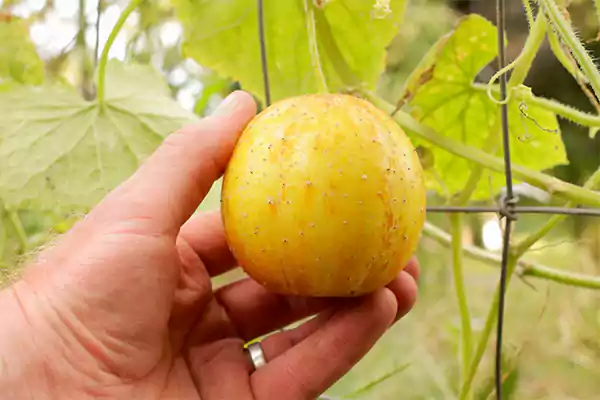 |
|
| Poona Kheera (Cucumis sativus) | 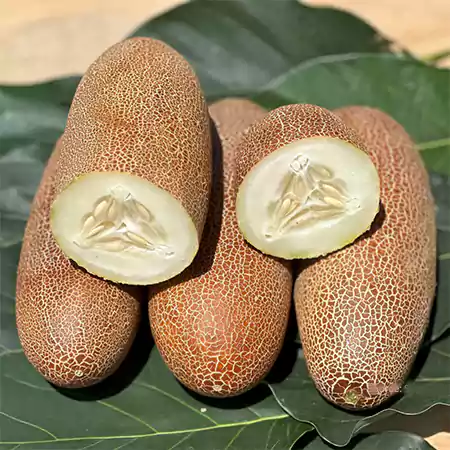 |
|
Why I Love Growing Cucumbers at Home?
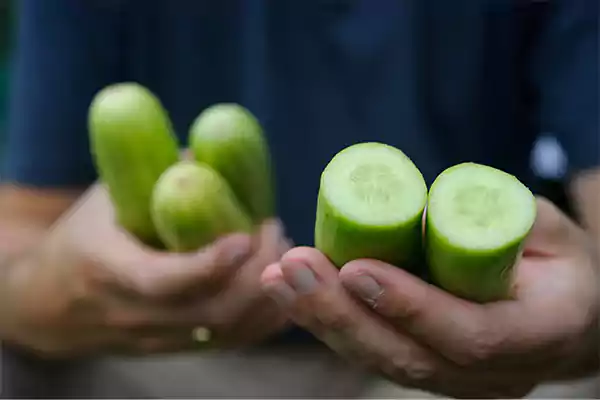
I love growing cucumbers at home because I get to experience quick rewards, steady harvests, and fresh crunch straight from my garden. I enjoy watching the vines climb, the tiny yellow flowers bloom, and the fruit appear almost magically.
Did You Know?
In a culinary context, a cucumber is considered a vegetable because of its savory flavor, but in the botanical realm, it is considered to be a fruit since it has a flower and contains seeds.
Another reason I prefer growing them in my home garden is that they are one of the fastest-growing and low-maintenance plants.
In the following sections, I will share how to save this fruit from pests and other plant diseases.
How do I Prevent Pests and Diseases Naturally?
Over time, I have learned to identify plant diseases and pest problems early by watching for specific signs. I prefer to manage them naturally, as it keeps my plants healthy without harming the soil or depleting the plant of its organic nutrients.
| Pest/Disease | Symptoms | Natural Solution |
| Aphids | Sticky leaves, curled new growth, and ants around the plant base. | Spray neem oil once a week, and wash the leaves with soapy water. |
| Whiteflies | Tiny white insects flying around the plant turn the leaves yellow-brown and cause wilting. | Maintain good airflow around the vines, use yellow sticky straps, and spray neem oil on the leaves. |
| Cucumber Beetles | Holes in leaves, stunted growth, and yellowing of the vines. | Hand-pick the beetles and remove them, mulch heavily around the base, and cover new seedlings with a net until they grow strong. |
| Spider Mites | Fine webbing on the leaves and dust-like particles on the surface of the leaves. | Spray water strongly to dislodge them and rub neem oil on the leaves. |
| Powdery Mildew | White powdery spots on the front and back sides of the leaves. It slows down the growth of the plant. | Remove the infected leaves, improve the air flow, and spray a mix of milk and water on the entire plant. |
| Fungal Leaf Spots | Brown or black circular spots on leaves. | Remove the damaged leaves, increase spacing, and spray compost tea on the stems of the plant. |
Managing pests and diseases naturally always keeps my cucumber plants stronger and my garden healthier. Early action and using the right methods to cure the problem can help the genus bounce back quickly.
Harvesting — How Long Do Cucumbers Take to Grow?
Whenever someone asks me how long does it take for a cucumber to grow, I always say that it completely depends on the care conditions you are giving the plant. Most cucumber varieties grow fast, and the quick progress keeps me motivated.
- I usually see sprouts within 5–10 days after sowing the seeds.
- The plant starts forming vines and flowering in 4–5 weeks.
- I start harvesting most varieties within 45–60 days from seed.
- The pickling types mature faster, while the slicing types take a little longer to grow.
I mostly harvest the cucumbers when they look firm, bright, and properly sized as per their standards. Gently twist the fruit or use scissors to avoid damaging the vine. Do not let them over-ripen, as they can turn seedy and slow down the new growth.
Understanding the growth timeline of any plant helps in planning the garden better and enjoying fresh and steady harvests.
Conclusion
Knowing how to grow cucumbers always feels rewarding because the plants respond quickly to good care. When I focus on soil, sunlight, water, and support, the vines tend to stay healthy and productive.
If you are starting from sowing the seeds, make sure to manage the trellis and look out for pest infestation. Being aware throughout the journey will always give you better results.
With a little effort, cucumbers can turn into the easiest crop in your garden.
FAQs
How long do cucumbers take to grow?
Cucumbers generally take 50–70 days to grow from planting to harvest, if given proper care conditions.
What is good for cucumber growth?
Good sun exposure for a minimum of 6–8 hours, rich organic soil, and consistent watering are essential for a healthy harvest.
How do I grow cucumbers easily as a beginner?
As a beginner, you simply need to follow a good and healthy care guide for your plant. Keep the soil moist, give proper sunlight, and maintain proper air circulation for productive growth.
Do cucumbers grow well in hot climates?
Yes, cucumbers love warm weather and require a hot climate for full growth. The plant thrives between 24-29 °C.
How often should I water cucumbers?
Water cucumbers deeply and at regular intervals for adequate growth. During a dry spell, daily watering is needed so that the plant does not dry up, and the leaves do not wilt.
How many cucumbers will you get from one plant?
A single cucumber plant can grow 15–30 cucumbers per season, depending on the growing conditions being provided.
- How to Grow Cucumber in Your Garden — Utah State Extension Research Paper
- Growing Cucumbers in a Home Garden— University of Minnesota Research Paper