Use this guide to modernize your home with upgrades that measurably improve comfort, efficiency, and indoor air quality. Each idea includes time, cost, and skill bands so you can match projects to your situation, whether you rent or own. The mix works for quick weekend fixes as well as multi-day renovations you phase in over a longer stretch.
Expect quick wins like LED lighting and weatherstripping alongside mid-scope swaps such as induction cooktops and WaterSense fixtures. Strategic investments, including heat pumps and window improvement,s round out the list, and residential LED bulbs alone use at least 75 percent less energy and last up to 25 times longer than incandescent bulbs, according to Energy.gov.
Indoor air quality and safety stay central throughout, with ducted range hoods, radon testing, and interconnected alarms featured prominently.
Use This Guide To Match Projects To Your Time, Budget, And Skill
Right-sizing your projects prevents wasted time and rework, so each idea is labeled with three bands: Time (one day, weekend, or multi-day), Cost ($ up to $250, $$ from $250 to $1,500, $$$ above $1,500), and Skill (DIY-friendly, Advanced DIY, or Pro).
Use the bands to build a realistic 90-day plan instead of chasing scattered one-off fixes. Prioritize safety by shutting off power at the breaker, verifying circuits with a non-contact voltage tester, and using PPE including safety glasses and N95 masks when cutting or sanding.
Check permits before opening walls or altering electrical, plumbing, or structural elements, because unpermitted work can complicate resale and insurance claims.
Adopt clean-build practices by isolating work zones with plastic sheeting, maintaining negative pressure with a box fan, and covering HVAC returns so dust does not recirculate. Batch projects by room to minimize disruption, and commission as you go by testing lights, sensors, and fans before moving to the next task.
Transform Your Living Room Quickly With Layered Lighting, Air Sealing, And Acoustic Tweaks
Four low-disruption improvements can transform your living space in a single weekend. Start with layered LED lighting using 2700 to 3000K bulbs with CRI 90 or higher for warm ambiance and accurate color, combining ambient ceiling lights, task lamps for reading, and accent strips for artwork. LEDs deliver immediate savings, last decades, and create a more comfortable, evenly lit room.
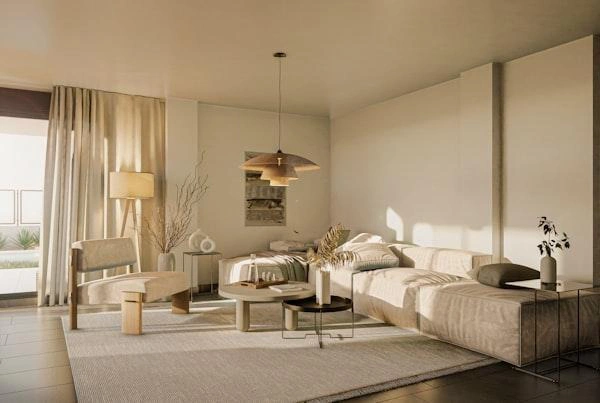
Add smart dimmers and occupancy sensors in hallways and secondary spaces; according to the Better Buildings Solution Center, lighting controls can cut lighting energy use by more than 30 percent when properly applied. Tighten door drafts with weatherstripping and a quality sweep so air sealing pays back in about a year. Finally, reduce echo with a large area rug, lined curtains, and optional acoustic panels with NRC 0.7 or higher at first reflection points.
Refresh Your Kitchen Quickly With Targeted Lighting, Ventilation, And Efficient Appliances
Targeted upgrades modernize your kitchen without a full renovation. Under-cabinet LED task lighting with CRI 90 or higher improves prep safety and color accuracy, especially on cutting boards and at the sink. Use 3000 to 3500K strips in aluminum channels with diffusers, connected to a plug-in driver or hardwired switch on a clearly labeled circuit.
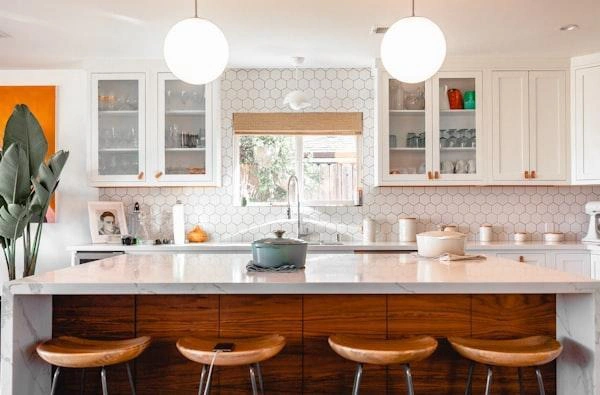
Consider an induction cooktop or portable unit for faster boils, easier cleanup, and reduced indoor pollutants; according to Energy.gov, induction is up to three times more efficient than gas. Pair it with a ducted range hood vented outdoors, sized to your cooktop width and installed to manufacturer’s height requirements.
Replace your dishwasher with an ENERGY STAR model featuring soil sensors, since a standard-size unit can save roughly 5,800 gallons of water over its lifetime compared with non-efficient models.
Plan High-End Kitchen Renovations Carefully To Optimize Workflow, Ventilation, And Finish Choices
A chef-caliber kitchen demands professional planning and precise specifications. Start with discovery by documenting workflows, appliance zones, and clearances, and reference NKBA guidelines such as 36-inch walkways, 42 to 48-inch work aisles, and 24-inch landing zones adjacent to ovens and refrigerators. Map the working triangle or modern zone planning that covers prep, cook, clean, and storage areas so every task has clear counter space and access.
When you move beyond quick lighting swaps and appliance changes into layout, structural, and mechanical upgrades, the project complexity increases dramatically, and professional support becomes more valuable for cost control, scheduling, risk management, and code compliance.
For homeowners planning a coordinated redesign with custom cabinetry, stone surfaces, and integrated appliances, consider high end kitchen renovations managed by a design-build team rather than separate trades. A cohesive team compresses timelines, reduces change orders, and navigates permits and inspections efficiently.
Prioritize ventilation with smooth metal ducts, minimal elbows, and a backdraft damper so cooking fumes leave the house quickly. Select low-porosity surfaces for hygiene, deep drawers for pots, and vertical tray dividers to keep baking sheets and cutting boards accessible. Layer downlights with under-cabinet and in-cabinet accent lighting at CRI 90 or higher, and commission the system by testing hood capture with visible steam and verifying water filtration performance.
Upgrade Bathroom Fixtures Strategically To Save Water Without Sacrificing Comfort
Water-saving fixtures improve comfort while cutting utility bills significantly. Swap to a WaterSense showerhead rated at 2.0 gpm or less; according to the EPA, WaterSense-labeled showerheads can save the average family about 2,700 gallons and more than 330 kWh per year. Installation takes minutes: remove the old head, wrap threads with PTFE tape, and hand-tighten until leaks stop.
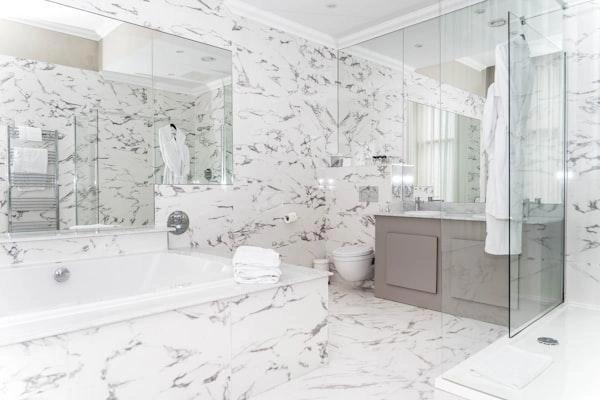
Replace an old toilet with a WaterSense model targeting MaP 800g or higher for reliable flush performance. This swap can cut toilet water use by 20 to 60 percent, saving nearly 13,000 gallons per home annually. Upgrade your exhaust fan to a quiet, ducted, humidity-sensing model sized at 1 CFM per square foot minimum and 1.5 sones or less for quiet operation, then run it for at least 20 minutes after showers.
Design Bedrooms Intentionally To Support Cooler, Darker, Quieter Sleep
Light and temperature control directly impact sleep quality. Cellular blackout shades with side tracks can reduce heat loss through windows by 40 percent or more and cut unwanted solar heat gain by up to 60 percent, according to Energy.gov, which makes bedrooms more stable in both winter and summer. Measure carefully, order with side tracks for complete blackout, and mount brackets level so the shade seals tightly.
Add low-profile sconces with warm-dim LEDs in the 2200 to 2700K range for melatonin-friendly evening light. Choose plug-in models for rentals and use adhesive cord channels or paintable raceway to hide wires along the wall. Position switches within reach from the bed and aim fixtures to eliminate glare on pillows or screens.
Improve Comfort By Managing Window Heat Gain, Heat Loss, And Glare
About 25 to 30 percent of residential heating and cooling energy use stems from heat loss and gain through windows. Low-e storm windows offer an affordable upgrade, saving about 10 to 30 percent on heating and cooling while reducing overall home air leakage by 10 percent or more, according to Energy.gov, without the cost of full window replacement. Choose interior storms for easier installation or exterior storms for long-term weather durability.
Apply spectrally selective window film on east and west exposures to reduce glare and solar gain while maintaining daylight and views. Use film where glass is in good condition and drafts are minimal so you are not masking structural problems. Clean thoroughly, wet-apply, squeegee bubbles, and allow several days to cure before final cleaning.
Boost Whole-Home Comfort And Efficiency With Smart Controls, Air Sealing, And Heat Pumps
Space heating is typically the largest home energy expense at about 29 percent of the average U.S. utility bill. An ENERGY STAR smart thermostat delivers average savings of about 8 percent on heating and cooling bills when it is programmed correctly.
Confirm HVAC compatibility and C-wire availability, then set schedules and geofencing for automatic adjustments that match your daily patterns.
Air sealing at top plates, rim joists, and penetrations stops the stack effect and often pays back in about a year. Prioritize attic and rim joists with caulk and foam, then move to penetrations like plumbing stacks, recessed lights rated for insulation contact, and wire chases.
Modern cold-climate air-source heat pumps deliver two to four times more heat energy than the electricity they consume, and heat pump water heaters are typically two to three times more efficient than conventional electric resistance units.
Protect Indoor Air Quality In The Kitchen With Effective Capture And Exhaust
A ducted range hood vented outdoors is essential even with electric or induction cooking, because gas and other combustion cooking can increase indoor nitrogen dioxide (NO2) and carbon monoxide (CO). ASHRAE and HVI guidance recommend about 100 CFM for a typical range, with higher rates and larger capture areas for oversized appliances, island hoods, or high-output burners.
Select a hood with effective capture area, smooth metal duct with few bends and sealed joints leading to an exterior termination with a backdraft damper, and clean grease filters monthly to maintain performance.
Address Hidden Health And Safety Risks Proactively With Testing And Monitored Alarms
Radon causes about 21,000 lung cancer deaths per year in the U.S., making it the top cause among non-smokers. Place a short-term test kit in the lowest livable level, mail it for analysis, and contact a certified mitigator if levels reach or exceed 4 pCi/L. Properly installed sub-slab depressurization systems effectively reduce radon concentrations and run quietly in the background.
Install interconnected smoke and CO alarms in every bedroom, outside each sleeping area, and on every level. Replace units every 10 years and test monthly with the built-in button instead of open-flame tests. Hardwire with an interconnect or use wireless models so one alarm triggers all units throughout the home.
Upgrade Laundry And Mudroom Areas To Cut Water Use And Contain Mess
ENERGY STAR clothes washers use about 20 percent less energy and 30 percent less water than standard models, especially if you consistently choose cold-water cycles. Install a drain pan and leak detector beneath your washer, connect stainless braided hoses with new washers, and level the unit carefully to reduce vibration.
Add a drip zone or slop sink for plants, paint tools, and muddy gear to protect finishes and contain mess.
Use Thoughtful Hardscape Design To Improve Curb Appeal And Manage Stormwater
Permeable pavers reduce stormwater runoff and filter pollutants while creating modern, functional hardscape. Use compacted open-graded aggregate with a geotextile separator and set slopes at 1 to 2 percent away from structures so water does not pond near foundations.
Excavate to depth, compact base in lifts, screed the bedding layer, lay pavers with consistent joints, add edge restraints, and finish with solar path lights that mark edges without wiring.
Add Flexible Farm Workers Accommodation That Meets Code And Respects Site Constraints
As housing costs rise and landowners look for flexible ways to host staff, guests, or extended family, small detached units are becoming a practical, low-impact solution. Compact, code-compliant micro-dwellings offer flexible space for rural properties with minimal site disruption.
For rural properties or lifestyle blocks needing a compliant, move-in-ready micro-dwelling, consider farm workers accommodation options that serve as staff housing, seasonal worker quarters, or compact guest suites when codes allow dual use. Factory-built units compress timelines while still meeting local building consent requirements and quality-control standards.
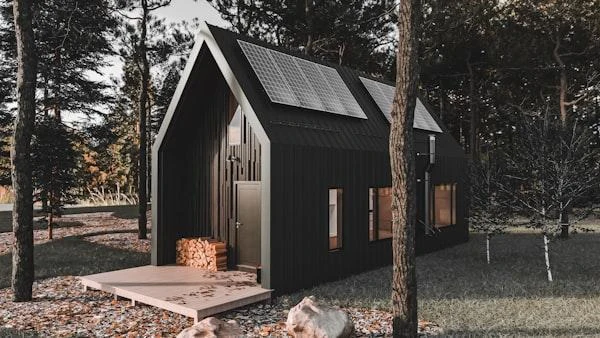
Site units near existing services to reduce trenching costs and simplify maintenance. Respect setbacks and easements, orient for passive shade and wind protection, and confirm foundation, tie-down, insulation, and egress requirements with local authorities before ordering.
Use Simple Biophilic Touches To Reduce Stress And Increase Daily Comfort
Randomized crossover research published in the Journal of Physiological Anthropology found that active interaction with indoor plants reduced both physiological and psychological stress.
Choose one floor plant, such as a snake plant, one shelf plant like a ZZ plant, and one trailing plant like pothos, and place them near bright, indirect light with self-watering planters and simple soil moisture meters. Avoid blocking HVAC returns, wipe leaves during your weekly cleaning routine, and set a reminder to check soil moisture on the same day each week.
Sequence Projects And Budget Intentionally To Maintain Momentum And Cash Flow
A 90-day plan keeps momentum without overwhelming your schedule. Week one covers assessment and air sealing; weeks two through four tackle lighting and controls by room; weeks five through eight address bathroom WaterSense fixtures and the quiet ducted fan; weeks nine through twelve focus on window measures and your smart thermostat; and weeks thirteen and fourteen bring the heat pump water heater and planning for space heat pump bids.
Adjust the timeline for your budget and available weekends, but keep tasks grouped by room or system to minimize repeated setup and cleanup.
Check utility and federal programs before purchasing to stack incentives and avoid missing deadlines. Document serial numbers and installation invoices to claim rebates and warranties. Photograph model and ratings labels for your records and store them in a shared digital folder.
Start Small, Then Layer Modern Upgrades For A More Efficient, Comfortable Home
Start with a one-day project this weekend, whether that is lighting layers, weatherstripping, or a WaterSense showerhead. Use simple commissioning checklists to verify performance, then claim any available rebates while details are fresh. Next, line up your first multi-day upgrade and revisit your plan quarterly to lock in comfort, lower bills, and improve resale appeal across every room in your home.