The environment seems pleasing when the sound of water flowing in the outdoor spaces covers the mind. When integrated well, it completely changes how the outdoor spaces feel, sound, and mean to everyone. For these reasons, pond fountains and aeration systems are made in the outdoor spaces to create stunning designs.
Water specialties, ranging from calming ponds to attractive fountains, enhance the beauty of the landscape. But setting aeration systems with ponds and fountains often feels like a complex task to most of the homeowners. And that’s why many skip it, even after much planning.
But not anymore. Read this article to design outdoor spaces with pond fountains and aeration systems.
Key takeaways
- A perfect pond is much more about design—with improper circulation, it will not stay the same way for long.
- The ponds with big sizes can’t simply rely on decorative things—they need proper maintenance and oxygen management.
- For the best results, design, performance, and maintenance need to be balanced, apart from appeal.
Why Pond Fountains and Aeration Systems Matter in Outdoor Design
Landscape design is often evaluated by what people notice first. In a pond setting, that means surface movement, reflected light, sound, and the overall impression of cleanliness. But a water feature designed solely for appearance will fall short in everyday use.
Stagnant zones, poor oxygen levels, and ongoing water-quality issues during warmer months are common when circulation is an afterthought. That is why effective planning requires more than choosing a spray pattern or a power source.
Aesthetic Value Shapes First Impressions
A fountain adds visible energy to an outdoor space. It creates motion, draws the eye, and becomes the visual foundation of the pond itself. In residential settings, that makes a backyard feel more complete. In HOA, hospitality, or estate landscapes, it elevates the overall impact. Some property owners want dramatic height and visibility.
Others want a quieter, lower-profile display that complements plantings, seating areas, or nearby hardscape. Either way, matching the visual effect to the surrounding environment is what makes the design feel intentional rather than incidental.
Functional Water Movement Supports the Visual Result
A beautiful pond rarely stays beautiful without circulation. Circulation and aeration support oxygenation and help prevent division. This is where pond fountains and aeration systems move beyond decoration and into practical performance. Circulation keeps the pond feeling cleaner, fresher, and more active. It also gives the design a sense of purpose. Instead of looking like a static basin, the pond becomes a living part of the landscape.
Understanding the Difference Between Fountains, Aerators, and Bubblers
One of the most common mistakes in pond planning is assuming that all moving-water equipment does the same job. It does not. A decorative fountain, an aerating fountain, and a diffused aeration system may all move water, but they do so in different ways and for different reasons.
Decorative Fountains Focus on Display
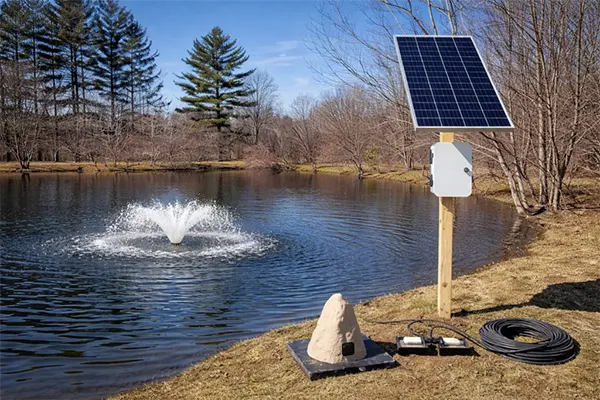
Decorative pond fountains are chosen primarily for surface presentation. They create visible spray patterns, movement, and sound. For many homeowners and property managers, this is the main appeal. A decorative fountain transforms the look of a pond quickly and gives the entire landscape a stronger focal point.
That said, decorative fountains are not always the best standalone solution for deeper ponds or ponds with recurring oxygen concerns. They improve surface activity but do not circulate the entire water column as a deeper system would.
Aerating Fountains Balance Display and Water Movement
Aerating fountains sit between pure display and pure management. They still create a visible surface pattern, but they are also selected with circulation and oxygen transfer in mind. This makes them appealing for larger landscape ponds where appearance matters, but efficiency cannot be ignored.
For many medium-sized ponds, this middle-ground option makes sense. It gives owners the visual benefit they want while improving day-to-day water movement.
Bubblers and Diffused Systems Work Below the Surface
Bubblers and diffused aeration systems are built for underwater circulation rather than above-water shows. They move deeper water upward, improve mixing, and reduce separation in larger or deeper ponds.
Diffused-aeration systems are the better fit when fish health, oxygen support, or deeper circulation is the main concern. They do not usually create the same dramatic visual effect as a fountain, but they solve a different and often more important staging problem.
How to Choose the Right System for Your Pond
To choose the right system, one needs to actually understand what the realistic requirements of a pond are. Below are the major steps to be taken to choose the right system for your pond:
Start With the Pond’s Primary Purpose
Before choosing equipment, define what the pond is supposed to do. Is it mainly ornamental? Is it part of a larger estate or entrance feature? Does it support fish? Is it expected to look polished year-round in a community or commercial setting?
A pond built for visual enjoyment should prioritize fountain style, sound, and overall fit with the landscape. A pond that regularly deals with algae, fish stress, or summer stagnation may need to prioritize circulation and aeration first.
Consider Surface Area and Depth Together
Pond size matters, but depth matters just as much. A small, shallow pond near a patio performs well with a compact fountain that adds movement and keeps the design feeling active. A larger pond with more depth often needs a more planned aeration strategy. This is where buyers often undersize the system. They choose equipment based on what looks right from shore rather than what the pond actually requires below the surface. A fountain can appear active without meaningfully improving deeper water conditions if the pond is too large or too deep for that setup alone.
Factor in Maintenance Expectations
The best equipment choice is not just about ideal performance on day one. It should also reflect what the property owner or maintenance team can easily support over time. Some ponds are cleaned and monitored regularly. Others are expected to perform with minimal assistance. If maintenance attention is limited, system selection becomes even more important. The easier the equipment is to understand, monitor, and match to the pond’s needs, the more stable the long-term results will be.
Designing for Better Reading of the Pond Itself
A well-designed pond should seem manageable at first glance only. The water movement, fountain placement, and other elements all need to work together. Explore the essentials of designing for better reading to ponder:
Match Spray Scale to the Surrounding Landscape
A fountain should feel proportionate to its setting. In a compact backyard, an oversized display creates too much noise, too much splash, or too much visual dominance. In a larger pond, a system that is too small disappears into the landscape and fails to create the intended focal effect.
Spray height, width, and overall pattern should work with nearby seating areas, paths, garden beds, and viewing angles. The best-looking pond fountains feel integrated rather than forced.
Use Sound Intentionally
Sound is one of the most overlooked parts of a water feature. Some people want a noticeable, energetic fountain presence. Others want a softer background sound that supports a calmer landscape experience.
This choice affects how the pond interacts with patios, entryways, and outdoor gathering spaces. A fountain that sounds perfect from one viewing point may feel too loud or too thin from another. That is why the use pattern matters just as much as visual preference.
Why Aeration Helps, but Does Not Solve Everything
While aeration can improve water movement and uplift oxygen levels, these are not everything that needs to be addressed. Discover how aeration does not solve every problem:
Aeration Supports Water Quality, Not Perfect Water by Itself
Aeration is valuable, but it is not a magic correction for every pond problem. Algal blooms are driven by excess nutrient loading, and if a pond is receiving heavy nutrient runoff, accumulating organic debris, or facing other site-related pressures, equipment alone will not fully resolve the issue. Aeration is part of a broader pond-management approach. It improves conditions, but it works best when paired with smart site care.
Runoff and Nutrient Load Still Matter
If lawn fertilizer, sediment, decaying plant matter, or fish waste continue to accumulate, algae and water-quality issues will persist. Aeration alone is not a viable algae-control method when nutrient inputs continue. Many pond problems start outside the pond itself, so the most effective improvements involve shoreline care, runoff management, and better maintenance habits.
This is why owners sometimes install new equipment and still feel disappointed. The equipment may be helping, but it is merely compensating for a larger site issue that has not yet been addressed.
Small Backyard Ponds Versus Larger Pond Installations
Not every pond should be approached with the same design logic. The scale of the water body changes what matters most.
Scale Changes What Matters Most
In a smaller backyard pond, details become more apparent. Overspray, noise level, splash radius, and fountain proportion all affect the outdoor experience, so restraint and balance matter. A compact fountain needs to look attractive, fit the garden’s mood, and keep water moving.
Larger ponds shift the focus toward coverage, circulation zones, and depth-related stress. Heat and dry conditions reduce oxygen levels, which is why larger installations often need a fountain for visual appeal and a separate aeration strategy to support underwater performance.
Maintenance Is Part of the Design Outcome
Just having a great-looking pond may not be sufficient. As even the best ponds may fail to work efficiently—that’s why they require regular maintenance.
Warm Weather Increases Stress on Ponds
Summer exposes weak circulation, low-oxygen conditions, and increased organic activity. This is when owners first notice odor, murkiness, or fish stress. A pond that seemed easy in spring becomes much harder to maintain once temperatures rise.
This is one reason pond fountains and aeration systems are such an important design choice.Warmer water holds less dissolved oxygen, which means the pond faces more stress precisely when it is most visible and most used.
Regular Checks Protect the Visual Payoff
Simple maintenance habits can preserve the system’s effectiveness over time. Keep intake areas clear. Monitor spray performance. Watch shoreline conditions for runoff or nutrient buildup. Fish feeding and plant management should reflect the pond’s real capacity.
The better the equipment is matched to the pond, the more manageable this maintenance becomes. Good design reduces strain. Poor matching creates more work.
Creating a Pond That Looks Better and Performs Better
The best outdoor water features are not just attractive; they are coherent. They look right in the landscape because the equipment choice supports the visual design, the site conditions, and the practical realities of ownership.
That is the real value of thoughtfully selecting pond fountains and aeration systems. A strong setup improves how the pond reads from a distance, how it feels up close, and how well it performs through the seasons. It makes a space feel calmer, cleaner, and more complete.
Conclusion
A well-managed and designed pond is much more than just great looks—it’s strongly about how it functions in everyday life. What most of the homeowners don’t understand is that aeration systems and fountains play a significant role in how ponds are balanced. It revolves around choosing the right setup, having realistic plans, and knowing what really can be managed.
In the end, it’s not just about integrating more features. It is more about making smarter preferences that ensure the look of outdoor spaces is elegant and manageable with time.
Is it necessary to have both the pond fountain and an aeration system?
No, it is not always necessary. If the pond is small and just acting as a decorative thing. Just having a fountain can work.
What is a major difference between a fountain and an aerator?
A fountain is more about how the pond looks, while the aerator has to manage the functionality—about how to improve water quality.
Will a fountain be enough to manage the cleaning part?
It can regulate the surface movement. But when it comes to surface area and depth. It might be too small to ensure the water movement.