



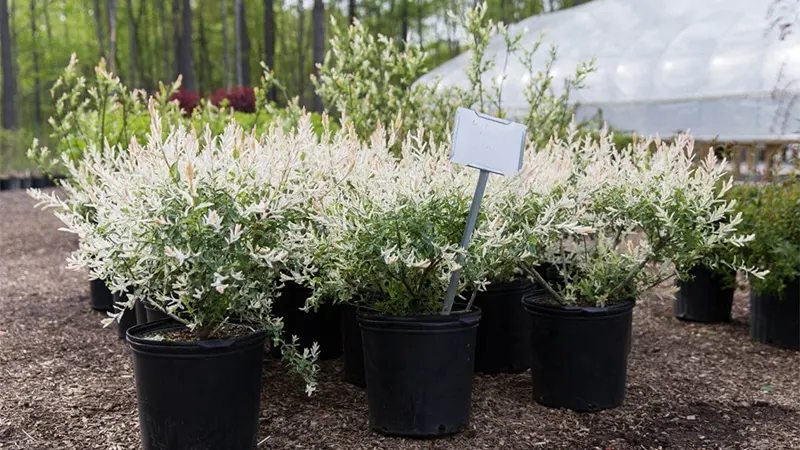
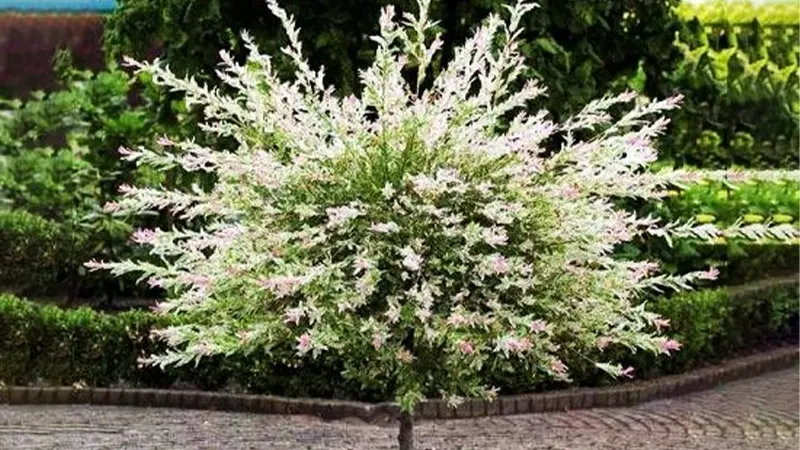
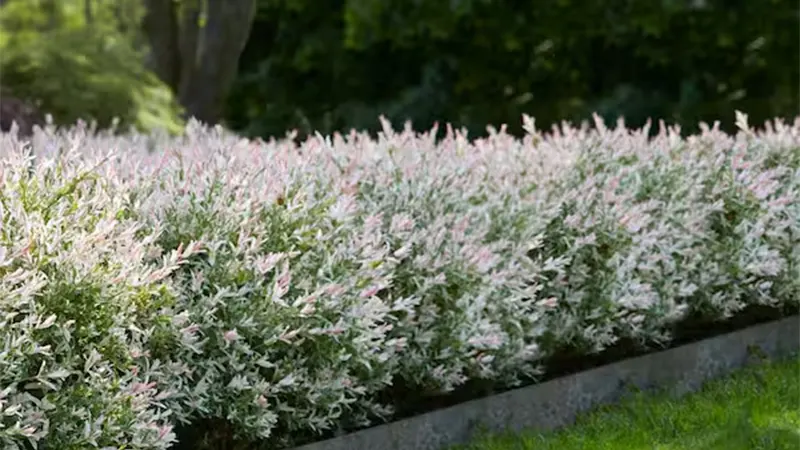


Plant Description and Overview of Tri Colored Dappled Willow
| Common Name | Dappled Willow, Hakuro Nishiki Willow, Flamingo Willow, Japanese Dappled Willow | Maintenance | Moderate |
|---|---|---|---|
| Native Region | Japan | Average Height | 4-10 feet (if unpruned, 15-20 feet) |
| Plant Type | Deciduous shrub or a small tree | Average Width | 4-10 feet |
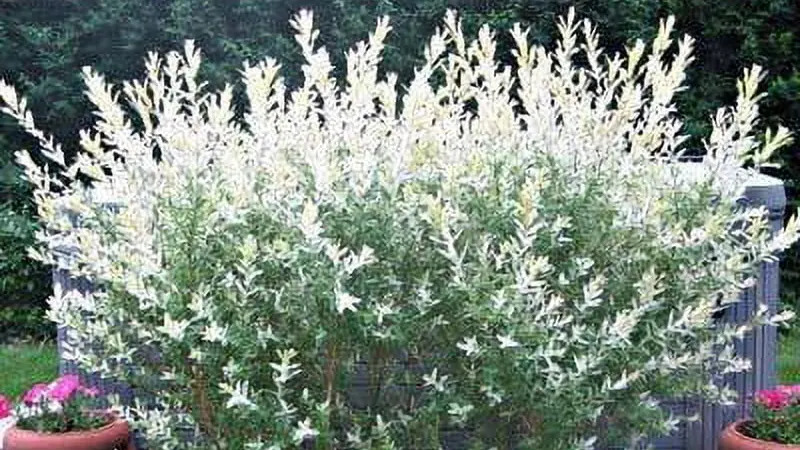
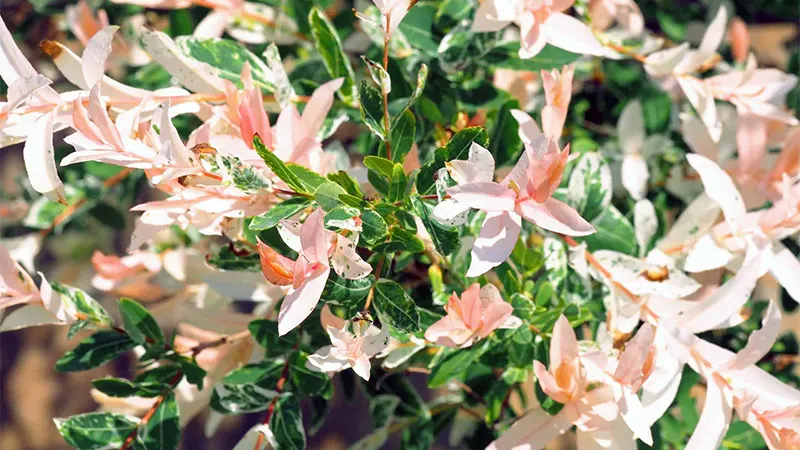
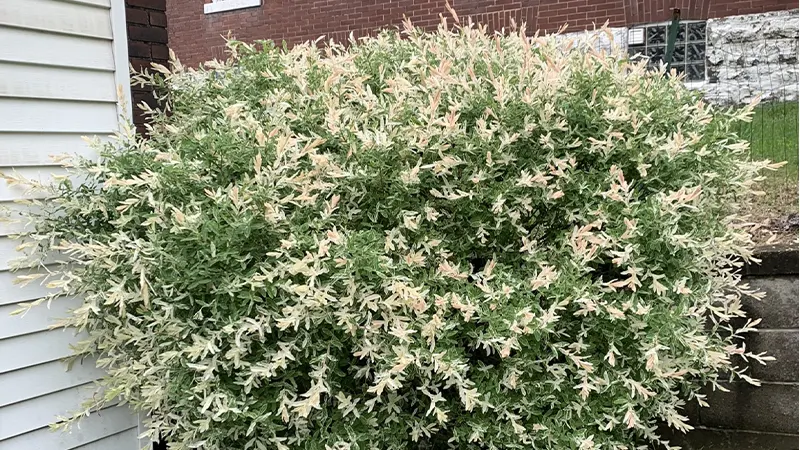
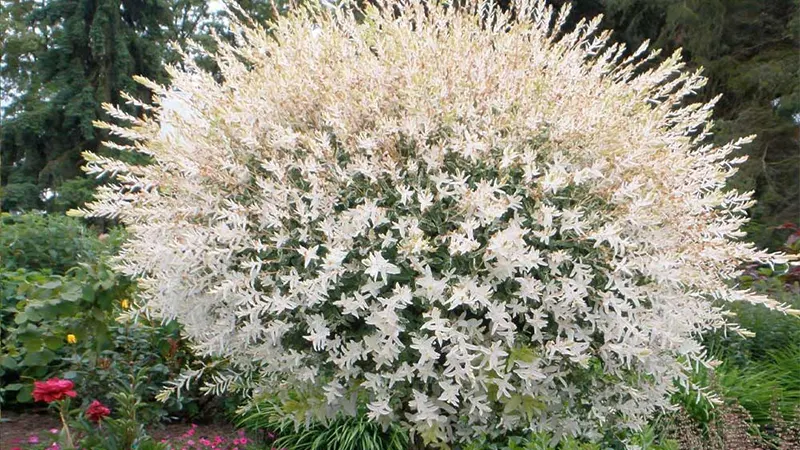
Tri Colored Dappled Willow tree, scientifically known as Salix integra ‘Hakuro-Nishiki’, is perfect for adding a whimsical touch to your garden. The fresh growth in spring brings pink foliage that softens to white and matures into green, mottled leaves, thereby attaining a tri-colored appearance along with red stems.
Key Features and Benefits of Tri Colored Dappled Willow
- Tri Color Dappled Willow shrub is an excellent choice for versatile usage, including privacy screens, borders, container planting, and hedges.
- Thanks to its high growth rate of 2 to 3 feet per year, the Tri Color Dappled Willow hedge becomes dense rapidly.
- Possesses a shallow, fibrous, and extensive root structure spreading horizontally for increased nutrient absorption.
- Found to be pollinator-friendly, the enchanting catkins attract many butterflies and bees in the early spring.
Care Guide, Advantages, and Disadvantages of Tri Colored Dappled Willow
- Growing Zone : USDA Zones 4–9
- Sunlight Exposure : At least 6 hours of direct sunlight is required for the best color and growth.
- Water Needs : Regular watering is required, but avoid waterlogging.
- Soil Type : Prefers moist and well-drained soils, including clayey and sandy types with slightly acidic to neutral pH levels.
Adventage
- Generally resistant to pests, deer, and rabbits.
- It can be easily pruned into small trees for a quick landscape impact or left natural.
- Provides four-season interest with silvery catkins in spring, variegation in summer, and golden leaves in the fall.
- It is moisture-tolerant and can thrive in rain gardens.
Disadvantages
- Susceptible to browning if it dries out.
- Prone to spider mites, aphids, and powdery mildew in crowded conditions.
- Like other willows, the root system is aggressive and should not be planted near concrete or sewer lines.
- It has a shorter lifespan compared to other landscape trees.



Joey Browning –
In the winter season, when there are very few blooms to look at, the bright coral-red stems of this shrub add colour to my garden.
Peter Cooke –
My cousin and I planted it in a large container last year. Much to my astonishment, it has grown a lot, becoming the centerpiece in the garden with delightful pink, white, and green leaves.
Kenneth Davis –
I have received many compliments for the spectacular colour of pink, white, and green leaves in the spring season. Apart from this, it also looks equally enchanting after the fall because of the coral stems.
Helen Jones –
It’s there at my parents’ place. The tree is easy to grow and ideal for rain gardens as it can tolerate dampness.