Everybody dreams of having an outdoor cookhouse, people having fun, chatting, eating, and kids running around. But people hesitate to even think about building one, considering the costs involved, the space requirements, planning woes, etc.
Guess what? You can build the summer cookhouse of your dreams yourself. And that too for cheap. A DIY outdoor cookhouse can save you 20-40% compared to paying professionals to build the thing (Source). But if you don’t mind spending a little more to have the best outdoor kitchen possible in your backyard, go ahead and hire professionals for expert outdoor living design.
In this guide, I’ll tell you everything about DIY outdoor kitchens. The following sections discuss how to plan building one, choosing the right space and layout, planning work zones for peak efficiency, best building materials and appliances, and safety considerations. All that on a budget.
KEY TAKEAWAYS
- DIY backyard kitchen costs way less than hiring professionals to build one.
- Just plan the location and layout, and choose durable and weatherproof construction materials.
- Keep in mind the safety considerations, plan to prevent fire and electricity hazards.
- For a budget cookhouse, use concrete, steel, and wood materials. Also, repurpose old furniture.
Planning Your DIY Outdoor Kitchen Layout
So, you have decided to go ahead with the idea of building a summer cookhouse. Now, it’s time to decide how to go about crafting one: where it would be located, how much space to allocate, and how we would cook and dine in and around the designated area.
Choosing the Right Location and Available Space
First comes the location. Choosing the right location for the backyard kitchen is crucial. And while doing that, we have to balance the convenience and functionality of the space.
For convenience, keep the backyard cookhouse located as close to the house as possible. This way, people and things can go from the house to the cookhouse and vice versa, easily and quickly. Another benefit of this is that extending the utility lines (electricity, water, gas) would cost less.
Also, take into account the grill, wind directions, and other areas. The smoke from the grill should move away from the dining and lounge areas, not towards them.
It would be great if the location is such that the space is already protected from the sun and rain. Otherwise, you will need pergolas or shades.
Lastly, you need to choose an area so strategically that it has privacy and a nice view both.
Designing a Functional Cooking and Dining Flow
The summer cookhouse needs to have distinct work areas. A separate area for each: prep, cooking, and dining.
Installing an outdoor fridge beside the prep area can greatly smoothen the process. There should be ample space for installing other appliances if needed.
The gas or pellet grill becomes the central point of the cooking area.
Utensils would need storage space as well. A durable counter with multiple cabinets would be great for that purpose.
Essential Materials for Building a Durable Outdoor Kitchen
For a durable summer cookhouse, employ:
- 304/316 stainless steel for appliances/cabinets.
- For countertops, choose granite for heat resistance or go with concrete for durability and customizability.
- Stone/brick for base structure.
- Marine-grade plywood.
- Fibre cement boards.
- Concrete paver flooring.
Include stone, brick, and concrete in the construction of the backyard kitchen as they withstand rot and UV damage.
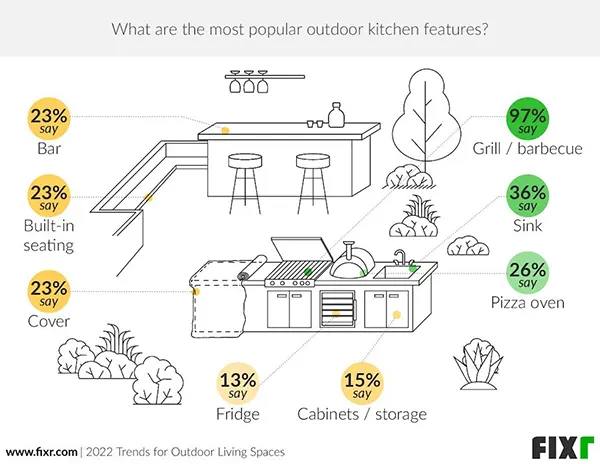
The following infographic shows the most popular backyard cookhouse features:
Choosing Weather-Resistant Appliances and Fixtures
Backyard cookhouse would be exposed to elements, so choosing durable and weatherproof materials is necessary for a long-lasting kitchen.
It really depends on the climate of your area, so choose the materials wisely based on that.
- Food prep countertops need to be durable and weather-resistant. Go with granite, concrete, or stainless-steel as they resist heat, moisture, and UV rays pretty well.
- Storage cabinets made of weatherproof materials ensure longevity. Powder-coated aluminum, high-density polyethylene (HDPE), or stainless steel are good choices as they resist rust and corrosion.
- Flooring needs to be non-slippery and weather-resistant being exposed to the outside elements all the time. Go with stamped concrete or natural stone for this.
- As for appliances, look for the ones made for outdoor use. They withstand the wear and tear due to humidity, rain, and temperature changes better. Safely install with insulated jackets.
Safety and Utility Considerations for Outdoor Cooking Areas
Outdoor kitchens require careful planning, balancing functionality with safety.
There are risks of fire, gas, and electricity hazards, like any other cookhouse. But being outdoors, they can spread to the surroundings as well.
Just follow these key considerations, and you can stay worry-free:
- Keep the grill at least 10 feet away from anything.
- Use non-combustible construction materials as much as possible.
- Proper ventilation is a no-brainer, especially for gas appliances.
- Buy weather-resistant appliances.
- Don’t skimp on lighting, as most outdoor feasts last till evening. Many people even plan dinners outdoors.
- For peak efficiency, craft the functional “working triangle”: prep area, grill, sink.
Cleaning up seems to be a big chore as the feast party ends, but some easy tricks makes cleanup simple.
Budget-Friendly Tips for Building a DIY Outdoor Kitchen
You shouldn’t compromise on the durability of the summer cookhouse to save some bucks. Actually, you don’t even need to.
- Use materials like wood pellets, pressure-treated 2x4s, and cement board.
- Repurpose old furniture for the summer kitchen.
- Use concrete pavers for countertops.
- Stainless-steel sinks are inexpensive.
Just focus on the essentials. A small backyard cookhouse is still an outdoor kitchen, and much more cozy than the big ones.
A backyard cookhouse is just one of the ways to improve your backyard. There are many other things you can do to improve backyard comfort, even on a budget.
Wrapping Up
Now you’re equipped with the knowledge of building a summer cookhouse in your backyard by yourself.
It will cost you less than hiring builders. Properly plan the location and layout of the kitchen for convenience and safety. There should be no scope for fire and electricity hazards. Choose durable and weatherproof construction materials. If your budget is even tighter, use wood materials and repurpose old furniture.
Backyard upgraded. Now it’s time to cook!
What is the best material to build an outdoor kitchen out of?
Granite or concrete for countertops, and stainless steel for cabinets.
What is the 3×4 kitchen rule?
The rule says that a cookhouse should have three 4-foot-long countertops, each for food prep, cooking, and cleaning.
What is the cheapest way to build a backyard kitchen?
Go DIY and recycle materials and furniture.