“A house is as warm as its weakest window.”
According to the U.S. Department of Energy,windows account for 25-30% of residential heating and cooling energy use. It is a staggering figure that highlights how much your window dictates your comfort and bank balance.
Windows are often treated as a static part of the house, like walls or floors, but actually they are hard-working mechanical systems. Over time, warped frames and broken seals make old glass obsolete.
Explore the red flags, from rising bills to physical decay that signal when your windows need a modern transformation to restore comfort, efficiency, and structural safety.
Key Takeaways
- Drafts and fog are the most immediate signs of seal failure.
- New windows boost the resale value of a home and curb appeal.
- Windows that don’t open easily are a hazard in emergencies.
- Repair costs exceeding maintenance time indicate it’s time to replace.
Why Timely Window Replacement Matters for Your Home
Why wait for your window to fail? Timely replacement makes sure that the structural integrity is maintained and your money is saved. Modern upgrades prevent moisture from rotting wall studs and also stop UV rays from bleaching expensive floors.
Beyond offering protection, new windows improve air quality by sealing out allergens and dust. This shift transforms your home into a high-performance environment, ensuring your house remains serene. You are not just investing in your windows; you are paying for your peace of mind.
Sign 1: Noticeable Drafts Around the Window Frames
When your home experiences constant air leaks, it means the weather protection system has suffered damage. The window shows an air leak because its framework has become twisted, and its seals have lost their original alignment.
While a bit of caulk might help temporarily, it won’t fix the deeper problem. Choosing high-quality replacement wood windows is a smart move because wood acts as an effective thermal barrier that prevents heat and cold from passing through better than standard platform window frames.
Solid wood creates a strong and long-lasting shield that keeps your home quiet and the temperature steady. This doesn’t just stop the wind; it also makes every corner of your room feel warm and comfortable again.
Sign 2: Rising Energy Bills Without a Clear Reason
Rising utility bills often indicate that your HVAC system is fighting leaky windows. The thermal performance of your windows decreases when argon gas escapes from the space between their double panes because the windows begin to conduct heat instead of providing insulation.
You can stop the invisible leak by upgrading and ensuring the climate you pay for actually stays inside. It is among the most effective ways to reclaim control over your monthly overhead.
Fun Fact: Homeowners often recoup about 70-80% of the cost of the window replacement in added home value.
Sign 3: Difficulty Opening or Closing Windows
Opening a window should be a simple task that does not require much physical effort. If you are struggling to keep your window open, the internal balance system has malfunctioned. The foundation experiences moisture damage that can cause the frames to bend until they become impossible to fit.
Beyond daily frustration, this situation is significantly risky for safety. A window that becomes stuck during an emergency situation will become a barrier that prevents people from exiting the building.
New and smooth-operating windows offer essential peace of mind, effortless ventilation, and a reliable escape route.
Sign 4: Visible Damage to Frames or Glass
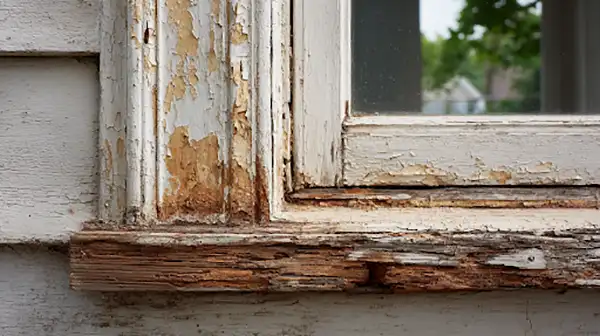
While cracked glass is an obvious warning, you should also check your window frames. Use a screwdriver to press against the wood, and if you feel something spongy, it indicates rot. This decay happens when trapped water eats the window from the inside out.
For vinyl, you can look for sagging or bowing caused by intense sun exposure. Once a frame loses its physical shape, it can no longer support the glass properly, which can lead to dangerous air leaks, seal failures, and eventually, the glass may break entirely.
Sign 5: Condensation Between Glass Panes
If you cannot wipe away a ‘foggy’ patch because moisture is trapped inside the glass, you have a broken seal. Modern windows use multiple panes filled with insulating gas, which can block the heat.
When the perimeter seal fails, that gas escapes, and the humid air comes in. This will create a permanent haze that ruins your view and destroys the thermal resistance of the window. At this point, your window acts like a thin, single pane, causing your home’s energy efficiency to vanish almost overnight.
Sign 6: Outside Noise Becoming More Noticeable
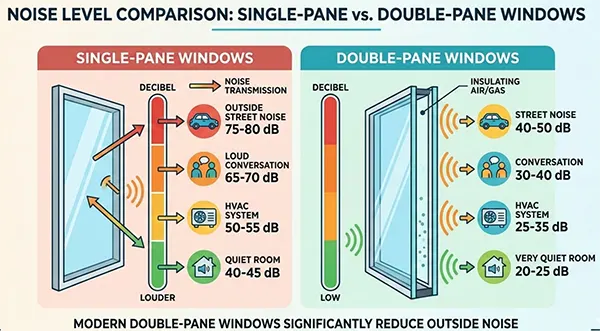
Your home should be a quiet sanctuary. If outside noise, such as traffic or a lawnmower, feels like moving right inside your room, your windows are failing. Older panes lack the acoustic mass that is needed to block the sound waves, especially as aging seals shrink.
Upgrading to modern units is like putting noise-cancelling headphones on your house. Newer glass technologies are specially designed to absorb vibrations and reduce chaos, which allows you to enjoy the peace you deserve.
See how upgrading your glazing affects your home’s calmness in the noise comparison chart below.
Sign 7: Fading Furniture and Interior Surfaces
Windows are like sunglasses for your home. If your hardwood floors or rugs look washed out, the sun is bleaching your interiors. Older glass allows harmful UV rays to pass through, but modern replacements have Low-E coating that protects your home.
This microscopic metallic layer reflects heat and blocks up to 95% of UV radiation. This protection saves you money by extending the life of your furniture and flooring, acting as a permanent shield for your interior design and furniture.
Sign 8: Frequent Maintenance and Repairs
Fixing an old window will cost you more than getting a new one. If you are spending every spring scraping the paint, filling gaps, and searching for rare parts for your window, you are wasting both your time and money.
Every dollar you spend on it could have gone towards a modern, maintenance-free version. Upgrading allows you to enjoy your weekends and stop worrying about the next leak. It is much better to invest in a permanent solution than to keep fixing up a failed system.
Sign 9: Poor Home Insulation and Temperature Imbalance
Is there a room where everyone avoids going in winter because it is too cold, or a kitchen that feels like an oven in July? This temperature imbalance is a classic sign of damaged windows. When windows lose their insulation, they create ‘cold spots’ that pull heat from your body and leave you chilled even when the thermostat is high.
High-performance windows create a consistent thermal blanket around your house. This ensures that every room stays comfortable, allowing you to finally use every square inch of your home regardless of the season.
Did You Know?
Upgrading to modern windows can reduce external noise by up to 50% compared to single-pane versions.
Sign 10: Outdated Window Style Affecting Home Aesthetics
Sometimes the biggest sign of a failed window is not a leak; it is how your house looks. Windows are the eyes of your home and define its curb appeal. Old-fashioned aluminum or chunky dated vinyl frames can make an entire property look and feel old.
Updating them is one of the most effective ways to give your home an instant facelift. Whether you select sleek modern frames or classic wood for a traditional feel, new windows completely transform your home’s character and increase your pride of ownership.
Sign 11: Preparing Your Home for Resale Value
If you’re planning to sell your house soon, you should look at your windows through a buyer’s eyes. Old windows are immediate red flags for home inspectors. Today’s buyers prefer energy-efficient homes that require no repairs, while they show a preference against properties that contain hidden costs.
When you replace windows before listing your property, you will experience two benefits: faster selling times and higher selling prices. The investment demonstrates excellent value because it shows proper maintenance of the property that enables buyers to present their best offers without the need for future repair needs.
Final Considerations Before Replacing Your Windows
You should evaluate your home design and your local climate conditions before making your final choice. The selection of materials needs equal importance because customers need to choose between weather-resistant vinyl and climate-resistant wood that protects against extreme temperatures.
The window operation also needs assessment because your daily activities will decide whether you choose sliding window sashes or classic casement windows. Your home will offer you lasting comfort and beauty when you combine functional elements with its distinct design features.
Ques: How long do windows generally last?
Ans: Most windows have a lifespan of 15 to 25 years, depending on the material used and weather exposure.
Ques: Is it possible to just replace the glass?
Ans: If the frame is damaged, replacing just the glass is a waste of money.
Ques: Do I have to replace all the windows at once?
Ans: No, not necessarily. You can prioritize drafty rooms or the room with the most weather exposure to manage your budget effectively.