Tiny homes force better decisions. When space is limited, every outdoor area has to work harder. Functional spaces become a necessity by not only increasing the appeal but also providing advantageous uses too.
If you have searched for awnings Atlanta has to offer for a compact home, the range of options can feel a bit overwhelming. In a city known for its weather shifts, the right strategy helps make your space feel more usable, comfortable, and intentional.
Let’s understand how you can upgrade your area with creative outdoor designs, so that you can get more out of limited space without making the exterior feel cluttered.
Key Takeways
- Smart management of an outdoor space requires a clear understanding of the functionality requirements of your home.
- Retractable patio awnings, in combination with vertical drop screens, allow for flexible use during shifting weather conditions.
- Comfort and protection must be prioritised when choosing a shade for a tiny home.
- Studying the sunlight direction and matching the projection is crucial before making a purchase
Why Tiny Homes Need Smarter Outdoor Shade
Small homes do not have the luxury of wasted areas. If the outside of the home is too hot, too bright, or too exposed to light rain, that space quickly becomes decorative rather than functional.
The goal is to create an extension that expands outdoor usability across more hours of the day and more months of the year.
Small Spaces Heat Up Faster
Tiny homes often include glass doors, windows, and compact living zones that respond quickly to direct sunlight.
According to the U.S. Department of Energy’s guidance on energy-efficient window coverings, awnings can reduce solar heat gain on south-facing and west-facing windows, helping improve indoor comfort during warmer months.
This is especially relevant for smaller houses that have less indoor air flow against outdoor heat.
Shade Helps Protect Daily Comfort
Outdoor comfort is not only a design concern. It is a practical one. The EPA’s UV safety guidance recommends seeking shade when UV exposure is high, especially during peak daylight hours. For families, older relatives, or anyone trying to enjoy a small patio in the heat, adequate shade matters.
The Best Awning Options for Tiny-Home Living
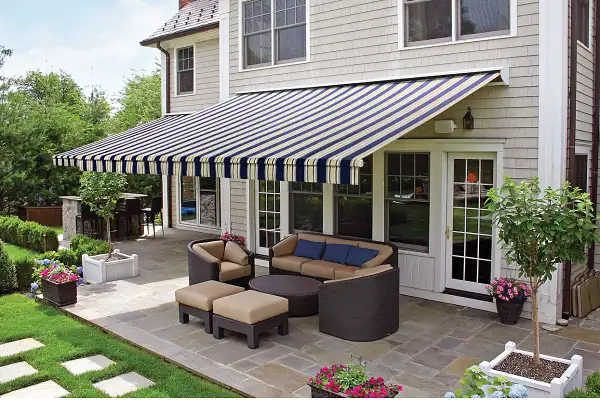
Not every small outdoor area requires the same solution. The best fit depends entirely on orientation, privacy needs, wall space, and how the area is utilized throughout the day.
Retractable Patio Awnings for Flexible Everyday Use
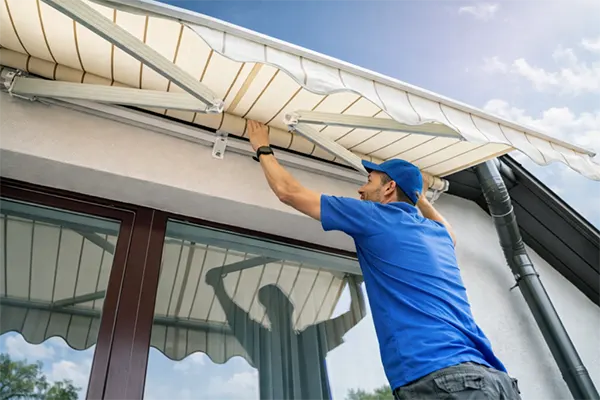
Retractable patio awnings are one of the strongest options for tiny homes because they provide overhead protection without permanently closing off the space. You can extend coverage when the sun is intense and retract it when you want more light or open sky.
This kind of flexibility is the most valuable for smaller decks and patios that perform more than one job. A compact outdoor space might serve as a coffee area, a work spot, or an evening dining space.
An adjustable system makes that transition simpler and easier, keeping comfort consistent throughout the day.
Vertical Drop Screens for Glare, Privacy, and Wind Control
For homes where the main issue is low-angle sun or visibility from nearby neighbors, vertical drop screens are a practical solution. They reduce glare, buffer wind exposure, and add practical privacy without making a small area feel sealed off.
Drop screens are especially functional in tiny layouts where homes sit relatively closer together. The result is a more comfortable outdoor area that still feels visually open.
Pergola Awnings and Window Awnings for Targeted Zones
Pergola awnings define an outdoor room around a seating or dining area, while window awnings cut direct sunlight at windows and doors.
The right system enhances both exterior usability and indoor comfort, specifically where heat and glare are concentrated.
Fun Fact
The Roman Colosseum featured a massive, retractable awning known as the velarium, capable of providing shade for more than 50,000 spectators.
What to Prioritize When Choosing Shade for a Tiny Home
The challenge with tiny homes is not simply finding shade. It is finding shade that fits the scale of the home, supports how the space is used, and still looks integrated with the architecture.
For compact homes, the best systems usually balance flexibility, clean sightlines, and practical weather protection. That may mean top coverage for a small patio, side screening to reduce glare, or specific shading at windows and doors where sunlight is most intense.
Comfort Without Making the Space Feel Closed In
One of the biggest design mistakes in small outdoor spaces is solving weather exposure by creating a structure that feels too heavy. A better approach is a custom patio shade system that blocks heat, glare, and light rain while preserving openness and airflow.
Maintaining balance is important where the climate rewards adaptable outdoor designs. A small patio should not feel like a sealed porch unless that is the intention. Most homeowners want relief from the sun and weather without losing the view of being outside.
Protection for Furniture, Decking, and Interior Surfaces
Consistent sun exposure can wear down outdoor furniture, decking finishes, and nearby interior flooring over time. The Skin Cancer Foundation’s shade recommendations also reinforce the broader value of built shade as part of a protective outdoor environment. A well-placed awning reduces direct exposure and extends the life of your materials.
Planning the Right Awning for a Tiny Home
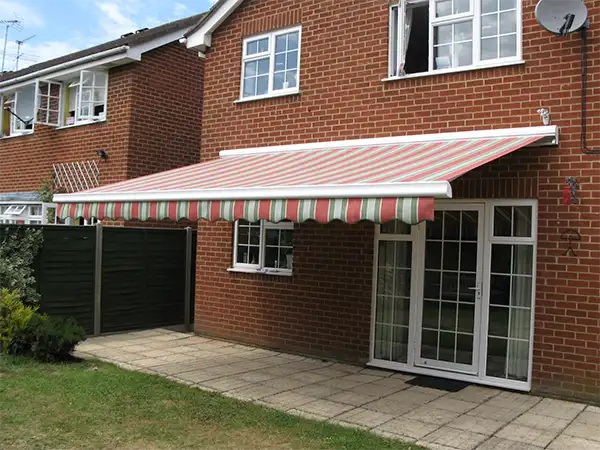
A functional outdoor strategy begins with the right planning decisions. The product type matters, but so does sizing, projection, controls, and the angle of sunlight when it hits the space.
Study Sun Direction First
Before selecting a system, look at when the outdoor area becomes uncomfortable. Is the problem harsh midday light, late-afternoon glare, or lack of coverage during light rain? Tiny homes demand this kind of clarity because there is less room for design decisions that look clever but do very little.
The Department of Energy notes that awning effectiveness depends in part on window orientation, which is a useful reminder that shade planning should respond to actual exposure, not just appearance.
Match Projection and Mounting Height to the Space
An awning that appears shallow would not provide enough protection. One that is mounted too low makes a patio feel compressed. In such small areas, proportion is everything. The system should improve functionality, not dominate the space or interfere with movement.
This is why custom awnings for small outdoor spaces outperform generic options. Tiny-home design leaves very little room for awkward fit.
Choose Controls That Fit Daily Life
Some homeowners prefer manual operation. Others want the convenience of motorized retractable awnings that respond quickly to changing weather and sun conditions.
The right choice depends on how often the system will be used, who will operate it, and how central the outdoor area is to everyday living.
A Practical Path to Better Outdoor Living
The strongest small-space upgrades are the ones that solve several problems at once. The right awning improves comfort, supports better UV protection, reduces glare, manages heat gain, and makes a tiny-home patio feel like a genuine part of the home.
For homeowners looking to create a more usable outdoor area within a compact footprint, the right awning is worth the extra evaluation. The goal is not to overbuild, but to choose a system that supports the scale of the home, adapts to the climate, and improves daily uses naturally.
A well-planned shade solution makes a tiny-home outdoor area feel calmer, cooler, and more useful across the year. When the structure, projection, and placement are right, even a very small footprint functions like an intentional extension of the home.
FAQ
Q1) How do I cover my outdoor area during harsh climates?
Ans: Retractable awnings are the best bet to protect your outdoor space against harsh weather conditions and slide back in when not in use.
Q2) What do I keep in mind while buying an awning?
Ans: The size, proportions, sun directions, and glare projections in your area help you pick the most suitable option with accurate measurements for your home.
Q3) Why is an awning needed for a home?
Ans: Tough and changing weather conditions may damage outdoor spaces like a patio or a small deck. This is why an upper covering of a space is needed to prevent such damage.
Q4) Why is there a need to consider the sun’s direction when installing an awning?
Ans: Studying the sunlight’s direction in your space lets you know where the shade would be the most useful and functional, so that your money doesn’t get wasted on non-beneficial additions.