“Water is life’s matter and matrix, mother and medium. There is no life without water.”
— Albert Szent-Gyorgyi (Biochemist)
It’s impossible to think about life without water. However, supply disruptions can stop your access to water, so storing it in bulk is a wise decision. According to a global WHO report, 1 in 4 or 2.1 billion people still lack access to safe drinking water, emphasizing the criticality of storing water.
Storage systems help you store water safely and efficiently. But which one is the best for you?
In this article, I will help you decide the best storage system for your home needs and preferences. You will also get to know how to maintain and upgrade them for better water quality and supply.
Key Takeaways
- The two main water storage types are overhead tanks and underground sumps.
- Choose an overhead tank for a budget and low-maintenance solution.
- Go for underground sumps in case of limited space.
- Use plastic/steel storage, automate pump operations, and integrate smart sensors for safe water and efficient supply.
Why Water Storage Systems are Essential for Modern Homes
People need to store water for drinking, farming, fire emergencies, and other domestic or commercial purposes.
For homeowners, a steady water supply is necessary in case of drought, water main breaks, or any other emergency that disrupts the normal water supply.
Storing water also helps with sustainable living. Diligent use of water saves it from being wasted. Collecting rainwater is another good practice for people to save on their water supply bills.
All in all, water storage systems are essential for your homes. But to make informed decisions about installing or upgrading one, you should have proper knowledge regarding its market status.
The following infographic will inform you about the status of the water storage market.
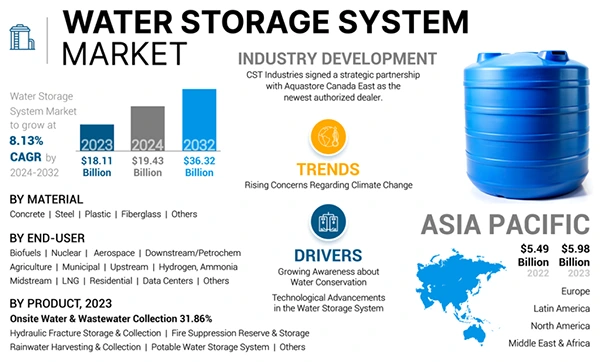
Alt: Infographic on Water Storage System Market
Common Types of Water Storage Systems for Residential Use
There are basically two systems you can use to store water: overhead water tanks and underground storage systems.
Overhead Water Tanks
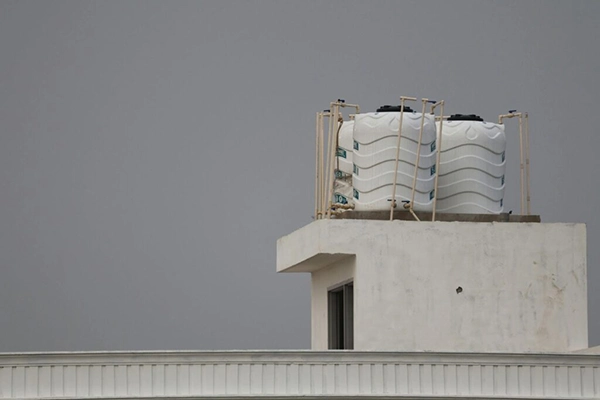
Usually positioned on terraces, these water tanks provide a consistent gravity-based supply to taps and water appliances.
Commonly made of plastic, these also come in steel and concrete options.
Easy to install, monitor, and clean makes them cost-effective and low-maintenance.
However, these require strong structural support to be placed on. They can also suffer from algae infestation.
Underground and Sump Storage Systems
As the name suggests, underground sump storage systems are built below the surface. Construction material is usually RCC or, in some cases, strong and durable plastic.
They are typically considered when the space is limited or restricted.
Being underground, these systems keep the water cool naturally.
However, these entail high installation costs and maintenance efforts due to the regular cleaning required. You have to invest in a pump as well to pull the water up for use.
Choosing the Right Water Storage System for Your Home
The following table compares the two storage systems, helping you choose the right one for your home:
| Overhead Tank | Underground Sump | |
| Cost | Low | High |
| Installation | Easy | Complex |
| Space | Takes up roof space | Hidden (Saves space) |
| Pressure | Gravity-induced | Needs a pump |
| Maintenance | Low | High |
Practical Tips for Maintaining Safe and Efficient Water Storage
For a safe and efficient water supply, proper maintenance of storage systems is necessary. We have to prevent water contamination and structural damage to the storage.
Regular cleaning every 6-12 months prevents sludge, bacteria, or algae development.
Similarly, your septic tank also demands regular maintenance.
Smart and Effective Ways to Upgrade Your Existing Water Storage System
Here are some suggestions if you are considering upgrading your system for storing water.
Modern Materials
Go for modern materials like food-grade plastic or stainless steel. Plastic is lightweight and affordable, while Stainless steel tank fittings are corrosion-free and hygienic. This ensures long-term and safe water storage.
Smart Sensors
Integrate IoT-based sensors to monitor water levels and quality in real-time. These sensors can detect water pH, turbidity, TDS, chloride, and temperature. If contamination is detected, the sensors trigger an alert.
Automation Options
Automate pump operations for water filling and distribution. By preventing overflows, this saves both water and energy.
Improving Water Quality and Storage Efficiency
For better water quality, implement systems like reverse osmosis (RO), ultrafiltration (UF), or nanofiltration (NF). And for efficient water storage, a leak detection system is a good option to prevent water loss.
Final Thoughts: Sustenance is the Key
Water is an essential need in our lives. But water supply can be disrupted for any reason, so storing water is a necessity. It also helps with efficient use of water, adding to sustainability.
There are mainly two types of water storage: overhead tanks and underground sumps.
Choose an overhead tank if you want a budget and a low-maintenance solution. But if you have limited space, go for underground sumps.
Use plastic or steel storage, automate pump operations, and integrate smart sensors to ensure water quality is safe and the supply is efficient.
Finally, regardless of whichever storage you choose, regular cleaning is essential for a safe and efficient water supply.
Always remember not to flush our planet’s most valuable resource!
Frequently Asked Questions
What are three types of water storage?
There are mainly two systems of storing water: overhead tanks and underground sumps. A rare third is also there: surface reservoirs.
Which is the best water storage system?
There is no best system for storing water for everyone. It’s overhead tanks for low-budget and want low-maintenance, and underground sumps for less space.
What are modern methods to improve water storage?
Use modern construction materials, automate water management, and implement smart-sensor systems to improve water quality and reduce water loss.