A roof serves as a vital protective barrier for your residence, shielding it from the harsh and unpredictable elements of nature. Daily, it endures the relentless forces of rain, wind, sunlight, and cold air, all of which gradually erode its integrity over time.
If you don’t keep an eye on it, these elements can cause weak points, resulting in expensive repairs and even home damage.
Homeowners who rely on experts like Hertiage Roofing Solutions enjoy the benefit of skilled inspection and repair. Their knowledge identifies problems early, before they become major failures.
In this blog post, we will discuss how different weather conditions can damage roofs and why taking quick action protects both the home and its value.
Let’s begin!
Key Takeaways
Understanding the impact of heavy rain
Looking at the havoc of strong winds
Uncovering how the heat of sun is a major problem
Heavy Rain
Rain may appear to be harmless, but persistent storms cause serious damage over time. Water enters hairline cracks and gradually enlarges them, causing leaks that spread across ceilings. When wood absorbs enough moisture, rot occurs, weakening the roof deck.
Gutters and downspouts also play a critical role. If they clog, water pools near roof edges and places weight on rafters and support beams. Over months, this cycle leads to sagging, mold growth, and the breakdown of structural integrity.
Intriguing Insights
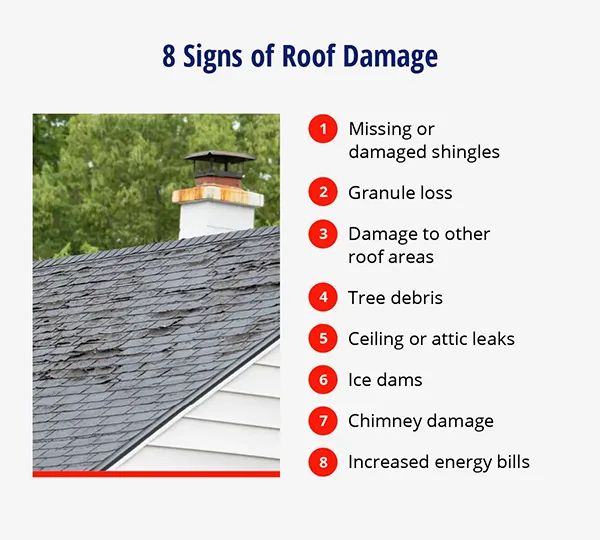
This infographic shows 8 signs of roof damage
Strong Winds
High winds tear at the shingles and loosen the flashing around joints. A strong gust can lift entire rows, leaving the bare underlayment exposed to rain. In severe storms, entire sections of roofing may be ripped off.
Flying debris creates additional risks. Branches or objects crash into the roof and puncture shingles, forming pathways for water intrusion. With each event, damage layers upon itself and reduces the roof’s life span much faster than expected.
Intense Sun
Prolonged sunlight degrades roofing materials in subtle but destructive ways. UV rays strip away protective granules, fade colors, and cause shingles to crack. Dry, brittle materials no longer provide adequate protection for the home. Heat inside the attic exacerbates the situation.
Without proper ventilation, temperatures rise and cook shingles from beneath. This accelerates wear and increases household cooling costs, causing financial strain in addition to physical damage.
Interesting Facts While some materials like slate offer strong resistance, proper installation is key to mitigating damage from all weather conditions.
Hailstorms
Hailstones strike with a force that few materials can resist. Large pieces dent or split shingles, while smaller stones loosen granules and expose the underpayment. Once protective layers are gone, leaks become inevitable during the next rain.
Even mild hailstorms leave behind hidden problems. Damage may not show until months later, when water intrusion spreads inside walls. Expert contractors understand how to quickly identify these weak points and apply effective repairs before costs escalate.
Cold Conditions
Cold conditions create unique challenges for roof systems. Materials contract, putting additional strain on the joints and nails that hold them together. Snowmelt that refreezes forms ice dams along the edges, forcing water back under shingles.
The trapped water seeps into insulation and ceilings, where it causes staining and rot. Ice also adds heavy weight that pulls gutters away from the house. Over repeated winters, this cycle leaves cracks, leaks, and weakened seals across the entire surface.
Seasonal Shifts
The most impactful factor is often the cycle of seasons itself. Summer heat expands roofing materials, while winter cold contracts them. These constant changes loosen fasteners, split seals, and create openings for water.
Moisture seeping into these gaps worsens with each cycle. When leaks appear inside, the roof may already need extensive repair. Regular inspections by qualified professionals detect these early failures and maintain roof health for many years.
Rain, wind, sun, hail, cold air, and seasonal shifts all weaken a roof in different ways. When ignored, these issues spread quickly and compromise the entire structure. Working with experienced roofers like Heritage Roofing Solutions ensures that damage is detected and repaired before it worsens. Nevertheless, a strong roof is the result of timely action and trusted professional care.
Frequently Asked Questions
What damages the roof the most?
Hails, snowfalls, and winds cause the most damage to the roof
What type of roof is most easily damaged by high winds?
Asphalt shingles are the most vulnerable parts of the roof that get damaged easily.
Which roofs are preferred in areas with heavy rainfall?
A Sloping and pitched roof provides the perfect durability from rainfall