KEY TAKEAWAYS
- Learn about the growing role of retaining walls in landscape planning
- Discover the benefits of retaining walls for outdoor living areas
- Understand the material choices and durability considerations for 2026
“Architecture is the art of how to waste space.”
Philip Johnson (American architect)
Have you ever looked at your backyard and thought, “Why does that feel unfinished?” or worse, “Why does the ground slope weirdly, and nothing stays in place?” Yeah, that’s where retaining walls quietly do their thing.
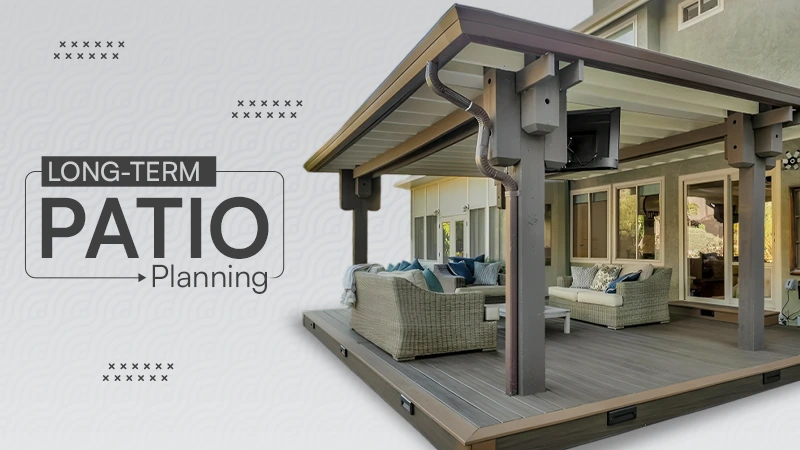
In 2026, retaining walls aren’t just about hiding dirt (very important, obviously); they are about making outdoor spaces actually useful. They help shape your patio. Also, contractors like Martinez retaining wall construction help make walls that level out the ground, and stop your garden from slowly sliding away after every heavy rain. Plus, they make everything look more planned and less chaotic.
Think of them as unsung heroes of outdoor design. Not flashy, not dramatic, but super practical and low-key stylish. And honestly, when I added them in my place, I literally wondered how my outdoor space ever worked without them. Let’s continue with this article and learn more about composite decking in Martinez and retaining walls’ importance in 2026.
How Outdoor Spaces Are Evolving in 2026
When I first moved into a new house, my plan was simple: “I’ll just add some grass and a couple of plants. Easy.” Yeah, no. Like a lot of people in 2026, now I wanted the space to be more than just lawn:
- A place to sit and work outside sometimes
- A small BBQ spot for friends
- A little garden area, because I was very sure I’d suddenly become a plant person
Problem? Unfortunately, the land itself isn’t always helpful. It’s sloped, uneven, or keeps washing out when it rains. That’s usually the point where retaining walls enter the conversation.
The Growing Role of Retaining Walls in Landscape Planning
For my own lawn, retaining walls went from “optional” to “non-negotiable”. When the landscaper came over and looked at my yard, his first sentence was basically “You need levels,” and the only way to get there without digging half the hill away was, yes, the retaining walls.
We used them to create two flat terraces instead of one long slide, push back and hold the soil safely, and make clear areas for different activities.
Before the walls:
- I used to avoid the backyard when it rained
- Everything felt temporary and unstable
After the walls:
- I had a flat patio on the upper level
- A small and usable lawn and garden on the lower level
- The whole place felt like it had a proper layout instead of chaos
Same yard, totally different vibe.
Benefits of Retaining Walls for Outdoor Living Areas
There are many benefits that I have seen after adding retaining walls in my yard, some of them are:
Soil Stabilization
In my yard, the soil was slowly creeping downhill over time. I didn’t notice at first until:
- One side of the garden bed started sinking
- The edge of a path cracked slightly
- Little ridges of soil piled up at the bottom of the slope
Once the retaining wall went in, the wall is now:
- Holds the soil in place
- Keeps everything from shifting after a heavy rain.
It’s one of those things that you don’t appreciate until you realize that nothing is slowly sliding away anymore.
Erosion Control
Before I had retaining walls, every big rainstorm felt like a test. Would my plants survive? Would the soil stay where I left it? Spoiler: Often, no.
I’d see soil washed down into one ugly pile at the bottom, mulch scattered everywhere, and exposed roots on some plants. Once I added the walls and broke the slope into tiers, that calmed down a lot. The walls slowed the water down and kept the soil and mulch from traveling downhill.
Now, after every heavy rain, I’m not out there trying to shovel soil back up the yard like some weird workout.
Improved Drainage
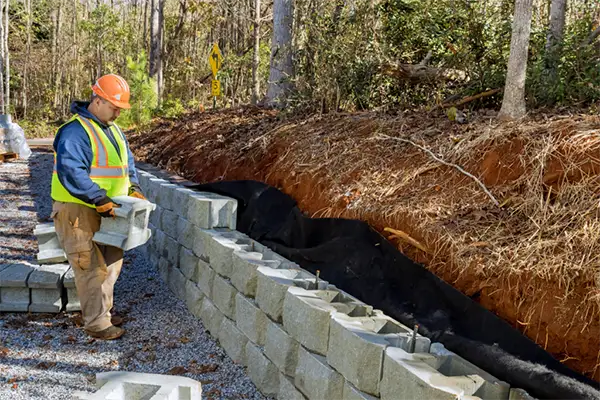
My yard also had that one classic problem: that soggy corner. The retaining wall design for my place included gravel backfill behind the wall, a draining pipe running along the bottom, and small weep holes for water to escape.
The difference was big. The swampy corner dried up, the middle of the yard stopped feeling like a sponge, and I could finally walk across the grass without sinking in.
Design and Aesthetic Advantages of Retaining Walls
Now let’s move to the advantages I get from the design and aesthetics of my retaining walls:
Tiered Landscaping
The biggest visible change in my yard came from creating tiers. Now I have:
- Top level— a paved area with a table and a chair where I can eat and work
- Bottom level—a small lawn with a narrow garden bed along the wall
Even though it’s not a massive yard, the tiers make it feel bigger, more organized, less like an accidental slope, and more like an actual design.
Visual Structure
Before the walls, the yard was just one continuous tilt. No real edges, no real levels, just grass leaning downhill. After the walls:
- There’s a clear break between the patio and the lawn
- The vertical faces of the walls add height and depth
- The garden beds along the wall make the whole thing feel intentional
Now, when I look at the back door, it does not feel like a “random backyard”. It looks like a space that someone actually planned.
Functional Zoning
The retaining walls basically draw invisible lines for how we use the space.
Now the yard naturally splits into:
- A “sit and hangout” zone on the top level
- A “play and plant” zone on the lower level
I’m not tripping on the chair to get to the garden, and the lawn isn’t fighting with the patio. Each area has its own feel, thanks to the walls.
Material Choices and Durability Considerations for 2026
For my own retaining walls, I went with concrete blocks that have a textured, stone-like look. Here is why:
- I wanted something low-maintenance
- They are strong and built to last for years
- The color works with the house and patio
But before selecting, I also looked at the other options like:
- Natural stone: Looked amazing, but was a bit pricier for my project size. If you have a good budget, go for it
- Timber: I loved the warm look, but I didn’t want to worry about it aging too fast
- Gabion walls: Very cool and modern, but a bit too industrial for my small yard
With this project in 2026, I learned that you have a lot of choices, but your climate matters, and design and drainage matter as much as looks. The best decision I made was getting someone who actually knew what they were doing to build it. A poorly built wall is a stressful disaster waiting to happen.
Final Thoughts
After living with retaining walls in my own yard. I don’t see them as “just walls” anymore. For me, they turned a sloped, awkward space into two usable levels, stopped the slow slide of soil and the constant erosion drama, and helped create clear zones for sitting, playing, and planting.
If you also have outdoor space that feels hard to use because of slopes, erosion, or weird angles, reading walls are the right path to move forward, and these walls aren’t just a technical fix; they are a smart way to actually enjoy your yard.
FAQ
Do I need a permit to build a retaining wall?
You usually require a permit if the wall is over 3 to 4 feet tall, supports a slope, or holds extra weight (surcharge).
How long do retaining walls last?
Retaining walls typically last between 25 and 100+ years (depending on the material, construction quality, and drainage).
How do retaining walls affect the environment?
Retaining walls positively impact the environment by preventing soil erosion, controlling water runoff, and stabilizing slopes to protect the natural landscapes.