“Home is a place you grow up wanting to leave, and grow old wanting to get back to.”
– John Ed Pearce (Author)
We grow old but don’t stop upgrading ourselves to keep ourselves functional and valuable. Similarly, as our home grows old, it needs essential upgrades to maintain safety and value. Ultimately, these upgrades ensure that our homes remain inviting and functional.
But how to go about it? What to upgrade exactly and how? And what will those upgrades amount to?
In this article, I will tell you about some awesome exterior upgrades that can give your old home a fresh new look. Also, knowing about how these upgrades can improve your overall home safety and curb appeal.
KEY TAKEAWAYS
- Upgrading your home exterior boosts overall safety and property value.
- Assess your home for natural wear and tear, structural damage, and outdated features.
- Then make needed upgrades to: painting, roof and siding, doors and windows, lighting, pathways, landscaping and lawns, fencing and gates, and drainage.
Why Exterior Upgrades Matter for Aging Homes
As homes age, their curb appeal reduces significantly. But most importantly, the exterior, including siding, roofing, windows, and gutters, deteriorates over time. This allows more moisture into the house and increases the utility bills.
Upgrading your home exterior can help with this.
They don’t just improve your home cosmetically. You can aim them at addressing critical issues like structural integrity, energy efficiency, and long-term maintenance.
Assessing Your Home’s Exterior Before Upgrading
Assessing the exterior is a critical step before upgrading it.
Proper assessment helps you avoid costly repairs and decide if you want to improve your home’s safety or its aesthetics as well.
Identifying Wear, Damage, and Outdated Features
A thorough assessment involves looking out for visible structural damage and natural wear and tear. You also need to identify features that are outdated and adding to your energy expenditure. These can range from faded siding, a worn roof, to cracked windows.
1. Refresh Exterior Paint and Finishes
Refreshing your home exterior with modern-colored paint and the latest hardware and lighting instantly boosts its curb appeal.
The steps involve power washing, repairing and priming the surface, and finally applying durable and vibrant paint.
2. Replace or Repair Roofing and Shingles
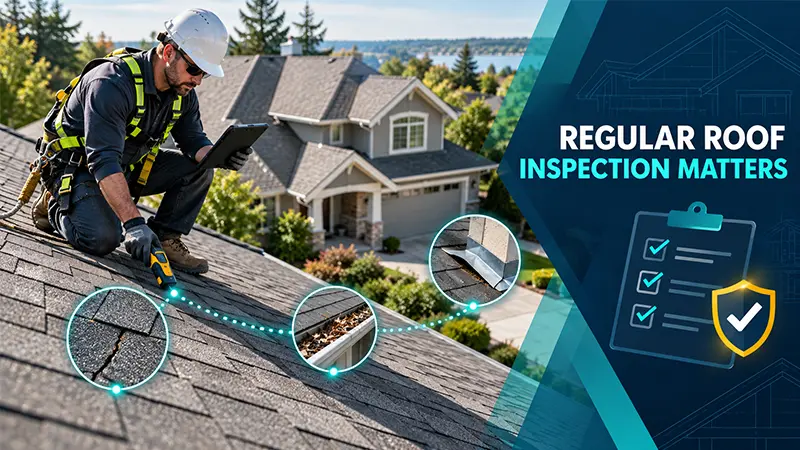
Through the years, you can lose some shingles, and the roofing can get damaged.
Repair the roof by replacing shingles. It saves you from weather damage and long-term structural issues.
You can consider an entire roof replacement to address the issue once and for all, for the long term.
3. Upgrade Windows and Exterior Doors
Upgrade your windows and exterior doors to improve your home’s energy efficiency.
Go for ENERGY STAR certified windows to reduce your energy bills by upto 13%. Make sure they are at least two- or three-paned. Durable materials for doors are fibreglass or steel.
You can also get natural light inside using glass inserts.
4. Improve Driveways, Walkways, and Entry Paths
Modernizing driveways, walkways, and entry paths can also augment your property value.
Use durable materials like pavers, concrete, or natural stone for these areas. For a cohesive and welcoming look, consider strategic lighting and landscaping.
5. Enhance Outdoor Lighting for Safety and Style
Enhance your home safety and curb appeal by installing smart, energy-efficient LED lighting, preferably solar-powered.
LEDs are versatile, so you can consider them for your interiors as well.
Energy-Efficient and Smart Lighting Options
Use motion-sensing lighting for critical areas and low-voltage lighting for illuminating paths. You can also use spotlights to accentuate the architecture.
Go for smart, app-controlled LEDs. They are energy-saving and can be automated or customized as per your needs.
6. Update Siding, Cladding, or Wall Textures
Installing new siding or wall textures significantly improves your home’s protection against the elements.
Low-maintenance materials such as porcelain slabs, Wood-Plastic Composites (WPC), and durable fiber cement are getting really popular.
7. Improve Landscaping and Green Spaces
Improving the landscaping and green spaces of your home can be for functional, aesthetic, and sustainability reasons.
This also boosts your curb appeal and property value by about 5-15% (Source).
Install, trim, and maintain lawn areas properly. Plant colorful flowers and use mulch for a polished look.
8. Modernize Fencing, Gates, and Boundaries
Modernizing fencing, gates, and boundaries focuses on enhancing your home’s privacy and security.
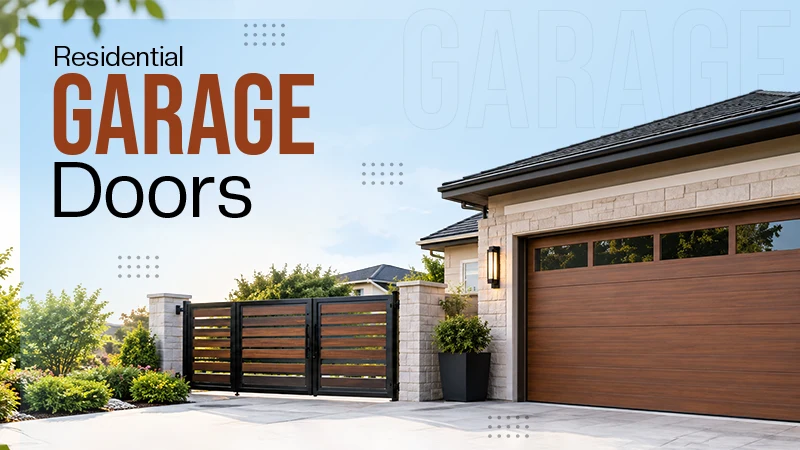
Horizontal slats are great for boundaries and combine metal and wood for fencing. Integrate technology wherever possible. Shift to smart and secure gate systems.
9. Add Functional Outdoor Living Features
You can upgrade your exterior with functional outdoor living features as well, which can involve composite decks, stone patios, and pergolas.
This will create defined, multi-use zones in the exterior of your home.
To improve usability, you can also add amenities like an outdoor kitchen, cozy fire pits, and smart lighting.
10. Improve Drainage and Exterior Maintenance Systems
Improving your drainage and exterior maintenance systems is essential for protecting your home’s foundation and structural integrity. You have to act before water damage occurs.
Consider upgrading to French drains, extending downspouts, and larger gutters. Also, grade your yard to direct water better.
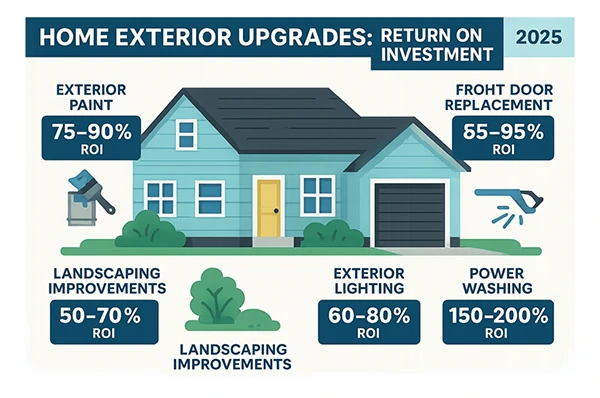
All these upgrades give varied but very good ROIs as depicted in the following infographic:
Final Thoughts
Upgrading your exterior gives a new life to your old home and improves its overall safety, giving an instant boost to the property value.
First, carefully assess the natural wear and tear, structural damage, and outdated features in your home.
There are many upgrades you can consider: painting, roof and siding, doors and windows, lighting, pathways, landscaping and lawns, fencing and gates, and drainage.
Get your curb appeal to 10/10!
FAQ
How to update a 10-year-old house to look new and modern?
Repaint your old house with neutral colors and upgrade dated lighting with LEDs to make it look new and modern.
What exterior home improvements add the most value?
Upgrading to steel doors and cement siding, in addition to adding a composite deck, are currently the most value-adding home improvements.
What is the 30% rule in remodelling?
The 30% remodelling rule states that your renovation costs should not exceed your house’s present market value.