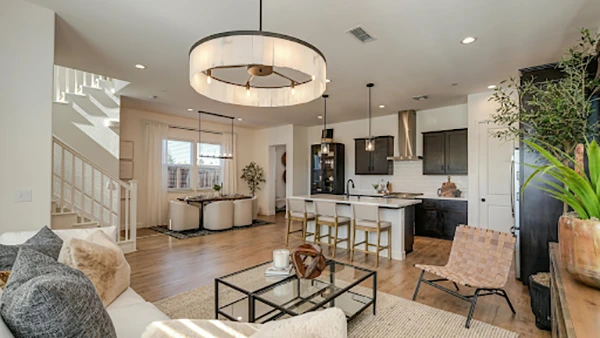
“The ache for home lives in all of us.” – Maya Angelou (Memoirist & Essayist)
Home isn’t just where you live. It’s where your body resets and your mind either finds calm or stays on edge. And here’s the surprising part: it doesn’t take a full makeover to shift that balance. Studies show that even small, intentional changes to a living space can reduce stress by over 20% in a matter of months.
Designing for well-being isn’t about chasing perfection or trends. It’s about shaping an environment that quietly works in your favor, through better light, less noise, thoughtful layout, and a sense of ease you can actually feel.
In this guide, I’ll tell you how to design a place that supports your physical and mental well-being with simple, practical changes in lighting, layout, decluttering, and daily habits.
KEY TAKEAWAYS
- Small design changes to your home can significantly reduce stress and improve daily well-being.
- Lighting, color, and sound have a direct impact on mood and energy levels.
- Develop simple, repeatable systems for decluttering the household.
- Well-designed rooms support mental health but don’t replace professional care.
Foundations of Home Wellness Design for Body and Mind
Before aesthetics, your place is a biological environment. Every room you walk into triggers a different physiological response in terms of heart rate, cortisol, and muscle tension. Light, temperature, noise, and layout are constantly signaling either safety or stress to your nervous system. When those elements work in harmony, you settle. When they conflict, the strain builds silently over weeks and months.
Think of your home as a series of “micro-environments”, spaces tuned for sleep, focus, movement, or connection. That framing immediately makes the whole project feel less overwhelming. You’re not redesigning everything at once. You’re fixing what matters most, first.
Core Principles of a Healthy Home Environment
A healthy home environment begins with what most people overlook entirely. Clear walkways, secure rugs, proper ventilation, and low-VOC products aren’t just practical upgrades. They send genuine signals of safety to the nervous system. Clean air matters as much as clean surfaces. Moisture control matters as much as aesthetics.
Decluttering Systems That Support Mental Clarity and Daily Routines
Clutter isn’t just visual, it’s mental noise. Every pile of unread mail, every counter covered in random objects, quietly demands a small piece of your mental attention. The goal isn’t minimalism. It’s enough visual calm that your brain can genuinely rest when you’re home, especially when you’re already navigating added pressures like seeking support or exploring mental health referrals.
Use closed storage for visually busy items and reserve open shelves for a handful of meaningful objects. “Drop zones” at your entryway, hooks, a small basket, and a dedicated shelf for mail keep surfaces clear without requiring constant effort.
A five-minute nightly reset, a weekly “one drawer, one shelf” refresh, these small habits prevent the slow creep of clutter that eventually feels impossible to address.
Creating a Stress-Reducing Home Design with Light, Color, and Sound
Most people think of these as decor choices. But they’re actually emotional regulation tools. These three levers are the most underestimated resources available to every homeowner and renter, regardless of budget.
Mood-Supportive Lighting Strategies
Lighting works on you constantly, whether you notice it or not. Start by maximizing natural light, furniture placement, sheer curtains, and reflective surfaces, all of which help daylight travel deeper into a room.
Layer your lighting: ambient, task, and accent, so you can shift the energy of a room simply by adjusting what’s on. In the evenings, warm bulbs around 2700K support your circadian rhythm and make falling asleep considerably easier.
Color Palettes That Promote Calm and Focus
Muted blues, soft greens, and warm earth tones consistently calm the nervous system in bedrooms and living rooms.
For home offices or workout spaces, desaturated yellows, sage, and dusty terracotta add energy without tipping into overstimulation. A reliable 60-30-10 rule, dominant color, secondary tone, and accent keep rooms cohesive without making them feel cold.
FUN FACT
Cool tones (blues/greens) ease stress by reducing cortisol levels by up to 18%.
Soundscapes That Support Relaxation and Concentration
Most people don’t realize how much ambient noise is quietly draining them. Rugs, curtains, fabric panels, and full bookshelves absorb sound more effectively than expected. White noise works well for sleep and deep focus.
The real habit shift is zoning: keep loud activities, TV, gaming, and long phone calls physically separated from reading corners, meditation spots, or telehealth call areas. That boundary alone makes a measurable difference.
Room-by-Room Home Design for Well Being
Different rooms should serve different purposes. As a result, they demand different design changes to support your well-being.
| Room | Primary Goal | Key Design Move |
| Bedroom | Deep, restorative sleep | Blackout shades, no work items visible |
| Living Room | Rest and connection | Conversation-focused seating, layered lighting |
| Kitchen | Healthy habits | Visible healthy foods, clear prep zones |
| Home Office | Focus and boundaries | Ergonomic setup, visual work/home separation |
| Bathroom | Quick recovery | Soft lighting, tidy surfaces, warm towels |
| Entryway | Nervous system transition | Hooks, calming art, a small plant |
The bedroom deserves first priority; sleep is the most powerful recovery tool your body has. Bed placement matters more than you’d expect: a clear sightline to the door, away from visible desks or work piles, creates a sense of safety the nervous system responds to immediately.
In living rooms, seating that faces each other rather than pointing at a screen actually encourages real conversation, a detail with measurable effects on relationship quality and mood.
The kitchen quietly governs daily energy levels and decision fatigue; keeping healthy foods visible and prep zones clear reduces the friction that derails cooking. For home offices, fix ergonomics first, chair height, monitor placement, keyboard position, then add a visual boundary between work mode and home mode.
Biophilic Home Wellness Design: Harnessing Nature Indoors
Research shows that greater residential green space exposure is associated with significantly fewer internalizing symptoms, including anxiety and depression, in young children.
Humans are wired to respond to nature. Living things, organic textures, daylight, and moving air all signal safety at a pre-cognitive level.
Easy-care plants, pothos, snake plants, and ZZ plants work well in low-light rooms. Natural materials like wood, linen, stone, and wool add tactile comfort that synthetic alternatives simply don’t replicate. Good ventilation and low-toxic cleaning products meaningfully improve indoor air quality without any renovation.
Personalized Interior Design for Mental Health and Identity
A place that looks good but feels empty won’t support you for long.
Display sentimental items where your eyes naturally rest, above a favorite chair, near the bed, or at eye level in a hallway. Release “obligation clutter”, décor that no longer reflects who you are. One or two joy corners celebrating a hobby do far more for daily mood than a perfectly curated but impersonal room.
A dedicated grounding ritual zone, a specific chair, a candle, and a journal train your brain to shift into rest mode faster simply through consistent use.
Digital Wellness and Tech Boundaries in Home Design
Good design loses its impact if your space is constantly buzzing with notifications.
Keep the charging station outside the bedroom. Create at least one screen-free zone, a reading nook, a meditation corner, and a comfortable chair removed from screens. Softer lighting, tactile materials, and plants in those zones cue rest without requiring any active effort.
When Home Design Isn’t Enough: Seeking Extra Support
Your environment matters, but it’s not a cure-all.
Persistent low mood, sleep disruption, appetite changes, difficulty functioning at work or in relationships, these are signals worth taking seriously, not designing around.
Seeking professional support and investing in your home environment are not mutually exclusive. A journaling corner, a medication station, and a relaxation zone can directly reinforce therapy goals.
Speaking with a healthcare provider about mental health referrals can open access to virtual care, telehealth, and specialist services, which can help you better, in addition to your well-designed home.
Practical Action Plan to Transform Your Home in 30 Days
Here’s a 4-week action plan to optimize your place for physical and mental well-being:
- Week 1: Walk around your home and identify the three spaces causing the most stress. Declutter those areas using a simple keep/donate/recycle system, 15 minutes per day.
- Week 2: Swap bulbs, add a lamp, and address the noisiest room with rugs or curtains. Mini color updates, new throw pillows, calming art, shift emotional register fast.
- Week 3: Build one calm corner, one movement area, one space for connection. These don’t need to be large; a chair, good lighting, and one meaningful object are often enough.
- Week 4: Embed daily resets, weekly maintenance checks, and tech boundaries as habits rather than willpower. Reflect honestly on what’s shifted, and consider professional support if you need more than your space can give.
Designing a Home That Works for Your Health
Your place is quietly shaping how you feel every single day.
From the light above your desk to the pile of mail on your counter, every detail either adds to your load or quietly reduces it. None of this requires a generous budget, a perfect aesthetic, or a complete overhaul. It requires honest attention to what your space is currently communicating, and what you want it to say instead. Start with one room. One corner. Even one shelf.
Small changes compound faster than most people expect. And when environmental improvements aren’t enough, reaching out for professional support is always the right next step, not a sign of failure, but a smart design decision in its own right.
FAQs
Do I need a big budget to create a wellness-focused room?
Not at all. Most impactful changes involve rearranging, decluttering, and adjusting lighting rather than buying new things.
Which room should I prioritize first?
Start with the bedroom. Better sleep has the biggest ripple effect on both physical and mental health.
How quickly can I expect to notice a difference?
Often within days. Even small changes like reducing clutter or improving lighting can create immediate relief.
What’s the biggest mistake people make in home wellness design?
Trying to do everything at once. It usually leads to burnout. Focusing on one area at a time works far better.