The very moment one plans to decorate or renovate their pool, the most important thing that comes to mind is adding a quality cap. This is not just to add a decorative element, but to improve safety by being installed at the edges.
These are actually high-quality materials that are specifically designed to outperform local materials over time and withstand even the harshest climates.
When paired with beautiful designs, it shines out while performing its crucial role. Keep reading to learn how quality caps transform pool edges.
Key Takeaways
- The right pool coping cap does more than finish the edge of a pool. It protects the pool structure from water infiltration and improves safety.
- Precast concrete caps offer the widest range of colors, textures, and profiles while delivering freeze-thaw durability and low maintenance that natural stone and budget alternatives struggle to match.
- A well-chosen cap paired with professional installation keeps the pool edge looking sharp and performing reliably for years.
What Is Pool Coping and Why Does It Matter?
In simple terms, pool coping is a material that is used to cap the edge of the swimming pool. It plays an essential role in upgrading safety by working around the slippery edges.
When choosing the right tone, it turns into the right ratio between the pool and the patio – helping the space to be comfortable every year.
How Does Pool Coping Protect the Pool Structure?
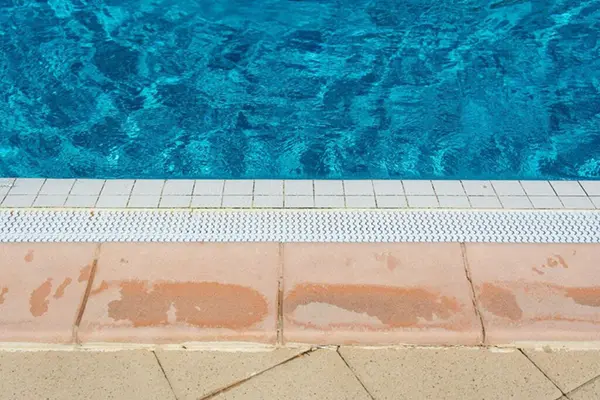
Pool coping is the cap stone or unit that lays on top of the pool shell wall, covering the obvious edge where the deck meets the water. It is used as the first line of defense to prevent water infiltration behind the pool shell.
Without a properly installed cap, water seeps into the bond beam, speeds up freeze-thaw damage in colder climates, and weakens the structural quality of the entire pool wall over time.
Coping also anchors the pool liner or tile edge, keeping it firm in position. A loose or poorly fitted cap allows the liner to shift, making up gaps that trap debris and promote algae growth. The cap shifts surface water away from the pool interior, reducing the volume of unfiltered runoff that passes the basin after rain.
What Role Does Coping Play in Pool Aesthetics?
Pool coping sets the visual boundary between water and landscape. It is the most visible horizontal line in any backyard pool layout, and its color, texture, and profile shape set the design tone for the terraced patio and hardscape.
A bullnose cap with a smooth finish creates a clean, modern edge. A square-cut stone cap with a polished surface creates a more traditional, architectural character. The material and finish of the coping should blend with the deck pavers or slabs to create a shared design language across the outdoor space.
For homeowners looking to improve their pool perimeter with a material that balances design capacity and long-term performance, companies like Techo-Bloc offer pool coping caps in a broad range of textures, profiles, and colors engineered for outdoor strength.
Having access to that variety makes it easier to match the pool edge to the surrounding hardscape without missing out on freeze-thaw prevention or slip safety.
What Are the Most Common Cap Materials for Pool Edges?
Pool coping is available in various types of material with various qualities. Each one offers a unique quality, look and functionality.
Selecting a right one can instantly give an attractive finish to the pool:
Precast Concrete Caps
Precast concrete is the most heavily used material for pool coping in residential projects. Manufacturers produce caps in a range of textures, from smooth and polished coats to slate-style embossed surfaces.
Precast units are engineered for dimensional uniformity, which eases installation and creates tight, even joints around the pool perimeter.
High-density precast caps endure salt, chlorine, and UV exposure better than typical poured concrete. Products with advanced surface technologies reduce porosity, making them less vulnerable to staining and efflorescence.
Precast concrete also offers the best color selection, allowing homeowners to match or set off the coping with their patio pavers.
Natural Stone Caps
Natural stone coping, including travertine, limestone, and bluestone, speaks a distinct, organic look that precast materials aim to copy. Each stone piece carries unique veining and tonal variation, giving the pool edge a one-of-a-kind finish.
The tradeoff is higher cost and greater support. Natural stone is porous and calls for periodic sealing to delay water absorption, staining, and surface degradation. In freeze-thaw climates, opened natural stone caps can crack or spall within a few seasons.
Stone also lacks the dimensional precision of precast, which increases installation time and joint variability.
How Do Porcelain and Composite Options Compare?
Porcelain pool coping has gained traction for its near-zero soaking rate and consistent surface quality. Porcelain caps resist stains, chemicals, and fading with minimal routine care. The material stays cooler on the bottom than darker-toned concrete or stone, making it a practical choice for sun-exposed pool decks.
Composite coping materials, including resin-bonded aggregates, fill a niche between natural stone designs and engineered performance. They are likely to be lighter than precast concrete, which can simplify processing during installation.
Both porcelain and composite options carry a higher price point per linear foot as opposed to standard precast, and color selections are more limited.
How Do Quality Caps Improve Safety Around the Pool?
While using the pool, it becomes easy for the surrounded surface to get wet. As a result, it gets slippery. But using a quality cap provide considerable safety from it by:
Slip Resistance and Texture Considerations
The pool edge is the highest-traffic wet zone in any backyard. Swimmers step onto the coping every time they enter or exit the water, often with wet feet on a surface bound to direct sunlight. A cap with a textured or slip-resistant finish greatly minimizes the risk of slips and falls in this critical crossover area.
Precast concrete caps with slate or granitex textures provide efficient traction without the roughness that makes barefoot walking stressful. Polished or high-gloss finishes, while visually attractive, perform better on vertical or decorative applications than on horizontal pool edges where water gathers.
What Makes a Cap Heat-Resistant for Barefoot Areas?
Surface temperature is a direct effect of color and material density. Lighter-colored caps emit more solar energy and stay cooler underfoot during peak sun hours. Darker tones hold heat quickly and can become uncomfortable or even unsafe for bare feet by midday in summer.
Solar reflectance index (SRI) ratings define this difference. Caps with higher SRI values maintain lower surface temperatures under identical conditions. For pool decks in hot climates, choosing a cap in a lighter shade or a material with a naturally higher reflectance significantly improves comfort during the swimming season.
What Design Styles Work Best for Pool Coping?
Different shapes, qualities and finishes affect the overall appearance of the pool. Explore some of the most used design styles that work best for pool coping:
Bullnose, Square Edge, and Cantilevered Profiles
The profile shape of the coping cap changes both the look and purpose of the pool edge. A bullnose profile features a rounded front edge that expands the pool wall slightly, creating a soft visual line and a comfortable grip point for swimmers. This is the most common profile for residential pools.
A square edge profile offers a sharper, more geometric appearance suited to modern or minimalist pool designs. Cantilevered coping runs farther over the pool wall, creating a shadow line that covers the waterline tile and gives the pool a smooth, floating look.
Each profile reacts differently with lighting, water reflection, and adjacent hardscape lines.
How to Match Caps to Your Patio and Hardscape Layout
The coping should function as a design gap between the pool water and the surrounding patio surface. Matching the cap material to the deck pavers creates a monolithic, unified look.
Comparing the coping with the patio, such as a lighter cap against darker pavers, shows the pool perimeter as a distinct design element.
Scale matters too. A large-format patio slab coupled with a narrow coping strip can look disproportionate. Selecting a cap width that balances visually with the paver dimensions keeps the overall layout harmonious.
Coordinating textures, such as a smooth cap with smooth pavers or a textured cap with textured slabs, reinforces design harmony across the entire outdoor area.
What Factors Affect the Durability of Pool Caps?
Not every pool cap performs the same. The real value and investment return are seen after a few years. Discover the factors that affect the durability of the pool caps:
Freeze-Thaw Performance and Climate Readiness
In regions with cold winters, freeze-thaw resistance is the single most important durability factor for pool coping. Water that penetrates the cap surface gets bigger when it freezes, creating internal pressure that leads to cracking, spalling, and surface delamination over several cycles.
High-density precast concrete caps engineered for freeze-thaw climates undergo rigorous testing to prove they withstand dozens of freeze-thaw cycles without structural decay.
De-icing salt resistance is another critical factor, as chloride exposure from pool chemicals and winter maintenance boosts surface wear on lower-quality materials.
Low Maintenance vs. High Maintenance Materials
Precast concrete and porcelain caps sit at the low end of the maintenance spectrum. Their engineered surfaces can withstand staining, require no sealing, and clean easily with water and a mild detergent. Natural stone sits at the higher end, asking annual sealing and careful product selection for cleaners to avoid etching or discoloration.
The long-term cost equation shifts when maintenance is built in. A material that costs less per unit but demands regular sealing, cleaning treatments, and earlier repairs may end up costing more over a 10 to 15 year period than a higher-quality cap that needs no recurring upkeep.
How to Choose the Right Pool Coping for Your Project
Choosing the right pool coping is just a single decision. It comes along with setting the right budget, understanding the climate and setting your priorities. Below is a straight plan to end up on a right pool coping for your project:
Budget, Climate, and Design Priorities
Selecting pool coping comes down to three elements: what the project budget allows, what the local climate demands, and what design outcome the homeowner wants. In mild climates with no freeze risk, the full range of materials stays viable.
In northern regions with harsh winters, freeze-thaw rated prefab concrete caps offer the best balance of performance and value.
Design priorities narrow the options further. A homeowner looking for a contemporary, clean-lined pool edge will gravitate toward smooth or mirror-like precast caps in cool gray or white tones.
A project with a rustic or Mediterranean theme calls for textured stone or travertine-look precast. Fixing the visual direction early prevents costly material changes midway through installation.
Working With a Contractor for Proper Installation
Even the highest-quality cap will fail prematurely if installed incorrectly. Pool coping requires a stable, level bond beam, a proper mortar or adhesive bed, and uniform joint spacing to perform as intended.
An experienced hardscape contractor can handle the substrate preparation, drainage grading, and expansion joint placement that keep the coping locked in position through seasonal movement.
Requesting product-specific installation guides from the manufacturer is a practical step before the project begins. These guides outline bedding thickness, joint fill material, and compaction requirements related to the specific cap profile and material.
A contractor who follows manufacturer specifications enhances both the warranty and the long-term integrity of the pool edge.
Conclusion
For any pool project, either the most expensive or the cheapest one, adding a quality pool coping can be one of the smartest decisions for the long term functioning.
These are not the materials one should compromise with. Investing in a quality material now will make you relaize later how well they were engineered to outperform the cheap alternatives to withstand harsh weather conditions.
Whether the end goal is to get a modern finish in the pool or an elegant resort-like feeling, selecting quality pool caps is essential for every year that comes by.
Frequently Asked Questions About Pool Coping Caps
1. What Is the Difference Between Pool Coping and Pool Caps?
Pool coping and pool caps refer to the same element: the finished unit placed on top of the pool shell wall to create a clean edge. “Coping” is the industry term for the overall edging system, while “cap” often refers to the individual stone or precast unit. In practice, the two terms are used interchangeably by contractors and manufacturers.
2. How Long Do Quality Pool Caps Last?
High-density precast concrete caps engineered for outdoor use typically last 20 years or more with no structural maintenance. Natural stone coping can last a similar timeframe if sealed regularly and protected from heavy salt exposure. The lifespan depends on material quality, climate conditions, and whether the installation followed manufacturer guidelines.
3. Can Pool Coping Be Replaced Without Redoing the Entire Pool Deck?
Yes. Pool coping can be removed and replaced independently from the surrounding deck surface. A contractor cuts the mortar joints, lifts the existing caps, prepares the bond beam, and installs the new coping. The process does not require tearing up the patio pavers or slabs adjacent to the pool, though minor patching at the transition line is common.