In a world where everyone is facing climate change uncertainty, sustainable building is no more a choice–it’s a responsibility. When I think about building a home, I don’t just picture a structure but imagine a space that reflects my values and my responsibility towards the planet.
Choosing natural materials is not only a trend; it’s a conscious step towards a healthy future. No doubt why the Coherent Market Insight report says the global sustainable material market size is increasing and projected to reach 800.02 billion USD by 2032.
Well, this data itself reflects that many people have realized their responsibility and started to incorporate effective solutions in their home construction.
Are you also considering sustainability in home construction? Continue reading this article, I have elaborated on the importance, benefits, and some useful steps to incorporate eco-friendly materials in your home construction.
KEY TAKEAWAYS
- Choosing eco-friendly building materials supports both the environment and personal well-being.
- Some sustainable materials, such as reclaimed board bamboo or recycled substances, reduce waste and promote energy efficiency while adding unique character to a home.
- Green construction lowers the utility bills, improves air quality, and even both property resale value, giving a long-term positive effect.
- Integrating renewable resources into home design shows how luxury and responsibility go hand in hand.
- Ultimately, building sustainably allows every individual to leave a positive footprint that balances comfort, conscience, and innovative design.
Understanding Eco-Friendly Construction Materials
As human beings, it’s a duty to protect the environment and reserve resources for future generations as well. Before that, one must realize that materials that use matter as much as the design.
There comes eco-friendly construction stuff that is sourced and produced in ways that minimize environmental harm. To incorporate organic and durable materials during your home construction, you can contact Quality Timber by Olam Agri.
The Benefits of Using Eco-Friendly Materials
You may find numerous benefits of using eco-friendly materials that go far beyond reducing carbon footprints. Here is a brief description of why they matter:
- Improved Air Quality: Organic materials are low in volatile organic compounds that are associated with toxins, making the air inside your home cleaner and healthier.
- Energy Efficiency: Some insulating materials, like sheep’s wool or straw bales, help regulate temperature and cut down on energy costs.
- Durability: Natural materials such as bamboo or other substances are built to last longer, leading to fewer repairs and replacements over time.
- Environment Friendly: Materials that are sourced from nature are easy to decompose and don’t pollute nature, coming out to be as a mindful thought.
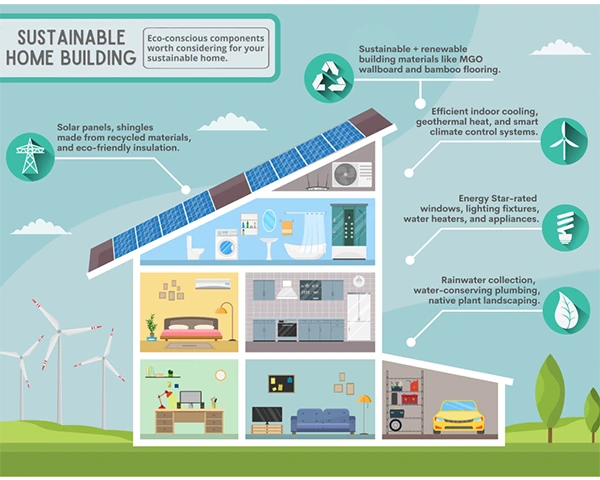
Besides benefits, here are some sustainable home-building ideas depicted through the image below.
Long-Term Environmental Impact
Home construction is not just about building a place to live but shaping a legacy. Considering the thought of sustainability in my mind, I choose eco-friendly materials for my home because they reduce landfill waste, lower greenhouse gas emissions, and conserve natural resources.
From choosing FSC-certified timber to using recycled roofing material, every decision contributes to a broader environmental benefit. I believe this small shift in construction philosophy plays a huge role in reducing long-term ecological damage, making the home both resilient and respectful to the earth.
INTERESTING FACT
“China has the most LEED-certified project and the largest amount of green building space across the world, followed by Canada and India.”
Challenges in Adoption

Of course, embracing green building is necessary, but it comes with many hurdles. I encountered a few of them myself.
- High Upfront Cost: Sustainable materials can require a high-cost investment initially, although they save money over time.
- Limited Local Availability: Many times, it becomes impossible to source materials in the local region easily. Only a few environmental-focused agencies supply those materials with a guarantee.
- Knowledge Gap: Not all suppliers have knowledge about sustainable methods, which can complicate planning.
Even after many challenges, proper guidance and a clear vision can help to overcome these obstacles. Certainly, the long-term benefits far outweigh the temporary inconveniences.
Steps for Transitioning to Sustainable Construction
If you are ready to take a step, in this action, I have provided a few steps that I also followed to make the transition smoother.
- Research Suppliers: Search for suppliers who prioritize sustainability in timber and raw materials before planning. It will be easy to compare and pick the best suppliers.
- Higher Professionals: Always choose architects and contractors who have prior experience in eco-conscious design. Based on their experience, they provide exceptional designs that might make your home outstanding.
- Start Small: Small steps can be a big way to sustainability. For this, you can even use recycled insulation or solar panels.
- Seek Certifications: Energy Star certificate LEED can provide you with authenticity and add value to your property.
Every eco-friendly choice you make today might come out to be a foundation for a greener tomorrow.
In conclusion, living sustainably is not a choice anymore, it’s a duty of every human being. Due to major climate shifts, it’s time to implement sustainability in everything, including during home construction.
With long-term environmental benefits to various other benefits, you will end up with satisfactory results. However, I agree this must be challenging, but a few preventive steps can help you out for sure.
In the end, don’t wait–just do it!
What makes a construction material eco-friendly?
Environmentally friendly materials are those that have a minimal negative impact on the environment. They are mostly renewable, recyclable, sustainably sourced, and so on.
Are green building materials more expensive?
Initially, it might seem they are quite expensive. But they may lead to reduced energy bills, lower maintenance costs, and longer durability over time.
How to determine if material is truly sustainable?
Always look for trusted certifications such as FSC (Forest Stewardship Council) for wood, LEED for overall building performance.
Are eco-friendly designs always simple?
Of course not, eco-friendly materials can be shaped in modern layouts or designed to give a vintage look to your home. You can also hire a professional designer to help you think outside the box.