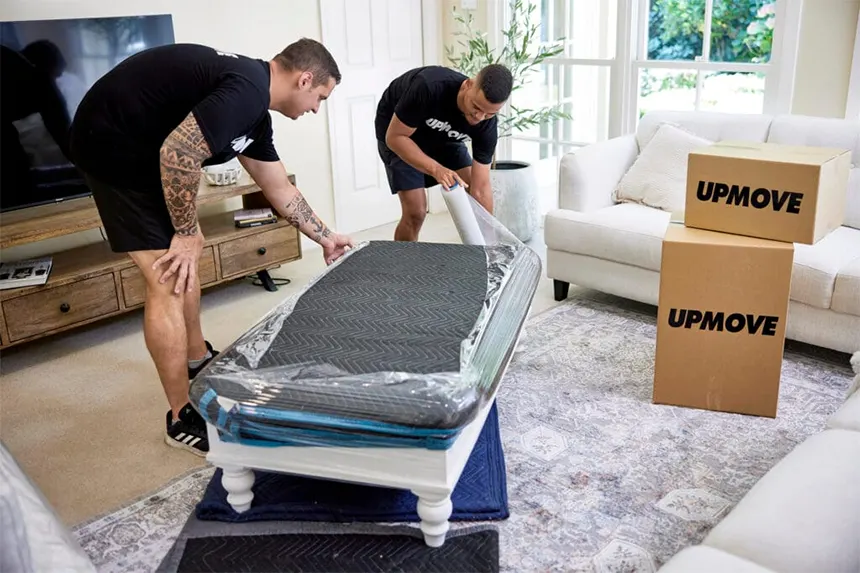
Lifting or shifting a bulky piece of furniture suddenly seems almost impossible when there are pinched corners, tight doorways, or fragile flooring to be concerned about. What might have been a quick job can end up with scratches in the hardwood, dents along the walls, or chips near the doorframes without the right planning.
The larger and heavier your item is, the more care you should take to visualize all the ways you might lift or push it. Thankfully, home defense doesn’t need fancy tools or a lot of work.
Learn the proper lifting techniques, protective pads, and measurements to use, so you can move heavy furniture without damaging the floors, walls, and doorways.
1. Start by Measuring Before Moving Anything
One of the biggest errors most people often make is counting on a piece of furniture to go through an opening just because it went through a similar opening previously.
Different rooms and buildings have different dimensions. A sofa might pass through the front entrance but become difficult to turn inside a narrow hallway. A wardrobe may fit through a bedroom door but not around the corner leading to it.
Before moving heavy furniture, measure:
- The height and width of doorways
- Hallway width at its narrowest point
- Staircase width and ceiling clearance
- Landing dimensions and turning spaces
- Elevator doors and interior dimensions, if applicable
- The furniture’s height, width, depth, and removable components
Remember to account for handles, decorative edges, legs, and other parts that extend beyond the main body of the furniture.
Think About the Turning Space
A doorway’s width does not tell the whole story. Large furniture often needs to be tilted or rotated to pass through an opening.
For example, a tall bookcase might fit through a doorway when upright but require a different angle when passing around a hallway corner.
Measure the available turning space rather than checking only the straight-line distance.
If the item won’t clear, then ask ourselves if we can take off legs, shelves, or other parts that might be able to shrink the object down to size. Never squeeze furniture through a tight hole just because it looks close enough!
2. Prepare the Floor Before Furniture Starts Moving
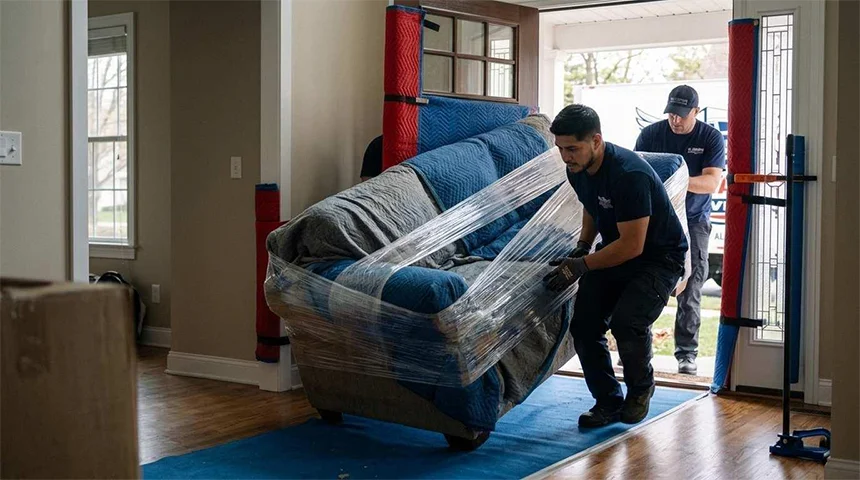
Flooring is particularly vulnerable during furniture relocation because heavy items can concentrate their weight on small contact points.
Wooden furniture pieces like a wardrobe or a cabinet will have comparatively small feet on which they rest; a refrigerator or washing machine can apply huge pressure onto a smaller area. Moving either across the flooring can leave scratches, dents, or stained finishes.
The correct protection depends on the type of flooring.
Hardwood and Engineered Wood
Wood flooring can be scratched by furniture edges, trapped dirt, and abrasive particles.
Prior to applying protection, sweep or vacuum the route, and a tiny stone under a moving blanket or floor protector will crush and damage the floor when pressure is applied.
Consider using:
- Heavy-duty floor protection boards
- Clean moving blankets
- Appropriate protective floor runners
- Furniture sliders designed for the specific floor surface
Avoid dragging furniture directly over hardwood, even if the floor appears durable.
Tile and Stone
Tile can withstand everyday use, but concentrated pressure or an impact from a heavy object can cause cracks and chips.
Padded or protectively covered the route with a well-suited fit now provides a barrier between the furniture and the route, corners, grout lines, even where the base of furniture stood directly on the route.
Never assume that a thin blanket alone will protect delicate stone or tile from the impact of a dropped object.
Carpet
Carpet may seem less vulnerable than hard flooring, but heavy furniture can compress fibers and leave visible impressions.
Roll or transport the furniture on the walking surface of furniture sliders or other moving equipment that is safe for use on the carpet. Do not use furniture sliders that have hard bottoms made for wooden floors since they may not work properly.
Keep the carpet clean before moving anything across it. Dirt and debris can become trapped beneath furniture and create additional friction.
3. Protect Walls and Corners Along the Moving Route
Walls are often damaged when people focus entirely on the furniture.
A large sofa may clear a doorway but scrape the wall when someone attempts to rotate it. A wardrobe can also strike a corner when being carried down a narrow hallway.
Before moving large pieces, walk through the entire route and identify vulnerable points.
Pay particular attention to:
- Hallway corners
- Doorframe edges
- Narrow passages
- Stairwell walls
- Areas beside handrails
- Wall-mounted fixtures
- Decorative trim and molding
Use corner protectors or suitable padded materials where furniture is likely to make contact.
Moving blankets protect furniture from scratches and also offer some padding if they come into contact with the furniture. Remember, though, that they are not intended to be used in place of sufficient space or delicate movement.
If possible, remove pictures, mirrors, wall decorations, and other fragile objects from the route before moving begins.
It is much easier to create a clear passage beforehand than to repair a broken picture frame or damaged wall afterward.
4. Use Doorway Protection Instead of Relying on Careful Handling Alone
Door frames are particularly exposed during furniture relocation.
A heavy sofa, bed, refrigerator, or wardrobe being hauled through an opening can slam into your framing studs if it gets away from you. Even a light bump can scuff or scratch paint, mar wood, or nick molding.
Temporary doorway protection can reduce this risk.
Depending on the doorway and the item being moved, consider:
- Padded doorframe protectors
- Removable corner guards
- Protective covers for exposed trim
- Moving blankets secured safely around vulnerable surfaces
Make sure protective materials are properly positioned and cannot slip into the path of the furniture.
If the opening is too narrow, reassess the furniture’s orientation before proceeding. Remove detachable components where appropriate, or consider another route.
Do not remove structural elements or force a piece of furniture through an opening that does not provide sufficient clearance.
5. Treat Staircases as a Separate Moving Challenge
Compared to average hallways, staircases require greater consideration for planning, as they bring in the element of elevation, restricted turning space, as well as more physical stress.
Moving a heavy object up or down stairs without the right equipment can put people and property at risk.
Before attempting the move, inspect:
- Staircase width
- Ceiling height above the stairs
- Landing dimensions
- Handrail clearance
- Steps with loose or damaged surfaces
- Lighting along the route
Remove loose rugs and other objects that could cause someone to trip.
Use suitable stair protection where appropriate, especially when transporting furniture with exposed metal components or sharp edges.
Heavy appliances and bulky furniture should be handled using equipment designed for the load and the staircase conditions. A regular hand truck is not necessarily suitable for stairs.
Avoid attempting to carry exceptionally heavy objects with too few people. If the item is difficult to control, stop and reassess the approach rather than risking an accident.
6. Protect Furniture as Well as the Property
Protecting the house is only half the job. Furniture can also sustain damage while being moved.
Corners, legs, handles, glass panels, and decorative surfaces are particularly vulnerable.
Before moving an item:
- Remove loose cushions and detachable accessories.
- Empty drawers and cabinets.
- Secure doors and moving components.
- Remove detachable legs or shelves where appropriate.
- Wrap delicate surfaces with suitable protective materials.
- Keep screws and small fittings in labeled bags.
Glass shelves and removable panels should be taken out and packed separately when possible.
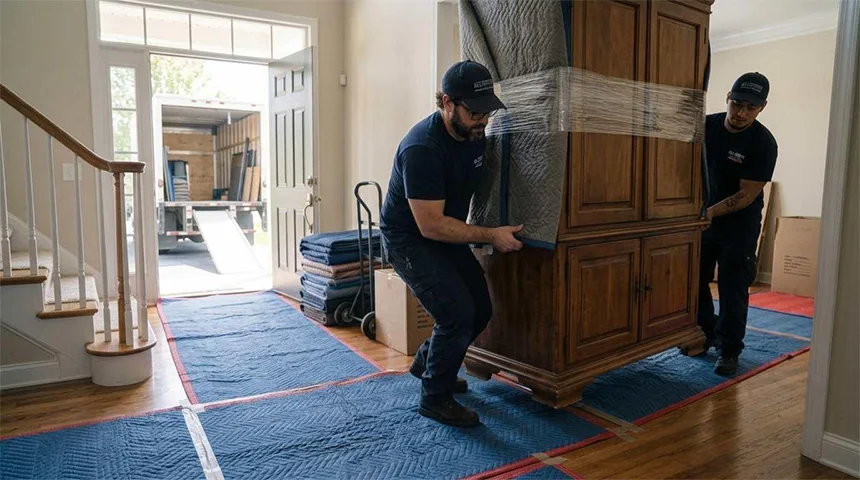
Protect wooden furniture with clean moving blankets to avoid scratching or surface damage. Make sure the blankets or coverings don’t bleed color or leave moisture and other residue on the surface of your finish.
Avoid wrapping furniture too tightly if doing so could damage fragile components or finishes.
If an item has a manufacturer-provided disassembly guide, follow it rather than guessing how the structure should come apart.
7. Clear the Route and Manage Obstacles Before Moving Day
Stylish furniture designed to withstand normal wear and tear will still leave a mark when clumsy or inattentive adults are forced to walk around it.
A clear moving route helps everyone work more efficiently and reduces the likelihood of sudden movements.
Start by removing:
- Shoes and small household items
- Rugs and loose mats
- Decorative accessories
- Children’s toys
- Pet belongings
- Low furniture and side tables
- Unsecured cables and extension cords
Keep pets and children away from active moving areas.
Ask if there are building regulations for hallways, elevator(s) and entrances, such as timing of moving times, elevator booking, protective coverings and loading dock.
For apartment buildings, confirm whether management requires advance notice or a designated moving entrance.
If you are planning a household relocation, build these details into your schedule rather than waiting until the furniture arrives at the property. Planning a smooth household relocation involves more than arranging transportation; access, timing, and the condition of both properties matter too.
8. Choose the Right Equipment for Heavy Items
The equipment used during a move can make a major difference to safety and property protection.
Different items require different handling methods.
Furniture Sliders
Floor protectors enable lightweight furniture to slide along any surface with the least amount of resistance. However, you need to be sure you’re choosing the proper floor protectors for the flooring type and for the weight of your furniture.
Check that the furniture is stable before attempting to slide it.
Moving Dollies
A suitable dolly can help transport heavy boxes, cabinets, and certain appliances across flat surfaces.
Make sure the load is secured and balanced. Do not overload equipment beyond its rated capacity.
Appliance Dollies
Refrigerators, washing machines, and other large appliances may require specialized moving equipment.
Follow the manufacturer’s preparation and transportation instructions. Some appliances need to be disconnected, drained, or secured before being moved.
Moving Straps
Straps can help to divide the load between people, but it is essential to use them correctly and to coordinate.
Incorrect use can increase the risk of back injuries or loss of control.
No equipment makes an unsafe load automatically safe. Always consider the weight, dimensions, route, and experience of the people handling the item.
9. Know When Professional Furniture Handling Makes Sense
Not all furniture needs to be moved by the pros. Moving a light chair or small side table is something most people can do with some simple preparation.
However, professional handling may be worthwhile when the move involves:
- Large sectionals and oversized sofas
- Heavy wardrobes and cabinets
- Refrigerators and washing machines
- Fragile antiques
- Large glass furniture
- Bulky items on staircases
- Narrow entrances and difficult access routes
Professional moving companies can evaluate the route, bring the right equipment, and organize the movement of heavy objects.
For people coordinating a relocation in Chicago, coordinating a residential move in Chicago may involve additional considerations such as apartment access, loading restrictions, parking availability, and building schedules.
These details are worth discussing before moving day, particularly when the property has limited access or oversized furniture.
10. Inspect the Property After the Move
After you have also set everything up on the furniture, spend a couple of minutes checking your hands and knees where you are using them at the same time.
Check the floors, walls, corners, staircases, and doorframes for new marks or damage.
Remove protective coverings carefully. Do not pull them across the floor if they contain dirt or debris.
Look beneath furniture where accessible and confirm that protective pads or suitable floor glides are positioned correctly.
If possible, try to take photos of the damage immediately. This can make the repair process go much more smoothly since you will have a visual account of the issue.
Also check that furniture is stable, appliances are positioned correctly, and doors or walkways remain unobstructed.
A Quick Home Protection Checklist
Before moving heavy furniture, use this checklist to make sure the important details are covered.
| Task | Why It Matters |
| Measure furniture and doorways | Prevents access problems |
| Check hallways and turning spaces | Reduces wall and corner damage |
| Clean the moving route | Prevents trapped dirt from scratching floors |
| Protect flooring | Reduces dents, scratches, and surface damage |
| Cover vulnerable doorframes | Helps prevent chipped trim |
| Clear staircases | Improves safety and access |
| Secure furniture components | Prevents shifting and breakage |
| Prepare suitable equipment | Makes heavy handling more controlled |
| Confirm building access rules | Avoids last-minute delays |
| Inspect after the move | Identifies damage promptly |
Frequently Asked Questions
What is the best way to protect hardwood floors when moving furniture?
Clean the route first, then use appropriate floor protection, moving blankets, or sliders designed for hardwood. Avoid dragging furniture directly across the surface.
How do you prevent furniture from damaging doorframes?
Measure the furniture and doorway, remove detachable components where possible, and use suitable padded doorframe protection. Plan the angle of entry rather than forcing the item through.
Can moving blankets protect walls?
Moving blankets can provide cushioning against minor accidental contact, particularly around furniture edges. For vulnerable corners and doorframes, dedicated protective guards may offer better coverage.
Should I remove furniture legs before moving?
If the legs are designed to detach and removing them makes the furniture easier to handle, it can be helpful. Follow the manufacturer’s instructions and keep all hardware organized.
Is professional help necessary for heavy furniture?
It depends on the item’s weight, dimensions, access route, and handling difficulty. Oversized appliances, fragile furniture, and heavy pieces on staircases may benefit from experienced handling and suitable equipment.
Final Thoughts
Transporting heavy pieces of furniture does not have to lead to a series of unfavourable marks, creases, or broken doorposts.
The most effective approach is to prepare the route, measure before lifting, protect vulnerable surfaces, and use equipment appropriate for each item. Just as importantly, recognize when a piece of furniture is too heavy or awkward to handle safely without experienced assistance.
A little preparation before the first item moves can save considerable time, money, and frustration afterward. Your furniture should arrive in its new position, not leave the house looking like it went through a renovation project.