“Price is what you pay. Value is what you keep when you take care of what you own.”
Think of yourself as a living, breathing entity. Just as you wouldn’t skip your annual checkup, you shouldn’t let your home’s skin weather the elements without a little TLC. Often, we get so caught up in selecting the right interior throw pillows or kitchen backsplashes that we forget the exterior is what actually stands between us and the chaos of the outside world.
You should invest your time in your home’s facade, which isn’t just about being the envy of the neighborhood, but also about strategic preservation. In this guide, I’m going to walk you through how to treat your property like the high-value asset it is.
Key Takeaways
- Almost all the exterior degradation is caused by improper water management.
- You should use binoculars to inspect your roof for damaged shingles without the need for a ladder.
- You should keep the plants away from your siding to prevent rot and pests, and also follow the 12-inch rule.
- You should mark your calendar for ‘Exterior Checkups’ at the beginning of every season.
Why Consistent Exterior Maintenance Protects Your Home Long-Term
It happens often when a homeowner ignores a tiny hairline crack in the siding, and three years later, they are facing a five-figure bill for fixing the structural rot. Consistent maintenance is essentially ‘future-proofing’! By staying ahead of the weather, you are maintaining the structural integrity of your sanctuary, making sure that your property value continues to climb.
Year-Round Exterior Home Maintenance Tips
The following tips will help you keep your home in the top shape all year round:
Inspecting Roofing and Gutters
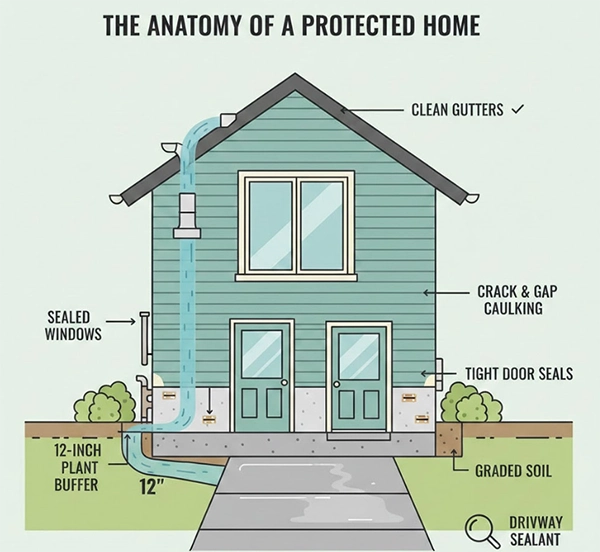
Your roof is always your first line of defense; however, your gutters are the unsung heroes of drainage. If your gutters are choked with leaves, water will back up under your shingles or pour directly into your foundation. To keep your basement dry and your roof intact, you must pay attention to maintaining clean gutters twice a year, especially when there are autumn leaves.
Sealing Cracks and Gaps
Tiny gaps around spigots or foundations are invitations for moisture and pests. You should always use high-quality exterior caulk to ‘plug the holes’ once a season. This simple habit keeps your interior dry and significantly lowers your monthly energy bills.
Maintaining Windows and Doors
Beyond cleaning the glasses, you also need to inspect the weatherstripping to prevent drafts and save your money. Lubricate your sliding door tracks and check the wooden frames for soft spots. If the eyes of the home are well-maintained, your home will remain both comfortable and structurally sound.
Checking Exterior Paint and Finishes
Paint is a very important protective layer of your home against UV rays and moisture. If you wish to notice alligatoring or peeling, it is time for a touch-up. Addressing these surface issues early prevents deep-seated wood rot of damage from taking hold.
Caring for Driveways and Walkways
Both concrete and asphalt are vulnerable to winter weather. When water enters small cracks and freezes, it expands that turning tiny gaps into costly damage. You can use a specialized sealant that blocks moisture and prevents these expensive repairs, which can save you from a total driveway replacement.
Trimming Landscaping Near Structures

As for the garden, you should keep it from touching the siding. Plants trap moisture and act as bridges for pests. By maintaining a 12-inch breathing zone between bushes and walls, you prevent wood rot and can stop termites from easily entering your home.
Maintaining Fences and Gates
Boundary markers ensure constant weathering. For automated systems, mechanical health is as vital as aesthetics. Using professional services for driveway gate maintenance, ensuring sensors and motors function correctly, which will prevent you from being locked out during a storm.
Inspecting Outdoor Lighting
Safety and security shouldn’t be an afterthought. Every few months, a night walk is recommended. You should check for burnt-out bulbs, making sure that motion sensors are still calibrated. High-quality LED outdoor lighting not only deters the intruders but also highlights the best architectural features of your home.
Preventing Costly Repairs Through Early Detection
The secret of being a savvy homeowner is developing a ‘detective’s eye’. Early detection is the difference between a $10 tube of caulk and a $10,000 siding replacement. It is recommended to perform a perimeter sweep at the beginning of every season.
Did You Know?
Nearly 40% of home water damage claims are caused by failing gutters and poor exterior drainage.
You should look for changes in texture, hardware, or new stains that feel loose. When you catch a problem in its infancy, you can keep the repair cheap, simple, and manageable.
Final Thoughts
Maintaining your home’s exterior doesn’t have to be an overwhelming weekend-warrior project. It is about the small and consistent victories, clearing a gutter here and sealing a crack there. When you treat your home with respect, it also rewards you with safety, comfort, and a much healthier bank account when the time comes to sell. Happy home-keeping!
How often should I power wash my siding?
Once a year is usually plenty. You should not use too much pressure, as you can force water behind the siding and also into your insulation.
Why is my gate making a grinding noise?
This usually indicates debris in the track or a lack of lubrication. It is best to call a specialist to avoid burning out the motor.
What is the best time of the year to paint the exterior?
Late spring or early fall is ideal as the temperatures are moderate and the humidity is usually lower, which allows the paint to cure properly.