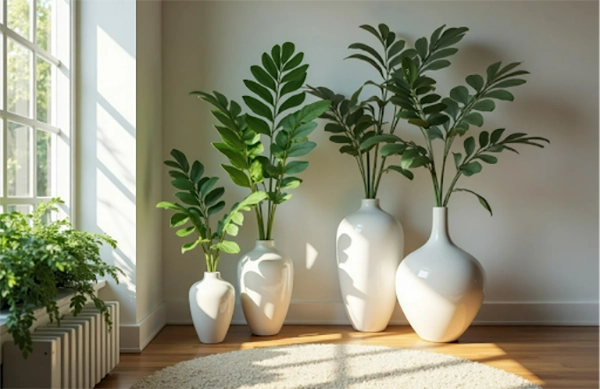
In the era of modern redesigning, artificial flowers or plants are frequently overlooked. You may envision stiff leaves and boring styles that lack character. However, that outdated idea or perception is no longer correct.
Many people enjoy faux plants because they require less maintenance than real ones. They are available in realistic textures and nearly natural, vibrant colors, making them both stylish and functional for any space.
In this blog post, we are going to learn how to use faux plants creatively to bring personality into your space and provide some unique ideas to people who are looking for a revamp.
Let’s begin!
Key Takeaways
- Uncovering the impact of filling empty corners
- Looking at the style shelves with potted plants
- Understanding how it transforms living rooms and dining areas
- Exploring bathroom elevation using these plants
1. Fill Empty Corners With Tall Trees
Sometimes a home can still feel bland, even with beautiful furnishings. Perhaps the empty corners are to blame, as they are often easy to overlook, especially in open-plan rooms with furniture dispersed throughout.
That’s when tall artificial trees can be an ambiance lifter. You can choose between olive trees, fiddle leaf fig, snake plants, or pampas grass. Their height and unique shapes will surely capture everyone’s attention. Just make sure to purchase realistic fake plants from a reputable shop. This ensures you get high-quality pieces designed to last for many years.
Another thing to take into account is placement. Position the faux trees near a piece of wall art, a rug, or a side table to visually anchor them. It’s also recommended to use planters with texture, such as woven baskets, ceramic pots, or a concrete container. You’ll be surprised how a once-neglected corner can become a statement feature.
2. Style Shelves With Potted Plants
The popularity of artificial plants isn’t just a passing trend. Based on a report, the artificial greenery industry is projected to reach USD 0.93 billion by the end of 2030. In other words, they are here to stay. And one of the easiest places to work them into your space? Shelves. They are the perfect spot to sneak in a mini artificial botanical collection.
Because shelving units can sometimes appear rigid, the goal is to soften those straight lines and introduce more flowing movement. Succulents, trailing vines, and compact leafy greenery look great here.
For a more creative display, consider tucking plants between books to break up visual monotony while keeping things polished. Avoid lining them up evenly across shelves, too. Instead, stagger their placement and vary their sizes. One shelf might hold a small fern, while another features a cascading pothos-style vine draping downward. These decorative fake plants can add variation without overwhelming the space.
3. Liven Up Dining and Coffee Tables
Just like shelves and corners, tables are another place to introduce plants. But centerpieces don’t always need fresh flowers to make an impact. Artificial plants provide a long-lasting alternative that suits everyday living. Low-profile arrangements with faux grasses or leafy stems, for instance, keep tables looking neat and stylish.
Interesting Facts
You can opt for a tall faux palm in a chic planter or a lush fiddle leaf fig tree, positioning it strategically in a corner or beside a sofa instantly to draw the eye and anchor the space.
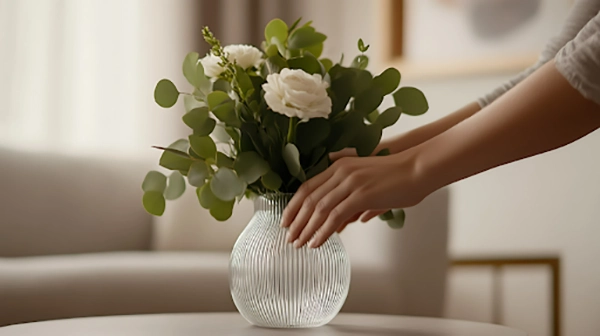
For the dining table, choose neutral-toned greenery that works across seasons. As for the coffee table, you can make it more fun by layering plants with books and classic accents. The key here is scale. That means keeping things proportional so your arrangements add style without taking over the table.
4. Build a Lush Green Wall
If an instant wow factor is what you’re after, a lush green wall is a great choice. This unique home decor turns a plain surface into a focal point. It also brings a lively atmosphere without relying on real plants.
To build it, start by choosing a spot that needs a facelift. This could be an interior wall near your living area or an exterior facade. Make sure to measure the area to determine how much coverage you’ll need. This will help avoid gaps or an overcrowded appearance.
You can then pick faux foliage that complements your home’s design and color palette. Pre-made greenery panels are the quickest option. But if you’re a DIY enthusiast, you can craft a custom wall by placing small bunches onto a frame or grid.
For a nice arrangement, mix different leaf shapes, textures, and shades of green. It’s also a good idea to tuck in some artificial flowers to add a splash of color to the feature.
5. Elevate Bathrooms With Moisture-Free Foliage
Bathrooms are a tough environment for real plants. That’s mainly because of the low light and constant humidity in the space. While some indoor plants can survive in these conditions, they still require regular monitoring and care.
Faux foliage solves the problem while adding a spa-like atmosphere. A synthetic eucalyptus bundle near the shower or on the vanity can make the room feel fresher while reducing the risk of mold and decay.
Wall-mounted planters work beautifully in this area, too. Since these elements are much lighter than soil-filled pots, they’re easier to hang and keep in place. Pair them with warm lighting fixtures, and your bathroom starts to feel thoughtfully styled.
Wrapping Up
Artificial plants have come a long way from their outdated reputation. Today, they’re recognized as design-forward elements that can elevate any space. If you’re revamping your home, consider including these versatile pieces in your plans. When placed correctly, they can create a space that radiates warmth and visual interest.
Can you leave artificial plants outside in winter?
No, because freezing temperatures, snow, and ice can cause some fake plants to become brittle or crack.
How long do fake plants last?
They can last for a few months or a year.
Are fake plants eco-friendly?
Yes, mostly they are; it just depends on their material.