I always look for plants that feel unique and rewarding, and the pistachio plant instantly grabbed my attention. The ability of the genus to thrive in a variety of climatic conditions and still give a generous yield completely amazes me.
Although I grew my pistachio tree out of curiosity, the more I study it, the more it fascinates me. Its hardy nature and long-term productivity make it one of the most demanding dry fruit plants.
Moving further, if you are also planning to add this genus to your garden, I am here to help you out. In this article, I have shared all the useful insights, from the plant’s nature and growth cycle to its care and nutritional benefits, so that you can easily grow this green gem.
Introduction to the Pistachio Plant
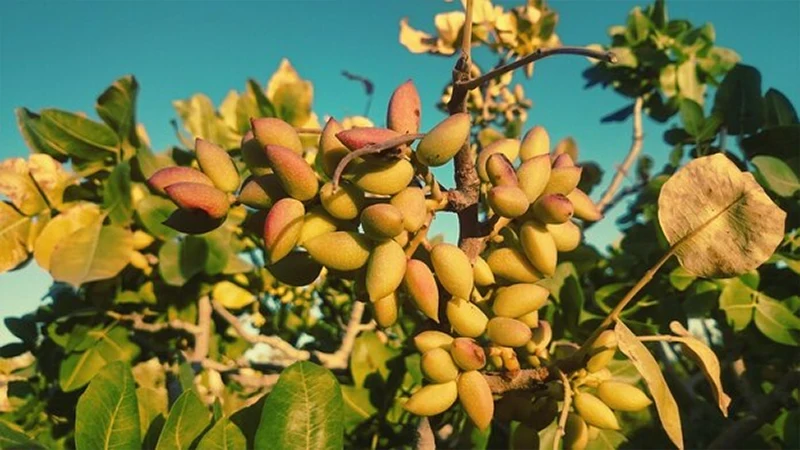
The pistachio plant, botanically known as Pistacia vera, is a small, slow-growing deciduous tree. It belongs to the Anacardiaceae family, which also includes cashews, mangoes, and poison oak. Additionally, the genus is cultivated worldwide and is highly prized for its edible seeds, commonly known as pistachio nuts.
Here are certain features that make the pistachios trees botanically unique.
- Dioecious Nature: The word means “two houses”, which in a botanical sense indicates that male and female flowers grow on separate individual trees.
- Botanical Explanation: Although the pistachio as a whole is referred to as a nut, botanically it is a drupe (a fleshy fruit with a thick skin like a peach or olive), and the edible part is its seed, enclosed in a hard shell.
- Natural Shell Dehiscence (Splitting): As the pistachio nut grows on the tree, the seed inside gets bigger and puts pressure on the hard shell. When fully mature, the outer layer of the seeds naturally cracks and splits with an audible pop.
This natural opening is valuable as it makes harvesting easy and is also commercially beneficial because people generally prefer buying pistachios that are split open.
- Adaptability and Longevity: The pistachio is a highly adaptable, resilient, and drought-tolerant species known as a Phreatophyte. It has an extensive root system that allows it to reach deep underground water channels. This way, it can thrive even during summer or a dry spell.
- Alternate Bearing: This phenomenon is also known as biennial bearing. It typically produces a heavy crop one year, followed by a significantly lighter crop the next time.
The pistachio is a crop of increasing global importance due to its nutritional value. Additionally, the crop also has a long history of human consumption, dating back to at least 600 BCE. The crop is also called “green gold” due to its substantially high economic value.
History and Origin: Where Do Pistachios Come From?
Pistachios are believed to have originated from the arid or semi-arid regions of the Middle East and Central Asia. This includes modern-day Iran, Afghanistan, Syria, Lebanon, and Turkey.
It is believed that the cultivation of this royal nut began approximately 3,000–4,000 years ago. Furthermore, in the classical era, Alexander the Great brought them to Greece, and later, these were introduced to Italy and Spain.
Did You Know?
Every year, 26th February is observed as National Pistachio Day!
The key growing regions that significantly produce high-quality seeds are Iran and Turkey. The United States is one of the largest producers, with major crops growing in Arizona and New Mexico.
Ever since the cultivation of this royal nut, it has been an important part of many local cuisines. What fascinates me most is its unique use, how the seed can be used in both sweet and savory dishes.
Botanical Classification and Morphology of the Pistachio Trees
Let us quickly explore the botanical background and morphology of the Pistachios trees so that we can understand more about the plant family of the genus.
| Scientific Classification of the Pistachio Plant | |
| Kingdom | Plantae |
| Clade | Tracheophytes |
| Clade | Angiosperms |
| Clade | Eudicots |
| Clade | Rosids |
| Order | Spindales |
| Family | Anacardiaceae |
| Genus | Pistacia |
| Species | Pistacia vera |
| Morphology of Pistachio |
| Growth Habit: Small, deciduous tree type. |
| Mature Height: 8–10 meters tall, with a canopy-like structure. |
| Root Structure: Deep, taproot system allowing it to survive dry days. |
| Leaves: Pinnately compound, oval-shaped, with a thick leathery texture. |
| Fruit: Botanically called a drupe, the fruit has a fleshy outer layer (hull); inside is a hard, inedible shell, which encloses the edible green kernel. |
Where Can I Grow Pistachio Trees? Ideal Growing Conditions Needed
By now, I have given you a fair idea of where the pistachio nut comes from. It is now time to understand the ideal growing conditions needed by the genus.
- Always choose hot, dry climatic conditions because pistachios thrive in hot summers and mild winters. The genus needs a minimum of 7-8 hours of direct sun exposure.
- I make sure to plant the seed in well-drained sandy-loam soil to maintain the overall health of the plant. This ensures that the plant gets all the essential nutrients and prevents root rot.
- Although the species can tolerate a variety of soil types, the pH level of the soil should be between 7.0 to 8.0, as the plant grows best in slightly alkaline soil.
- During its active growing period, I always watered deeply so that the roots and the leaves of the genus do not dry out. Simply make sure to adjust the frequency and allow the soil to dry.
Once the plant is mature, intense watering is not needed as it becomes drought-tolerant.
- Avoid growing them in areas having high humidity, as it can create ideal conditions for fungal diseases to grow, causing leaf damage. It can also hinder the overall growth of the plant.
What fascinates me about this dry fruit is that if the aforementioned conditions are met, it can be grown in almost any region.
Take a look at the table below, which highlights the vibrant growing regions from around the globe!
|
|
|
How are Pistachios Grown? Care Tips and Tricks That I Follow
Beyond the basic growing needs, pistachios also have some seasonal garden care requirements to thrive and produce nuts.
- Chilling Hours: It is a set period of winter that is required by the pistachio plant to produce new buds and leaves during the spring. It is advised to provide at least 900–1000 hours of chilling period at a temperature of 45°F (7°C).
- Heat and Aridity Period: Pistachio trees require hot and arid temperatures to grow properly. To ensure the nuts ripen, plant the species in areas with temperatures of at least 38 degrees Celsius.
- Avoid Overwatering: While young trees require frequent watering, it is important to adjust the water level once the plant is mature to prevent root rot.
Just like any other fruit tree, this slow-growing deciduous tree also needs additional nutrients to flourish. A well-balanced fertilizer (NPK) in the ratio 10:10:10 can work wonders for the genus. You simply need to spread the chemical evenly around the tree base, and it’s done.
How Do I Grow Pistachios? My Home Gardening Guide
I love munching pistachios daily, and ever since I have known about the nutritional benefits these tiny kernels hold, I have fallen in love with them even more!
While I was exploring how peanuts grow, someone suggested that, of all the nuts, growing pistachios can be the most challenging. I knew this would be my next garden addition.
Therefore, here are some deeper, more practical home gardening tips that go beyond the general Garden care guide.
Step 1: Selecting the right variety as per the climate of the area you are living in. I always go for “Kerman” ones as these are easy to manage and can easily adapt to the environment of any home garden.
Step 2: Always dig a deep planting pit. Pistachios have long taproots, which help them reach underground water channels and absorb better nutrition.
Step 3: I personally avoid adding heavy fertilizers as the genus tends to grow better in poor-quality and loamy soil types. When you see wilting leaves, immediately check for pest infestation.
Instead of using any strong plant food, consider spraying organic horticulture oils for quick results.
Step 4: It is better to prune the pistachio plant strategically. Before learning how to grow pista, it is important to understand its pruning techniques. I generally prefer pruning my tree during the dormancy period, and I only remove dead, damaged, or crossing branches.
Is it Possible to Grow Pistachios in a Container?
Yes, pistachios can be grown in a container, but only for the first 3–5 years when the plant is in its initial growing stage. Since it naturally develops a long taproot system, it demands an open ground for full development.
- Be sure to choose a pot at least 20–24 inches deep so that the roots of the plant can develop fully without becoming stressed.
- Avoid using heavy garden soil because pistachios hate staying wet. This stunning species that starts with a P thrives in a potting mix similar to that of a cactus.
- Keep the plant in full sunlight. As containers heat up faster, growing the genus initially in it can actually be beneficial for the overall health of the plant.
The only drawback of growing a pistachio plant in a confined container is that the fruit production will be fewer as compared to that of growing in the ground.
Success Rate Comparison (Container Plant vs Open-Ground Tree)
- Container growing is only applicable for nursery plants or for the initial growing stages of the genus.
- For long-term health and quality nut production, open-ground cultivation is advisable.
Common Pests and Diseases That Affected My Pistachio Plant and How I Treated Them
Pest infestation is the most challenging part of growing a pistachio plant. The genus is prone to many vulnerable insects and other plant diseases. Let us quickly discuss some common issues that are faced by the genus and how I generally treat them.
Navel Orangeworms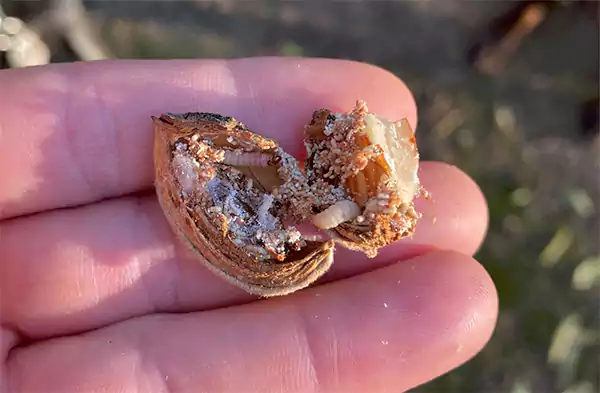 | Problem: The larvae/caterpillars feed on the green kernel, potentially damaging seed quality and reducing production. Solution: Use insecticidal soaps or spray liquid fertilizer to remove them completely. |
Scale Insects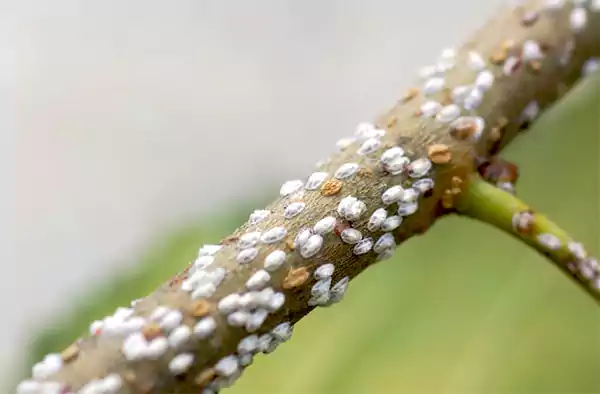 | Problem: These are sticky insects, mostly found on the stem, sucking sap. Solution: Prune infested branches and spray horticultural oil on the entire plant. |
Spider Mites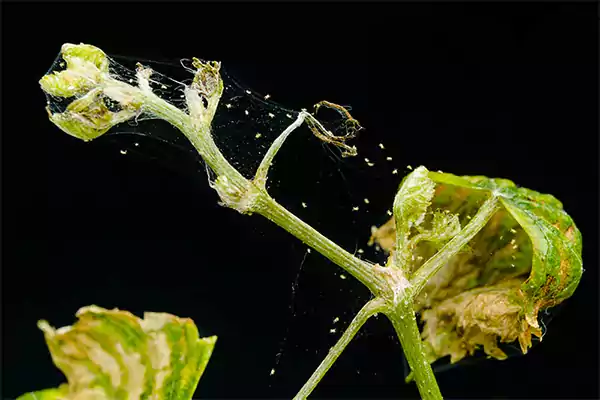 | Problem: Similar to scale insects, spider mites also feed on the sap, and the leaves of the plant turn brown, and the plant starts wilting. Solution: Use strong water sprays and apply insecticidal soap or horticultural oil to remove them. |
Verticillium Wilt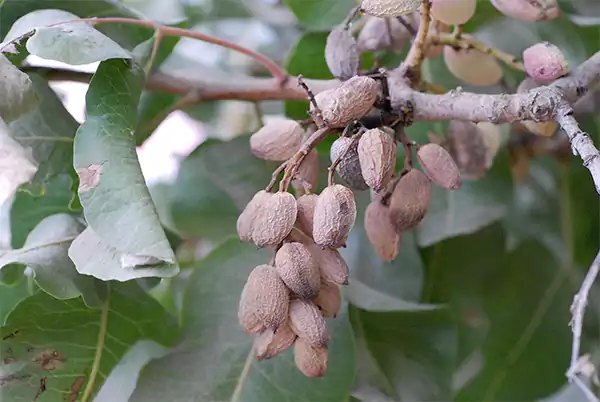 | Problem: Verticillium wilt is a soil-borne fungal disease that affects the overall health of the plant. It blocks the water flow, turning the leaves yellow or brown. Solution: There is no cure for this plant disease. If the infection is in its early stage, prune the branch or simply remove the tree from the garden. |
Powdery Mildew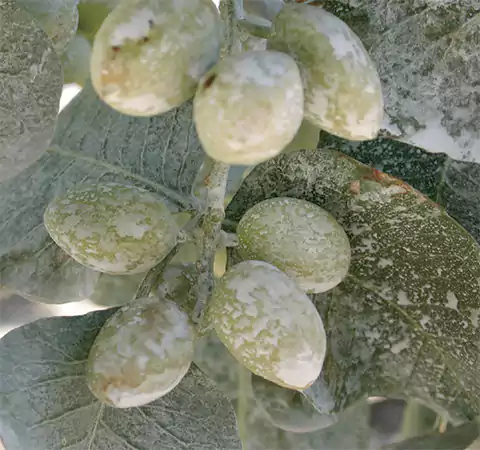 | Often found on the leaves, stems, or branches of the plant, powdery mildew is a white patch that deteriorates the health of the species and leads to stunted growth. Solution: Apply fungicide on the leaves of the plant and wait for 2–3 days. |
How to Harvest Pistachios? Simple Steps That I Followed
Unlike other fruit trees, pistachios need to be harvested before they fall off the tree. Harvesting this nut involves a few key steps, from knowing when they are ripe to collecting and processing them. Pistachios are typically harvested in late summer to early fall, usually around September in most major growing regions.
Signs that pistachios are ripe and ready for harvest:
- The color of the hull (outer layer of the nut) changes from green to a rosy, pinkish-yellow.
- Apart from color changing, the hull starts loosening and easily separates from the hard inner shell. You can easily check this by pressing the nut with your thumb. If it peels away easily, it means they are ready to harvest.
- Natural splitting is another indicator that the fruit is ready for harvest. As the nut matures, the shell splits open naturally, and an audible popping sound comes to alert the gardeners as well.
If you are a home gardener just like me, or are harvesting pistachios at a small scale, you simply need to follow the steps mentioned below.
- Spread large tarps or nets under and around the base of the tree to catch falling nuts. You can also use any large piece of cloth. Just make sure that it is clean and completely dry.
- Gently tap or shake the branches of the tree using a rod or any feasible instrument, so that the mature pistas start falling on the cover spread on the ground.
- Collect all the nuts that fell on the tarp and avoid the ones that fell on the ground or in any sort of dirt.
For large-scale or commercial harvesting, you will need mechanical shakers that have large catcher boxes attached to them, so that not a single nut goes to waste. The nuts are later transferred to processing facilities using conveyor belts.
Nutritional Value and Health Benefits of Pistachios
Before adding this plant to my garden, I researched its dietary advantages, and many reputed health institutes call them green jewels because of all the nutritional value they hold.
Let us quickly discover some astonishing health benefits of this aromatic nut.
- Loaded with vitamins, minerals, and macronutrients. It contains protein, fiber, potassium, and healthy fats that help manage the energy level of the body.
- If you are on a weight control diet, adding pistachios can be beneficial as they are low in calories and have a high protein level.
- The main reason I started growing these in my backyard is that pistachios are gut-healthy and an excellent probiotic snack. Having 5-6 kernels daily can enhance your digestion and improve your metabolism.
- Regular intake of pistachios indicates an improvement in insulin sensitivity and reduces post-meal blood sugar spikes. It also contains L-arginine, which relaxes the blood vessels and improves blood circulation.
Let us quickly review the nutritional value of pistachios and compare them with other nuts (per 100g) in a table format.
| Nutrient | Pistachio |
| Calories | 560-570 kcal |
| Protein | 20-21 g |
| Fat | 45 g |
| Fiber | 10 g |
| Potassium | 1000 mg |
| Magnesium | 110 mg |
| Vitamin E | 2.4 mg |
| Iron | 4 mg |
| Omega-3 | 320 mg |
While pistachios are a safe and healthy snack, overconsumption can also cause various issues. It may cause digestive issues or allergic reactions in some individuals; therefore, moderation is the key!
Let’s Explore Some Viral Pistachio Recipes
Pistachio-based recipes have undoubtedly gained popularity on the internet. These dishes are not only good in taste, but are also visually appealing, which makes them go viral on social media.

The most significant trend has been the “Dubai Kunafa Chocolate”. If you are also looking for sources to buy this viral pista desert, let me tell you, it is easily available in premium chocolate stores, but you can also make one for yourself in just a few easy steps.

It typically features milk chocolate with a crunchy layer of kataifi, mixed with a sweet, creamy layer of pistachio tahini cream.
Some other popular pistachio desserts are as follows:
- Pistachio Tiramisu

A twist on the classic Italian dessert, which is made using lady fingers infused in a coffee concoction for days, and a silky smooth pistachio cream.
- Pistachio Brownies
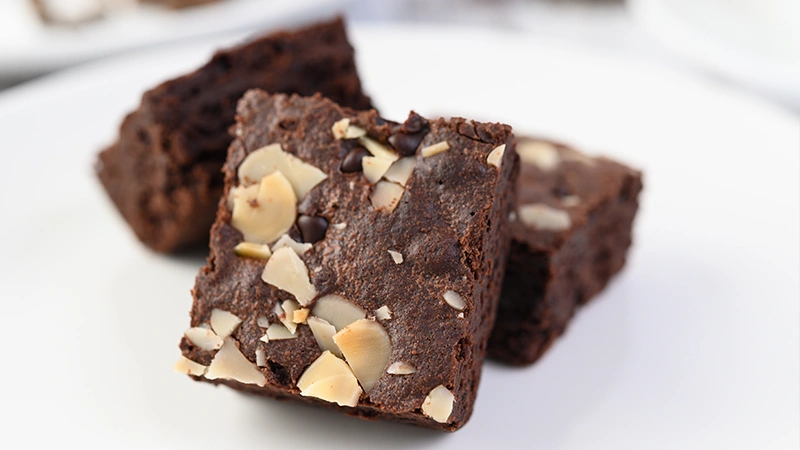
A mini moist cake, often made using pistachio cream or butter for a nutty, gooey center, to make layers, similar to that of a cheesecake.
- Pistachio Latte

This is a unique coffee drink made by combining espresso and hot milk with the distinct nutty flavor of pistachios. It can either be served hot or iced, and is available at many stores as a ready-made drink.
Fun Facts and Lesser-Known Insights
Let us quickly explore some fun facts and lesser-known insights about pistachios.
- Many scientific studies suggest that eating 1.5 ounces of pistachios per day can significantly reduce cholesterol and eliminate the chances of any kind of heart issues.
- The dry fruit is known as “smiling nut” in Iran and “happy nut” in China because of its naturally split-open shell.
- In China, pistachios are associated with good luck and are often used for fighting purposes, especially during the New Year.
- Many legends say that the Queen of Sheba liked this green nut so much that she reserved all her lands’ production for herself and her courtiers.
This nutty fruit has been enjoyed for over 9000 years now, and its distinct flavor still makes it one of the most liked dry fruits.
Conclusion
Now I feel more confident growing pistachios since I understand their growth cycle and their needs. The plant is said to be a low-maintenance species, but it does require certain specific conditions to thrive.
Whenever I plant the pistachio seed, it humbles me and reminds me that slow results can also be meaningful. The journey of growing this green nut teaches me patience, and I hope you get some useful insights from my personal experience.
Go ahead and embark on your own pistachio adventure!
FAQs
Can pistachios grow in India?
Yes, pistachios can be grown in India, particularly in the regions having hot, dry summers and mild winters. Rajasthan, Himachal Pradesh, Jammu & Kashmir, and Gujarat are some of the most suitable states.
How long does a pistachio tree take to fruit?
Although the tree starts bearing fruit during the first 4–5 years of planting, the first profitable yield takes around 7–10 years. During the initial years, the yield is not very productive.
Do pistachio trees need a male plant?
Yes, pistachio trees are dioecious. The male and female flowers grow on separate trees. So to produce nuts, you need a male plant during pollination.
Why are some pistachios closed?
Some pistachios are closed because they are not fully ripe. This can happen due to weather stress or poor growing conditions.
Can we eat the pistachios directly from the tree?
Yes, you can eat pistachios directly from the tree. You simply need to remove the outer shell before consuming it.
Why are pistachios so expensive?
Due to their labor-intensive cultivation process and the nutritional benefits they hold, pistachios are generally expensive in comparison to other dry fruits.
- Pistachio: Description, Uses, and Nutrition – Britannica
- The Pistachio Tree – US Agriculture and Natural Resources Research Paper
- How to plant and grow a pistachio tree – BBC Gardeners’ Guide