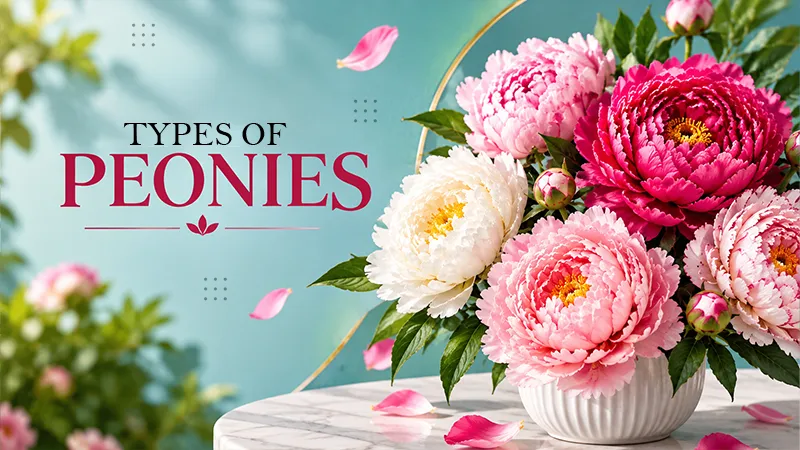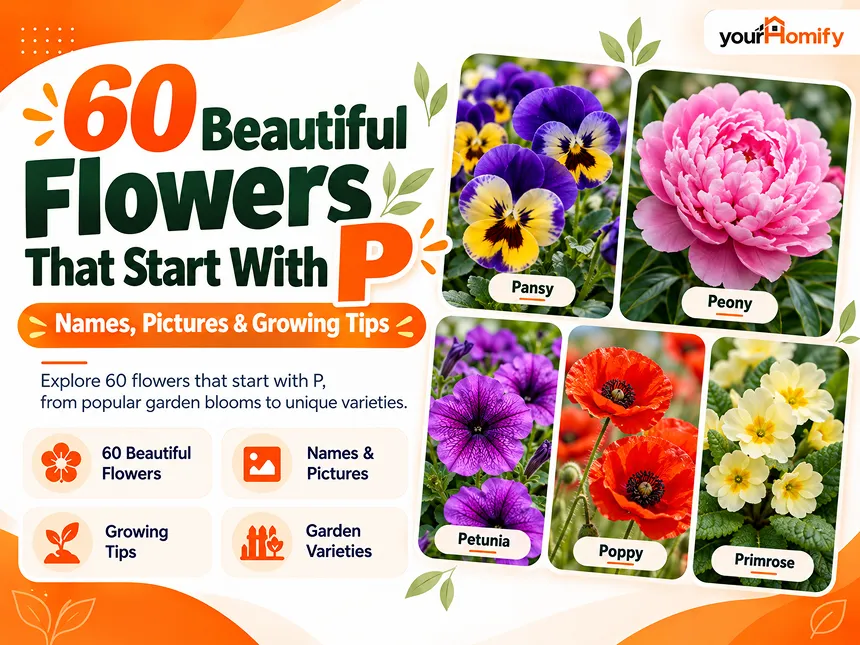
Pretty and personality are the words that can be used for the flowers that start with P. This plant has different specifications, appearances, and growing requirements. There are beautiful flowers like pansy, peony, primrose, and poppy, and ornamental flowers like peace lily, papyrus, paper daisy, and Pimpernel. The vibrant and unique textures will enhance the look of your indoor or outdoor garden.
Take a look at 70 flowers that start with P, along with a quick description of them.
Quick Answer
Peony, pansy, petunia, poppy, and primrose are popular flowers that start with P. Each one of them has different characteristics, like: peonies are large, fully bloomed, and fragrant flowers; pansies are colorful, cool-weather plants; petunias are trumpet-shaped flowers; poppies are vibrant blooming flowers; and primrose is the earliest spring bloom.
10 Alluring Flowers That Start With P
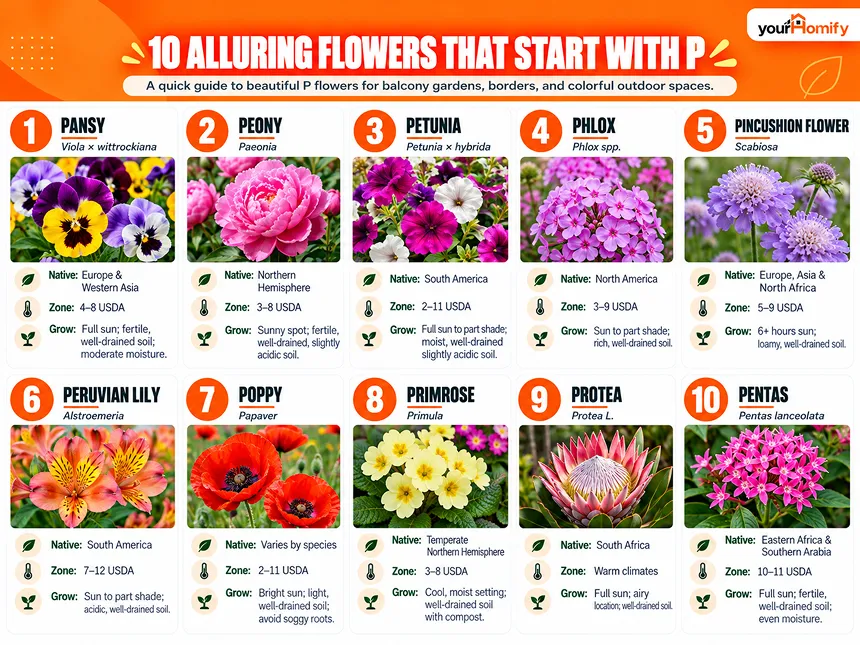
Are you also planning to create a personalized balcony garden? Let us quickly explore some fascinating flowers that start with P. The list below covers a wide range of blooms that will surely enhance the whole vibe of any garden space.
1: Pansy

| Native Range: Europe and Western Asia |
| Hardiness Zone: 4-8 USDA |
| Botanical Name: Viola x wittrockiana |
| Growing Conditions: Requires full sun exposure to flourish. Prefers growing in fertile, permeable soil, with moderate watering to keep the soil evenly moist. |
One of the most eye-pleasing flowers that start with P is the Pansy. It is a hardy, low-growing species that originally belongs to the violet family. This purple plant can be easily grown under diverse environmental conditions, and its heart-shaped leaves are its main attraction.
2: Peony

| Native Range: Mostly grown in the Northern Hemisphere |
| Hardiness Zone: 3-8 USDA |
| Botanical Name: Paeonia |
| Growing Conditions: Choose a spot where the flower can receive ample sunlight. Needs well-draining, fertile soil which is slightly acidic and does not require much watering once established. |
If you walk past a species that has large, showy, and vibrant blooms, chances are that it is a Peony. The fragrant blossoms of this flower starting with the letter P, are widely appreciated, and its beauty is insanely mesmerizing.
Growing up to 7 feet tall, the Peony flower is an ornamental garden species often used for floral decoration.
3: Petunia

| Native Range: South America |
| Hardiness Zone: 2-11 USDA |
| Botanical Name: Petunia x hybrida |
| Growing Conditions: Prefers growing in full sun exposure but can also tolerate partial shade. Needs moist, permeable but slightly acidic soil to flourish with moderate watering. Avoid making the soil soggy to prevent root rot. |
If you wish to add a pop of color to your garden, the ideal flower that starts with P is Petunia. This flowering hanging plant bears trumpet-shaped blooms and is quite easy to care for.
Petunias are annual herbs belonging to the nightshade family and are popularly grown as border cover plants to attract pollinators like bees, butterflies, and hummingbirds.
Recommended Product
View all products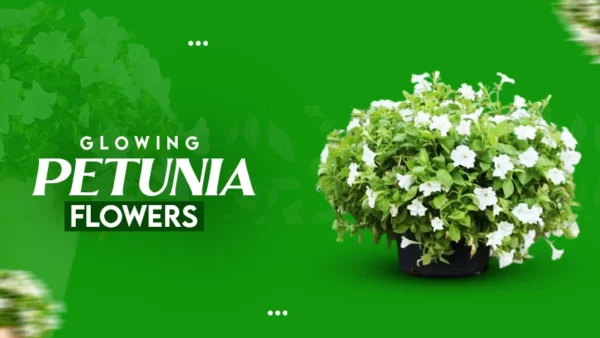
Imagine, as the sun sets, a little plant in your balcony garden gently illuminates, making your space aesthetically pleasing. Created through advanced science, this enchanting Firefly Petunia can instantly transform the overall look of any landscape. Before you plan to add this plant to your indoor space, go through this immersive write-up and explore its features and benefits, along with its care guide. Firefly Petunia: A Brief Overview of the Ornamental Plant The Firefly Petunia is a revolutionary, world-first genetically engineered bioluminescent houseplant, famous for its natural glow-in-the-dark. It emits a soft greenish-yellow glow, especially when the plant's foliage and roots are in their initial growth stages. Key Features and Benefits of Firefly PetuniasFirefly Petunias also bear small white flowers that usually bloom from spring through fall. The genus does not need any charging in the sunlight; it glows brightly, especially the new growth. These are best used as container or hanging plants. The bushy appearance of the genus makes it a unique accent plant that enhances the overall look of any garden space. Growing about 6-10 inches tall and 8-10 inches wide, the Bioluminescent Petunia is an annual flowering plant. Its glow is visible in a dark room, but not strong enough to light a pathway. Botanically called Petunia x atkinsiana ‘Firefly White’, this first-generation plant requires minimal upkeep and attracts various beneficial pollinators such as bees, butterflies, and hummingbirds. The Firefly Petunia plants not only offer an aesthetic appeal but also contribute to the ecological development of nature. It also emphasizes the power of genetic innovation. Scientific Classification of the Firefly Petunia Seeds Growing like a normal petunia during the daytime, this hybrid species belongs to the Solanaceae family, which is commonly called Nightshades. Let us quickly explore more about the botanical background of this plant. KingdomPlantaeCladeTracheophytesCladeAngiospermsCladeEudicotsCladeAsteridsOrderSolanalesFamilySolanaceaeGenusPetuniaSpecies/Botanical NameP. × atkinsiana Ideal Growing Conditions Needed for Bioluminescent Petunias Although these Firefly Petunias for sale do not need any special maintenance, they do require basic growing conditions to flourish. Quickly take a look at what an ideal care guide for this genus looks like. Complete Care Guide for Bioluminescent PetuniaSunlight ExposureThis Petunia hybrid needs bright, direct sun exposure. It needs a minimum of 6-8 hours of direct sunlight. Soil TypePrefers growing in a well-draining potting mix consisting of peat moss or coco fiber. Water NeedsModerate watering is ideal for Firefly Petunias. Make sure that the soil is not too moist, as it can cause root rot. Fertilizer & PruningA slow-release fertilizer works best for the genus, and it needs light pruning only if the leaves are dead or damaged. Reviews and Ratings Oliver Thompson: Absolutely enchanting – my poolside feels so magical and surreal specially after the sun sets. Rating: ⭐⭐⭐⭐⭐ James Harrington: Very easy to care for and looks visually appealing. Worth every penny! Rating: ⭐⭐⭐⭐⭐ Amelia Collins: My guests are always amazed by its glow. This has truly been a focal point of attraction in my balcony garden. Rating: ⭐⭐⭐⭐⭐ Charlotte Bennet: I visited a nursery full of firefly petunias, and I was completely mesmerized. This is truly a wonderful blend of science and beauty. Rating: ⭐⭐⭐⭐⭐ FAQs Do Firefly Petunias prefer growing in sun or shade? Firefly Petunias are pure sun-loving plants and prefer growing under bright, direct sunlight. Where to buy Firefly Petunias from? Firefly Petunias can be easily bought online or from any local nursery near you. Do Firefly Petunias grow back every year? Typically, this genus is grown as an annual flowering plant and cannot grow back on its own, while some hybrid species are perennials. How expensive are Firefly Petunias? Firefly Petunias are the world’s first genetically engineered, glowing, bioluminescent plants and generally cost between $29 and $40 USD per plant.
- Indoor/Outdoor Usage: Outdoor
- Brand: YourHomify
4: Phlox

| Native Range: North America (some subspecies are grown in Siberia) |
| Hardiness Zone: 3-9 USDA |
| Botanical Name: Depends on the particular species |
| Growing Conditions: Most species prefer growing in full sunlight to partial shade. Nutrient-rich, permeable soil type with average watering works wonders for the bloom. |
Phlox is a diverse genus of flowering plants, liked by many garden enthusiasts for its vibrant and clustered blooms. Some cultivars of the genus, like the ‘Emerald Blue’ creeping Phlox, form a low and dense mat and are popularly grown as ground cover plants.
Although this flower that starts with a P is low maintenance, it is quite prone to certain pests and requires attention.
5: Pincushion Flower

| Native Range: Europe, Asia, and Northern Africa |
| Hardiness Zone: 5-9 USDA |
| Botanical Name: Scabiosa |
| Growing Conditions: Requires a minimum of 6 hours of direct sunlight with some shade during hot summer days. It should be planted in loamy yet permeable soil with moderate to minimal watering. Consider adding organic compost to the soil for optimal growth. |
Named after their unique appearance, the Pincushion flower is a perennial species and is mostly used for decorative purposes. This exotic-looking, rare flower is admired for its flower head and is also pollinator-friendly.
Available in many hues, the Pincushion flower is the perfect option if you wish to add a head-turning bloom to your garden.
6: Peruvian Lily

| Native Range: South America, specifically in Chile, Brazil, and Argentina |
| Hardiness Zone: 7-12 USDA |
| Botanical Name: Alstroemeria |
| Growing Conditions: Grows best in full sunlight but can also thrive under partial shade. During winter, the bloom needs morning sun to prevent wilting. Water only when the top 2–3 inches of the soil feel dry, and use well-draining acidic soil with general-purpose fertilizer. |
Peruvian Lilies do not belong to the true lily family, but are popular for their blooms that look almost similar to real ones. Often found in shades of pink, orange, white, purple, and yellow, this spring flower has a strong stem and grows up to a height of 1–3 feet tall.
Prized for their trumpet-shaped blooms, this flower manages to uplift the vibe of any garden space.
7: Poppy

| Native Range: Varies by the species |
| Hardiness Zone: 2-11 USDA |
| Botanical Name: Papaver |
| Growing Conditions: Most poppy varieties prefer growing under bright sunlight; partial afternoon shade can also be beneficial. Requires watering only during the initial growing stages and should be planted in permeable soil, as it is susceptible to root rot. |
Available in almost every shade, Poppy is one of the most exquisite flowers starting with P. Being a popular August birth flower, the bloom symbolizes peace and resilience.
It is globally applauded for its culinary and medicinal uses and is often grown to add a burst of life to any landscape. The showy blooms of Poppy are truly eye-pleasing and are widely used for floral decorations.
8: Primrose

| Native Range: Northern Hemisphere (particularly in temperate regions of Asia, Europe, and North America. |
| Hardiness Zone: 3-8 USDA |
| Botanical Name: Primula |
| Growing Conditions: Primrose prefers growing in a cool and moist environment. The amount of sunlight required varies from species to species. It should be planted in well-draining soil with organic compost, and moderate watering is required only until the plant establishes. |
Primrose is a genus of herbaceous perennial belonging to the Primulaceae family. These blooms come in a variety of colors and often grow in clusters.
If you wish to create a pollinator-friendly garden, the colorful and fragrant flowers of the genus attract bees and butterflies. Primrose, also known as February birth flower, indicates the arrival of spring and is often gifted to convey fresh beginnings.
9: Protea

| Native Range: Southern Hemisphere (South Africa’s fynbos region) |
| Hardiness Zone: (not specific) |
| Botanical Name: Protea L. |
| Growing Conditions: Protea requires an ample amount of sunlight for optimal growth and flowering. Water regularly during the initial growing stages, and adjust the frequency later to avoid root rot. Try using a permeable soil type with an organic compost mix. |
The captivating blooms of Protea are simply irresistible. Known for their pink flowers, the genus has glossy, leather-like leaves that create a stunning contrast in the garden. Since the blooms produce nectar in large quantities, it is also commonly called “sugar bushes”.
Being an evergreen species, the blooms of Protea are used for floral arrangements or to make fresh bouquets. The genus prefers growing in a breezy location to avoid fungal diseases and pest infestation.
10: Pentas

| Native Range: Eastern Africa and Southern Arabia |
| Hardiness Zone: 10-11 USDA |
| Botanical Name: Pentas lanceolata |
| Growing Conditions: Though Pentas can tolerate partial shade, abundant sunlight is needed for optimal growth. Grows best in well-draining, fertile soil with a pH between 6 and 7. Water the plant regularly, only to keep the soil evenly moist, but avoid waterlogging. |
One of the most picturesque flowers that begins with the letter P is Pentas. It is a flowering plant and bears stunning pink blooms in large, showy clusters.
Commonly called the Egyptian Star Flower and the Egyptian Star Cluster, this bloom can instantly enhance the aesthetics of any place.
The genus can be planted in a container as a houseplant, does not require much care, and is a favorite among pollinators as it attracts bees, butterflies, and hummingbirds.
Additional List of Flowers Beginning With the Letter P
Discover more flowers that start with P, each with its own colors, shapes, and growing needs. From delicate garden blooms to eye-catching varieties, the table below highlights their botanical names, native regions, and USDA hardiness zones to help you explore different options.
| S. No | Flower Name | Image | Key Aspects |
| 11 | Penstemon |  |
|
| 12 | Passion flower |  |
|
| 13 | Periwinkle |  |
|
| 14 | Petticoat Daffodil | 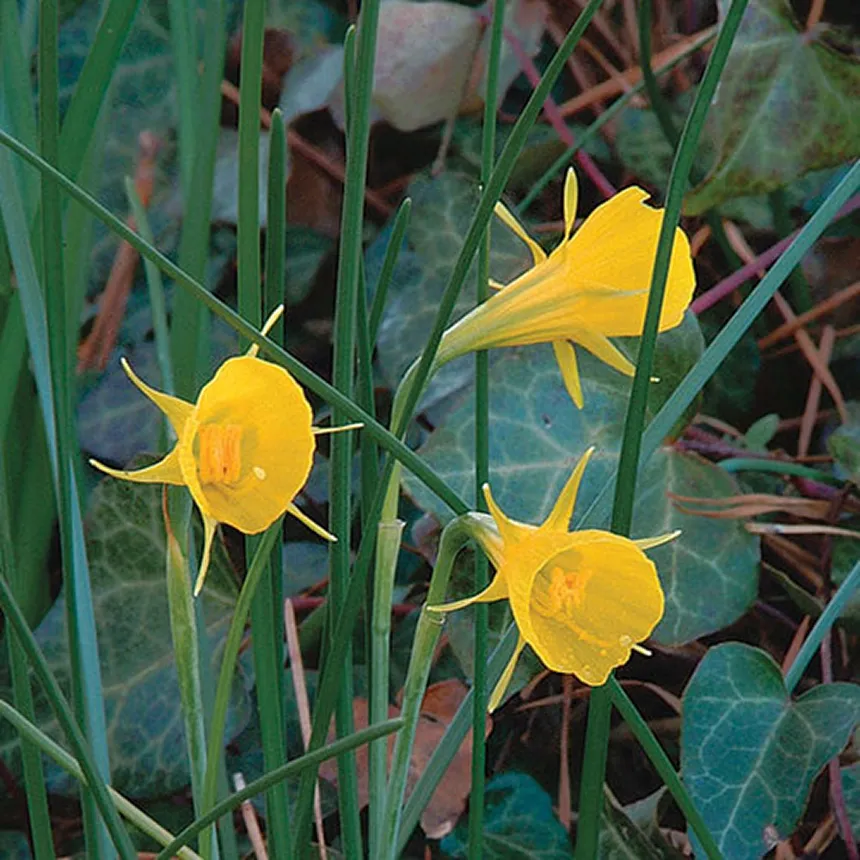 |
|
| 15 | Pheasant’s Eye |  |
|
| 16 | Pincushion Protea |  |
|
| 17 | Pinks |  |
|
| 18 | Prairie Smoke |  |
|
| 19 | Pulsatilla |  |
|
| 20 | Painted Daisy |  |
|
| 21 | Potentilla |  |
|
| 22 | Portulaca |  |
|
| 23 | Persian Buttercup |  |
|
| 24 | Prickly Pear Cactus |  |
|
| 25 | Parrot Lily |  |
|
| 26 | Polyanthus |  |
|
| 27 | Prairie Gentian |  |
|
| 28 | Platycodon |  |
|
Whether graceful, bold, or delicate, flowers that start with the letter P bring endless elegance to any landscape. Go ahead and fill vibrancy in your life with the aforementioned blooms.
10 Flowering Trees and Shrubs That Start With P
Looking for flowering trees and shrubs that start with P? This list includes beautiful options such as plumeria, poinsettia, and plum blossom. Explore their botanical names, native regions, and hardiness zones to find varieties that may suit your garden.
| Flowers | Images | Description |
| 29: Poinsettia | 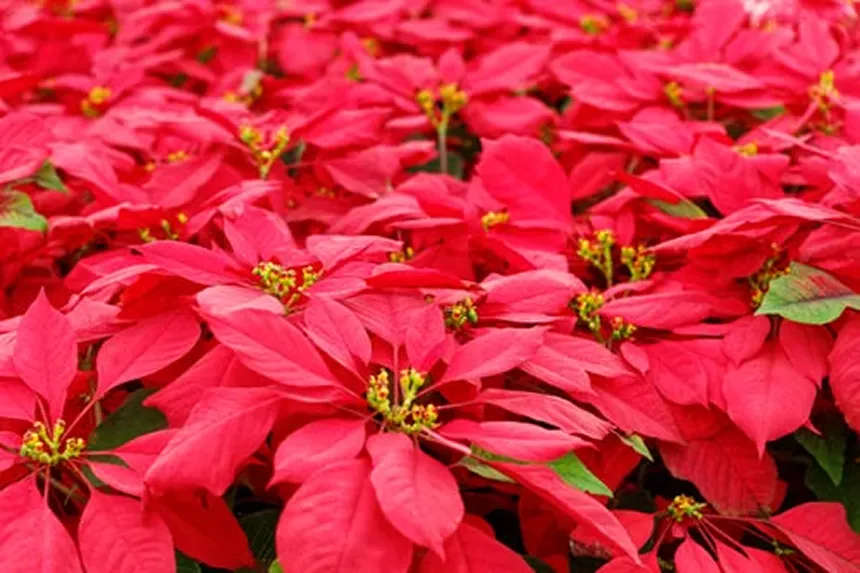 |
|
| 30: Plumeria | 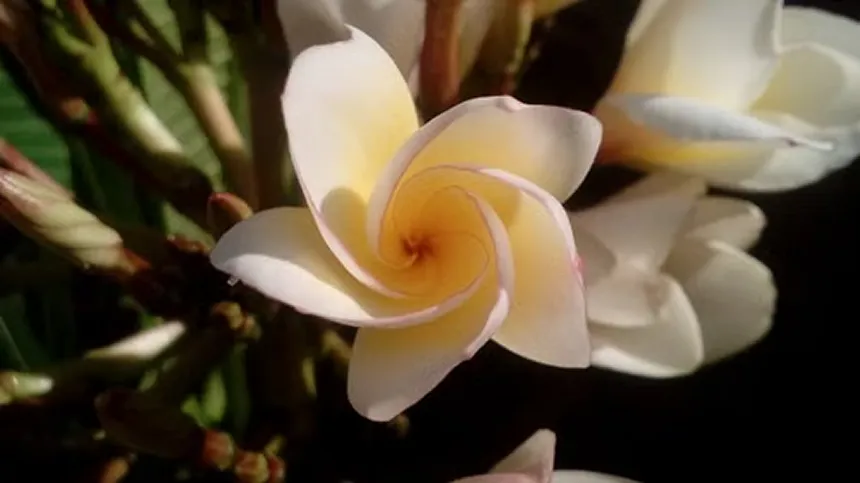 |
|
| 31: Pavonia | 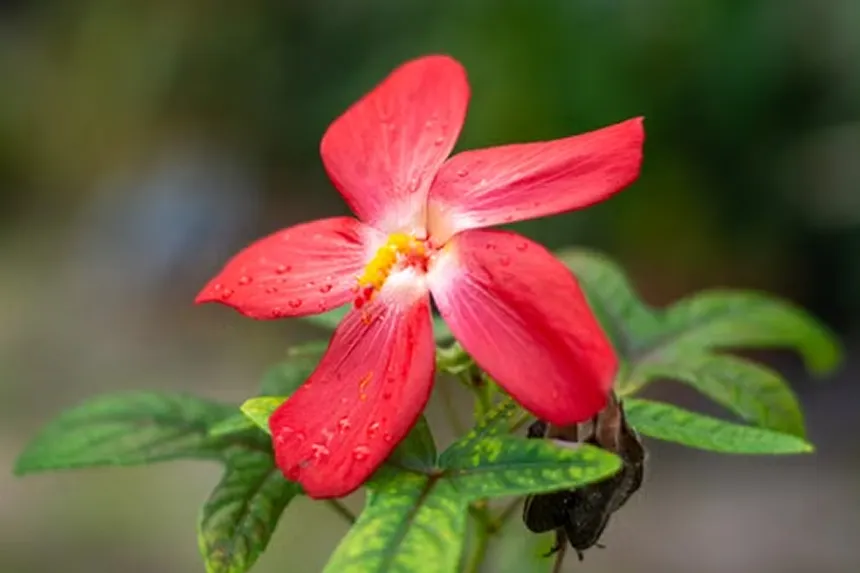 |
|
| 32: Peach Blossom | 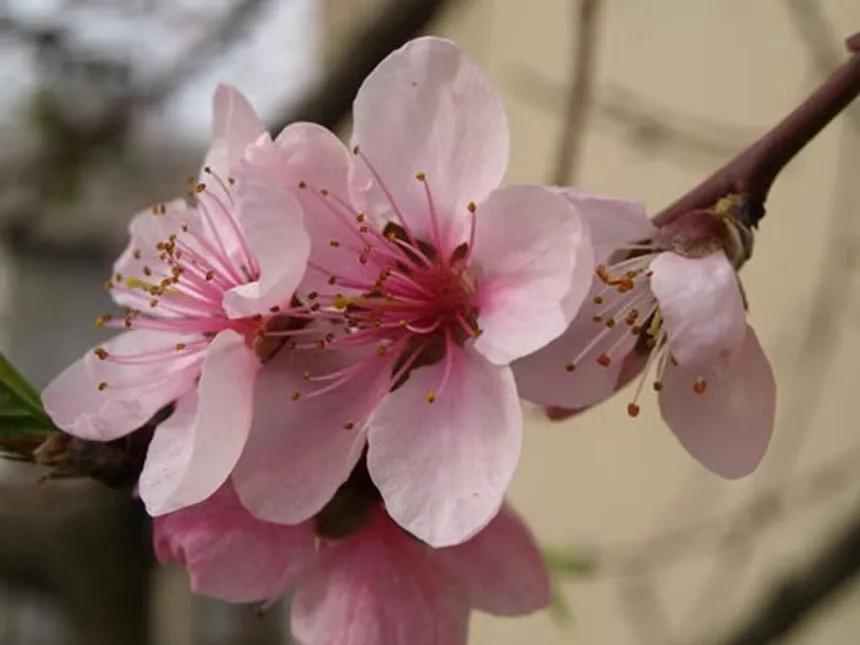 |
|
| 33: Plum Blossom | 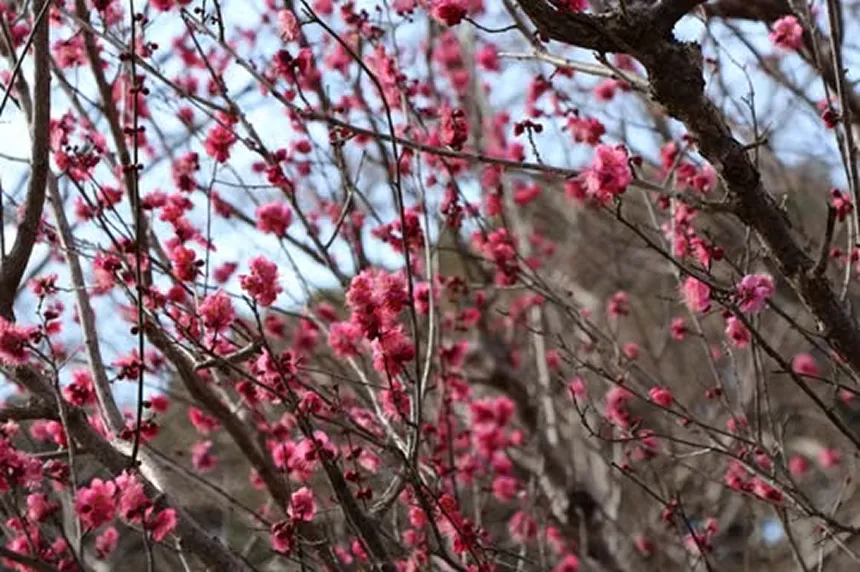 |
|
| 34: Plumbago | 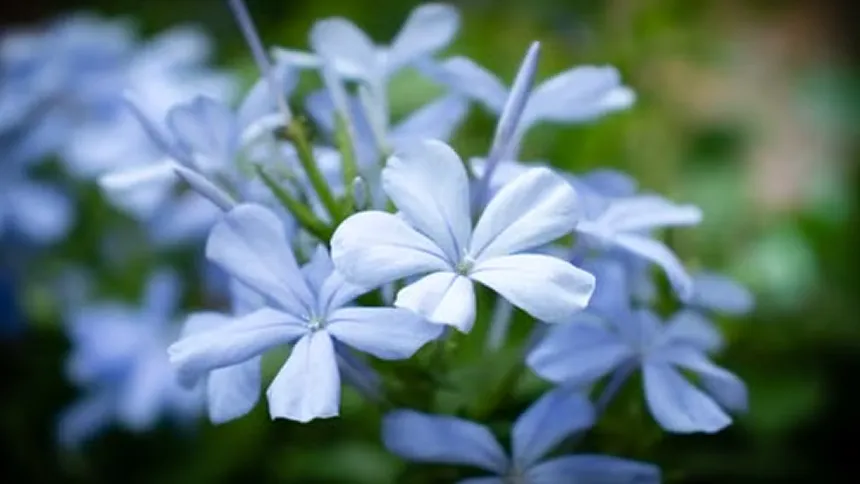 |
|
| 35: Philadelphus | 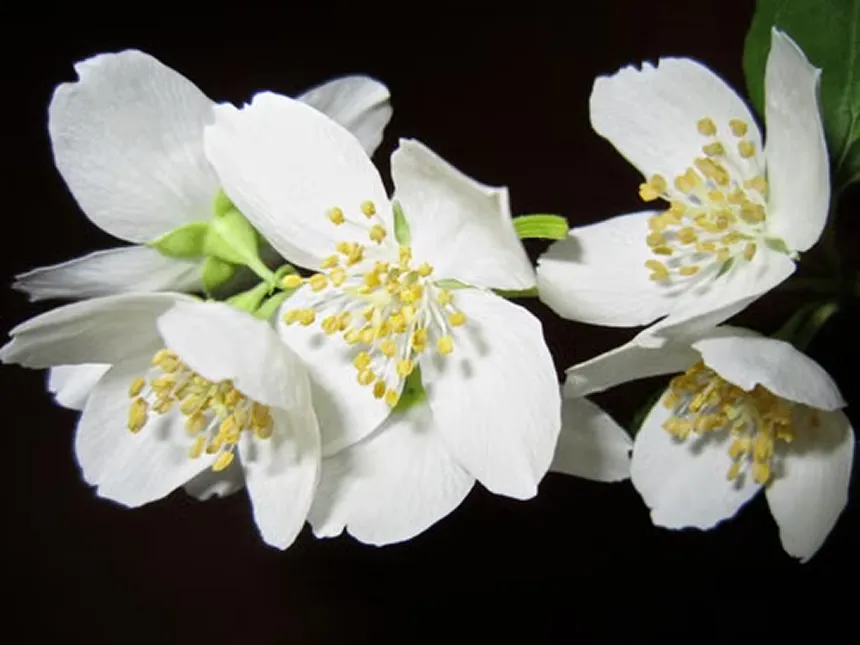 |
|
| 36: Pittosporum | 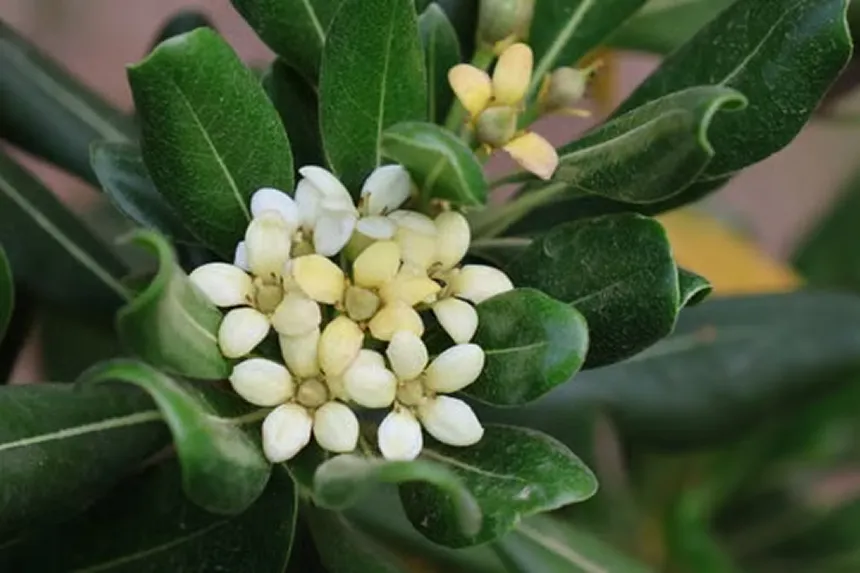 |
Get product: Pittosporum |
| 37: Privet | 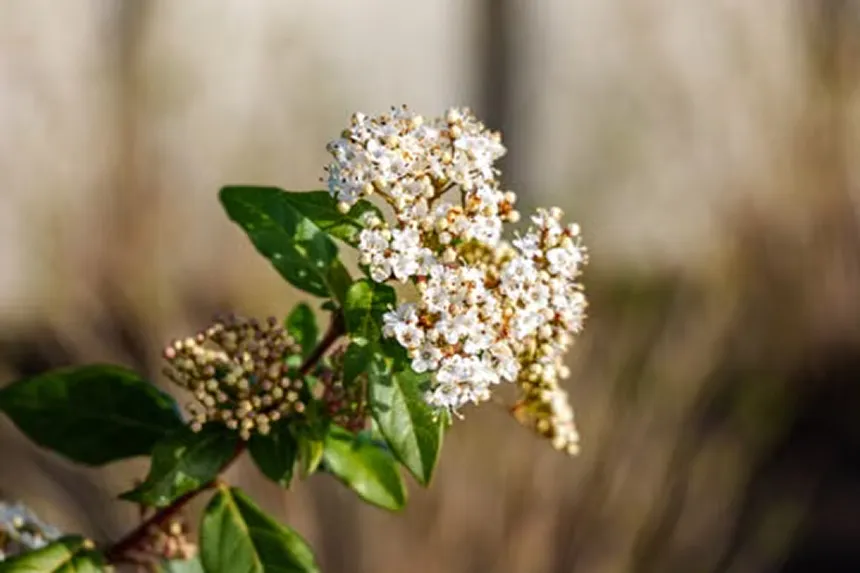 |
|
| 38: Pussy Willow | 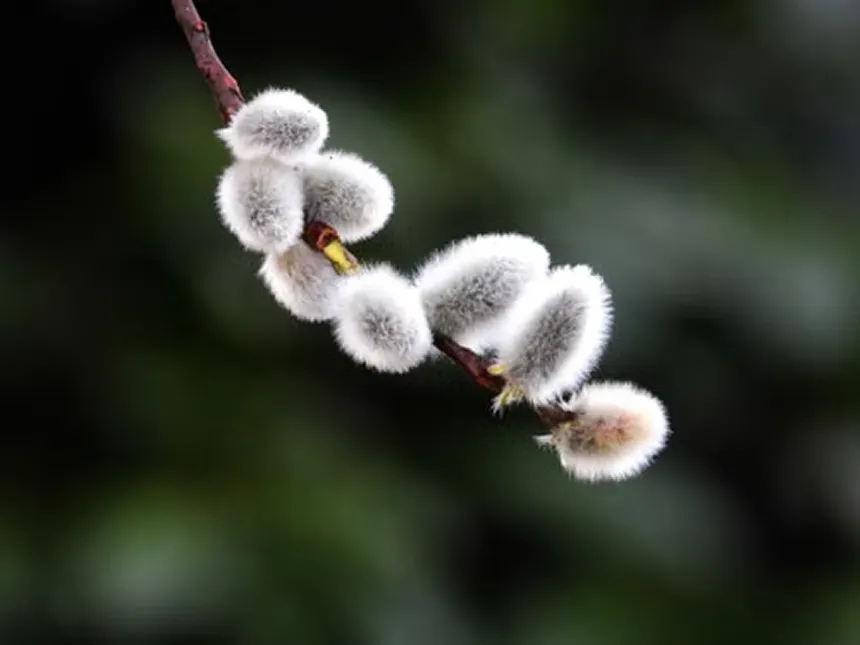 |
Product Link: Pussy Willow |
Did You Know?
The bright red parts of a poinsettia plant are not actually flowers! These are modified leaves called bracts; meanwhile, the tiny red structure is the real flower that is hidden in the center.
12 Garden and Perennial Flowers That Start With The Letter P
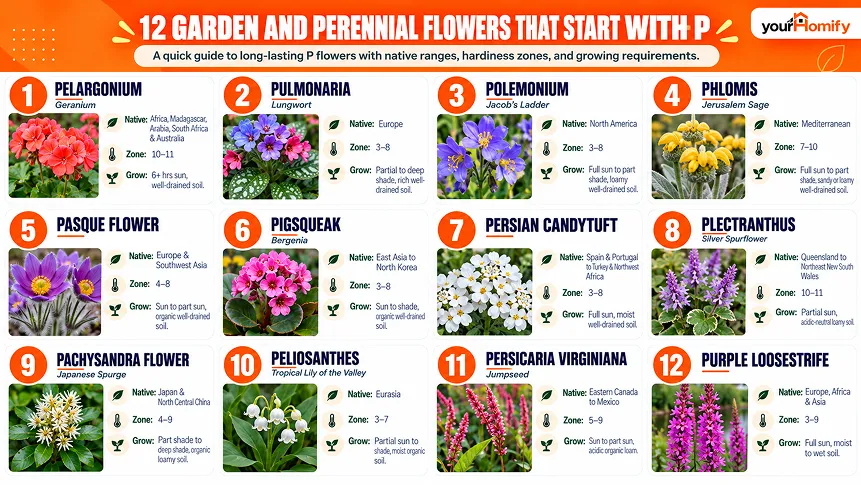
Some garden and perennial flowers that start with P can bring color to your outdoor space year after year. From pelargoniums to pasque flowers, these plants have different blooming seasons and growing requirements. Explore the list below to learn about their appearance, sunlight needs, and soil preferences.
39: Pelargonium
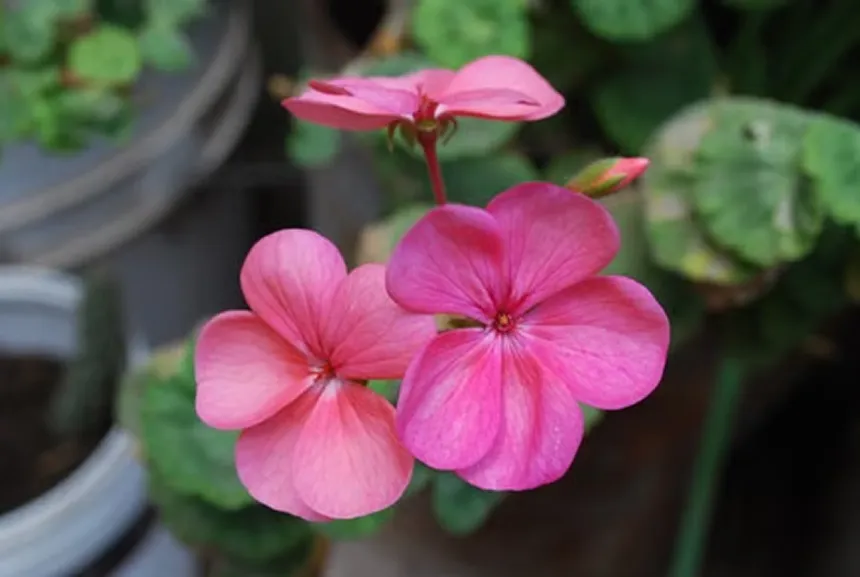
| Common Name: Geranium, Cranesbill |
| Native Range: Africa, Madagascar, the Arabian Peninsula, South Africa, and Australia |
| Hardiness Zone: 10 to 11 |
| Growing Requirements: For growing, you have to provide 6 or more hours of direct sunlight to the plant. |
Pelargonium is a hardy perennial plant. It is also known as crane’s bill due to the long and beak-shaped seed pod that resembles the crane’s bill. It produces 5-petaled saucer-shaped flowers that are edible.
Interesting fact
This plant is considered a pest repellent that’s why various people plant it inside the home.
40: Pulmonaria
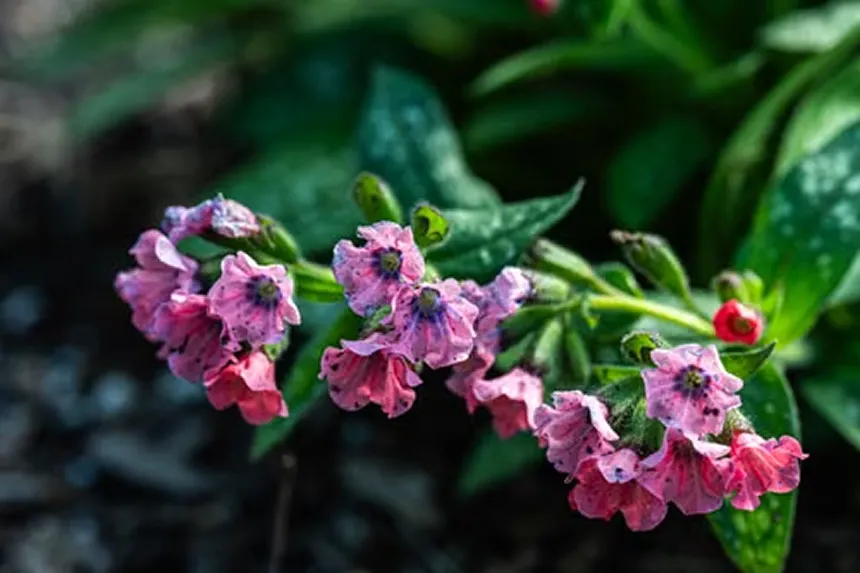
| Common Name: Blue lungwort, common Lungwort, Jerusalem sage, and Lungwort |
| Native Range: Europe |
| Hardiness Zone: 3 to 8 |
| Growing Requirements: To grow, select a spot that gets partial shade for 2 to 6 hours and deep shade for 2 hours a day. |
Pulmonaria is a herbaceous perennial plant that blooms in early spring with silver-spotted shade foliage. It produces funnel-shaped flowers with 4 to 5 petals. Use highly organic, neutral soil with good drainage.
41: Polemonium
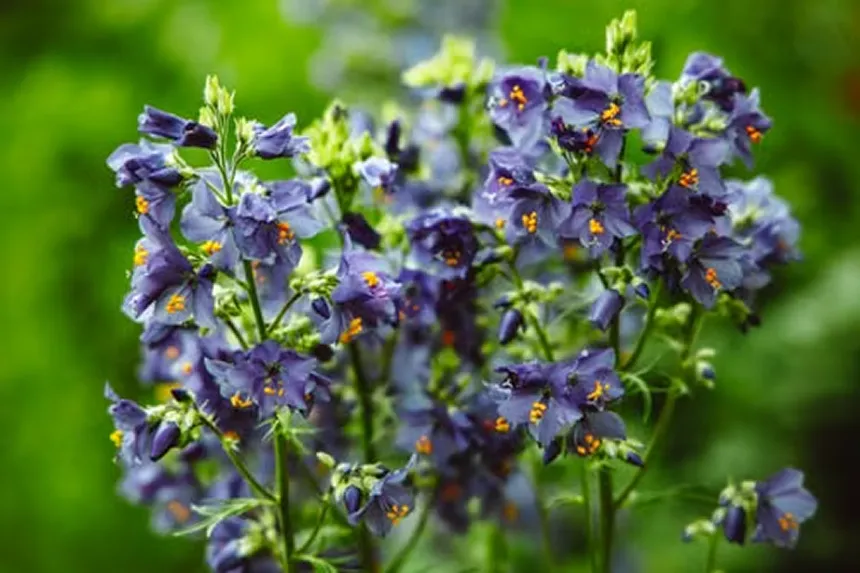
| Common Name: Greek Valerian, Jacob’s Ladder |
| Native Range: North America |
| Hardiness Zone: 3 to 8 |
| Growing Requirements: Provide 6 plus hours of full direct sunlight and 2 to 6 hours of partial shade. |
Polemonium is a herbaceous perennial plant that belongs to the Phlox family; these are self-seeding plants that need loamy soil and good drainage. This plant produces bell-shaped flowers that have 4 to 5 petals and blooms in the summer season.
42: Phlomis
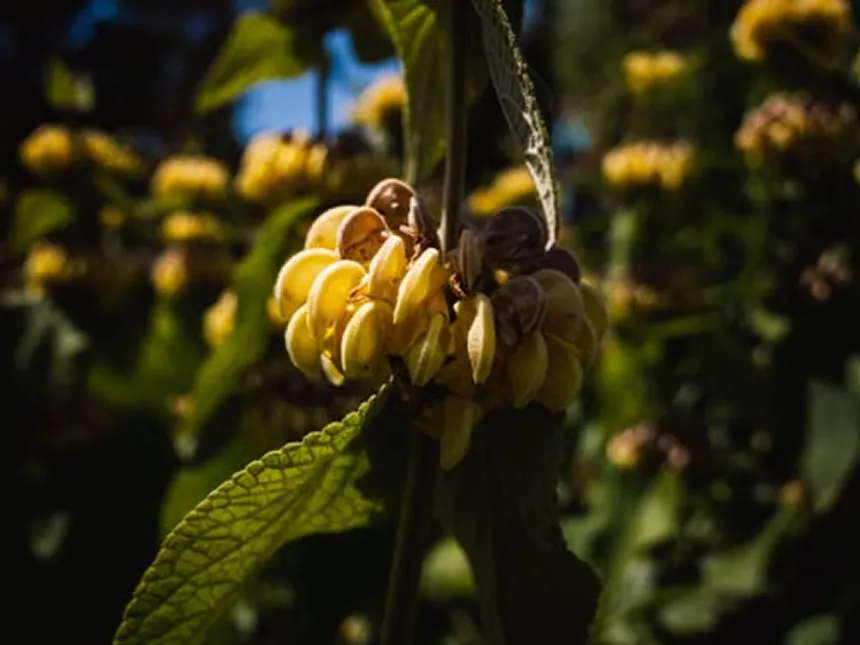
| Common Name: Jerusalem Sage |
| Native Range: Mediterranean |
| Hardiness Zone: 7 to 10 |
| Growing Requirements: This plant needs full sun for 6 hours or more and partial shade for 2 to 6 hours. |
Phlomis is a perennial shrub plant. It produces lipped and tubular flowers that are 1 to 3 inches wide. It blooms in spring and summer, and the fruits usually come in the fall and summer season. Ensure the soil has good drainage, is neutral, and ensure it’s loamy and sandy.
43: Pasque Flower
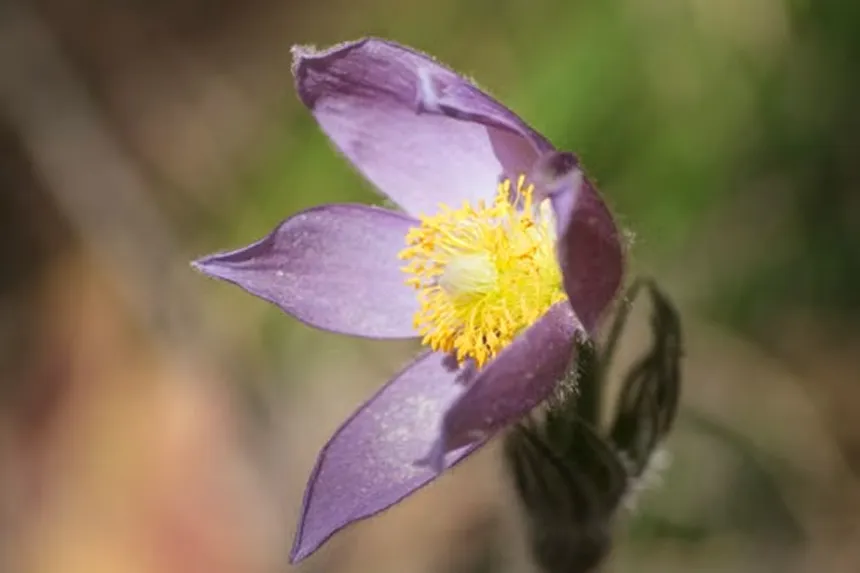
| Botanical Name: Pulsatilla vulgaris |
| Native Range: Europe, southwestern Asia |
| Hardiness Zone: 4 to 8 |
| Growing Requirements: This plant needs 6 or more hours of direct sunlight and 2 to 6 hours of partial sunlight, too, with highly organic and well-drained soil. |
Pasque Flower is a herbaceous perennial plant that produces bell-shaped flowers with 4 to5 petals and 1 to 3 inches. The petals are fuzzy outside and silky inside with golden stamens.
44: Pigsqueak
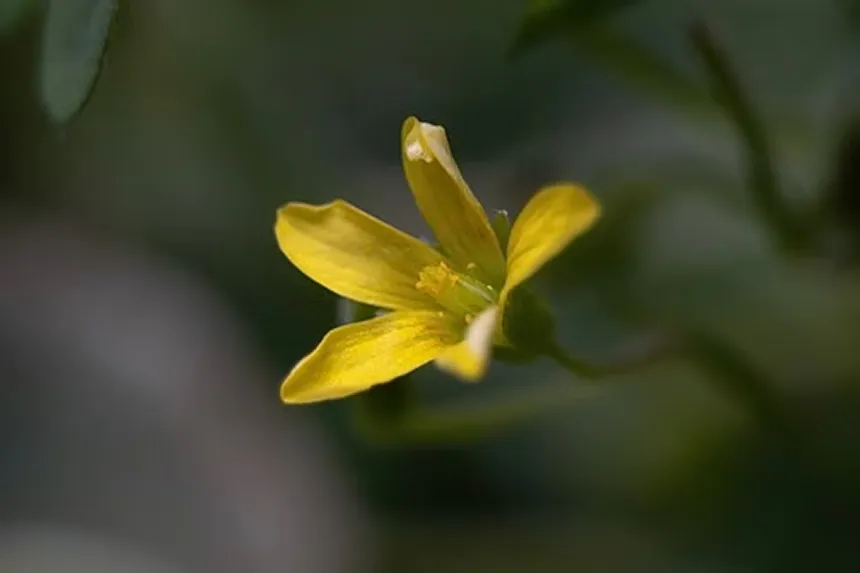
| Botanical Name: Bergenia crassifolia |
| Native Range: East Asia, Northwest China, Siberia to North Korea |
| Hardiness Zone: 3 to 8 |
| Growing Requirements: For proper growth, this plant needs 6 or more hours of direct sunlight, 2 to 6 hours of partial shade, less than 2 hours of deep shade, and dappled sunlight. |
Pigsqueak is a herbaceous perennial plant that produces tubular-shaped flowers that bloom in the spring season. Use neutral soil that is highly organic, clay, loamy, and sandy, with good drainage.
Interesting Fact
This plant is named pigsqueak because rubbing the flowers’ leaves together produces a sound that feels similar to a pig’s squeal.
45: Persian Candytuft
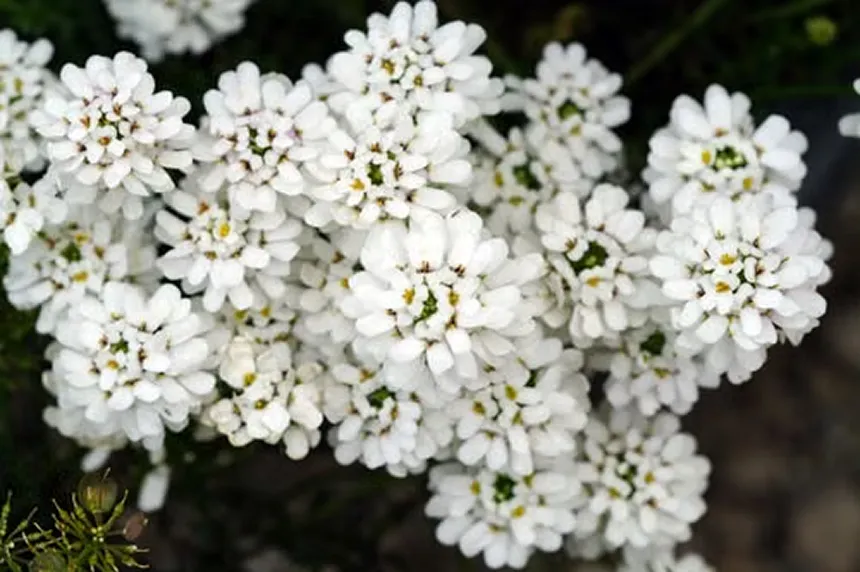
| Botanical Name: Iberis sempervirens |
| Native Range: Iberian Peninsula–Spain and Portugal to Turkey and NW Africa |
| Hardiness Zone: 3 to 8 |
| Growing Requirements: The plant needs 6 or more hours of sunlight and clay, loamy soil that is neutral to slightly alkaline in nature. |
Candyturf is an everlasting, low-growing plant that is classified as a herbaceous perennial subshrub. Ensure it has good drainage and is moist. It produces cross-shaped flowers that have 4 to 5 petals and blooms in the spring and summer seasons.
46: Plectranthus
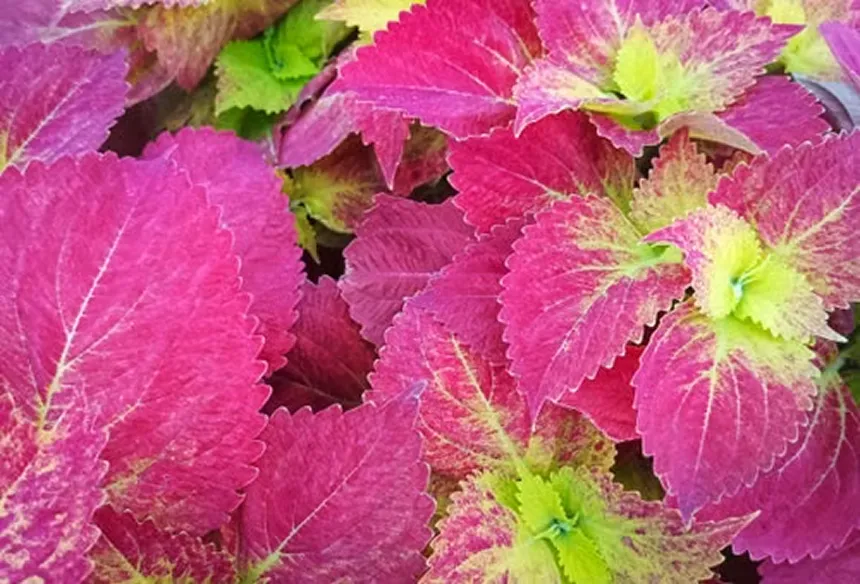
| Common Name: Silver Spurflower, Silver Spur Flower |
| Native Range: Queensland to Northeast New South Wales |
| Hardiness Zone: 10 to 11 |
| Growing Requirements: This plant needs partial sunlight for 2 to 6 hours every day with loamy and sandy, acidic to neutral soil that has good drainage. |
Plectranthus is a perennial subshrub that has colorful leaves an deasy to grow. It produces tubular fused petal plants that bloom in the summer season.
47: Pachysandra Flower
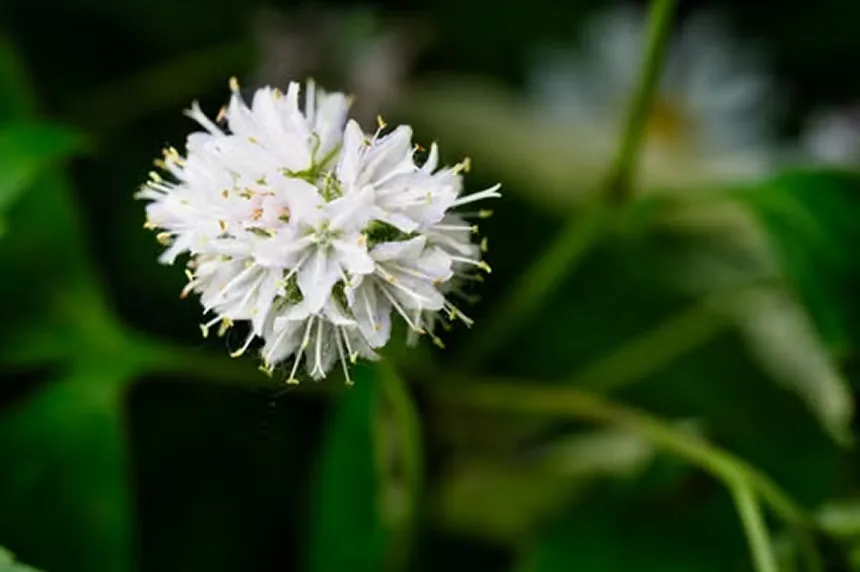
| Common Name: Carpet Box, Japanese Pachysandra, Japanese Spurge |
| Native Range: Japan and North Central China |
| Hardiness Zone: 4 to 9 |
| Growing Requirements: This plant needs partial shade for 2 to 6 hours and deep shade for 2 hours. |
Pachysandra is an evergreen herbaceous perennial plant that produces star-shaped flowers that bloom 1 to 3 inches wide. Ensure the soil is acidic, highly organic, and has a clay or loamy texture for good drainage, and stays occasionally dry.
48: Peliosanthes
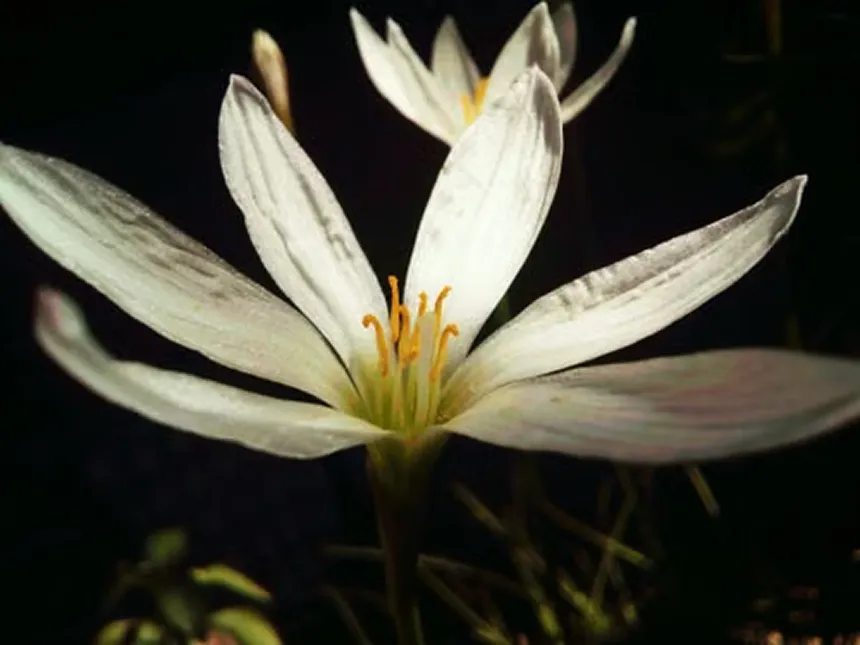
| Common Name: Tropical lily of the valley |
| Native Range: Eurasia |
| Hardiness Zone: 3 to 7 |
| Growing Requirements: This plant needs 2 to 6 hours of partial sunlight, 2 hours of deep shade and dappled sunlight, with highly organic, clay-loamy soil that stays moist. |
This plant is a rhizomatous perennial. It produces bell-shaped, fused petals that are up to one inch wide and bloom in the spring and summer seasons.
49: Persicaria Virginiana
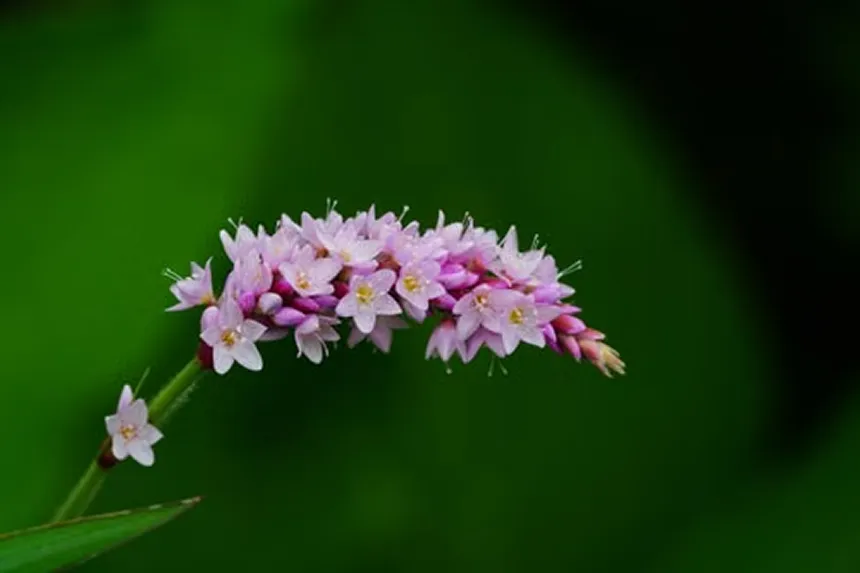
| Common Name: Jumpseed, Knotweed |
| Native Range: E. Canada to Mexico |
| Hardiness Zone: 5 to 9 |
| Growing requirements: The plant needs 6 or more hours of direct sunlight and 2 to 6 hours of partial sunlight, with highly organic loamy soil that is acidic and has good drainage. |
Persicaria virginiana is a herbaceous perennial plant that produces green and white flowers in a cup shape. These flowers bloom in summer, mostly in raceme-like clusters.
50: Purple Loosestrife
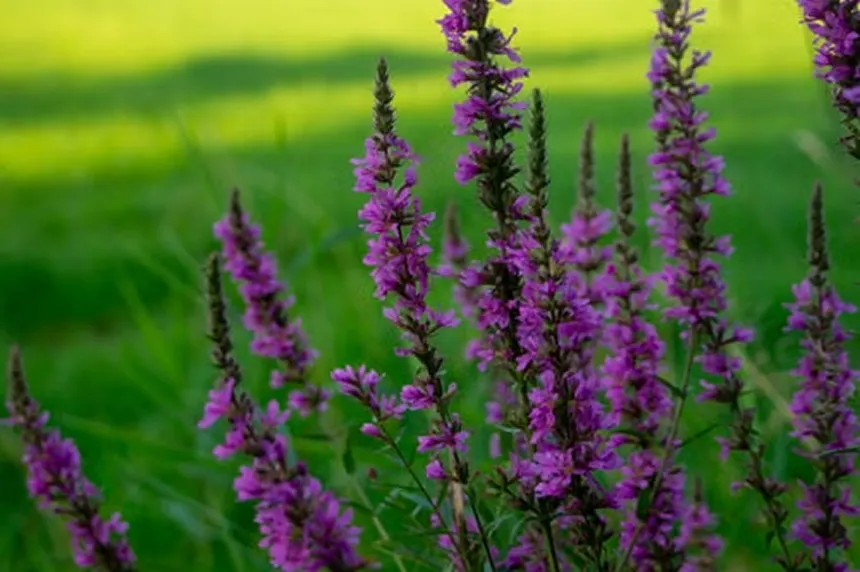
| Botanical Name: Lythrum salicaria |
| Native Range: Europe, Africa, and Asia |
| Hardiness Zone: 3 to 9 |
| Growing Requirements: This plant needs 6 or more hours of sunlight, good drainage, and is occasionally wet. |
Purple loosestrife is a perennial weed plant that produces flowers in the summer season. These flowers are clustered on the stems in spike form.
Interesting Fact:
This plant is one of the most aggressive invasive plants in wetland ecosystems, as a single plant produces over 2 million seeds
10 Wildflowers, Tropical and Ornamental Flowers That Starts With P
Come and learn about some wild, tropical, and ornamental flowers that start with the letter P and will bring unique color and natural beauty to your outdoor space. There are exotic flowers and delicate wildflowers that will add some charm to your garden.
| Flower | Image | Description |
| 51: Peace Lily | 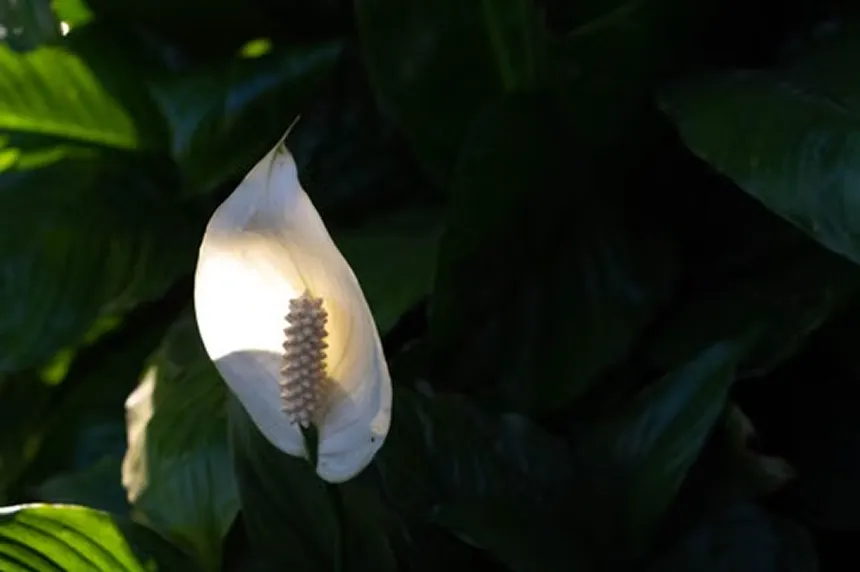 | Botanical name: Spathiphyllum USDA zone: 11-12 Native: Mexico, Tropical America, Malaysia, and Western Pacific Bloom time: Spring and Fall. |
| 52: Partridge Pea | 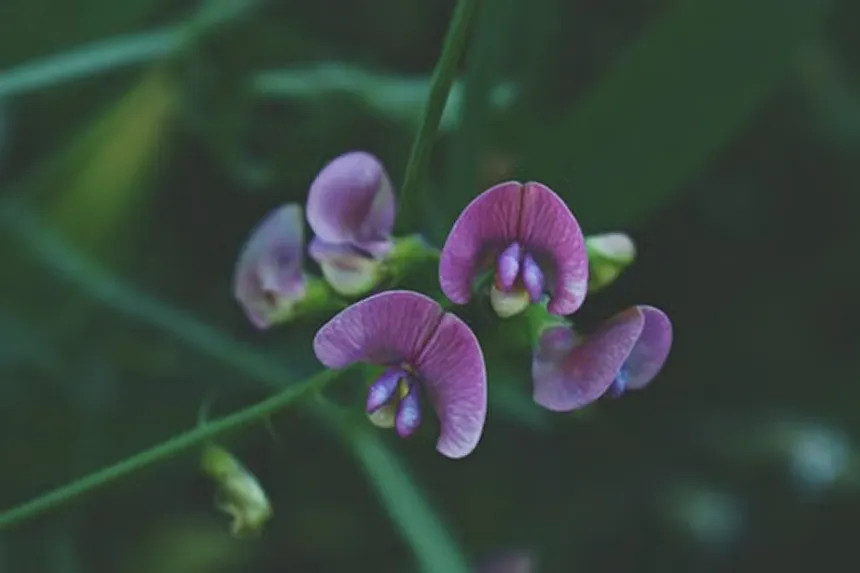 | Botanical name: Chamaecrista fasciculata USDA zone: 3 to 9 Native: Central and Eastern U.S.A. Bloom time: summer |
| 53: Pandanus | 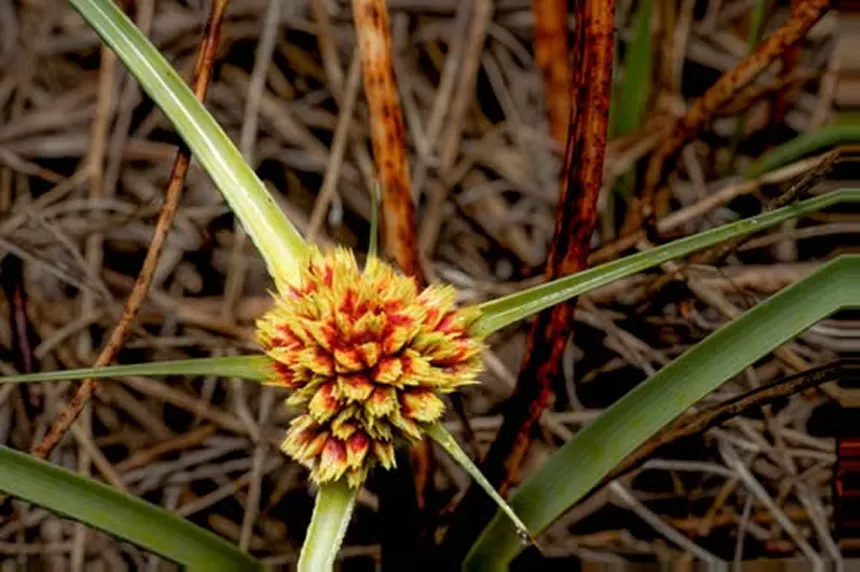 | Botanical name: Pandanus tectorius USDA zone: 10 -12 Native: Australia, Madagascar, Southeast Asia, southwestern Pacific. Bloom time: Spring and Summer |
| 54: Papyrus | 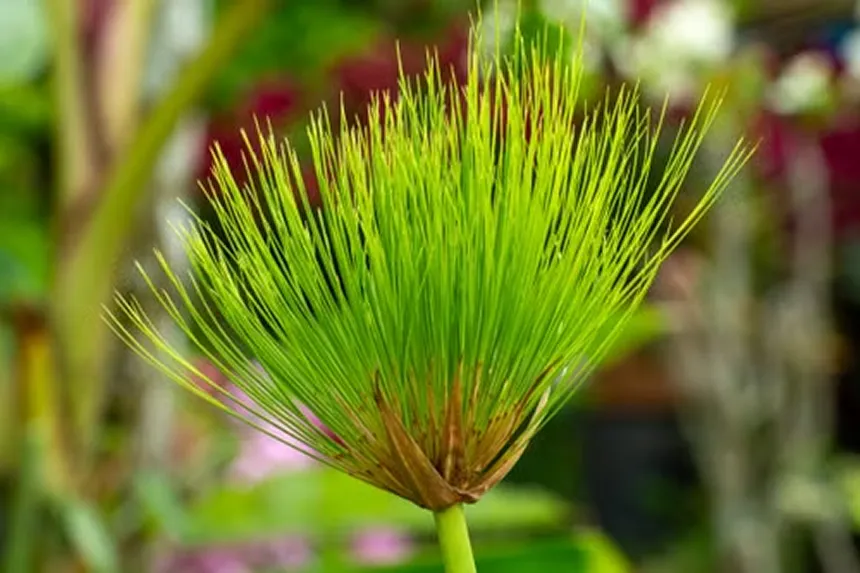 | Botanical name: Cyperus papyrus USDA zone: 9 to 12 Native: Africa and Northern Israel Bloom time: Summer |
| 55: Pearly Everlasting | 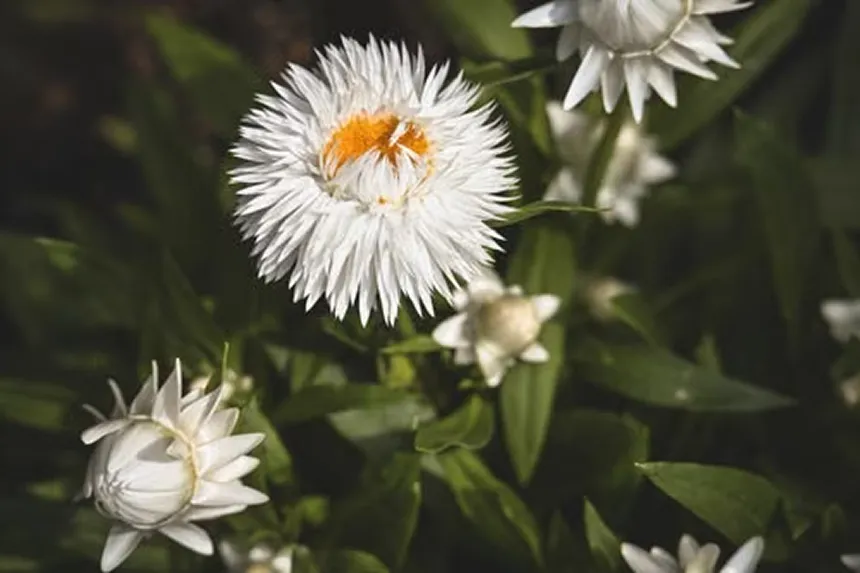 | Botanical name: Anaphalis margaritacea USDA zone: 3 to 8 Native: North America, Europe, Asia Bloom time: Summer |
| 56: Paper Daisy | 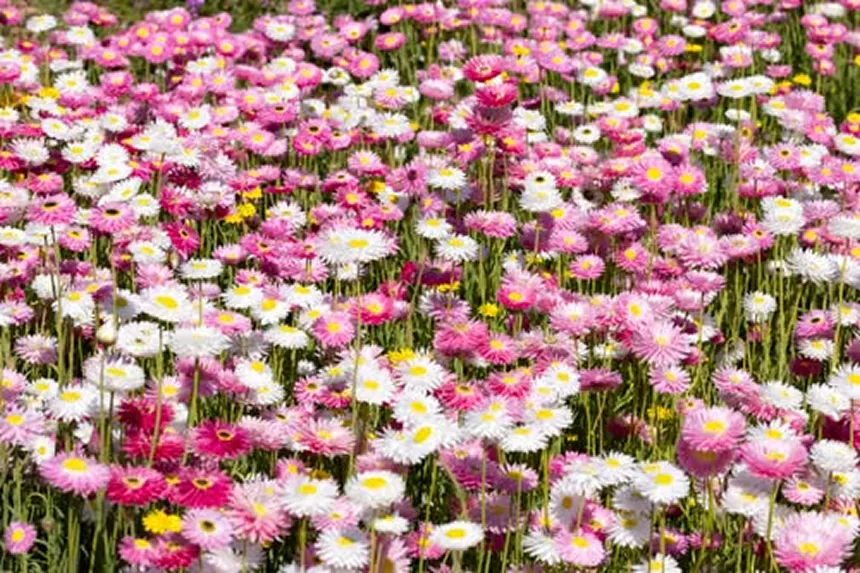 | Botanical name: Xerochrysum bracteatum USDA zone: 8 to 10 Native: Australia Bloom time: Fall and Summer |
| 57: Pimpernel | 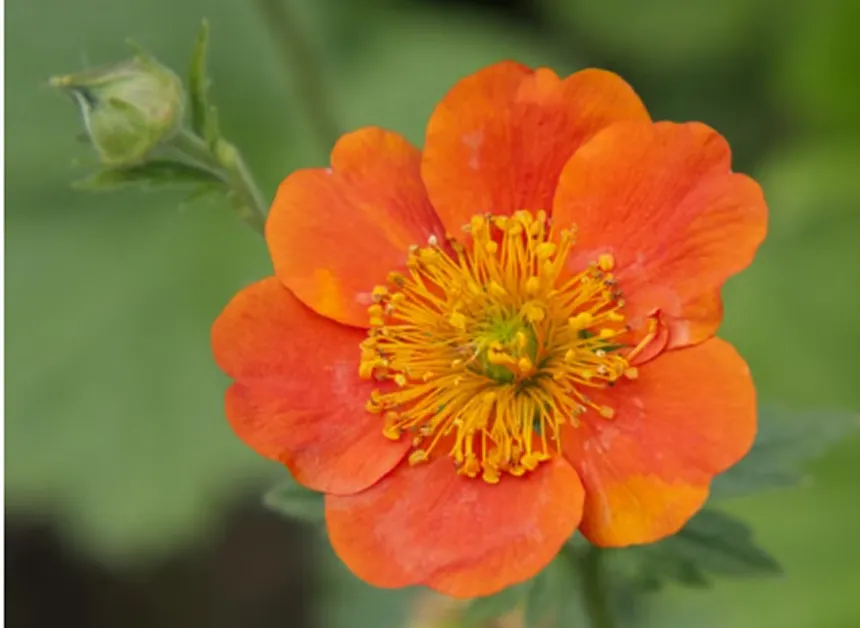 | Botanical name: Anagallis arvensis USDA zone: 8 to 10 Native: Northern Africa, Azores, Europe, Western Aisa and Western China. Bloom time: Spring, sumer and fall. |
| 58: Phacelia | 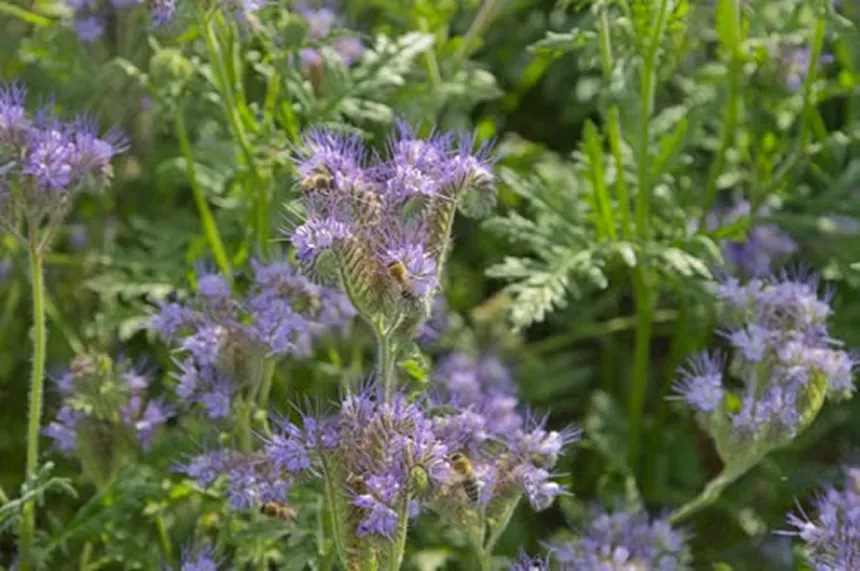 | Botanical name: Phacelia bipinnatifida USDA zone: 5 to 8 Native: Southeastern USA Bloom time: Spring |
| 59: Ptilotus | 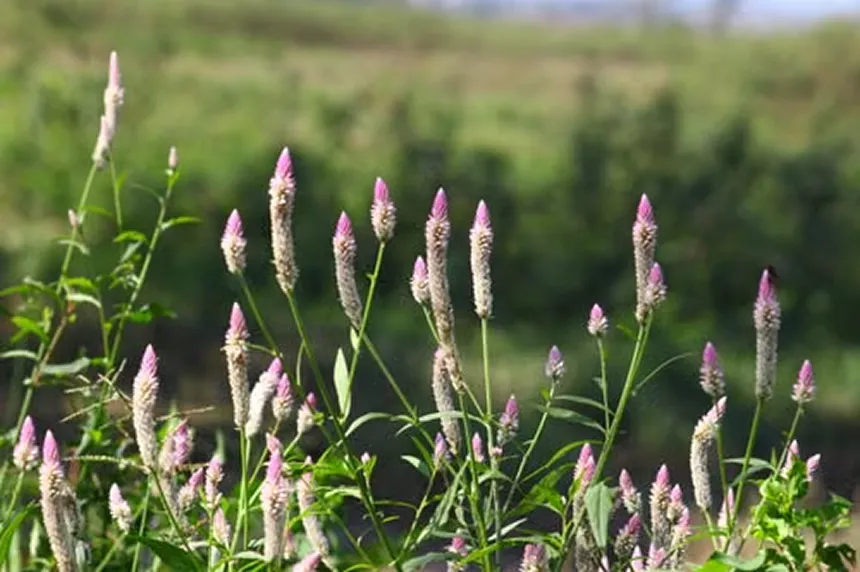 | Botanical name: Ptilotus exaltatus USDA zone: 2 to 11 Native: Australia Bloom time: Spring, summer, and fall. |
| 60: Perilla | 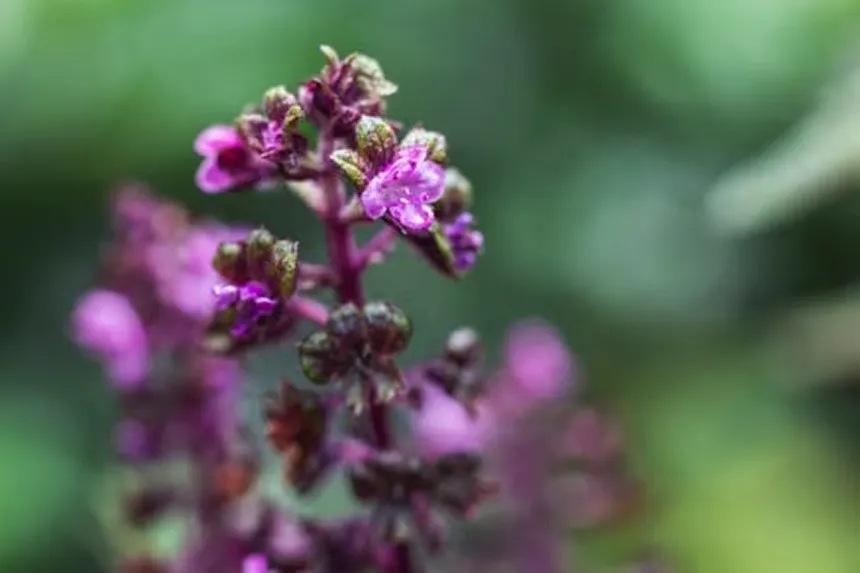 | Botanical name: Perilla frutescens USDA zone: 10 to 11 Native: Himalayas to Southeast Asia Bloom time: Fall and summer |
Conclusion
You have read about 60 flowers that start with P in this guide. I have included famous flowers like peony, phlox, primrose, protea, poppy, petunia, and pansy, and I have also covered a list of 10 flowering trees and shrubs, 12 garden flowers and perennial plants, and lastly 10 wildlife, tropical, and ornamental flowers.
The list of flowers that start with p is very vast and filled with vibrant colors and different textures. So if you admire these, you can add them to your garden.
FAQs
What are 10 common flowers?
Pansy, peony, primrose, petunia, phlox, Peruvian lily, poppy, protea, pentas, and pincushion flowers are common flowers that start with P. All of these flowers have different appearances and growth requirements.
Can you name 10 flowers?
Yes, the 10 flowers whose names start with the letter P are Peace lily, Podocarpus, Privet, Poinsettia, Pittosporum, Plumeria, Pandanus, Papyrus, Pavonia, and Pearly everlasting.
What are 25 common flower names?
Pansy, Peony, Petunia, Phlox, Pincushion Flower, Peruvian Lily, Poppy, Primrose, Protea, Pentas, Penstemon, Passionflower, Periwinkle, Petticoat Daffodil, Pheasant’s Eye, Pincushion Protea, Pinks, Prairie Smoke, Pulsatilla, Painted Daisy, Potentilla, Portulaca, Persian Buttercup, Prickly Pear Cactus, and Parrot Lily are 25 flowers that start with P.
What’s a pretty flower name?
There are pretty flowers that start with the letter P, including peony, which is commonly known as red charm and is famous for its beautiful deep crimson-colored blooms, and petunia that blooms with velvety dark red, trumpet-shaped flowers.
What is a red flower that starts with the letter P?
There are several red flower plants whose names start with P, including peony, poppy, petunia, pentas, penstemon, portulaca, poinsettia, and ptilotus. These are popular for their beautiful appearance and brightly colored flowers.
- Common Name List that start with P– Oregon State University