




Plant Description and Overview of Coral Bark Japanese Maple
| Common Name | Coral Bark Japanese Maple, Sango Kaku Maple, Coral Bark Maple | Maintenance | Low to moderate |
|---|---|---|---|
| Native Region | Korea, Japan, China | Average Height | 15-25 feet |
| Plant Type | Deciduous small plant/woody tree | Average Width | 10-20 feet |
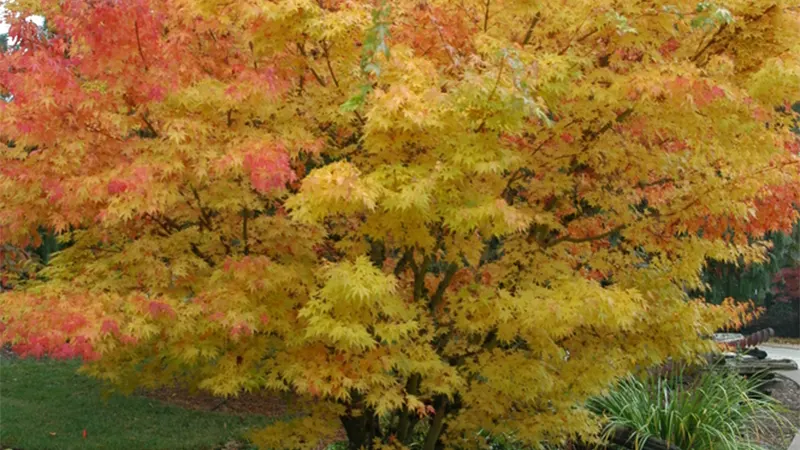
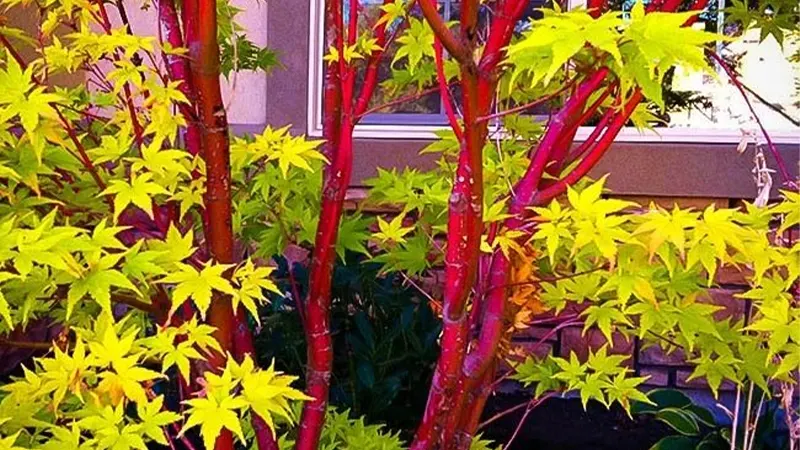
Coral Bark Japanese Maple, scientifically called Acer palmatum ‘Sango-kaku’, is a vibrant deciduous tree with striking red coral bark in winter, fresh lime green foliage in spring that turns golden yellow in autumn, becoming an all-season wonder. It is a versatile woody tree to amplify the elegance of distinct spaces, whether they be containers, small yards, or patios.
Key Features and Benefits of Coral Bark Japanese Maple
- During the autumn season, vibrant golden yellow leaves fall off, exposing the popular red coral stems, which adds a beautiful contrast.
- In addition to popular red coral stems, the bright Japanese Maple coral bark encompasses deeply cut palmate leaves and red corymb flowers blooming in mid-spring.
- Thanks to its low-maintenance feature, once established, it works best for busy garden enthusiasts.
- Coral Bark Japanese Maples have an open, architectural, vase-shaped form that provides year-round elegance and structure to various landscapes.
Care Guide, Advantages, and Disadvantages of Coral Bark Japanese Maple
- Growing Zone : USDA zones 5-9
- Sunlight Exposure : Prefers partial shade to full sun. In very hot climatic conditions, afternoon shade is essential to protect the leaves and bark from scorch.
- Water Needs : Regular watering is needed until it is established. Water deeply once or twice a week, avoiding waterlogging.
- Soil Type : Tolerant of different soil types, including sandy, clayey, and loamy, as long as they are well-drained.
Advantages
- Considered deer-resistant, it is suitable for locations with deer activity. Furthermore, it is resilient to both heat and cold.
- The size of the tree, 15-20 feet, is ideal to fit as a specimen into small- to medium-sized gardens.
- It generally requires very little pruning, only to maintain the structure.
- The vibrant red coral stem acts as a focal point even during the dull winters.
Disadvantages
- Susceptible to fungal issues, including Anthracnose, Verticillium Wilt, and aphids that can cause leaf curling, leaf spots, and dieback.
- In hot climates and direct sunlight, leaves are susceptible to burning, requiring afternoon shade.
- The delicate branches and foliage may get harmed by harsh, dry winds.
- Slow-growing trees, 1-2 feet a year, may take many years to offer landscape impact.




Anthony Baker –
When the rest of the garden falls dormant in frosty winters, the stems of the Coral Bark Japanese Maple get intensely red in colour, reigning as the showstopper in the garden.
Betha Williams –
I bought this last year at a sale price. I had my doubts whether it would work in a container or not, but after seeing its growth and amazing colors, I want to recommend it to all gardeners.
Sam Mackie –
If you find pruning monotonous, the tree is best for you, as it requires minimal effort only to maintain its structure.
Jenny White –
While many people are enchanted by its stems, I have been highly fascinated by its chartreuse-colored leaves with reddish margins, contrasting beautifully with the coral stems.