



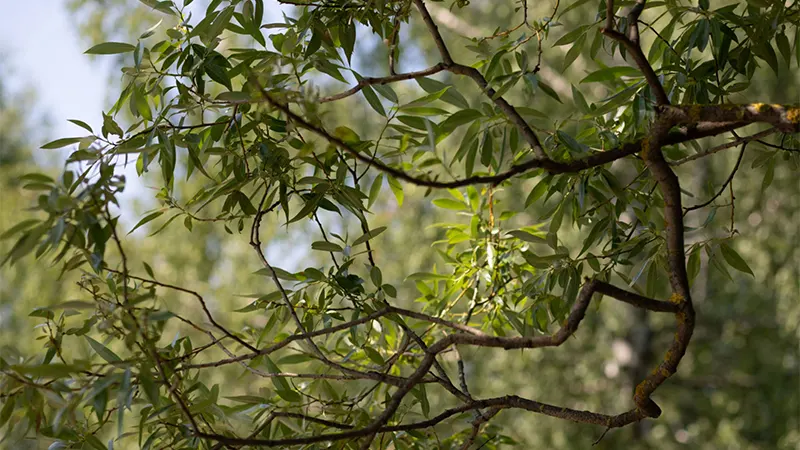

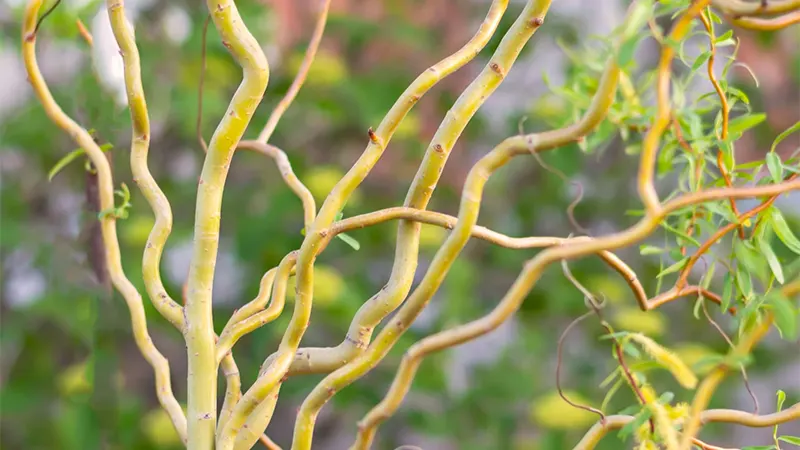


Description
Description and Plant Overview
| Common Name | Curly Willow, Pekin Willow, Dragon’s Claw Willow | Maintenance | Low to moderate |
|---|---|---|---|
| Native Region | Northern and Western China, Korea, and Siberia | Average Height | 20-40 feet tall |
| Plant Type | Fast-growing deciduous tree | Average Width | 10-20 feet wide |
Highly valued for its wavy and twisted branches, the corkscrew willow tree is often confused with the weeping willow tree. Traditionally, the bark of the genus is used to make herbal teas to treat fever, headache, and other ailments.
Additionally, the active compounds like salicin present in the twigs of the species are used to treat skin ulcers and many fungal infections.
Key Features and Benefits of the Corkscrew Willow Trees
- The twisted branches of the Corkscrew Willow tree add an aesthetic look to large landscapes. Botanically called Salix matsudana tortuosa, the genus makes an exceptional ornamental tree.
- Although there are many sturdy willow cultivars, this corkscrew willow tree for sale has a strong root structure and tends to prevent soil erosion.
- The canopy-like structure of the tree makes it an ideal shelter for many wildlife species, such as birds, insects, and small mammals. Furthermore, the twigs of the tree are often used to treat fever and body aches.
- Not only is the tree an easy-to-grow species, but it also offers numerous benefits. The dry leaves of Cockscrew Willow can be used as nutrient-rich compost to enhance soil health.
Care Guide, Advantages, and Disadvantages of the Cockscrew Willow Tree
- Growing Zone : 4-8 USDA
- Sunlight Exposure : Prefers to grow in a sunny location but can also thrive in partial shade.
- Water Needs : Requires water in moderation only when the topsoil of the plant feels dry.
- Soil Type : Grows best in various soil conditions but should be well-draining and fertile.
- Adds an aesthetic touch to any landscape with its twisted, contorted, and curly branches.
- It quickly grows to its mature height, making it an excellent privacy screen tree.
- Tolerates different soil conditions, including sandy, clayey, and moist soil types.
- The tree provides habitat for birds and supports the local biodiversity.
- The branches of the tree are brittle and hence are prone to damage from wind and snow.
- While it grows fast, the lifespan of the tree is short compared to other willow varieties.
- It has a large spreading root system that can cause damage to the nearby residences.
- Prone to canker, leaf spot, aphids, and other fungal pests.
Frequently Asked Questions
How big do corkscrew willow trees get?
The corkscrew willow trees grow up to 30-40 feet tall.
How to care for a corkscrew willow tree?
Plant the tree in a sunny spot. Make sure the soil is consistently moist but not waterlogged.
What is the lifespan of a corkscrew willow?
In comparison to the other willow trees, the lifespan of this genus is short, typically 30-50 years.
How to grow a corkscrew willow tree?
The corkscrew willow trees are easy to grow. With adequate sun exposure, moderate watering, and fertile soil, these trees can flourish.
What is the corkscrew willow tree growth rate?
The corkscrew willow tree has a fast growth rate. It grows up to 2-5 feet per year.




Debadrita Chatterjee –
Mark Patingson: The tree looks astonishing in my backyard garden.
Annie –
Oliver Thompson: The tree has beautiful, dark green, shiny leaves that make it a visually appealing element in any landscape.
Jimmy Black –
James Herrington: The wavy willow branches make the species a focal attraction in any garden space.
Laura Elsner –
Emily Forbes: This is an easy-to-grow willow variant and looks stunning when fully grown.