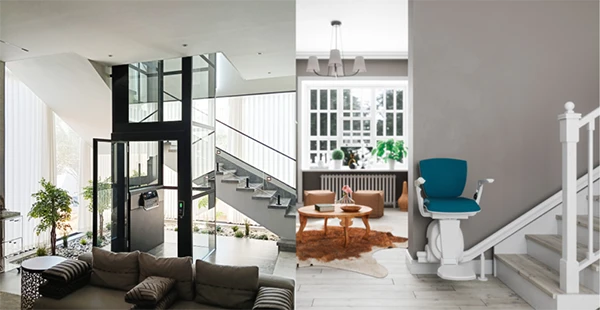
KEY TAKEAWAYS
- Understand which home lifts and stairlifts suit you
- Learn about the elements like cost, timeline, space, layout, and daily experience
- Discover the safety and compliance of these two solutions
For people who live with their parents (seniors, especially those who have some kind of issues while walking or climbing stairs), deciding how to make a multi-story home safe and accessible is often a major concern. For aged loved ones, going up and down stairs is not only painful but also dangerous.
This is where two brilliant solutions step in as the game-changer: one is a home lift, and the other is a stairlift. Both of these have their own unique set of benefits, but they differ in cost, installation, and functionality. And there is nothing like one is better than the other; the ‘better’ depends on what fits your life perfectly.
Maybe a home lift will be more helpful from a reliable company like Goldenhome Lifts or a stairlift that is easy and affordable to install. Let’s continue with the article because it will help you understand both of these solutions in detail so you can choose the right one for yourself.
Who Home Lifts and Stairlifts Suits
You might think of installing a home lift or a stairlift for various reasons. For example, those with mobility problems, like people who are disabled or elderly folks, may benefit from the accessibility, ease, and comfort that a home lift or stairlift provides. It may also be appropriate for households with multiple people living there, who would prefer an easy and convenient way to navigate double-storey houses. A home lift would also be suitable for those who need to transport bulky items to the second storey, such as prams, bags of groceries, and pets.
Space and Layout
You’ll need to think about a few things before installing a home lift or stairlift. You’ll have to consider if a lift shaft is essential, or consider the width of your stairs to confirm if they’re sturdy enough to accommodate a stairlift. When designing a home lift layout, space and circulation need to be considered alongside the existing stair structure.
A home lift with a shaft or a through-floor design generally has a more compact and predictable footprint. Through-floor lifts, in particular, can perform well in smaller houses, as they eliminate the need for a full shaft and big landings, travelling neatly between different floors through a protected aperture.
That said, clearances around the lift, door access zones, and approach space still require careful planning to ensure safe and comfortable use. Balancing lift footprint against stair dimensions early on in the design process helps form a layout that feels open, accessible, and functional rather than compromised, and that is perfect for your home.
Cost and Timelines
Your budget for renovations and the expense of installation of a home lift or stairlift is definitely an aspect to consider, with stairlifts being the much more affordable option. For example, a stairlift for a straight set of stairs might cost anywhere from $2,500-8,000, with this cost increasing significantly for customized curved stairlifts.
A home lift generally costs between $25,000 to $100,000 (or more), with most standard installations falling in the $40,000 to $70,000 range, depending primarily on lift type (the choices are hydraulic, traction and vacuum), size, features (like glass and automatic doors), and installation complexness (new build vs. retrofit, shaft requirements for the home).
Basic models start lower, while custom or luxury versions with advanced tech and finishes can drive prices much higher. You’ll also need to consider the complexity of the installation, with homes with unconventional layouts likely costing more. You will also want planning permits from your local government, and there may be fees included with this as well.
Daily Experience
You’ll also have to consider the daily experience of using a stairlift or a home lift. A stairlift, while a more affordable and practical choice, can be uncomfortable to ride. Whereas a home lift provides superior comfort, a good quality ride, and allows for hands-free carrying of heavy items to the second storey.
You’ll also want to consider the noise levels of each one, the speed of ascent and descent, and the aesthetics and how they will fit within your house design and layout.
Safety and Compliance
Safety and compliance are essential when installing a stairlift or a home lift. You’ll want to ensure that the supplier is fully certified, insured, and qualified to safely carry out the installation. The technology must operate according to Australian standards and local building codes. You’ll also need to consider if they come with emergency features, as well as ongoing maintenance requirements and repair costs, and warranty periods.
Future-proofing and Value Add
A stairlift or a home lift will future-proof your house, and may be worth considering as you age, or if you are living with parents or grandparents who are aging. This means they will be able to live at home without care for longer, keeping the family unit together.
They also provide adaptability for your living arrangements, when your mobility needs change in the future because of injury or accident. If you decide to list your house for sale, both stairlifts and home lifts will increase its resale value and attract potential buyers.
The Choice is Yours
Beyond immediate accessibility issues, making the choice between a home lift and a stairlift is also tied to your lifestyle, sense of independence, and long-term comfort in your home. A well-designed solution can eliminate daily strain, improve your confidence moving around the home, and improve your overall quality of life.
For homeowners planning renovations or new builds, incorporating vertical access options early in the process can ensure a more cohesive, visually appealing outcome that aligns with your vision for your home’s long-term design and layout.
In the end, whether you prioritize affordability, space efficiency, aesthetics, or adaptability, carefully looking up your current needs as well as the future possibilities will help you select an option that truly complements your life and your home.
FAQ
How much does a stairlift cost compared to a home elevator?
Installing a stairlift is significantly less expensive than a home elevator.
How long does it take to install a stair lift?
It usually takes between 2 and 4 hours, depending on the complexity of the stairs.
Are stairlifts suitable for wheelchair users, or is a home elevator better?
For wheelchair users, a home elevator is generally better.
Do stairlifts need maintenance?
A stairlift should be serviced every 12 months.