


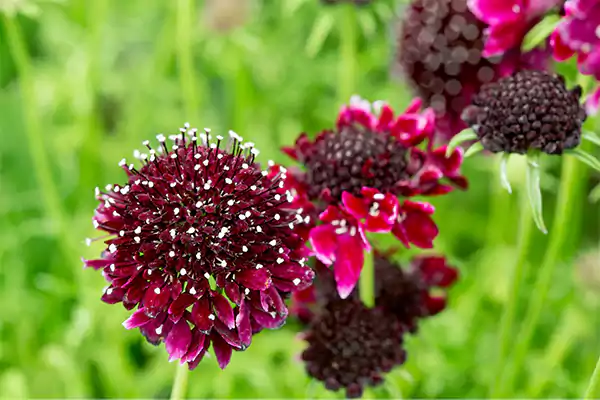
The Scabiosa (Pincushion Plant) is one of my favorite garden flowers because of its effortless beauty and dependable performance. Its delicate florets have a quiet charm that instantly draws attention without trying too hard.
I have always loved flowers that look gentle yet full of life, and Scabiosa fits that feeling perfectly. With its textured flowers and long blooming season, this plant has become the most liked species by every garden enthusiast.
Moving further, let us quickly explore everything about this genus, from its key features and taxonomy to the ideal care guide and pest control methods that I personally follow.
Scabiosa: General Overview, and Why is it Called Pincushion Flower?
Scabiosa, better known as Pincushion flower, is a charming perennial that belongs to the Caprifoliaceae family. Its unique name is derived from the flower’s distinct shape, which resembles a pincushion.
What fascinates me the most is that the center of the bloom has tiny florets, and the slender, needle-like stamens stick out.
Together, these parts resemble protruding pins or needles stuck into a fabric pin cushion, giving it a whimsical and elegant appearance.
| General Overview of the Scabiosa |
| Colors: Widely available in shades of lavender, blue, pink, white, deep burgundy, and near-black. |
| Growth Habit: Typically grows 1–2 feet tall and has clump-like blooms. |
| Plant Family: Belongs to the Caprifoliaceae family. |
| Uses: Majorly used as border cover flowers or for floral arrangements. |
| Hardiness and Blooming Period: 3-7 USDA, and mostly blooms from summer to fall. |
Scientific Classification and Morphology of the Scabiosa Flower
The Scabiosa flower typically belongs to the Scabiosa genus. Noted for its compact pink flowers, the Pin Cushion flower has undergone many scientific revisions.
Given below is a detailed taxonomic overview of the Pincushion flower plant.
| Kingdom | Plantae |
| Clade | Tracheophytes |
| Clade | Angiosperms |
| Clade | Eudicots |
| Clade | Asterids |
| Order | Dipsacales |
| Family | Caprifoliaceae |
| Subfamily | Dipsacoideae |
| Genus/Botanical Name | Scabiosa |
On my quest to explore more about this bloom, understanding the morphology of the plant helped me identify its growth behavior and care needs more accurately.
| Morphology of the Scabiosa Flower |
| Plant Habit: Herbaceous annual or perennial with an upright, clump-forming growth habit. |
| Stems: Slender, branching stems that are slightly hairy and flexible, supporting long flower stalks. |
| Leaves: Basal leaves are usually oval or lance-shaped, giving the plant a soft-textured appearance. |
| Bloom Structure: Flowers are borne on long stalks, making them ideal for cut flowers and pollinator attraction. |
| Roots: Fibrous root system that supports moderate drought tolerance once established. |
Explore Some Popular Scabiosa Flowers
With a wide range of colors and growth habits, different Scabiosa varieties suit garden beds, borders, containers, and even cut flower arrangements.
Below is a quick overview of some of the most popular Scabiosa flowers grown worldwide.
| Scabiosa Variety | Image | Plant Type | Key Features |
| Scabiosa ‘Black Knight’ | 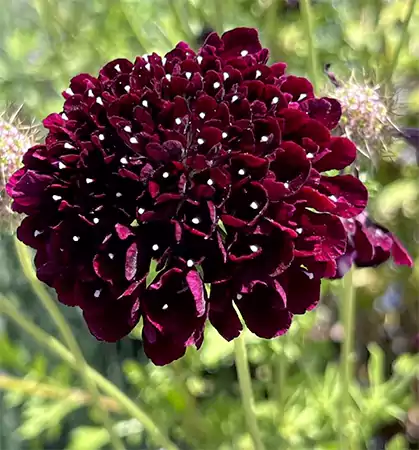 | Annual |
|
| Scabiosa Butterfly Blue | 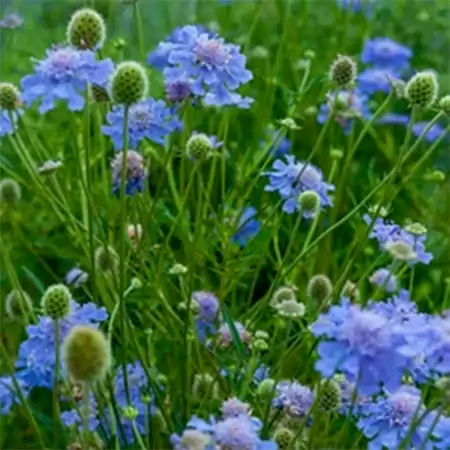 | Perennial |
|
| Scabiosa Fama White | 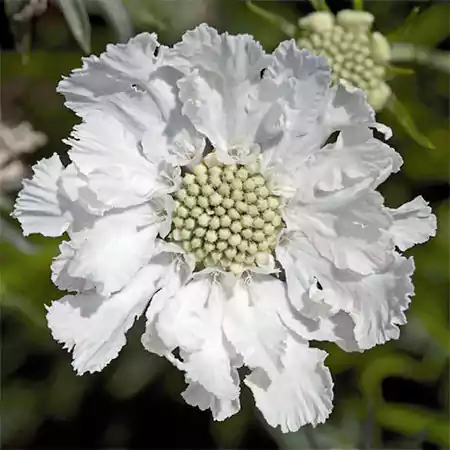 | Perennial |
|
| Scabiosa Pink Mist | 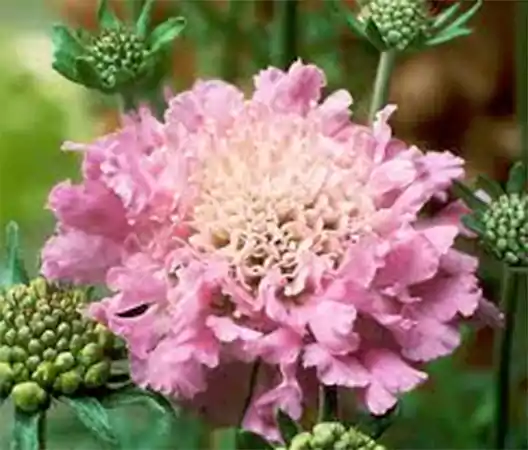 | Perennial |
|
| Scabiosa atropurpurea | 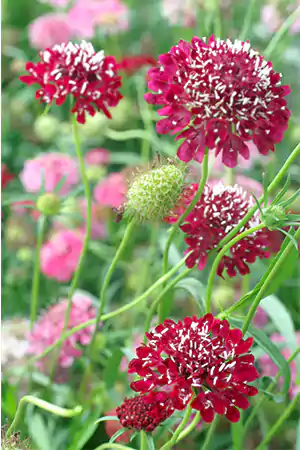 | Annual |
|
These popular Pincushion flowers offer something for every garden style. Additionally, these are loved by garden enthusiasts and are easy to grow, adding elegance and seasonal color to any landscape.
Ideal Growing Conditions Needed for Scabiosa Pincushion Flower
For ideal Pincushion flower growth, full sun exposure, moderate watering, and well-draining soil are some basic requirements of the species. Below is a complete guide that I follow for growing healthy Scabiosa plants, along with easy seasonal care tips for fresh flowers.
- Sunlight Exposure: Direct sun exposure for a minimum of 6 hours is required for healthy growth. It can also thrive in partial shade in an extremely hot climate.
- Soil Requirement: The soil must be well-draining and organic-rich in order to prevent root rot. I always make sure to amend it with compost or manure and balance the pH from neutral to alkaline soil type.
- Watering Needs: Although the Scabiosa pods may require regular watering, I have noticed that the mature flowers are somewhat drought-tolerant. Avoid overwatering, especially during the moist weather conditions.
- Fertilizer Requirements: A balanced, light feeding fertilizer is needed once a month to promote active growth of the blooms. I usually avoid this if my soil is organic-rich and stuffed with heavy compost.
I prefer sowing Scabiosa seeds when the weather is cool but frost-free, and the plant typically dislikes high heat and humidity.
| Seasonal Care Tips for Scabiosa | |
| Spring | Sow seeds or transplant the seedlings, apply compost, and ensure that the plant gets full sun exposure. |
| Summer | Water during the dry spells, trim or remove spent blooms, and keep the plant in afternoon shade. |
| Monsoon | Focus on improving the drainage, avoiding waterlogging, and monitoring for any kind of fungal diseases. |
| Autumn | Continue pruning the damaged parts, adjust the water frequency, and collect seeds for the next season. |
| Winter | Perfect for mulching perennial varieties, protect the plant from the frost, and cut back any dead growth. |
Although the species requires minimal care, by following these ideal and basic growing conditions, I ensure that the Scabiosa flowers have a generous flourishing season.
How do I plant Scabiosa Flowers in my garden?
Planting and growing Scabiosa is a relatively easy task, but following methods backed by experienced and expert gardeners can improve bloom quality and plant longevity.
Correct timing, soil preparation, and gentle maintenance can help the plant establish quickly.
- I personally prefer sowing the seeds directly in the garden soil in late September or October before the frost season begins.
- To grow it as a low light indoor plant, start by sowing the seeds in a container 4–6 weeks before the last frost date.
- Start preparing the soil by adding a generous amount of compost or manure to improve the drainage. Make sure that the soil is not overly moist.
- While sowing the seeds, I make sure that I do not cover them completely, as they need light to germinate effectively.
- Water the seeds immediately after planting, but avoid waterlogging to prevent root rot.
- Apply a thin layer of mulch to retain the moisture and suppress weeds.
Expert Tips at a Glance
- Too much fertilizer results in more leaves and fewer florets
- Good drainage is more important than rich soil.
- Regular deadheading extends the flowering season significantly.
With the right planting approach and expert-recommended care, my Scabiosa flowers thrive with minimal effort. These blooms are perfect for beginners and seasoned gardeners alike.
What are the Benefits of Growing Pincushion Flowers?
One of the reasons I love growing Pincushion flowers is that they offer beauty, ease, and ecological value all in one plant. By following simple garden care tips, these blooms can be one of the most rewarding additions to any landscape.
- The long blooming season keeps my garden colorful and fragrant for months.
- It naturally attracts bees, butterflies, and other pollinators.
- Perfect for novice gardeners, as these are low-maintenance and do not require constant attention.
- It can be easily grown in beds, borders, containers, or as a garden cover.
- The genus faces fewer pest and disease issues compared to other ornamental plants.
Without demanding much care, these Pincushion flowers make my balcony garden look elegant and aesthetic.
Common Pests and Diseases Affecting Pincushion Flower Seeds
Pincushion flowers generally grow trouble-free, but during the seeding process, they can be vulnerable to certain pests and diseases.
Below are some common pests and fungal diseases that can deteriorate the health of the genus if not treated immediately.
| Aphids: These are tiny insects that stick to the surface of the leaves, especially if there is new growth, and leave a honeydew-like liquid that causes curling of the foliage. |
| Spider Mites: If you spot tiny yellow dots on the stem or the bottom side of the leaves, your plant is most likely affected by spider mites. They cause fine webbing and tend to damage the overall health of the plant. |
| Fungus Gnats: Larvae feed on germinating seeds and tender roots, mostly due to overly moist soil. |
| Seed Rot: Happens in poorly drained or waterlogged soil, preventing healthy germination. |
| Powdery Mildew: White fungal coating that weakens young plants under extreme humid conditions |
| Whiteflies: Tiny, white, moth-like insects that fly around the florets, impacting the growth of the plant. |
I have also shared some preventive care tips I followed whenever I faced any issues with my plant.
- Drainage is essential. I learned this the hard way, so ensure you use soil that is both fertile and well-draining.
- Water moderately only to keep the base of the soil moist. Do not let the water sit, as it can affect the leaves and cause fungal diseases.
- Ensure good air circulation and adequate sunlight to prevent the spread of any pest.
- I personally use neem oil and a variety of horticulture oils or fungicides to treat the diseases.
By maintaining proper hygiene, moisture control, and early monitoring, most pests and diseases affecting pincushion flower seeds can be easily prevented.
Conclusion: Why is the Pincushion Plant my Favorite?
The Pincushion plant stands out because it delivers beauty without demanding much in return. Its long flowering season keeps my garden lively, while its soft, pastel blooms add a natural elegance to the space. Combined with adaptability, low maintenance, adaptability, the genus is suitable for both garden beds and containers.
What fascinates me the most about this plant is that with just minimal care, it thrives and enhances the overall aesthetic of my front lawn.
FAQs
Is the Scabiosa plant annual or perennial?
The Scabiosa plant, also known as the pincushion flower, can be either annual or perennial, depending on the specific variety you cultivate.
Can Scabiosa be grown in pots or containers?
Yes, the genus can be easily grown in flower beds, containers, or mini pots.
How much sunlight is needed by the Pincushion flower?
The Pincushion flower requires a minimum of 6 hours of direct sun exposure. During a dry spell, it can thrive in afternoon shade.
How long do Scabiosa plant blooms last?
Most varieties of this genus bloom throughout the summer till late fall. Some cultivars also grow all year round.
Are Scabiosa flowers easy to grow?
Yes, the species is low-maintenance and easy to grow, hence it is one of the most liked garden flowers.
- How to Grow Scabious – BBC Gardeners’ Magazine
- Pincushion Flower– NC State Extension Research Paper

Types of Black Flowers: 20 Dark & Beautiful Varieties
[…] Scabiosa […]
25 Flowers That Start With K: Names, Types & Care
[…] Knautia arvensis comes from the same family as the Scabiosa plant, which is Caprifoliaceae. Also commonly referred to as scabious, these flowers are infamous for […]
15 Flowers That Start With S: Names, Meanings & Pictures
[…] Scabiosa […]