


In late November 2025, the search interest for “DIY home decor” peaked at a normalised value of 88 – one of the highest seasonal peaks found on record! However, most of them are searching for a relaxing personalization. We see this interest trend in adolences, with teenage bedroom decor becoming more of a self expression, which evolves throughout an individuals’ phases.
Research has proven this connection: a 2024 article published in Frontiers in Public Health and based on 7,182 participants showed that individuals who engage in art and craft activities experienced the same level of well-being as if they had been employed. Let’s come together to promote restorative living at home.
KEY TAKEAWAYS
- Restorative home living involves the daily habits and rituals that you create in your space.
- They are designed to impact on your emotional, mental, and physical well-being.
- These ten craft projects can both beautify your home and improve your overall mental health during the process.
1. Punch Needle Kits — Tactile Art for Every Skill Level
Punch needle is precisely what it sounds like: a specialised needle loaded with yarn is pushed through a stretched fabric backing, forming raised loops that build up into richly textured pillow covers, wall art, or decorative patches. The result has a tactile warmth that no print or canvas can replicate.
The finished pieces bring dimensional softness to bare walls from a decor standpoint. This kind of warmth that photographers always describe as “cosy” is genuinely difficult to achieve with flat artwork. Because you select the colourway, every piece is automatically calibrated to your space.
The wellness connection here is well-documented. A 2025 systematic assessment in the Australian Occupational Therapy Journal (PMC) proved that embroidery and textile crafts specifically reduce anxiety, improve mood, and support cognitive function — effects linked to the repetitive, rhythmic motion involved. Punch needle drops squarely in that category.
The biggest barrier for beginners is sourcing the right materials and figuring out how to set up the fabric frame. Complete, beginner-ready punch needle kits — such as those from Punchora — solve that problem entirely, with colour-matched yarn, a punch needle tool, bundling pre-printed fabric, and step-by-step instructions so there is no guesswork involved.
Budget: $40–$100 for a complete kit. No prior experience needed.
2. Macramé Wall Hangings — Bohemian Texture Without a Loom
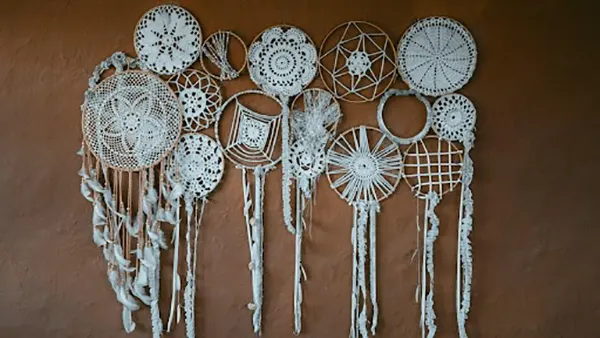
Macramé is knotted cotton cord —no specialist tools, no weaving equipment. A basic T-bar wall hanging requires just two knot types (the square knot and the lark’s head), which most beginners master within the first 30 minutes.
Decor-wise, macramé adds bohemian character and a soft, visual quality to any wall. It pairs especially well with trailing plants and natural wood furniture, making it a natural fit for the plant-forward rooms that yourhomify readers tend to gravitate toward.
The repetitive knotting motion is genuinely meditative. Research into the therapeutic aspects of repetitive textile work links this kind of rhythmic hand movement to reduced cortisol and a quieting of the mental chatter that accumulates during a busy day.
- Budget: $15–$30 in cotton cord. Dowels and rings are optional extras.
3. Air-Dry Clay Vessels and Pinch Pots
No kiln, no wheel, no lessons. Air-dry clay — available at any craft store for under $15 — can be shaped entirely by hand into pinch pots, small vases, ring dishes, and planter covers that look deliberately minimal instead of beginner-made.
The organic, imperfect aesthetic of hand-shaped clay has evolved into a fixture in contemporary home styling. A small cluster of matte white clay bowls containing dried botanicals or a following succulent reads as intentional and expensive. The raw material costs almost nothing.
Tactile engagement with clay is used routinely in occupational restorative practice as a grounding technique for stress and anxiety. The sensory focus required — feeling the clay warm and soft — pulls attention away from ideational worry and into the immediate, physical present.
- Budget: $10–$20 for clay and basic tools.
4. Gallery Walls with Mixed Media
A gallery wall works best when it tells a genuine story rather than checking a colour palette. Mix framed photographs, botanical prints, a small macramé hanging, a finished punch needle piece, and a couple of objects with personal significance — a pressed flower behind glass, a postcard, and a small shadow box.
Planning matters more than performance here. Lay the whole arrangement on the floor before committing a single nail to the wall. Paper templates taped to the border let you adjust spacing without holes.
Environmental psychology research always finds that surrounding yourself with personally meaningful objects raises baseline mood and sustains a sense of identity and belonging. A gallery wall built from things you have made and collected is arguably the highest-return home upgrade available.
- Budget: $0–$50, depending on frames. Thrift stores are the best source.
5. DIY Terrarium Displays
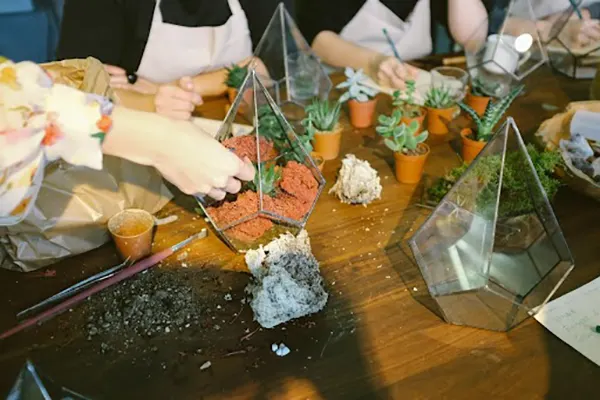
A terrarium is a layered glass ecosystem — gravel for drainage, potting mix, activated charcoal, then moss and plants — assembled inside a vessel that could be a fishbowl, a large jar, a geometric frame, or a vintage cloche. The finished composition is a living decor that changes and grows over time.
Closed terrariums are largely self-maintaining once sealed; open ones suit succulents and cacti that choose drier conditions. Either way, the daily ritual of observing and occasionally tending a little ecosystem creates exactly the kind of low-stakes, restorative attention that researchers associate with stress recovery.
Small home comfort upgrades like living decor change the sensory experience of a room in ways that larger renovations often can’t — the air feels different, mornings feel calmer, and the room earns its keep visually year-round.
- Budget: $15–$40 for vessel and supplies. Plants from cuttings can reduce this further.
6. Fabric Wall Art Panels (No-Sew)
Stretch a length of printed or hand-dyed fabric over a canvas stretcher bar, secure it at the back with a staple gun, and hang. That’s the entire process. The result looks like a commissioned textile artwork and takes about 20 minutes.
The ability to swap out fabrics makes this approach really flexible. If you switch your fabric seasonally, then the whole atmosphere of your space can be completely altered without any permanent commitment. It can be from a warm rust linen in the fall to a pale linen with botanical prints in the spring.
Colour psychology research demonstrates that warm, nature-inspired tones and organic patterns measurably reduce heart rate and perceived stress in interior environments. Fabric gives you access to colour and pattern at a fraction of the cost of painted walls or printed art.
- Budget: $5–$25, depending on fabric source. Charity shops are excellent for interesting fabric.
7. Miniature House Kits — Book Nooks and Dioramas
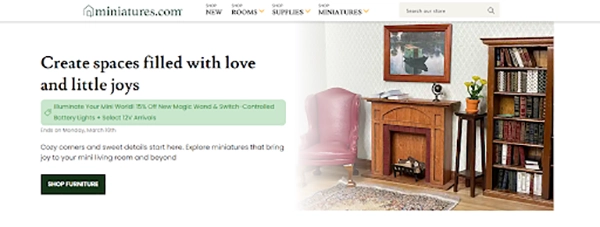
Lathe turned, laser cut wood kits can be assembled into illuminated miniature rooms, such as a small coffee shop or a tiny greenhouse, or a library with working LED lights. All of these can be placed on a bookshelf, or they can be used as stand-alone focal displays. The level of detail in these kits for the price point is incredible.
The assembly process is the point, not just the finished object. Fitting hundreds of small wooden pieces together requires sustained, focused attention that functions as active mindfulness — the mind cannot simultaneously ruminate and fit a 3mm bookshelf into a 3.1mm slot. Studies on focused manual tasks consistently link this type of engagement to reduced ruminative thinking.
- Budget: $25–$60 per kit, depending on complexity.
8. Decoupage and Upcycled Accents
Decoupage is the art of decorating a surface — a tray, a vase, a picture frame, a terracotta pot — with cut-out paper or fabric, then sealing it with a water-based medium like Mod Podge until the layers harden into a smooth, durable finish. The materials involved can cost almost nothing if you’re upcycling existing items.
You can take thrifted wooden trays, for example, and cover them with pages from vintage botanical books, or you could take plain terracotta pots, wrap them up in one solid coloured tissue paper, and make them into truly well-thought-out decorative pieces. These transformations are also very quick and have an extremely low failure rate.
There’s a documented psychological benefit to rescuing discarded objects. The intentional act of improving something that was going to be wasted builds a sense of mastery and environmental agency — both of which are independently linked to higher wellbeing scores.
- Budget: Near-zero when upcycling existing items; $5–$15 for supplies if starting from scratch.
9. Yarn Wall Art and Woven Hangings
Coloured yarn knotted or loosely woven onto a wooden dowel or a found branch creates textural wall art that pairs naturally with punch needle or macramé pieces — if you’re building a curated wall, these three techniques complement each other well.
The beauty of this for first-time users is that it is extremely forgiving; if something is imprecise, it comes out looking textured, so using imprecision when creating does not create a right or wrong way to create, which should help alleviate some of the anxieties associated with starting crafts.
The expressive dimension matters: choosing colour combinations that feel instinctively right is itself a mindful act, one that researchers in art therapy associate with emotional processing and self-expression.
- Budget: $10–$20 in yarn. A dowel from any hardware store completes the kit.
10. Candle and Wax Crafts
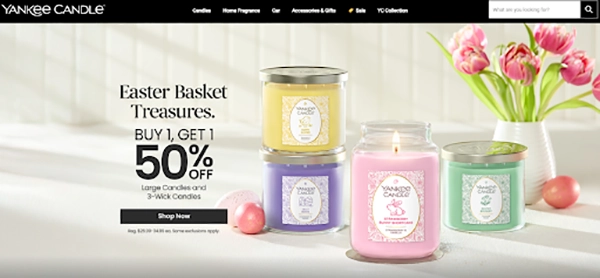
Soy wax flakes, a wick, a fragrance oil, and a vessel — that’s the complete ingredient list for a poured candle that will look and perform as well as anything from a boutique home goods shop. The variables (scent, container, colour, additives like dried botanicals) give you an enormous creative range within a very simple process.
Fragrance is one of the most straightforward methods for altering your mood. The olfactory sense has a direct connection to the limbic portion of your brain. This means that when you use a certain scent, it has the potential to alter your emotional state within a matter of seconds. Handmade candles serve the dual purpose of being a home decor item, as well as providing aromatherapy.
A batch of four to six candles costs $20–$35 in materials and produces gifts, home fragrance, and ambient lighting all at once. Few crafts return as much usable output per dollar spent.
- Budget: $20–$35 for a starter batch of 4–6 candles.
Start with One, Let It Grow
The global DIY craft kits market was estimated at $14.5 billion in 2025 and is projected to reach $27 billion by 2033 — a trajectory that reflects not only recreational spending but a cultural move toward making as a mode of self-care.
The research is consistent: the wellbeing benefits of crafting come from the action of making, not just the finished object. Every item on this list is a vestibule point into a practice that improves the home and mental health simultaneously.
Pick the one that goes well with your existing aesthetic. If you are drawn to texture and warmth, try punch needle or macramé. If you prefer minimal and organic, clay or fabric panels. If you like precision, miniature kits. If you want something that includes all your senses, candles.
The way you decorate your home is part of how you care for your health — a fact that handmade decor makes remarkably easy to act on.
Why choose handmade over mass-produced decor?
Handmade items offer authenticity and a “soul” that machines cannot replicate. Each piece is unique, supports artisan livelihoods, and is often more durable and eco-friendly.
Are these crafts suitable for beginners?
Yes. Projects like painted vases, mason jar candle holders, and cardboard photo frames require minimal tools and are ideal starting points.
How does crafting specifically improve mental well-being?
Engaging in creative projects triggers dopamine release, improves self-esteem, and provides a state of “flow” where external worries are temporarily forgotten.
Can I make these items for free?
Many projects utilize upcycled materials already in your home, such as old jars, newspapers, fabric scraps, or wine corks.





What is Macrame? Meaning, Knots & 2026 Trend Guide
[…] is the art of creating decorative items by tying cords together using a variety of knots. Its textured and handmade appearance has made it […]