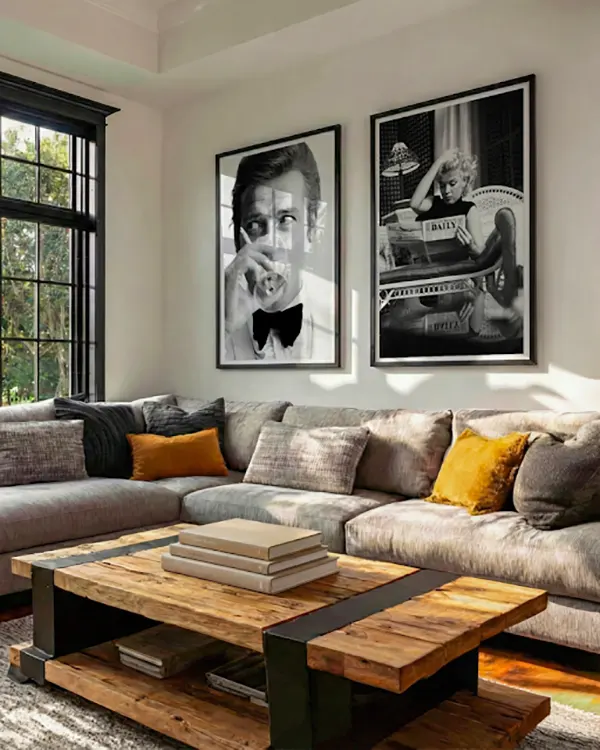
Few photographers captured the essence of postwar leisure and luxury quite like Slim Aarons. His images—sun-drenched poolsides, elegant ski chalets, and impossibly chic socialites—offer more than nostalgia. They provide a visual language of aspiration that remains remarkably relevant in contemporary interiors. For homeowners seeking to infuse their spaces with sophistication and narrative depth, Slim Aarons framed prints have emerged as a compelling choice, bridging the gap between fine art photography and accessible home decor.
The appeal extends beyond mere aesthetics. These prints carry cultural weight, documenting a specific moment in American visual history when photography began asserting itself as a legitimate art form. Whether you’re drawn to the saturated Kodachrome palette or the compositional elegance of his work, incorporating Aarons’ photography into your home creates layers of meaning that elevate ordinary rooms into curated environments worth experiencing.
The Photographer Behind the Glamour
Born George Allen Aarons in 1916, the man who would become known as Slim Aarons began his career as a combat photographer during World War II. The experience profoundly shaped his subsequent work—after witnessing the brutality of war, he famously declared his intention to photograph “attractive people doing attractive things in attractive places.” This wasn’t escapism so much as a deliberate artistic choice, one that would define his six-decade career.
Aarons’ breakthrough came in the postwar years when he gained access to circles of wealth and privilege that remained largely closed to outsiders. His subjects—from the Kennedys to European aristocracy—trusted him because he understood the unwritten rules of their world. According to The Guardian’s retrospective on his work, Aarons possessed an unusual ability to make the ultra-wealthy appear relaxed and genuine, capturing moments that felt spontaneous despite careful composition.
What distinguishes Aarons from other society photographers of his era is his technical mastery and editorial eye. He approached each assignment with the rigor of a photojournalist, yet his images possess an almost painterly quality.
Why Mid-Century Photography Endures
The sustained interest in mid-century photography reflects broader cultural trends. As contemporary life grows increasingly digital and ephemeral, there’s a corresponding hunger for tangible artifacts that convey permanence and craftsmanship. Mid-century prints satisfy this desire while offering visual respite from the oversaturated, hyper-processed imagery that dominates social media feeds.
Aarons’ work exemplifies the qualities that make this era of photography so compelling:
- Analog authenticity: Shot on film with natural light, these images possess a textural quality impossible to replicate digitally
- Compositional restraint: Unlike today’s maximalist visual culture, Aarons’ photographs demonstrate the power of negative space and careful framing
- Color science: The distinctive palette of Kodachrome film—slightly warm, deeply saturated—creates an immediate emotional response
- Cultural documentation: These aren’t just pretty pictures; they’re historical records of a specific moment in American leisure culture
Aarons’ contribution to this transformation was significant—he demonstrated that photography could be both commercially successful and artistically meaningful, a balance that continues to influence contemporary photographers.
Selecting Prints That Resonate
Choosing the right Slim Aarons print requires more than aesthetic preference. The most successful installations consider the relationship between image, space, and the emotional tone you want to establish. Start by examining your existing environment honestly. What’s missing? A sense of warmth? Visual drama? Conversational intrigue? Fine art print specialists like Leisure Piece, Society6, and Minted offer curated collections — though a dedicated print retailer like Leisure Piece, Society6, or Minted can help narrow selection by theme, palette, and scale before committing to a size.
Aarons’ extensive portfolio offers remarkable range. His poolside scenes—perhaps his most iconic work—bring vibrant energy and a sense of perpetual summer. The ski resort images convey alpine elegance and active leisure. His interior shots of grand estates provide architectural context and a more subdued palette. Consider which thematic direction aligns with your space:
- For minimalist interiors: Select prints with strong geometric elements and limited color palettes, such as his architectural studies
- For traditional spaces: His formal portraits and estate photography complement classic furnishings without competing
- For eclectic environments: The vibrant poolside scenes can anchor a room filled with varied textures and periods
- For neutral schemes: Use Aarons’ saturated colors as intentional punctuation, creating focal points that draw the eye
Scale matters considerably. A common mistake is selecting prints too small for the wall space, which diminishes their impact. As a general principle, larger prints (30×40 inches or greater) work best as standalone statements, while smaller formats (16×20 inches) can be grouped to create gallery walls. The latter approach works particularly well with thematically related images—multiple poolside scenes, for instance, or a collection focused on a specific geographic location.
The Art of Framing
Framing decisions can elevate or undermine even the finest photography. For Slim Aarons prints, the goal is to complement rather than compete with the image. His work already contains considerable visual information; the frame should provide structure without adding unnecessary ornamentation.
Material selection depends on both the print and your interior context. Wood frames in natural finishes—walnut, oak, maple—add warmth and work well in spaces with organic textures. They’re particularly effective with Aarons’ outdoor scenes, creating visual continuity between the natural elements in the photograph and the frame itself. Metal frames in brass, bronze, or matte black offer a more contemporary presentation. They suit modern interiors and can make vintage photography feel current rather than dated.
Color coordination requires subtlety. Rather than matching the frame to a dominant color in the print—which often feels too literal—consider echoing secondary tones or complementary hues present in your room. A print featuring turquoise pool water might pair beautifully with a warm bronze frame that picks up skin tones in the image, creating visual harmony without obvious matching.
Installation and Display Strategies
Where you place a Slim Aarons print matters as much as which print you choose. These images work best in spaces where people naturally pause and engage—living rooms, dining areas, hallways, and primary bedrooms. Avoid locations with direct sunlight, which accelerates fading even with UV-protective glazing, and high-humidity environments like bathrooms, which can damage both the print and frame over time.
For single large-format prints, consider the sightlines in your space. The center of the image should typically hang at eye level (approximately 57-60 inches from the floor to the center of the frame), though this can be adjusted based on ceiling height and furniture placement. In dining rooms, where people are often seated, hanging slightly lower creates better visual engagement.
Gallery walls require more planning but offer dynamic results. When grouping multiple Aarons prints, maintain consistent spacing between frames—typically 2-3 inches works well. You can organize by theme (all poolside scenes, all winter sports), by color palette, or by geographic location. Alternatively, mix Aarons prints with complementary pieces—vintage travel posters, abstract art, or other mid-century photography—to create a more eclectic but cohesive display.
Lighting deserves careful attention. Picture lights mounted directly above frames provide focused illumination that enhances detail and color. Alternatively, adjustable track lighting or strategically placed floor lamps can highlight your prints while maintaining flexibility. Avoid harsh overhead lighting, which creates glare on the glazing and flattens the image.
Investment Perspective
While most people acquire Slim Aarons prints primarily for aesthetic reasons, understanding their investment potential adds another dimension to the decision. The photography market has matured considerably over the past two decades, with mid-century work by recognized masters appreciating steadily.
Several factors support the long-term value of quality Aarons reproductions:
- Limited original supply: As original prints become increasingly scarce and expensive, demand for high-quality reproductions grows
- Cultural relevance: Aarons’ aesthetic continues influencing contemporary photography, fashion, and design, maintaining his cultural visibility
- Decorative demand: The interior design market consistently favors his work, creating sustained commercial interest
- Cross-generational appeal: Unlike more niche photography, Aarons’ images resonate across age groups and design sensibilities
That said, approach any art purchase primarily as an aesthetic decision rather than a financial one. The real return on investment comes from daily enjoyment—the way a well-chosen print transforms a room, sparks conversations, and provides visual pleasure over years or decades. If the piece also appreciates in monetary value, consider that a bonus rather than the primary objective.