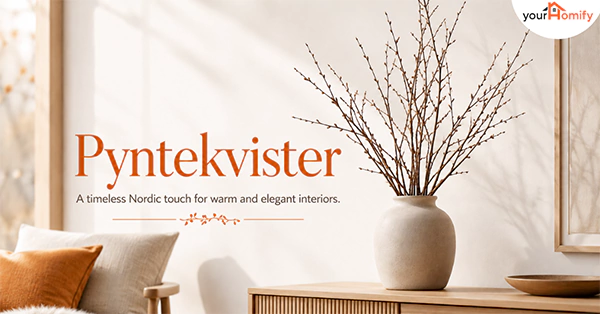
“Pyntekvister” is a Norwegian term that combines “pynte,” meaning “to decorate,” and “kvister,” meaning “twigs or branches.” Together, it describes decorative branches used to add a natural, elegant touch to interiors.
‘Pyntekvister’ offers all that is needed to elevate the house with minimal effort.
This Scandinavian style blends the natural elements of the outdoors with the minimalism of indoors to create a perfect balance, which looks elegant. From simple bare twigs to flowering or embellished branches, pyntekvister can suit a variety of decor styles and are perfect for your next home upgrade.
Quick answer
The pyntekvister is a Norwegian term that refers to decorative branches for home decor purposes. Here, “pynte” means “to decorate”, and “kvister” means “twigs or branches.” This Scandinavian style helps in incorporating the elements of nature indoors to create a rustic and classy look that looks minimal and elegant at the same time.
What is Pyntekvister?
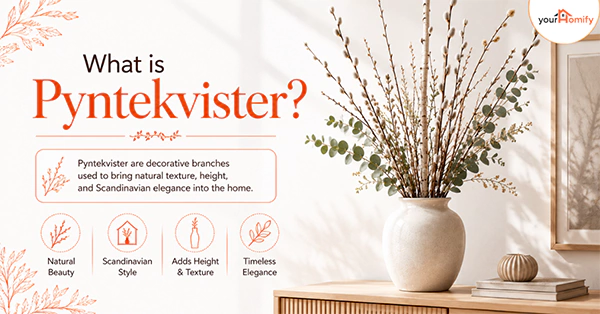
‘Pyntekvister’ is derived from the Norwegian word ‘pynte,’ meaning ‘to decorate,’ and ‘kvister,’ meaning twigs or branches. It refers to the Scandinavian art of using straight, bare, budding, flowering, dried, or preserved branches for home decor.
Pyntekvister creates a more sophisticated and modern look without pinching your pocket. This style of handcrafted decor is a much more sustainable approach than other alternatives and makes the vision of classy yet simple decor possible and affordable.
What Does the Pyntekvister Design Incorporate?
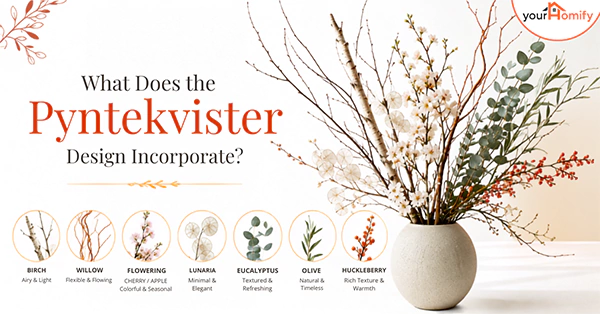
Basically, as the name suggests, the pyntekvister is an amalgamation of different types of branches that help add texture and design to the space.
Take a look at the different types of branches used in Pyntekvister and their significance:
- The birch branches are used for their airy and lightweight texture, which is easily incorporated in vases and centrepieces for dining tables and hallway entrances.
- Willow branches are mainly used due to their flexible and bendable design, which can be molded into wreaths and wall art easily, as compared to the birch branches.
- The flowering branches like cherry and apple are also used in pyntekvister to add that pop of colour to the interiors. Lunaria stems are added alongside woody branches for a more minimalist and modern look.
- Branches of eucalyptus, olive, and huckleberry are really beneficial due to their unique texture. Historically, they were used during festivals and special events.
Fresh vs Dried vs Preserved Pyntekvister
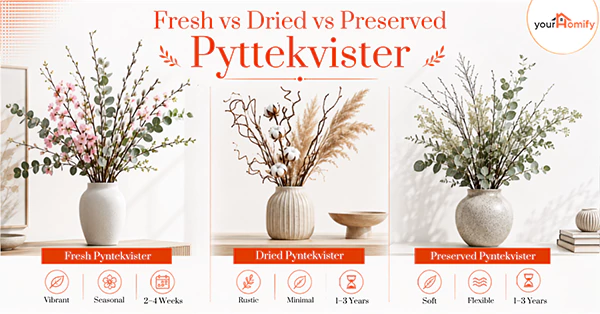
The three main types of pytekvister branches that are commonly used in Scandinavian interior design are fresh, dried, or preserved branches. Let us explore more about these in detail.
Fresh Branches: These are live cut stems of eucalyptus, cherry blossom, or pussy willow and are mainly used to add vibrancy, organic movement, and a natural fragrance to any space. Fresh pyntekvister are best to add a seasonal burst to the indoors. These twigs and branches need moderate maintenance and can last for about 2 to 4 weeks.
Dried Branches: These are natural branches of plants like cotton stems, curly willow, or dried pampas grass. If you wish to give your space a rustic, earthy, or minimalist touch, these are the best options. Dried branches or twigs need low maintenance and should be kept out of high-humidity areas. Depending on the species, these can last for about 1-3 years but can become brittle.
Preserved Branches: These are real branches only but treated using a special glycerin-based solution to replace their natural moisture. You can place them in high-traffic areas or make arrangements where you want to give a soft and flexible branch look. Preserved pyntekvister are low-maintenance and can last about 1-3 years.
How to Design a Pyntekvister at Home?
You can design a pyntekvister at home by selecting the right branches, preparing and trimming the stem accurately, selecting the right vase, arranging twigs as per the height, adding ornamental lights, and finally placing it appropriately.
The Pyntekvister designs help in elevating the home decor without the hassle of spending a lot. Here are some simple and easy steps to make your own pyntekvister at home:
Step 1: Select the Branches: Always go for branches that have textures on them, such as corkscrew willow, silver birch, or pussy willow. You can either go for fallen branches or purchase preserved or painted ones online.
Step 2: Prepare and Trim Stems: Once you choose a healthy stem, cut at a 45-degree angle. This helps in better water absorption and keeps the branches or twigs fresh for longer.
Step 3: Choosing Vase Height: It is always better to choose a simple, heavy glass vase or ceramic jug so that the focus remains on the natural shape and structure of the branches. Make sure the container is of good quality and can support the branches’ height.
Step 4: Arranging Different Heights: Always use an odd number of stems for a more naturally asymmetrical look. The tallest twigs should be at least 2 times the height of your vase or container. Place these in the center or slightly toward the back. The mid-height or short stems should be arranged in a way that they overlap the tall anchor.
Step 5: Adding Ornamental Lights: You can keep the design minimal or dress up the twigs for the festive season. Wrap thin copper wire fairy lights tightly around the main branches from top to bottom to give the design a warm, cozy glow during evening.
Step 6: Placement: This whole arrangement can be placed in the living room or your bedrooms to enhance its visual appeal. They can be used to fill vertical spaces beautifully, making the ceilings feel higher.
Where Can I Use a Pyntekvister for Home Decor?
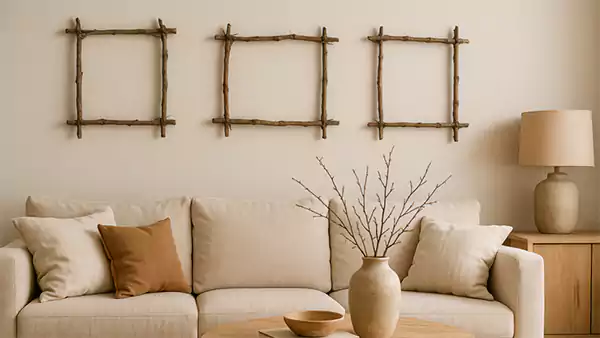
The pyntekvister can be used in various ways according to personal preference, such as for spring, Easter, autumn, winter, or decorative purposes. Here are some of the most common methods I’ve used for my home decor to create a seamless transition.
- Spring/Budding Branches: Bring in the early blooms such as pussy willow, forsythia, magnolia, or apple blossoms. Place them in glass vases or watering cans. These can be used to bring in a fresh, calming spring aesthetic.
- Easter Decorations: You can hang decorative materials like painted, wooden, or ceramic easter eggs from budding pussy willow or curly willow branches. Place the spring twigs in a rustic vase for a more chic look.
- Autumn Branches: Replace fresh green branches with dried bare branches. For a more fall look, combine these with dried grasses, cattails, or preserved autumn leaves in deep oranges, red, or yellow shades.
- Winter/Christmas Branches: Use pine, cedar, or cypress branches for a classic winter holiday look. You can also add artificial snow-frosted kvister for a more enhanced Christmas aesthetic. Arrange them in a vintage or metallic bucket to create a festive focal point.
- Fairy Lights and Hanging Ornaments: Wrap warm-colored LED wire fairy lights around the stalks to create a glowing twinkle tree-like effect. You can also hang lightweight ornaments from the sturdy nodes of your branches.
What are the Benefits of the Pyntekvister Design?

The pyntekvister is a sustainable alternative to other home decor, which is also really cost-effective.
If you are planning to add a touch of Pyntekvister to your home, here are some basic benefits and why it is a better alternative than others:
- Eco-Friendly and Organic: These decorative branches are eco-friendly and can be a low-waste décor option when locally sourced or reused more than other alternatives.
- Cost-Effective: The required materials can be easily sourced from your personal garden or outdoor surroundings, which makes it affordable and convenient compared to other options.
- Creates Height and Texture: These sleek and vertical branches are perfect for an elevated decor for the house that can add a little height to the indoor space.
- Versatile: Additionally, the decorated twigs help contrast well with the otherwise rigid and boring modern architecture.
- Easy to Style: Unlike most of the designs for interior decor, the decorative branches can be customised and moulded perfectly as per your personal needs and wants, and they also perfectly fit into your existing home design without looking off or dull.
How to Take Care of Pyntekvister with Simple and Effective Tips
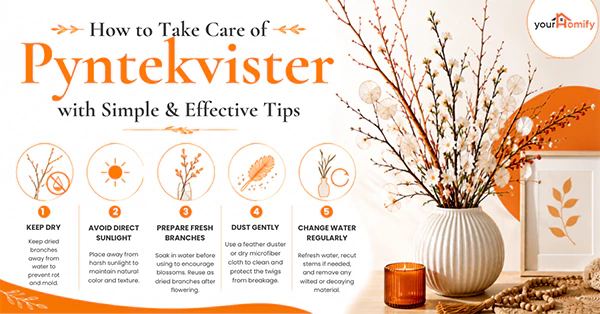
Although these decorative branches are really low-maintenance and sustainable, a little care goes a long way; therefore, here are some simple yet effective ways to maintain them to last longer:
- If you are using dried branches, ensure that they do not get wet, as moisture can turn them mushy and lead to rot or mold.
- Place the vase or the design away from direct sunlight so that the natural color and texture of the twigs remain the same and do not fade quickly.
- If you are adding fresh branches to the pyntekvister, before using them, place them in water to encourage blossoms. Once the flowering ends, you can further use these twigs for dried branch arrangements.
- For dusting, always use a gentle feather duster or a dry microfiber cloth to avoid the twigs from wilting or breaking.
- Change the water periodically for fresh branches to avoid any fungal infection. Recut the stems if needed and remove any kind of decaying material so that the design always looks fresh and lively.
Concluding Remarks
Pyntekvister offers a simple way to make home interiors feel more natural and inviting. From a dining table centerpiece to a statement arrangement in the living room, these straight, bare, budding, flowering, dried, or preserved branches can be styled in many creative ways. While these decorative branches are traditionally used in a vase, there are endless ways to incorporate these designs and experiment at the same time.
Choosing the right branches, vase, and placement can turn a simple arrangement into an attractive part of the overall interior.
FAQs
What is pyntekvister?
The Pyntekvister is a Scandinavian style of design that incorporates dried and fresh branches for home decor designs. It is mainly used to create a rustic and classy look that looks minimal and elegant at the same time, adding a natural touch to the space.
What are the different branches used in the pyntekvister?
The different types of branches used in the pyntekvister are curling willow, birch branches, hazel branches, Scots pine & fir branches, eucalyptus branches, and cherry stems. All these ornamental kvister are used for their visual beauty and architectural shape.
How can I use the Pyntekvister design at home?
The decorative branches’ design can be used in the house on wall art, enhancing the overall look of the room; on dining tables as centerpieces, or in living room areas as seasonal accents, as per your taste and style.
Is the Pyntekvister sustainable?
Yes, the Pyntekvister is a sustainable style for home decor, as it uses natural elements. It is usually made of natural, biodegradable materials, which avoids the environmental impact of other synthetic plastics.
How can decorative branches be used for wall art?
The decorative branches can be painted and woven on a canvas and hung on a wall for a hanging-on-the-wall decor vision. You can also make floating sculptures using them. Use a base branch and make a bohemian wall hanging in your living room for accent styling.