I’ve always enjoyed discovering unique and lesser-known blooms, especially those that don’t get much attention. The flowers that start with I may not be as commonly discussed, but they stand out with their vibrant colors, distinctive shapes, and diverse blooming patterns. From Impatiens and Iris to Ice Plant, these flowers can instantly enhance the beauty of any garden or indoor space.
In this guide, I’ll introduce you to 11 beautiful flowers that start with the letter I, along with helpful details about their appearance, bloom season, and growing appeal.
Reviewed by Simran Kaur: This article has been thoroughly checked for accuracy and authenticity, ensuring the information is reliable, practical, and enjoyable to explore.
Quick Answer
Flowers that start with I include Impatiens, Ice plant, Indian blanket, Indigofera, Iberis, Ipomoea, and Incarvillea. These are easy to grow and can instantly enhance the aesthetic of any garden space.
Flowers That Start With I: 11 Beautiful Types With Names and Pictures
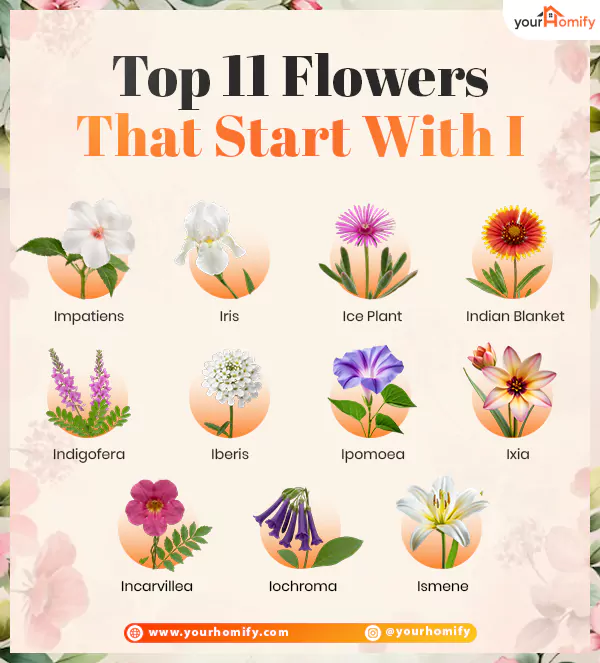
Flowers that start with I include Impatiens, Iris, Ice Plant, Indian Basket, Indigofera, and many more. You can plant them with flowers that start with M for a more well-organized and visually appealing garden space.
- Impatiens
- Iris
- Ice Plant
- Indian Blanket
- Indigofera
- Iberis
- Ipomoea
- Ixia
- Incarvillea
- Iochroma
- Ismene
The blooms mentioned above in the list are not only easy to grow but can instantly enhance the aesthetics of any garden space and can also be used to make beautiful corsages.
In this section, I walk you through a quick yet detailed list of flowers that start with the letter I. Each bloom has its own unique key features, meanings, and growing pattern.
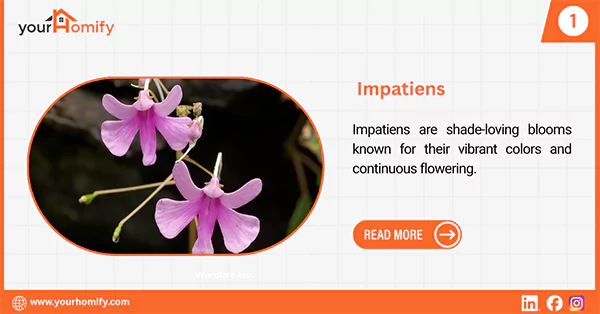
Impatiens
- Botanical Name: Impatiens walleriana
- Growth Type: Annual (perennial in warm climates)
- Growing Zone: 10-11 USDA (grown as annual in cooler zones)
- Bloom Season: Spring to fall
- Origin: East Africa
- Color: Pink, red, white, purple, orange
- Height: 6-24 inches
- Soil Type: Moist, well-draining, rich soil
- Maintenance: Low
Impatiens are popular and sought-after plants due to their wide range of available colors. They are commonly grown as ground cover or low-light indoor plants and require minimal care. Regular watering and good air circulation help prevent common pest issues like downy mildew. These ornamental plants are often used in containers, hanging baskets, and shaded landscapes.
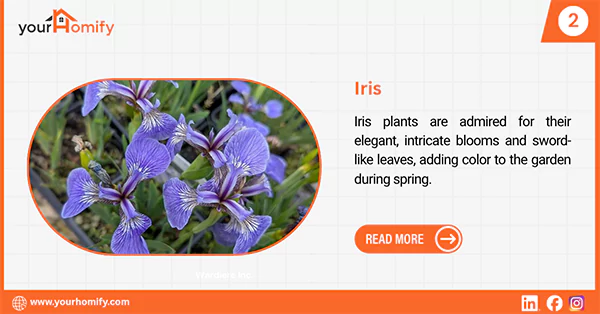
Iris
- Botanical Name: Iris spp.
- Growth Type: Perennial (rhizomatous or bulbous)
- Bloom Season: Spring to early summer
- Growing Zone: 3-9 USDA (varies by species)
- Origin: Europe, Asia, North America
- Color: Purple, blue, yellow, white, pink
- Height: 12-40 inches
- Soil Type: Well-draining soil, moderately fertile
- Maintenance: Low to moderate
As per Britannica, in Greek mythology, Iris is said to be the goddess of the rainbow and is often considered a messenger of the gods to mortals. It is one of the most common flowers that start with I and is a significant Easter flower that symbolizes faith, hope, and wisdom. They grow from rhizomes or bulbs and require good drainage to prevent root rot. Irises are drought-tolerant once established and attract pollinators like bees, birds, and butterflies.
Ice Plant
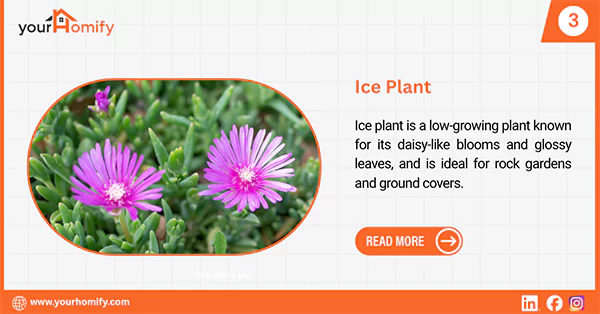
- Botanical Name: Delosperma spp.
- Growth Type: Perennial succulent
- Bloom Season: Late spring to summer
- Growing Zones: 5-10 USDA
- Origin: Arid regions of South Africa
- Color: Pink, purple, yellow, orange, red
- Height: 3-6 inches
- Soil Type: Sandy, well-draining soil
- Maintenance: Low to moderate
The ice plant is highly appreciated for its drought tolerance and ability to spread quickly, forming a dense, colorful blanket. Its fleshy leaves store moisture, allowing survival in arid climates. This flower that starts with I performs best in full sun exposure with excellent drainage. As officially stated by the US National Park, the ice plant was originally planted along the highways to stabilize blowing dunes.
Indian Blanket
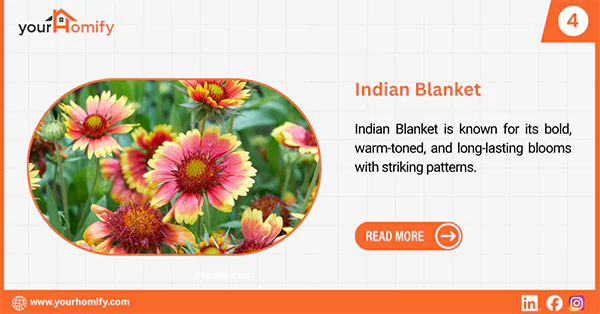
- Botanical Name: Gaillardia pulchella
- Growth Type: Annual (some species are perennial)
- Bloom Season: Late spring to fall
- Growing Zone: 3-10 USDA
- Origin: North and South America
- Color: Red, orange, yellow, sometimes bicolored blooms
- Height: 12-24 inches
- Soil Type: Well-draining, sandy or poor soil
- Maintenance: Low
Indian blanket, also called firewheel, is a hardy and drought-tolerant flowering plant that grows best in hot, dry conditions. This ornamental bloom attracts butterflies and supports pollinators. Regular deadheading can extend its blooming period, ensuring vibrant season interest. According to the Oklahoma Historical Society, this bloom was designated the state wildflower of Oklahoma in May 1986.
Indigofera
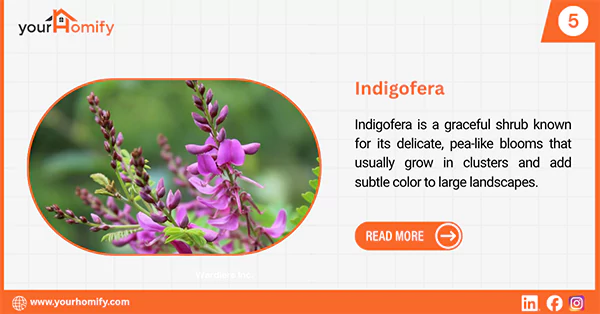
- Botanical Name: Indigofera spp.
- Growth Type: Perennial shrub or subshrub
- Bloom Season: Summer to early fall (May-September)
- Growing Zone: 6-11 USDA
- Origin: Tropical or subtropical regions of Africa, Asia, and America
- Color: Pink, rose, purple, lavender, and white
- Height: 24-72 inches
- Soil Type: Adaptable to various conditions; prefers fertile and moist
- Maintenance Level: Low to moderate
The most commonly grown type of Indigofera is the Indigofera heterantha, also called Himalayan indigo. In India, this flower that starts with I is mainly used to make dyes. Before planting, the seeds of the genus are soaked in cow urine for an hour to make them pest-resistant. According to the Google Arts and Culture research paper, Indigofera was the crop that led to India’s first-ever non-violent revolt.
Iberis
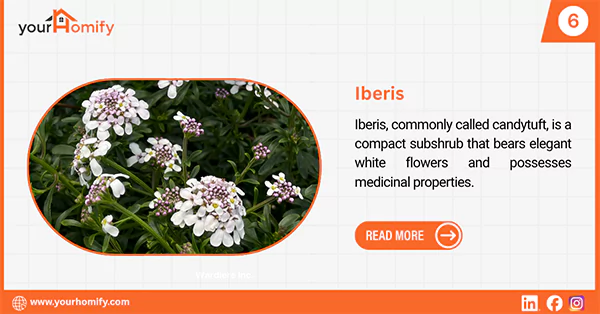
- Botanical Name: Iberis spp.
- Growth Type: Low-growing, dense mounding subshrub
- Bloom Season: Early spring to early-mid summer (April to July)
- Growing Zone: USDA 3-9
- Origin: Southern Europe, particularly the Mediterranean Region
- Color: Primarily bears white flowers, turning baby pink as they age
- Height: 6-12 inches
- Soil Type: Prefers well-draining, sandy or gravelly soil
- Maintenance Level: Low to moderate
The fresh extract from the white flowers of the Iberis is commonly used to treat irritable bowel syndrome. Its active ingredients, like bitter glycosides, stimulate gastric secretion and promote bile flow. Iberis is commonly grown in a rock garden or as a border cover plant. As said in the Victorian language of flora, the white flowers of this plant signify purity, innocence, and spirituality.
Ipomoea
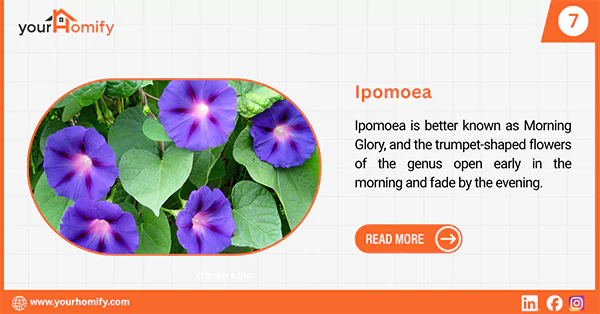
- Botanical Name: Ipomoea purpurea
- Growth Type: Rapidly growing, perennial, herbaceous vines, climbing
- Bloom Season: Early summer to first frost
- Growing Zone: USDA 2-8 (grown as annuals in many regions)
- Origin: Tropical and subtropical regions of America
- Color: Blue, purple, pink, white, and bicolors
- Height: 72-120 inches
- Soil Type: Adaptable to poor conditions, prefers moderately fertile soil
- Maintenance Level: Low
Ipomoea, also known as morning glory, is a stunning September birth flower and is widely appreciated by both experienced gardeners and novice plant lovers. As per the BBC’s Gardeners’ World Magazine, the heart-shaped leaves of the plant are toxic to cats and dogs, and if ingested, they can cause intestinal issues. This ornamental flower is often used for gifting purposes on many occasions, as it represents love, affection, and mortality.
Ixia
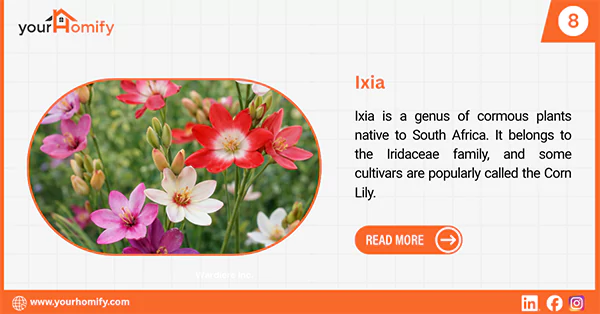
- Botanical Name: Ixia spp.
- Growth Type: Late spring to early summer (June/July)
- Bloom Season: Cormous perennial
- Growing Zone: USDA 8-11
- Origin: South Africa (specifically the Cape Provinces)
- Color: Red, pink, yellow, purple, white, cream, lavender
- Height: 12-24 inches
- Soil Type: Well-draining, sandy or loamy, and slightly acidic
- Maintenance Level: Low to moderate
Ixia is popularly used as a cut flower or filler bloom in bouquets. The average vase life of the genus is 5-7 days under ideal growing conditions. By following some simple care tips for flowers, you can easily extend their life and keep them fresh for a longer period. Ixia is a popular and hardy ornamental bloom that represents happiness, optimism, and resilience.
Did You Know?
Ixia is an abundant flowering plant. One single bulb can produce multiple stems, and each stem can bear 20 star-shaped blossoms.
Incarvillea
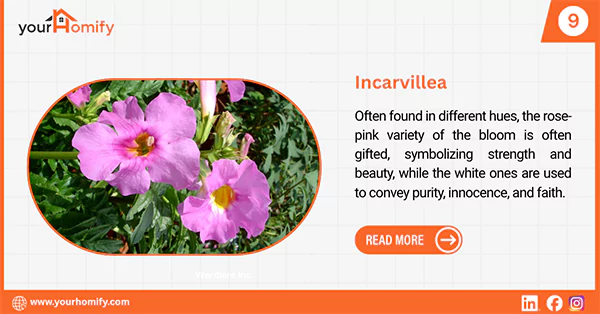
- Botanical Name: Incarvillea spp.
- Growth Type: Herbaceous perennial (usually dies in winter)
- Bloom Season: Late spring to mid-summer (June-July)
- Growing Zone: USDA 5-9
- Origin: Mountains of Central and Eastern Asia (Himalayas and Tibet)
- Color: Pink, magenta, yellow, white, and cream
- Height: 16-24 inches
- Soil Type: Prefers moist, nutrient-rich, acidic soil
- Maintenance Level: Moderate to high
Popularly called the hardy gloxinia or Chinese trumpet flower, Incarvillea is a perfect bloom for outdoor cultivation. Culturally speaking, the bloom was often grown in ancient times, as it represented extraordinary beauty even in harsh conditions. Some parts of the Incarvillea were often used to treat gastrointestinal issues, as they had medicinal properties. Highly valued for looking exotic, these are often planted in containers or in gardens as border cover.
Iochroma
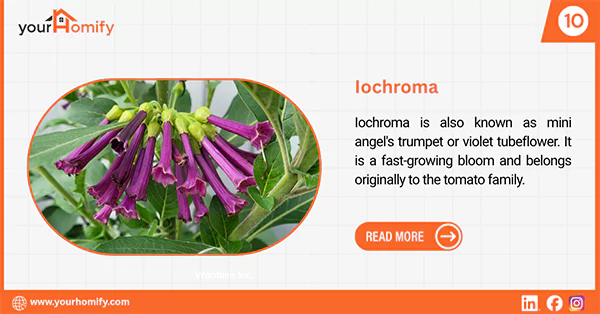
- Botanical Name: Iochroma spp.
- Growth Type: Fast-growing deciduous evergreen shrub
- Bloom Season: Spring to late summer or fall
- Growing Zone: USDA 9-10
- Origin: Forests of North and Central America, Columbia and Peru
- Color: Deep purple, mauve, violet, blue, orange, and yellow
- Height: 72-144 inches
- Soil Type: Fertile, moist, permeable, and organic-rich
- Maintenance Level: Moderate
Iochroma should be handled carefully since all parts of the genus are highly toxic. The sap can cause skin irritation, and if the leaves or the stems are ingested, it can cause an irregular heartbeat. It is of significant interest to many botanists because of its relationship with other members of the Solanaceae family. This flower that starts with the letter I is often grown to convey emotions like wisdom, maturity, and an enchanting spirit.
Ismene
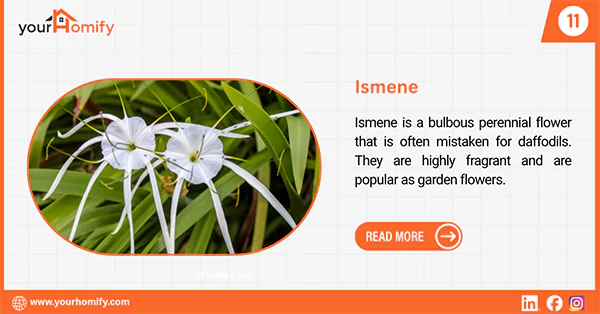
- Botanical Name: Ismene spp.
- Growth Type: Bulbous perennial, tender herbaceous geophyte
- Bloom Season: Generally flowers in summer (June/July)
- Growing Zone: 8-10 USDA
- Origin: Andean regions of Peru and Ecuador
- Color: White and yellow
- Height: 18-36 inches
- Soil Type: Well-drained, sandy, loamy, or humus-rich
- Maintenance Level: Low to moderate
Similar to daffodils, some parts of this summer-blooming flowering plant are toxic to humans and pets. Ingestion can cause vomiting and other gastrointestinal issues. Historically, Ismene was planted outside temples and other sacred places as it represents purity, renewal, and fresh beginnings. Due to their striking beauty and intoxicating scent, these are best used as cut flowers also.
Conclusion
After going through a complete list of flowers that start with I, one can say that beauty exists in every corner of nature. I have realized how unique and versatile each bloom is and how they add diversity to any landscape. Whether it’s the color, fragrance, or structure of a garden, these blossoms are perfect for decoration.
Whether you’re a beginner or an experienced gardener, this list will help you explore new varieties and add more color and charm to your space — and the flowers that start with J are a fragrant place to continue.
FAQs
What are some popular flowers that start with I?
Some well-known flowers include Iris, Ipomoea, Iberis, Ice Plant, and Inula. These blooms are popular for their beauty and variety in gardens.
Are there any easy-to-grow flowers that start with I?
Yes, flowers like Ipomoea and Iberis are quite easy to grow. They require basic care, sunlight, and well-draining soil, making them great additions for beginners.
Which “I” flowers are best for home gardens?
Iris and Ixora are excellent choices for home gardens. Iris works well in temperate climates, while Ixora thrives in warm and tropical regions.
Do flowers that start with I come in different colors?
Absolutely! These flowers come in a wide range of colors. For example, Iris blooms in purple, blue, yellow, and white, while Ixora often appears in red, orange, pink, and yellow.
Can flowers that start with the letter I attract pollinators?
Yes, many of them do. Flowers like Ipomoea and Ice plants attract bees, butterflies, and even hummingbirds, helping support a healthy garden ecosystem.