
When a project slows down and is unable to keep up with the decided schedule, the question of who is responsible and by how much rarely has a direct answer. Delay analysis is what provides a real solution to this problem.
Research from McKinsey found that more than 500 projects with scheduled delays average 52 percent beyond regular timeframes. When these delays turn into claims, the resolution process itself generates additional cost and time, making the analysis crucial right from the start.
This article describes four main methods used in CPM delay analysis and provides firms with an answer to which is the right strategy according to their team’s requirements.
Key Takeaways
- The as-planned vs. as-built method is the simplest of the four, positioning the original baseline schedule along with a reconstruction of how the project actually took place
- For prospective documentation during construction, time impact analysis is typically the most practical and defensible approach
- As-planned vs. as-built and collapsed as-built methods are generally considered less rigorous for complex claims, though as-planned vs. as-built retains utility for initial assessments and smaller disputes
- Whichever method a project team ultimately employs, the analytical work can only be as strong as the documentation created during construction
Method 1: As-Planned vs. As-Built
The as-planned vs. as-built method is the simplest of the four. It positions the original baseline schedule along with a reconstruction of how the project actually took place, then compares both to monitor where and by how much activities deviated from the actual plan.
The method’s primary advantage is its accessibility. It does not require contemporaneous schedule updates and can be performed retrospectively from daily reports, meeting minutes, correspondence, and other project records. For disputes involving less complex projects or smaller claims, it can deliver a clear picture of overall delay without requiring sophisticated modeling.
Its limitation is equally clear. Because the method compares endpoints rather than modeling the dynamic interaction of delays, it cannot isolate which specific delays were critical and which consumed float. A project may have fallen 60 days behind schedule while the activities that drove that overrun are buried in a pattern of concurrent delays that the simple before-and-after comparison cannot untangle. Opposing parties often challenge as-planned vs. as-built analyses on exactly this basis: that they establish correlation rather than causation.
Method 2: Impacted As-Planned (Time Impact Analysis)
Time impact analysis, also called the impacted as-planned method, takes the original baseline schedule and models the effect of a specific delay event by inserting it as a fragnet: a small sub-network of activities representing the delay and its logic relationships. The forward pass is then recalculated to show how the inserted delay shifts the project’s completion date.
This is the prospective method of choice for documenting delay events as they occur. A team working through cpm schedule delay analysis in real time will find that time impact analysis allows delay events to be modeled, quantified, and submitted to the owner contemporaneously with the delay itself. When a delay event is properly fragmented into the current schedule, and the impact calculated before the schedule has been updated with actual progress, the analysis is forward-looking and grounded in the project’s current plan.
The method’s strength is its logic-based rigor. By inserting the delay into the CPM network rather than simply comparing start and finish dates, time impact analysis produces results that can be traced through the schedule logic. Reviewers can follow the chain of dependencies from the inserted fragnet through to the new completion date.
Its weakness is that it depends on the quality of the baseline schedule. If the original plan was not built to a standard that makes its critical path credible, inserting a fragnet into it and calculating a new completion date produces a result that is only as sound as the plan it was modeled against. Time impact analysis also does not account for what actually happened after the delay event, which can be a significant limitation in retrospective claims where conditions changed substantially as the project progressed.
Method 3: Collapsed As-Built (But-For Analysis)
The collapsed as-built method works in reverse. It begins with a reconstruction of the as-built schedule that captures how the project actually progressed, then removes the delay events attributable to one party to model what the completion date would have been “but for” those delays. The resulting difference between the actual completion date and the collapsed modeled date represents the claimed delay.
This method is often favored in retrospective claims where the project is already complete and substantial records exist.
It allows an analyst to design a comprehensive picture of actual performance and then segregate the impact of each event within that picture. On paper, it captures all the complexities of how the project proceeded rather than projecting forward from an outdated plan.
Did You Know?
The CPM method was invented in the late 1950s by Morgan R. Walker of DuPont and James E. Kelley Jr. of Remington Rand to optimize chemical plant maintenance.
In practice, the collapsed as-built method invites significant scrutiny. The process of reconstructing the as-built schedule requires interpretive decisions about activity durations and sequencing that, when challenged, can undermine the analysis. The “but-for” logic also assumes that if the modeled delays had not occurred, everything else on the project would have proceeded as actually built, an assumption that opposing parties frequently contest. The method is resource-intensive and produces results that can be difficult to explain to non-technical decision-makers.
Method 4: Windows Analysis (Contemporaneous Period Analysis)
Windows analysis divides the project into discrete time periods and applies delay analysis within each window independently.
Instead of treating the project as a single identification unit, the method understands that the path can be prone to changes between periods and that delays in a specific window may not have the same character as delays in another.
The method’s rigor makes it the most defensible of the four in complex problems. The Arcadis 2023 Construction Disputes Report concluded that the average value of North American construction disputes rose by 42 percent between 2021 and 2022, indicating larger and more complex projects with a lot at stake in claims resolution.
When the risks are high, the quality of the analytical methodology directly impacts results. Windows analysis, by working from the schedule updates that were actually produced during construction, grounds the analysis in contemporaneous evidence rather than retrospective reconstruction.
Within every window, the analyst locates the core path as it existed at the time, directs delays to responsible parties, and measures the impact on project completion.
Because each window follows on the schedule update that was current at the period, the analysis shows real-time planning decisions instead of imposing an outdated structure based on historical information.
The practical limitation is the resources required to execute it properly. Windows analysis demands a complete set of schedule updates from the project, which may not always exist, and the analytical effort required to process each period independently can be substantial. On shorter or less complex projects, the investment may not be proportionate to the claims at issue.
How to Choose the Right Method
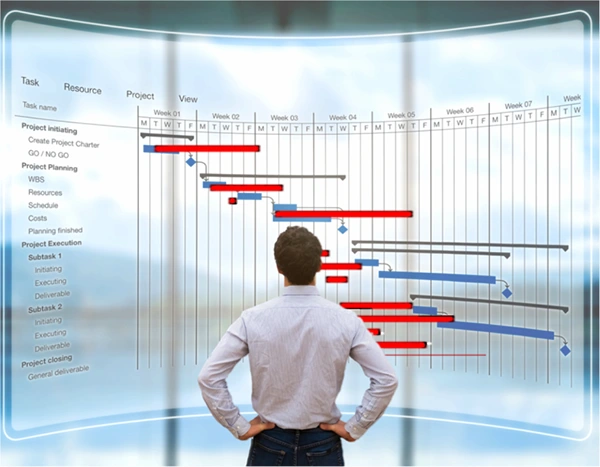
No single method is universally appropriate. The choice depends on the project context, the available documentation, the complexity of concurrent delays, and the forum in which the analysis will be presented.
For prospective documentation during construction, time impact analysis is typically the most practical and defensible approach. It allows delay events to be quantified as they occur and submitted through the contract’s formal notice and change order mechanisms. Teams that maintain good contemporaneous update cadences create the conditions for strong time impact analyses.
For retrospective claims on complex projects with substantial contemporaneous schedule data, windows analysis produces the most defensible results. The method’s reliance on period-specific schedule updates rather than retrospective reconstruction makes it more resistant to challenge and more capable of isolating concurrent delays.
As-planned vs. as-built and collapsed as-built methods are generally considered less rigorous for complex claims, though as-planned vs. as-built retains utility for initial assessments and smaller disputes where its limitations are less consequential. AACE International’s guidance in Recommended Practice 65R-11 reinforces a consistent principle that applies across all four methods: the lower the quality of the underlying schedule data, the lower the quality of any analysis built on it. A weak baseline schedule compromises time impact analysis. Incomplete update records cripple windows analysis. Poorly documented as-built information undermines the collapsed as-built method. Rigorous delay analysis begins with rigorous scheduling practice throughout the project.
The Documentation Foundation That Makes Analysis Possible
Whichever method a project team ultimately employs, the analytical work can only be as strong as the documentation created during construction. Contemporaneous schedule updates, daily reports, RFI logs, change order records, and written correspondence about delay events all become the evidentiary foundation for delay analysis after the fact.
Project controls teams that maintain disciplined update cadences and document delay events clearly and promptly as they occur are building the record that any of the four methods requires. Delay analysis is not something that happens after a project is over. It is a process that begins on day one and runs continuously through project closeout. The team that treats its schedule updates as legal documents, because in a dispute that is exactly what they become, will be far better positioned regardless of which analytical method the situation ultimately calls for.
FAQs
Which is the best method amongst all other options?
No single method is universally appropriate. The choice depends on the project context, the available documentation, the complexity of concurrent delays, and the forum in which the analysis will be presented.
What does the as-planned vs as-built method do?
It positions the original baseline schedule along with a reconstruction of how the project actually took place, then compares both to monitor where and by how much activities deviated from the actual plan.
Is documentation important?
Whichever method a project team ultimately employs, the analytical work can only be as strong as the documentation created during construction because written correspondence about delay events all become the foundation for delay analysis after the fact.
What is the limitation of Windows analysis?
The practical limitation is the resources required to execute it properly. Windows analysis demands a complete set of schedule updates from the project, which may not always exist.