Many homeowners don’t know, but a simple wood deck returns more of its cost at resale than a new kitchen, a bathroom remodel, or a finished basement.
Outdoor living has gradually transformed into the best-value renovation in the country, which is exactly why the category is so easy to overspend on. The gap between a $6,000 patio and a $60,000 outdoor room is massive, and so is the gap in what you actually get in return.
Here’s what the 2026 numbers look like, and how to plan better so that the final expenses align with the estimate.
Key Takeaways
- A pressure-treated wood deck costs approximately $16,000 to $23,000 installed, and returns come close to 65 to 70 percent at resale, one of the highest of any project
- A paver or concrete patio is the easiest and cheapest way to add usable square footage, costing around $4,000 to $12,000, thereby lifting the saleability more than the appraisal.
- A full outdoor kitchen can pass $40,000 fast and returns the least per dollar. Build it for the nights you will actually use it, not for the resale math.
- The real budget-killer is never the part you can see in a rendering. It is grading, drainage, and permits.
Why Outdoor Space Beats Indoor Space, Dollar for Dollar
There is a simple reason a deck outperforms a kitchen on return. Indoor renovations are judged against a buyer’s taste, so your quartz choice and your tile can work against you. Outdoor square footage is judged against a much lower bar: does the yard feel usable, or not? Adding a place to sit, eat, and gather reads as pure upside to almost every buyer, and it does it at a fraction of the per-foot cost of a heated, plumbed, insulated room.
It also matches how people actually live now. Time spent in the backyard has increased since 202, and it never came back down. A yard that actually functions is no longer a nice-to-have, but is a part of what makes a house feel much bigger without an addition.
Decks: The Resale Workhorse
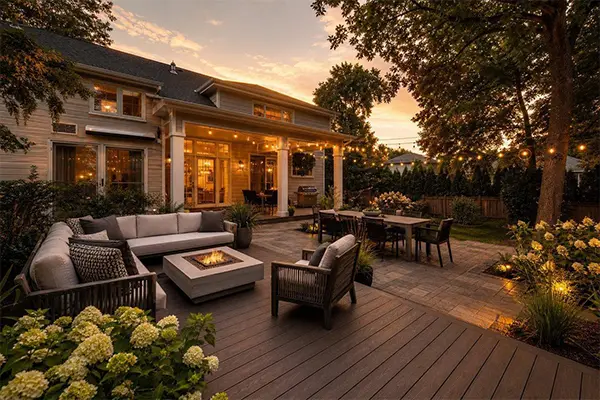
If return is the goal, the deck is hard to beat. Remodeling magazine’s long-running Cost vs. Value study has put a wood deck addition near the top of the resale-recovery list for years, recovering close to 68 percent of its cost nationally. A composite deck costs more up front, usually $23,000 to $40,000 depending on size and railing, and recovers a slightly lower percentage, but it buys you fifteen years of not sanding and staining every spring.
Size drives everything, and not the way people expect. A 200-square-foot deck and a 400-square-foot deck are not as far apart in price as demolition, footings, and getting the crew on site cost roughly the same either way.
If you’re confused between dimensions, going slightly larger is almost always a better option per square foot.
Did You Know?
Low-maintenance materials often yield the highest returns. While a high-end natural stone project might cost $15-$50 per square foot, stamped concrete or brick pavers ($6-$30 per square foot) offer a better balance of aesthetic appeal and cost recovery.
Patios: The Cheapest Real Square Footage
A ground-level patio skips the framing, footings, and railing that make decks expensive. Poured concrete is the low end. Pavers cost more but let you lift and repair a single unit instead of ripping out a cracked slab, and they read as more premium to buyers. Expect $4,000 to $12,000 for a standard install, more once you add a seating wall, a fire feature, or a built-in grill surround.
Don’t forget what actually surrounds the hardscape. Planting, irrigation, and grading can quietly rival the costs of the patio itself, and the range is wide: professional landscaping runs anywhere from $15 to $50 per square foot depending on the region and plant choices. Budget the yard as part of the project, not just an afterthought once everything is complete.
Patios show a lower resale percentage on paper, but that is misleading. It is not that they add less value. It is that most buyers in markets now treat a patio as a baseline expectation, so it determines how quickly a house sells more than it changes the appraised number. For a home you plan to keep, that distinction doesn’t really matter.
Outdoor Kitchens: Build for Use, Not Resale
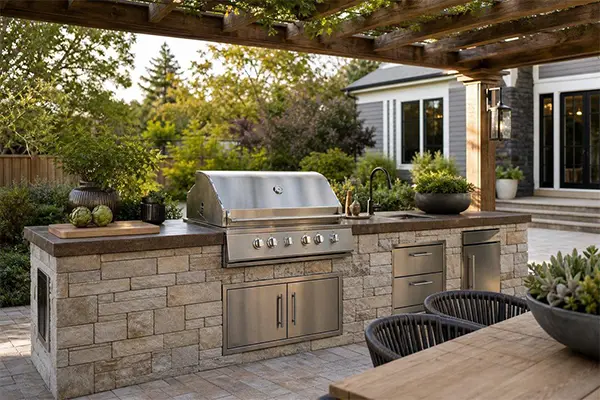
This is where budgets run. A regular setup with a built-in grill, a counter, and a run of cabinetry starts around $12,000 to $18,000. Add refrigeration, pizza oven, gas, and water lines, and you are well past $40,000.
The resale recovery is real but still modest, so an honest way to justify an outdoor kitchen is how many times a year you would genuinely eat out there.
In a mild climate, that number is high, and the project earns its keep in lifestyle. In a four-month-summer climate, be honest with yourself first.
Where Budgets Actually Blow Up
Almost nobody overspends on the visible part of the project. They overspend on the parts a rendering hides:
- Grading and drainage. A sloped or poorly draining yard can add thousands before the first board goes down. Water running toward the house instead of away from it is the single most expensive surprise in this category.
- Permits and setbacks. Decks over a certain height, any roof structure, and gas or electrical runs almost always need a permit and an inspection. Skipping it turns into a problem the day you try to sell.
- Material swaps mid-project. Deciding on the upgraded railing or the porcelain paver after demolition has started is how a 10 percent contingency vanishes in a week.
Build a 10 to 15 percent contingency in from the start. The National Association of Home Builders has recommended a cushion in that range for years, and outdoor projects, with their buried unknowns, sit at the higher end of it.
How to Keep the Estimate Honest
The difference between a great outdoor project and a painful one is usually always the contractor, not the material. A few things separate the two:
- Get the scope in writing down to the fastener and footing spec, not just build a deck.
- Ask who pulls the permit. The answer should be the contractor, not you.
- Confirm the payment schedule is tied to milestones, never a large deposit up front.
- Check that they have built the specific thing you want recently, not just decks in general.
Vetting on your own is doable but is extremely slow, and the star ratings you find online barely let you know whether a crew is right for your exact project and budget.
Editorial resources that pre-screen local contractors can shortcut the worst of it. The Renology, a home-renovation magazine, is a useful starting point for pressure-testing quotes and understanding how much prices swing from one region to the next. It will also match you with two or three vetted local pros for free, which takes the hardest part of the job off your plate before you sign anything.
The Bottom Line
If resale is the goal, a wood deck is the safest dollar in the outdoor category. If usable space on a budget is the goal, a paver patio wins. If you are building an outdoor kitchen, build it for the life you will live in it, because the resale spreadsheet will never fully justify it and it does not need to.
Whichever option you go with, the estimate holds or breaks on two main aspects that are decided even before the crew ever arrives: an honest contingency and a contractor who has done the exact job before.
Frequently Asked Questions
What is the reason that outdoor projects produce more profit compared to kitchen remodeling projects indoors?
Indoor renovations are subject to personal design taste (tiles, countertops, etc.), making it hard to sell the house afterward. Outdoor spaces are evaluated in terms of practicality, making the property appear to be more spacious with little cost involved.
What is better in terms of resale – wooden decking or composite decking?
Pressure-treated wood would enable a slightly better cost recovery when sold. However, composite structure is becoming more sought-after, as buyers would like to avoid time-consuming annual maintenance.
What should be the amount of the contingency fund allocated for an outdoor construction project?
Approximately 10-15% is generally recommended to be put aside for unexpected situations in the preparation process, such as correction of the drainage system, rock excavation, or obtaining structural permits.