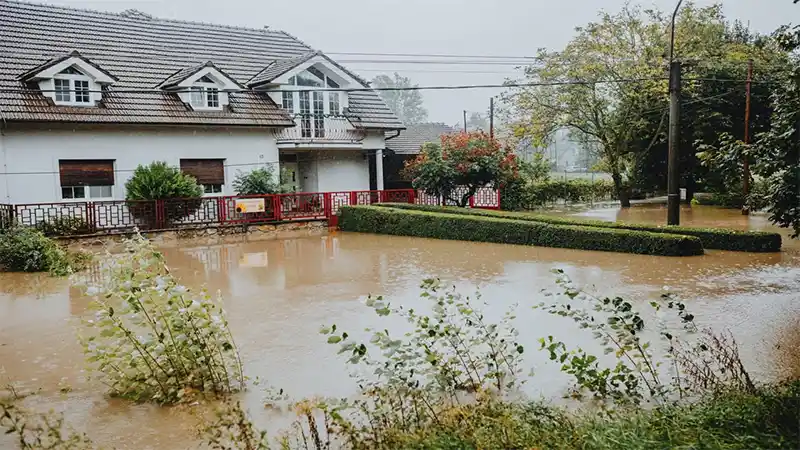


Your water bill came out higher or went up by forty dollars, but you’re confused because it was just a usual week and nobody in your house did anything extra. The only thing that is possible in this situation is a leak, and it can possibly be the reason more than you think.
According to data from the EPA, nine percent of American homes are in the category of wasting 50 gallons a day or more without anyone noticing.
A total of two tests can determine whether the leak is happening or not: One is free, takes two hours of doing nothing, and finds the gallons. The other is mandatory, costs money, and has nothing to do with your bill.
KEY TAKEAWAYS
- A two-hour meter test finds hidden leaks for free without needing any tools.
- EPA’s current waste figures are lower than the ones most plumbing sites still quote.
- A failed backflow preventer looks identical to a working one, which is why annual testing exists.
- A slow leak you ignored is the category insurers deny; a sudden burst is the one they pay.
The Test That Actually Finds the Gallons
The headline number on water waste is smaller than most plumbing sites claim, and it’s still substantial.
EPA’s WaterSense program currently puts the average household’s leaks at more than 9,300 gallons a year. Nationwide, that adds up to close to a trillion gallons. Fixing the easy ones typically takes about 10% off a water bill.
Worth knowing that most contractor blogs still quote EPA’s older figures of 10,000 gallons and 90 gallons a day. Those numbers were revised. The current ones are lower and better.
Finding your own leak takes one afternoon and no tools:
- Pick a two-hour window when nobody will use water. Overnight works, or a Saturday when the house is out.
- Read your water meter and write the number down. It’s usually at the curb or in the basement.
- Use nothing. No dishwasher, no ice maker, no toilet flushes.
- Read the meter again after two hours. If the number moved at all, water is going somewhere.
- Check the winter bill as a cross-reference. EPA flags a family of four using more than 12,000 gallons a month in winter as a likely leak.
That’s the whole test. A moved meter needle doesn’t tell you where the leak is, only that one exists, which is enough to justify looking.
The Other Test, and Why It Isn’t Optional
Now, the one that has nothing to do with your bill is also very important: the backflow preventer sits between your drinking water and everything that could contaminate it. Your irrigation line runs through soil, fertiliser, and whatever you sprayed on the lawn in April.
Under normal pressure, water only travels one way, from the main into the house.
Normal pressure doesn’t always hold. A water main break, a utility repair, or a fire crew pulling hard on a nearby hydrant can drop pressure in the supply line below the pressure in yours.
That reversal is called backsiphonage, and it pulls whatever is downstream back toward the main.
The device exists for exactly that moment. It spends years doing nothing and then earns its keep in about ninety seconds.
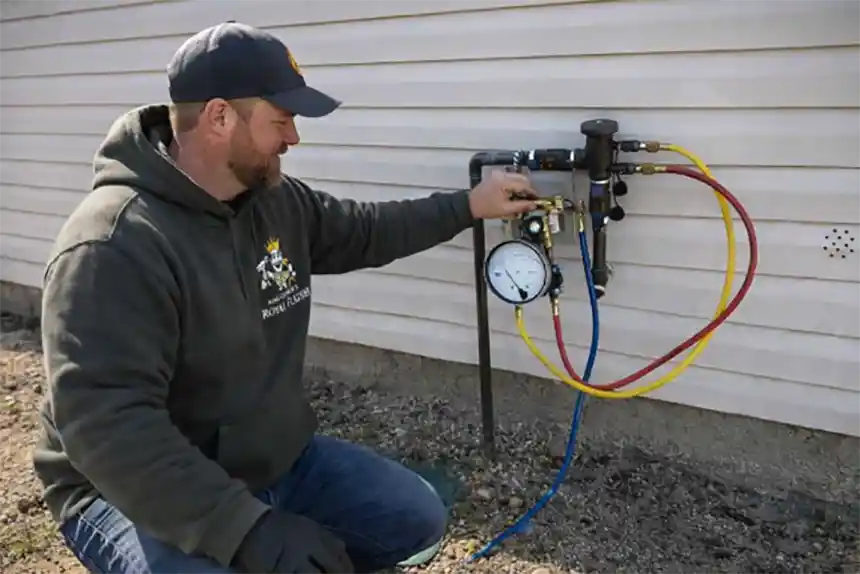
Annual testing is close to universal across US jurisdictions, traceable to EPA’s Cross-Connection Control Manual and administered through state agencies and local water utilities. Many utilities want the test report filed within 30 days.
The most important part that many homeowners find hard to accept is that the internal check valves that they use can degrade even using them normally. They can even degrade due to mineral buildup and pressure cycling, and a device that is not in working condition can look similar to a device that is perfectly fine.
This means that you can’t determine whether the device is in a condition to use or not just by looking at it. The only way to know this is functional testing under pressure, thesis the reason why visual inspection was never accepted as a substitute.
What You’re Actually Looking At
Three assembly types cover almost everything on a residential property.
| Assembly | Typically protects | Relief vent | Hazard rating |
|---|---|---|---|
| RP (reduced pressure principle) | High-risk connections, and it is the most common testable type | Yes, it discharges into open air | High |
| DCVA (double check valve assembly) | Usually a lower-risk connection | None | Medium |
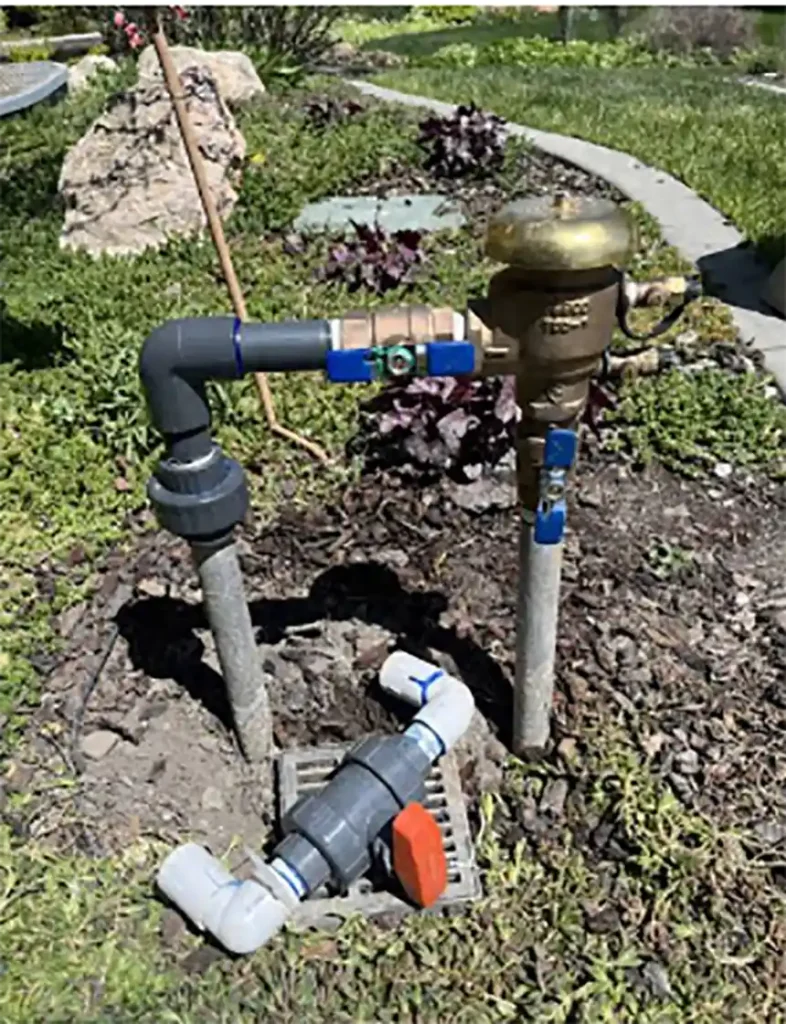
| PVB (pressure vacuum breaker) | Most residential irrigation lines | Vent in the bell-shaped cap | Irrigation-specific |
If yours drips briefly on startup, that’s usually the device doing its job. Continuous discharge is not. And nobody should ever cap or plug a relief vent to stop a drip, which defeats the safety function entirely and violates plumbing code, which can lead to heavy fines.
Why a Weeping Valve Costs More Than Water
This is the place where the two tests are connected, and it’s an argument that, in most of the cases, is made by the homeowner.
If we talk about the Homeowner’s insurance, then we know that the backflow preventer that quietly discharges for the period of 8 months is not a sudden event. And the insurance draws a hard line between sudden and accidental damage, which is generally covered, but slow and gradual damage is not covered by the insurance.
Yourhomify’s own guide to water damage insurance claims lays out the distinction plainly: policies typically require damage to be sudden and unexpected, and a loss traced to a condition the homeowner knew about or should have addressed is routinely denied.
A leaking valve you’ve walked past all summer fits the denial category almost perfectly. The annual test, dated and filed, is also the paper trail proving you were maintaining the thing.
When to Call Someone
You sometimes need a certified tester because your usual plumbers don’t have the calibrated gauges and the certifications that are required to run the test. The most standard state programs cited by name are the ASSE series.
Established firms in the trade tend to hold several credentials at once. San Diego Backflow Testing, for instance, lists certifications from the American Water Works Association and the American Society of Sanitary Engineering alongside membership in the American Backflow Prevention Association. That combination is a reasonable thing to ask any tester about before booking.
The two things that you should make sure to ask on the phone before the tests are: Whether they file a report for you with your utility, and whether they know how to rebuild the kits on the vn or not. This is because if a test fails, then you will have to take a retest, and it will cost you twice.
Conclusion
The two ways by which you can test whether there is a leak or not are the meter test and the backflow test. The meter test is free and usually costs nothing. You should run it in the particular month when you think that the water bill has jumped without any explanation.
The other one is the backflow test, which will cost you some money, and it is more likely to be required and compulsory. You should also do this test once in a while because if your machine is not working properly without even you noticing, then this will help you catch the leakage, and it also helps the dated certificate to protect your claim.
Neither test automatically saves the gallons of water that are being wasted, but together they can surely catch the waste you can’t see and the impurities that you can’t taste.
FAQs
How often does a backflow preventer need testing?
Ans: Annually in most US jurisdictions, plus after installation or any repair. Your local water utility sets the exact requirement.
Can I test my own backflow preventer?
Ans: No. The test needs calibrated differential gauges and a certified tester, and most utilities only accept reports from certified professionals.
Is a dripping backflow preventer always a problem?
Ans: A brief discharge at startup is normal. Continuous dripping usually means debris, worn seals, or freeze damage, and it should be looked at.
Does homeowner’s insurance cover damage from a leaking valve?
Ans: Often not. Slow leaks are usually classed as gradual damage, which most policies exclude, unlike a sudden burst.
- US EPA WaterSense — Fix a Leak Week, for current household leak figures and the meter test method
- Yourhomify — insurance from water that damages, for the sudden-versus-gradual coverage distinction