A beautiful exterior isn’t necessarily the one with the most expensive materials, boldest paint, or biggest features. More often, it comes down to proportion, cohesion, and how well each element works with the architecture of the home.
Curb appeal matters, too. According to the National Association of Realtors, 92% have recommended that sellers improve their home’s curb appeal before listing it, while 97% consider curb appeal important for attracting buyers.
Fortunately, many exterior design mistakes are avoidable. Before replacing siding, adding shutters, or redesigning a driveway, homeowners should consider how each change will affect the overall appearance of the property.
Ignoring Visual Balance and Scale
House additions often look mismatched when people skip basic planning. Resources from professionals such as Flatland Roofing often highlight how rooflines and exterior materials should work together with the original structure to maintain visual balance. Ignoring alignment checks creates awkward lines across the entire front porch.
Dark colors make spaces feel smaller, so light colors work better on trim. Neutral shades help create a uniform look from top to bottom. Keeping colors simple stops the yard from looking mucky.
Heavy light fixtures on small entryways ruin proportion quickly. Choosing fixtures sized 1 to 2 inches smaller balances the entryway area. Proper proportions keep every feature in balance.
Choosing Wrong Shutter Proportions
Perfect-sized shutters add personality to windows. In addition, going with real wood instead of plastic improves curb appeal. Fake vinyl shutters that look tiny next to glass frames throw off natural symmetry.
Proper window treatments match the actual window height and width. Real wood adds natural texture, aging gracefully over 10-15 years. Quality materials stand up to harsh weather without fading fast.
Measuring window frames before ordering prevents purchasing the wrong sizes. Operable hinges provide shutters realistic depth even if kept closed. Small hardware details lift the appearance of plain windows.
Disconnecting Indoor and Outdoor Spaces
While maintaining the house exterior, deck areas need to match the aesthetic of inner living rooms. A feature in Forbes mentions that interior and exterior spaces ought to form 1 unified layout. Mixing opposing styles breaks visual continuity across spaces.
Corresponding wood finishes on deck furniture create a smooth flow through glass doors. Using similar lighting styles inside and outside connects the two zones. Simple color cues help bridge living areas with backyards.
Flooring picks play a huge part in connecting living areas. Carrying similar tile patterns out to patio steps unifies both domains. This approach expands visual space across threshold lines.
INTERESTING INSIGHT
An NAR report noted that well-crafted transitions like patios and outdoor kitchens hit 95-100% ROI at resale.
Paving Boring Concrete Driveways
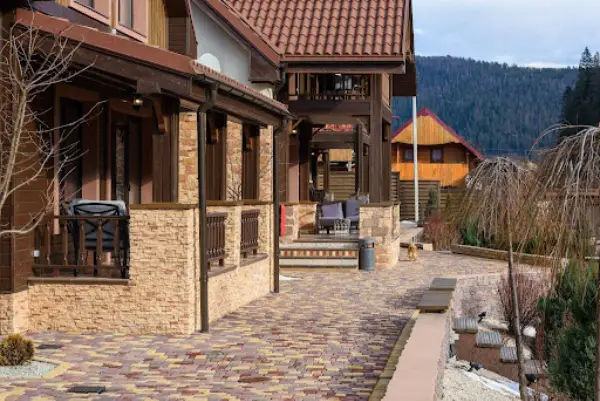
Driveways cover huge visual space near the front lawn. Pouring a plain concrete driveway lacking style lowers total curb appeal. Upgrading simple surfaces turns a driveway into a stylish feature.
Elegant driveways add instant charm to front yards:
- Brick borders to frame plain concrete edges
- Stained finishes that complement siding colors
- Paver gravel grid paths for green grass drainage
Adding decorative stones transforms basic gray driveways fast. Small hardscape details boost the entire property look without huge costs. Stamped patterns add rich depth that imitates natural stone tiles.
Lighting along driveway edges adds safety and visual appeal at night. Low-voltage solar stakes illuminate paths cleanly during dark hours. Bright entry paths welcome guests with affable ambiance.
Conclusion
Planning exterior updates carefully prevents costly fixes down the road. Balanced choices bring out the best features of any neighborhood home.
Focusing on scaled elements retains a fresh and well-kept property look. Small changes build a beautiful property that lasts for years.
What is the biggest home exterior design mistake?
Ignoring scale and proportion is the biggest and most common problem. Individual features may look attractive but can make the exterior feel unbalanced when they are too large or too small for the surrounding architecture.
How can I improve my home’s exterior without a major renovation?
Start with smaller, high-visibility elements such as exterior lighting, shutters, landscaping, house numbers, the front door, or driveway borders.
Should exterior and interior design match?
They don’t need to match exactly, but they should feel visually connected. Repeating colors, materials, textures, or design details can create a smoother transition between indoor and outdoor spaces.