Most homeowners never think about their switchboard until something goes wrong, but one device that can make all the difference, such as whether you will be faced with a shock or an injury, could be hiding within.
This little thing is known as the safety switch or residual current device (RCD), whose function is to monitor the electricity that flows through your house and to shut it all down immediately upon noticing the slightest leakage of the current.
Unlike the fuses and circuit breakers, whose function is to protect your wiring and not you, the RCD is an additional layer of safety. The Australian Wiring Rules now make it mandatory to install RCDs into new residential switchboards; however, there are many old homes with old-fashioned switchboards. Knowing what is installed in your house and how to test it is the first step toward electrical safety.
Key takeaways
- Safety switches reduce the risk of serious electric shock. A typical residential RCD trips within about 0.03 seconds and includes a test button.
- Circuit breakers perform a different job. Safety switches protect people from current leakage, while circuit breakers protect wiring and appliances from overloads and short circuits.
- Requirements vary by state and property use. Rental and property-sale rules in Victoria, Queensland, and Western Australia may impose additional obligations.
- Homeowners can test safety switches, but they cannot install them. Electrical safety regulators generally recommend using each RCD’s test button every three months.
- DIY electrical installation is illegal in Australia. A licensed electrician must complete safety switch installation, switchboard alterations, and rewiring.
What a safety switch actually does
Electricity always flows in a complete circuit. An RCD constantly compares the current flowing out with the current returning. If there is any leakage of current in the electrical insulation, a damaged appliance cord, moisture, or a person touching a live part, the device opens the circuit.
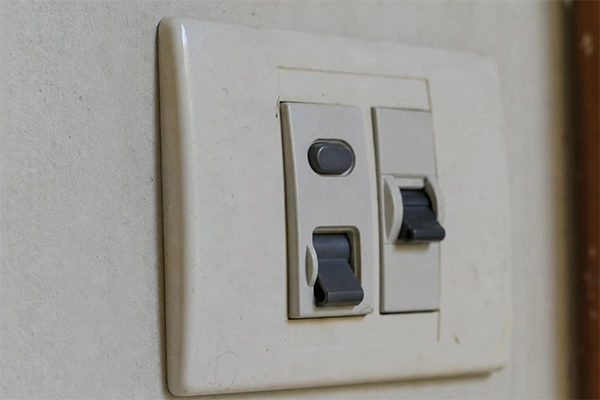
Energy Safe Victoria notes that a typical household RCD is designed to react at around 30 milliamps and disconnect the supply in roughly 0.03 seconds. This rapid response can reduce the severity of an electric shock, although an RCD cannot prevent every electrical injury.
A circuit breaker responds to overloading and short circuits to prevent the wires and devices from overheating. Surge protection is different again, guarding equipment against voltage spikes. A modern switchboard may contain all three because each addresses a different electrical risk.
Where safety switches are required
The Wiring Rules demand RCD protection on domestic and residential final sub-circuits for current electrical installations and alterations. Such circuits will include power points, lighting, and any fixed appliance circuits. States and territories also apply their own rules, especially to homes that are rented or sold.
- Victoria: The electrical safety rental minimum standard that commenced on 29 March 2023 requires a modern switchboard with circuit breakers and safety switches. Rental properties also require gas and electrical safety checks at least every two years by licensed professionals.
- Queensland: Landlords must ensure that approved safety switches protect power-point circuits. Specific deadlines and penalties can apply when a tenancy begins.
- Western Australia: Homes offered for sale, rent, or hire generally need at least two RCDs protecting lighting and socket-outlet circuits. Limits also apply to the number of final sub-circuits connected to each RCD.
Rules can change over time, so check the current guidance from your state or territory electrical safety regulator. An older owner-occupied home may not always require an immediate retrofit, but new electrical work must meet current requirements.
How to tell whether you already have safety switches
You can open the switchboard door in case you want to read the labels, but do not remove panels, covers, or other components. This is a visual check only.
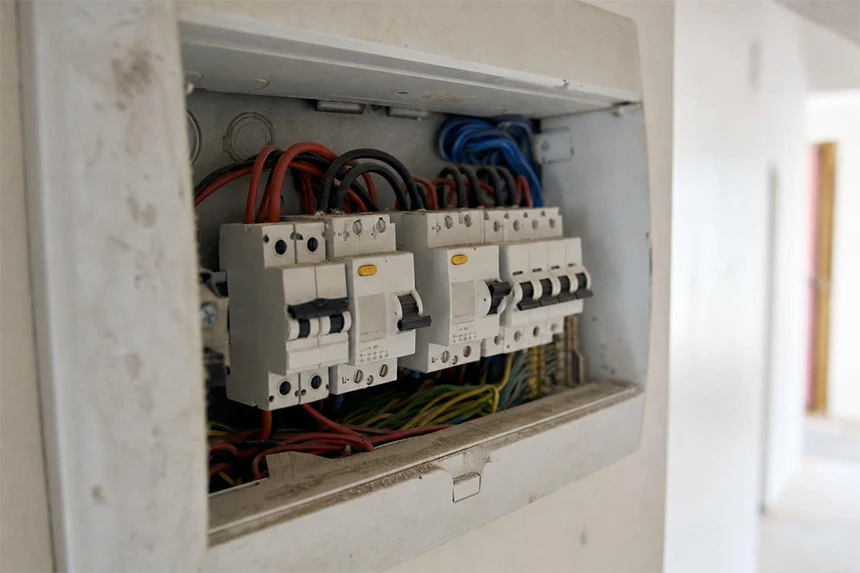
- Look for devices with a small button marked “T” or “Test.” This button is usually considered an RCD or a combined safety switch.
- Check whether “30 mA” is printed on the device.
- Note whether every circuit is protected or only a few selected circuits. Combined units called RCBOs usually protect one circuit each.
- Read the circuit labels. Missing or unclear labels make it difficult to know what each device protects.
- Look for signs of an older installation, such as ceramic fuses, no test buttons, or incomplete handwritten labels.
How to test a safety switch safely
Electrical safety regulators in Queensland and Western Australia recommend testing each RCD every three months. The test button checks whether the device can trip, but it does not replace professional electrical testing.
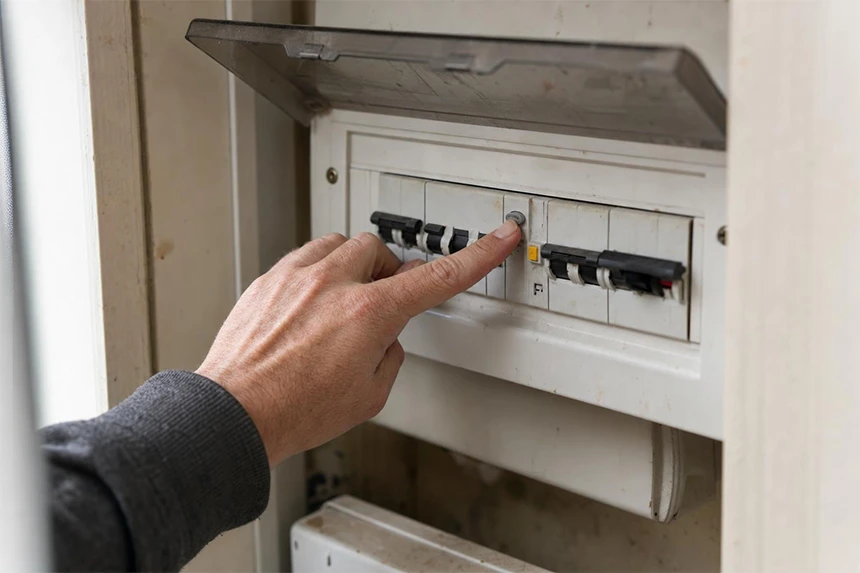
- Tell everyone in the home that the power will be interrupted. Shut down computers and other sensitive equipment first.
- Press the “T” or “Test” button on the device.
- Confirm that the switch trips immediately and cuts power to the protected circuit.
- Reset the switch and check that power returns.
- If the device does not trip, leave it alone and arrange an inspection by a licensed electrician as soon as possible.
Wait two to three minutes before restarting refrigerators and air conditioners after a test. You may also need to reset clocks and confirm that timed equipment, such as a pool pump, has resumed normal operation.
Who should install a safety switch?
Only a licensed electrician can install or replace a safety switch in Australia. DIY electrical work is illegal, and switchboards may contain live components even when individual circuits appear to be off.
Before hiring an electrician, you need to confirm his license from the relevant authorities. Explain about the existing switchboard, get a detailed estimate, and find out how much paperwork he can give to prove that he has done the job according to regulations. In New South Wales, for example, completed work may require a Certificate of Compliance for Electrical Work. Melbourne homeowners can use licensed providers such as O’Shea Electrical for safety switch installation and switchboard upgrades, while comparable licensed businesses operate across Australia.
Types of RCDs worth knowing before an upgrade
Not all safety switches react to the same kind of fault currents. Type AC devices have not been permitted for new installations in Australia since 1 May 2023. Type A is commonly used for household circuits because it can detect alternating current and certain pulsating direct-current faults.
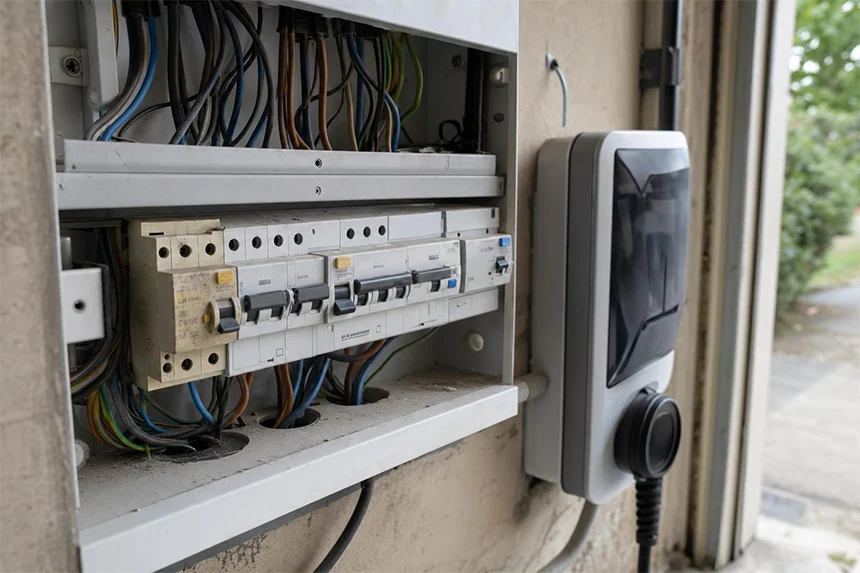
Equipment such as EV chargers, battery systems, and solar inverters may require additional protection. Depending on the equipment, this could involve a Type B RCD or another arrangement that detects direct-current leakage. The correct choice must follow the equipment manufacturer’s instructions and the Wiring Rules, so it should be confirmed by the electrician when designing the circuit.
When a switchboard upgrade makes sense
Several signs can justify a professional switchboard assessment, including repeated tripping, ceramic fuses, missing safety switches, poor circuit labels, or no room for additional circuits. A rental safety inspection that identifies non-compliance is another clear reason to act.
The installation of an extra electrical load may call for an upgrade. Such loads can include an electric vehicle charging station, induction stove, heat-pump hot water tank, solar power system, or home battery storage system.
A modern board typically includes RCD or RCBO protection for the required circuits, clear labels, and enough capacity for planned additions. Surge protection may also be recommended. The cost depends on the number of circuits, the condition of the existing wiring, the mains and earthing arrangement, enclosure size, and any faults found during testing. Ask for a written scope so you can compare quotes on the same basis. For more context, professional switchboard upgrades can clarify why qualified planning matters.
If a safety switch keeps tripping
Frequent tripping indicates a fault or leakage that should not be ignored. If it is safe to do so, unplug portable appliances on the affected circuit, reset the device, and reconnect the appliances one at a time. The item that causes another trip may be faulty. Devices that have been exposed to heat, age, and moisture are typical culprits in leakage cases.
Do not keep resetting a switch that will not remain on. If it trips with everything unplugged, operates only during wet weather, smells hot, or shows signs of damage, switch off the affected circuit and contact a licensed electrician. The issue can be either with fixed wiring, outdoor electrical devices, or an installed appliance.
An RCD cannot provide protection in every situation. Safe appliances, undamaged cords, compliant wiring, and prompt repairs remain essential.
The practical bottom line
Safety switches are among the few parts of a household electrical system that homeowners can meaningfully check without opening electrical equipment. Test the safety switch every three months, find out which circuits it protects, and ensure that the labeling on the switchboard is clear. If the board is old, confusing, or repeatedly tripping, arrange an assessment by a licensed electrician rather than attempting repairs yourself.
FAQs
How often should I check my safety switch?
Electrical safety authorities recommend that the test button on every safety switch be pushed approximately once every three months.
Is it possible to install a safety switch myself?
No, you can’t do it. Electrical installations must be done by a qualified electrician; you may not perform any work yourself.
Are safety switches mandatory in rental homes?
Yes, although requirements are different from state to state — states like Victoria, Queensland, and Western Australia have mandatory safety switches for rental accommodation.
How can I determine if I already have safety switches installed in my house?
Open the door of the switchboard and look for devices that have a “T” or “Test” button and “30 mA” marked on them, without taking off any covers.