Jim Ramsey is a home improvement and renovation specialist with more than 20 years of experience in remodeling, construction, and repair. He reviews project guides to ensure readers receive accurate, practical, and trustworthy advice.
Areas of Expertise
Home Improvement & Renovation
Building Construction
Interior & Architectural Design
Content Review & Quality Control
Ask Jim
Did you know? Home radiators distribute heat by circulating warm water, or for electric models, through an element converting electricity to heat, providing comfort through radiant and convective processes
While choosing a radiator, I make sure to look for more than simply a heat-generating unit. I want certain characteristics that will make for long-term comfort and efficiency
From my installations, options like Stelrad radiatorsprovide corrosion-resistant materials and a good warranty, which are non-negotiables for durability, and a more modern, compact design is a requirement to fit the aesthetic of my home.
That’s why in this blog post, I’m going to cover some pivotal feature that needs to be there in a top-tier home radiator and advise readers to ensure the availability of some must-have features.
Let’s begin
Key Takeaways
Understanding the energy efficiency
Looking at the design and style standards
Decoding the heating capacity and material selection
Discovering the control features with the need for installation and maintenance
1. Energy Efficiency
Well, I think saving a fraction of money every month on our electricity gives us the joy that no savings could ever bring because we feel the most concerned about it, which is why energy efficiency matters in every segment. To choose a good radiator, you need to make sure things like energy efficiency ratings and security ratings of the brand and product.
2. Design and Style
I know a lot of you guys don’t care much about the design and style of the radiators, but let me tell you, it’s the most important factor that people overlook and regret later.
If your radiator has a vertical design, it can be more aligned to throw excess heat and keep your room warmer for a longer period. The thing is, whether you are a modern geek or a contemporary aesthetic lover, make sure to choose the design that aligns with the style of your room
Interesting Facts While the initial investment is higher, the superior energy efficiency, durability, and low maintenance of premium radiators can lead to significant long-term cost savings. (Source)
3. Heating Capacity
Imagine buying a radiator for your home to heat up rapidly in the striking winters of December, but it doesn’t perform according to your expectations and becomes useless when you need it the most. I know it can hurt like hell to see your money get wasted, but to protect yourself from these situations, you need to ensure the criteria of British Thermal Units (BTUs).
4. Material
Now let’s talk about the most important factor of this entire concept, which is none other than choosing the machines that have appropriate materials. The choice of substance infused in the radiator is the major thing to prove its efficiency, longevity, and upkeep.
Common materials include steel, aluminum, and cast iron. Steel radiators are recognized for their longevity and effective heat distribution, while aluminum radiators warm up rapidly and are light, making them suitable for areas needing immediate warmth.
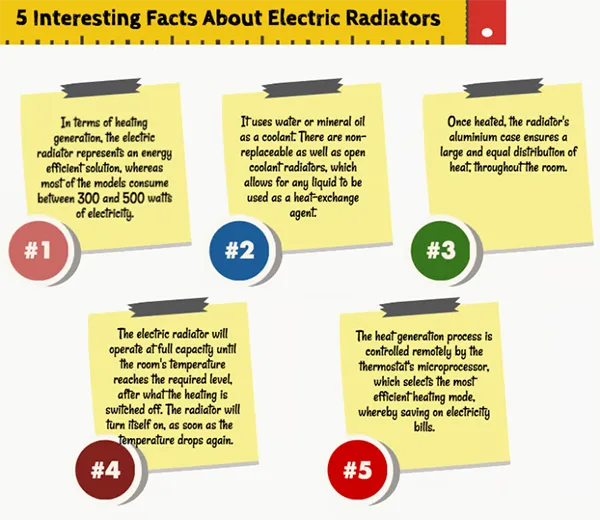
Intriguing Insights This infographic shows five interesting facts about electric radiators
5. Control Features
Nowadays, I believe that automation plays a major role in any product, so why should anyone settle for units with manual buttons and conventional features? Always look for the radiators that have secure components like TRVs and temperature regulation monitors. Try to avoid the older variants of radiators; instead, go for the latest ones, even if they are a little bit expensive.
6. Installation and Maintenance
To sum up this entire discussion, I just want to say that without proper installation and scheduled maintenance, all the features can become vulnerable in the long run. To avoid any kind of operational issues, you must ensure regular cleanups and expert checking of your product once a month.
If you still have some doubts, then make sure to read this article again and keep striving for more such content!
Frequently Asked Questions
What is the purpose of a radiator in a house?
The key purpose of a radiator includes a very simple yet necessary process, which is heating the home using the procedure of convection.
What is the lifespan of a radiator?
Technology has changed the way they were earlier now because of innovative approaches and integration of heavy materials; they can last up to 10-15 years with a proper maintenance schedule.
How often should radiators be cleaned?
Because of the presence of dust and debris in the environment, it makes radiators weak and inefficient.